
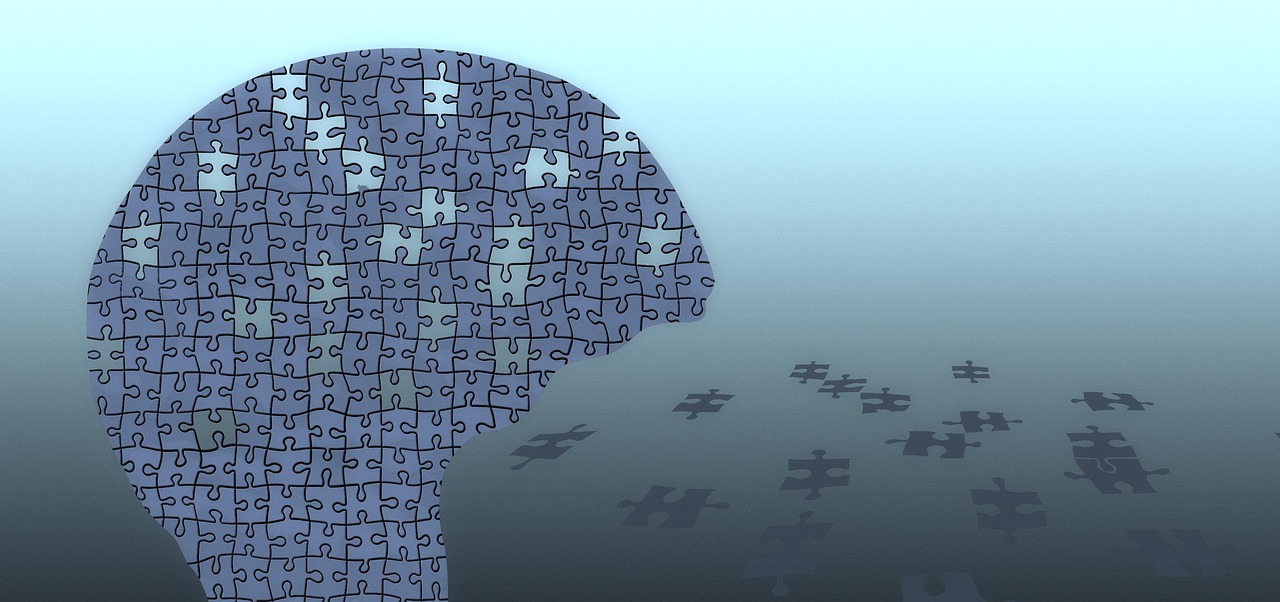
The human brain is a marvellous organ; the peak of evolutionary complexity. As we humans grow and learn new things, the brain learns and adapts. Indeed, throughout life, it exhibits surprisingly plastic behaviour, not just in terms of function but also morphology, changing itself according to needs.
The brain typically takes up 2% of the human body mass, but consumes at least 20% of the energy budget, 20% of the oxygen budget, and 20% of the glucose budget, so running the brain takes up a disproportionate amount of energy and a lot of the body’s resources. Evolution has made mammals as economical as possible in terms of the energy that they expend. This is because the more energy we expend, the more food we need to provide the energy, so the more time is needed for hunting, cooking, feeding, and digesting.
The body naturally reconfigures itself depending on available energy and needs. Males do not achieve the musculature of Arnold Schwarzenegger by doing nothing. Building up muscle mass requires repetitive physical work, extra food intake and in some cases help from the biochemical industry. For example, archaeologists can recognise the bones of archers by the increased robustness of the right arm bones (for right-handed archers).
By the same token, the converse is true. Any athlete who has had his leg in a plaster cast for six weeks will know all too well how quickly unused muscles atrophy. The old adage ‘use it or lose it’ applies perfectly. The same is true of the brain. From an evolutionary point of view, there is no point in feeding a brain vast amounts of bodily resources if it isn’t being used, by the same token, cognitive functions atrophy as well. Again, use it or lose it.
This isn’t simply a matter of common sense. Neuroscientists have expended considerable effort on studying the subject, and the conclusions are beyond doubt. This research paper linking cognitive stimulation with cognitive function is just one of very many such examples. To cite just one of the conclusions of this research, “Low cognitive stimulation or cognitive deprivation in the home environment is associated with lower executive functioning, including performance on tasks of WM [working memory], inhibition, and cognitive flexibility”.
The term ‘executive function’ is key to this article. In neuroscience, executive functions are “A set of higher-order cognitive control processes that enable goal-directed behaviour, by coordinating, regulating, and monitoring other cognitive processes, especially in novel, complex, or non-routine situations”. In more concrete terms, executive function includes mental abilities such as suppressing automatic, habitual, or irrelevant responses, resisting distraction and self-control, switching between rules, strategies, or mental frameworks and adapting to changing task demands. Crucially higher-level executive functions involve the following processes: planning, problem-solving, abstract reasoning, decision-making under uncertainty, error monitoring, strategic thinking, and understanding complex situations.
So, to circle back to the quote from the above cited research, lower cognitive stimulation or cognitive deprivation will inevitably lead to a lower ability to problem-solve, to take difficult decisions, to check for errors, to think strategically, and to understand complex situations. This isn’t an issue in doubt; it’s basic neuroscience, and it happens also to chime with common sense.
In this important UK Column article, we investigated in detail the matter of ‘trust’ and the two ways that humans reach conclusions about their environment: deductive reasoning and abductive reasoning. The difference between the two methods of reasoning is vital to understanding how we behave and how we understand the world around us.
Abductive reasoning involves taking split second decisions based on factors such as trust of source, threat and previous experiences. Deductive reasoning is closely associated with the scientific method of deduction, where no unproven assumptions are made and conclusions are derived logically from first principles. Using abductive reasoning, the conclusion is rapid and comes with a relatively high risk of error requiring less brain resources and less energy. Deductive reasoning requires considerably more brain resources, more time, reasoning, cross-referencing to memories, potentially investigation, discussion, reading, and so on, but the risk of making the wrong decision for the individual is lower.
Most people rely throughout their daily lives on abductive reasoning to understand the world around them. This is often based on trusting sources of information, for example: parents, teachers and the TV. Children raised in homes with little cognitive stimulation consequently have limited higher executive functions and will naturally rely on abducting reasoning throughout their lives.
The UK Column article ‘Lockdowns: A Study of the Harms’ investigated the degradation of peoples’ mental capacity who had experienced solitary confinement, based on numerous scientific studies. Once again, the persistent lack of cognitive stimulation leads automatically to loss of higher executive function. The longer that lack of cognitive stimulation lasts, the more permanent the effects on cognitive degeneration. In cases of prolonged solitary confinement, these effects may well be lifelong. In cases where the cognitive stimulation is the result of a chosen lifestyle, such as many hours spent in front of the TV, many hours spent on the mobile phone, and many hours using Artificial Intelligence (AI), then the effects equally are likely to be lifelong, leading to children brought up in such households not receiving optimal cognitive stimulation and not even developing higher executive functions. It’s a self-perpetuating cycle.
The more one uses higher executive brain functions, the better one becomes at using them. As the old adage goes, ‘practise makes perfect’; or if not ‘perfect’, then at least ‘better’.
To summarise the above in a nutshell: the more one stretches the mind by attempting to resolve complex problems, the more one is able to use deductive reasoning and expand one’s higher executive functions. The more one is deprived of intellectual stimulation, the more one relies on abductive reasoning, the less likely one is to question the world and therefore more likely to accept things the way they are.
Before readers tune out, and conclude that this article is only of academic interest and of no interest to the general population, please read on, because now that we’ve established the basic principles we can look at how this will affect the lives of everyone in the Western world and beyond in the near future.
We live in a world in which we rely more and more on devices, social media, and the TV to do our thinking for us. Many of these facets of modern life are attractive in that they facilitate daily life and make our lives easier and often more enjoyable. So, GPS units plot our journeys for us and can tell us turn by turn which road to take, without us ever having to learn to read a map, or create mental maps of our environment and journey to compute our best route. Influencers on social media tell us how we should think and react in certain circumstances. The TV tells us to trust the experts, because they always know best. Fact-checkers tell us to trust their conclusions, because they have done the research so that we don’t have to. The TV keeps us entertained so that we don’t have to expend energy on social interactions. We receive the endorphins of pleasure without needing to engage higher cognitive functions.
Taking just the TV as an example, there is plenty of research available on the matter. The Metabolic Equivalent of Task (MET) is a measurement of metabolic rate. 1 MET is a standard measurement of metabolic function for someone sitting and doing very little. Watching TV is rated at roughly 1 MET. Normal walking around doing light daily tasks is rated at around 1.6 MET. During TV watching, the brain doesn’t shut down as many might believe, but it does consume around 10% less energy, and this 10% economy is concentrated heavily in higher executive functions.
Returning to the earlier conclusions, this means that extensive watching of TV most certainly has a negative impact on thinking deductively, problem-solving, analytical thinking, understanding complex situations, etc. Watching TV for extensive periods affects the way we react to the world around us; the more we watch it, the more abductive reasoning we perform, and the less deductive reasoning we perform.
The TV is just one example of cognitive degeneration which automatically occurs when we subcontract our more complex mental tasks to others, be they other people or devices. Of course, the effect is cumulative, if throughout our days, we rely on a number of different devices which do our thinking for us. The unavoidable conclusion is that the more we rely on TVs, mobile phones, and of course AI, the more compliant we become. The less we question the world around us, the less analysis and problem detection we perform, the less deductive reasoning that we perform, and the more compliant we become.
The influence of AI on students, ability to think critically is already being noted with considerable concern on US college and university campuses. According to an article published in the New York Post:
A new survey from the American Association of Colleges and Universities and Elon University’s Imagining the Digital Future Center found that an overwhelming majority of college faculty are concerned that artificial intelligence is harming students’ critical thinking abilities. The survey, which polled 1,057 faculty members, found that 95% believe that AI will make students overly rely on artificial intelligence, and 75% said AI will have a significant impact. Ninety percent of faculty said AI would decrease students’ critical thinking abilities, and 83% said students’ use of it would decrease their attention spans.
It's worth just repeating the finding: 90% of faculty said AI would decrease students’ critical thinking abilities! This isn’t a blip on the radar; it marks a one-way sea change in higher education.
Just as devices are rapidly taking over our thinking for us, the political world is also moving fast. In Europe, towns and cities are being transformed into 15-minute cities, in which everything that everyone is ever likely to need will be available within a 15-minute walk. The population’s ability to act independently, to travel freely, and to enjoy traditional freedoms will be severely restricted.
As the World Economic Forum famously stated, we will own nothing, and we will never have been so happy. The ‘happy’ part of the statement is rather curious. Most people, when deprived of their belongings, would naturally be unhappy. But in a situation where the little that we need is provided, when we don’t question the world around us, and we trust implicitly the authorities, then why not be happy, as happy as, say, sheep in a field. In other words, the WEF was fully aware that the population of these 15-minute cities would be a population who had already undergone significant cognitive degeneration and thus would see the world through the eyes of someone using abductive reasoning all the time.
One example of a policy shift which targets very specifically cognitive degeneration is Universal Basic Income (UBI), a form of handout from the state where everyone receives the same basic income without having to earn it. This form of living precludes the necessity of having to exercise higher executive functions in order to survive. Very specifically, UBI allows continued physical existence with a minimal amount of cognitive ability, and money arrives automatically without any corresponding effort.
The more influence that the state has in everyone’s lives, the less they need to think for themselves, and so the less they need higher cognitive functions to live an everyday life. For example, we see the increased role that the state is assuming for itself in the upbringing of children. All of these factors feed the vicious circle into permanent cognitive decline and degeneration. Many people may well no doubt feel that they have witnessed this behaviour already, especially the older generations, which has spent more time using higher executive functions and is more likely to analyse anomalies and spot the problems.
Currently, 98 cities are aiming to achieve 15-minute city status. The population in these cities totals something around 300 million people. That number is constantly growing. This article on UK Column exposes the deliberate policies forcing people out of the countryside and into the cities.
Behavioural psychologists avoid using the term cognitive degeneration, which they consider loaded; they prefer the term ‘behavioural stabilisation’. Behavioural stabilisation is a known, long-established measure for better controlling captive populations such as in prisons or mental institutions. Deliberately using techniques that produce cognitive degeneration, the aims are to achieve ‘institutional adjustment’, ‘behavioural compliance’, ‘reduced incident rates’ with long-term inmates subjected to deprivation of higher cognitive functional needs, and becoming ‘cognitively narrowed’, i.e. losing their higher executive functions. The 1960s film Cool Hand Luke demonstrates the process nicely. As a general rule, population control will become far simpler if the population becomes cognitively narrowed by the techniques mentioned above.
Marxism takes cognitive degeneration a stage further, once again modifying the grammar while the general meaning remains the same. So, for example, Louis Althusser stated that ideology doesn’t deceive people with lies; it structures perception, defines what feels ‘natural’, and shapes what questions can even be asked. This Marxist theory shifts manipulation away from outright lying to making the subjects unaware that they are being manipulated by subduing their higher executive functions. The Marxist angle is subtle, but many people may well recognise this kind of manipulation going on around them on a daily basis.
The use of AI only serves to turboboost a process that has been underway for most of this century. Cars are learning to drive themselves. An increasing amount of government is going to be taken over by AI. The judicial system will increasingly be controlled by AI, as will health delivery and so on. As a species, we are learning to survive with an ever decreasing need to use the higher executive functions of our brains. If the above-mentioned societal changes only affected a few individuals, then we might comfortably as a species look the other way, but these changes are occurring on a global species-wide basis. Much damage has already been done; the harmful processes are baked into the system. We rely more and more on mobile phones in our daily lives, on the TV for information, on AI and experts for help with every kind of task imaginable and to do our thinking for us. All these devices and systems are sugar-coated cyanide pills containing the seeds of our destruction.
The Flynn Effect is a method of assessing IQ variations over time. IQ tests are intended to be used within a year-bound context, with a score of 100 being average for that cohort of people in time. But IQ tests do not serve to measure IQ variations over generations; this is what the Flynn Effect does. The Flynn Effect repeatedly recorded an increase in intelligence in Western populations over the 20th century of roughly 2.2 IQ points per decade. Around the year 2000, however, a new phenomenon appeared: the Flynn Plateau. In the Flynn Plateau, not only was the average increase not recorded, but average IQs started to drop. This became more noticeable since 2010, whereas in underdeveloped countries, IQs continued to rise during the same time period. This article discusses “Global Evidence of IQ Decline: State of the Art, 2019–2025” in industrialised countries, including a decline of up to five IQ points in UK populations since the 1970s cohort!
Right now, in 2026, the human species may never again be as intelligent as the generation that exists today. Cognitive degeneration is occurring in our species right now and is being scientifically documented.
As if by some coincidence after more than a decade of generalised loss of higher executive function and increased ‘behavioural stabilisation’, a vast array of societal changes are being put in place by states around the Western world. We are seeing the emergence of cashless societies using Central Bank Digital Currency (CBDC), Digital ID, permanent tracking of individuals, monitoring of everyone’s conversations across the media, loss of free speech, driverless vehicles, de-banking, the loss of freedom of the media, global censorship, the risk of having one’s door broken down at 3am for having written a few words on a social media platform, and of course 15-minute cities.
Although superficially all of these measures may appear disconnected, they are all closely linked into an ever-tightening Social Credit System. As we lose our individual ability to think strategically, understand complex problems and our collective behaviour becomes ‘stabilised’, so we find that the Social Credit System trap has grown around us, and we become less able to do anything about it.
Now for a very uncomfortable truth: either we manage to reduce our reliance on devices and external agencies that do our thinking for us, or we condemn ourselves to becoming mere sheep in a system of control, incapable by virtue of our limited ability to reason deductively of breaking out or even wanting to break out and become freedom loving people again. We need to learn again to rely on our marvellously complex brains again, to resolve complex problems again, to think in abstract terms, to think strategically, and to understand complex situations.
Right now, today, we have found ourselves as a species in a trap which we have walked into freely and unknowingly, and from which only great determination and willpower will permit us to escape. Staying in this trap will condemn us and future generations to be increasingly controlled by an omnipresent state, composed increasingly by AI and the owners of AI. The vicious spiral of subcontracting our higher executive functions and ever-increasing cognitive degeneration will deprive us of the very cognitive tools that we need to break free from the trap. As we lose our higher executive functions, we will lose our precious freedoms, a process that is already well underway.
And these higher executive functions, the apex thought processes of our marvellously complex brains, the ones that we need to escape are exactly the ones that we are losing right here, right now.

Neil Harrison
Neil Harrison achieved a degree in Pure and Applied Physics at Salford University, UK, and went on to work in the space industry for Marconi Space and the German Space Operations Centre near Munich, working on various satellite and NASA space shuttle programmes.