
This is Part 4 of a series about fraudulent climate science and global corporations. Parts 1, 2, and 3 are available on UK Column’s website.
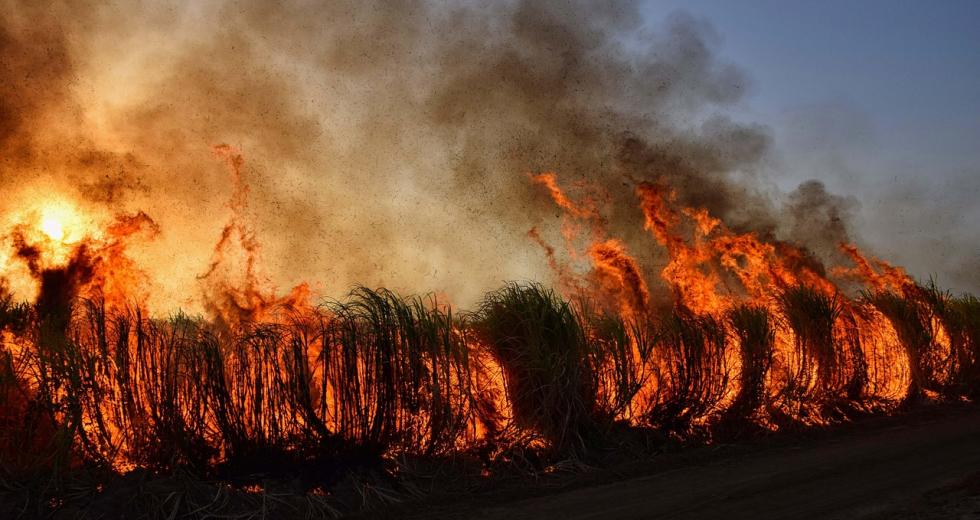
By 25 August 2025, 275,000 hectares of land had been ravaged by wildfires in Portugal this year alone, representing nearly 3% of the Portuguese land area. In common usage, this is equivalent to over 390,000 football pitches. In this article, we explore the factors that led to this disastrous situation, which are not what the Portuguese Government or the EU would have us believe. The fires kept on burning throughout September, but after 25 August, they stopped disclosing the figures.
Such is the scale of the wildfire problem that the area involved almost defies imagination. By August, four people had been killed, at least 130 firefighters had been hospitalised, and at least 1,000 people had been evacuated, with many homes burnt. The scale of the fires is simply way beyond the means of Portugal to control. 2025 was one of the worst years for fire disasters on Portuguese record, although it probably won’t surpass 2017, when 563,000 hectares of land were burned.
The smoke from these fires has been seen hundreds of kilometres away in distant France, including from our house in the south of France on the Mediterranean coast. Throughout the summer, firefighters had been attempting to control these fires unsuccessfully for weeks with no respite, but their resources were wholly inadequate faced with the scale of the disaster. The Canadair water-dumping plane fleet is one of the most important tools available to combat forest fires; one of these crashed into the banks of the River Douro in July, and two others had broken down and were unavailable. The Portuguese asked for help from neighbouring Spain, but that was refused, as Spain’s own firefighting resources were already stretched to the limit. In the end, an African country, Morocco, sent two Canadairs to help. This was a humiliation, not only for the Portuguese Government, but also for the much-vaunted EU emergency organisation called rescEU, which boasts: “rescEU was established as a strategic reserve of European disaster response capabilities and stockpiles, fully funded by the EU. It comprises a fleet of firefighting planes and helicopters …”.
Both EU and Portuguese politicians have seized the opportunity to blame the Portuguese wildfires on climate change. For example, Janez Lenarčič, EU Crisis Management Commissioner, described the 2024 wildfires in Portugal — along with concurrent floods — as evidence of climate breakdown. In the European Parliament, he warned: “This tragedy is not an anomaly. This is fast becoming the norm”. Wopka Hoekstra, the EU Commissioner for Climate Action, said, "Climate change is increasing the frequency and severity of wildfires."
In Portugal, politicians have echoed these sentiments. Maria da Graça Carvalho, Minister of Environment and Energy, expressly linked Portuguese wildfires to climate change during a UN Summit of the Future in New York:
There is always a part that is related to climate change. It’s not the only factor, but it’s evident that the highly unusual conditions that occurred during those three days — both the heat, the wind, and the very low humidity — have a lot to do with everything that is climate change.
One would expect that such serious claims made by senior politicians would be backed up by solid evidence, such as with serious scientific study or with quantitative assessments of the impact of climate change on wildfires. For example, they could have claimed that 50% of Portugal’s wildfires are caused by climate change, or that Portuguese wildfires are 50% worse due to recent climate change. No such justification is provided; instead, these statements serve to establish in the EU citizens’ minds that climate change is directly responsible for these increasingly widespread wildfires. This isn’t science; this is manipulation. We will investigate these claims later in the article.
Are these politicians offering us a solid scientific explanation of the Portuguese wildfire catastrophes, or are they covering up the responsibility for failed EU policy and flagrant corporate exploitation of Portugal?
Let’s take a closer look at the situation in Portugal. Over the past several decades, Portugal has experienced a dramatic shift in land use, driven largely by EU policy. This is arable land, which has traditionally acted as natural firebreaks, as we saw in the Aude fire in 2025. In 1990, Portugal had 2.3 million hectares of arable land. The most recent figures from 2021 reveal just 965,000 hectares, merely 40% of the 1990 total. Roughly two-thirds of this is lost arable land; over 1 million hectares have been left to become scrubland and forestry, adding to the already-existing scrubland and forests of Portugal. Most of the rest of this lost arable land has been built upon.
We have seen in previous articles the vast profits in the UK and France to be made from buying up agricultural land and selling it on for construction, a business dominated by large, often global speculators. In the mid-to-late 20th century, around 50% of Portugal’s population was rural; by 2023, this percentage had dropped to 32%. This constituted a decline of 1.73 million people from rural areas, most of whom went to live in Portugal’s two main cities, Lisbon and Porto. Porto has not published a recent census of its massive expansion, but over the same timeframe, the Lisbon population has increased by 500,000. The business of coercing rural people to give up their land and live in cities, while property speculators buy up large tracts of abandoned agricultural land, has already been well covered here in a previous article written for this series. This process is expected to continue to 2030 and beyond. A study by the European Commission’s Joint Research Centre highlighted that between 2015 and 2030, approximately 11% of agricultural land in the EU, including significant portions in Portugal, are at high risk of abandonment.
But what has become of the 1 million hectares of abandoned arable land that has been left to forestry and scrub? When one drives through rural Portugal today, the presence of an unusual tree may surprise visitors: the eucalyptus, a non-native tree imported from Australia, stands out. It has become the dominant species in many Portuguese forests. While economically beneficial for the pulp and paper industry, eucalyptus is highly flammable and contributes to the rapid spread of wildfires. Research indicates that eucalyptus and pine plantations covered around 70% of the area burned in the catastrophic 2017 Pedrógão Grande fire, underscoring the fire risk associated with these monocultures, according to the Global Forest Coalition.
The eucalyptus (Eucalyptus globulus, otherwise known as blue gum) has been deliberately planted in the newly-created shrubland, and, indeed, in existing forests, throughout rural Portugal. This is because it’s a fast-growing tree that is ideal for use in the paper pulp industry, which, in Portugal, is dominated by the company Navigator. It reaches a harvestable size within 10 to 15 years, compared to double that figure for native species. In addition, it requires little labour for a high return, requires no grazing protection, and can survive in poor soils. But, eucalyptus has multiple natural traits that make it a serious fire hazard:
- High oil content in leaves ignite easily and can cause crown fires (burning in the treetops).
- Leaves are shed continuously, creating permanent dry fuel beds.
- Trees can project burning embers long distances, starting spot fires ahead of the main fire line.
- The dry bark can peel and catch fire, spreading flames up the trunk.
- Worse yet, eucalyptus can re-sprout rapidly after fire. This makes it a fire-resilient species, but also means it re-establishes faster than native plants, thus locking in a vicious cycle.
Geoengineering Monitor reveals the elevated risks of eucalyptus with regard to wildfires. In just one example of this:
Satellite mapping of the infamous Pedrogão fire has shown that eucalyptus and pine plantations covered around 70% of the burned area, and that these areas experienced high fire severity. Both eucalyptus and pine have evolved to deal with fire. They are resinous trees that burn very easily and give off volatile oils that can even spontaneously combust in high temperatures. The bark of eucalyptus trees moves the fire quickly up the trunk and into the highly flammable leaves, both of which can be projected hundreds of meters, spreading the fire quickly. Compounding this is the fact that Portugal’s plantations are often illegal and unregulated, meaning that adequate firebreaks and zoning are not in place to prevent fires spreading easily.
From a biodiversity perspective, Portugal’s eucalyptus plantations have sometimes been referred to as ‘green deserts’. Eucalyptus leaves give off oils that inhibit soil microorganisms and prevent the growth of other plant species by blocking the development of root systems and inhibiting seed production. Eucalyptus leaves aren’t easily broken down by soil microorganisms (not even goats will eat eucalyptus leaves), and there are fewer invertebrates, fungi, and herbaceous plants in eucalyptus plantations.
Quercus (meaning ‘oak’ referring to the indigenous Portuguese tree species), an NGO, has been fighting against the plantation of eucalyptus since at least 2013. Quercus says:
The expansion of large-scale eucalyptus forests in Portugal — so-called monoculture tree plantations — is also a critical factor in the spread of large wild fires, the statement added. The highly inflammable composition of eucalyptus oil presents a real threat to the ecosystem and to the population, a fact tragically underlined earlier this year in the Serra do Caramulo, when lives were lost as a huge inferno swept through the region whose landscape is characterised by monoculture eucalyptus.
Such is the important commercial value of eucalyptus that fully 9% of Portugal’s land surface is covered in this readily combustible and non-indigenous tree, a total of 800,000 hectares, and now makes up a quarter of Portuguese forestry. The amount of the eucalyptus harvest is equally startling, with 2.7 million tonnes of mainly eucalyptus harvested by the wood pulp industry and an additional 2.9 million tonnes of mainly eucalyptus used for bioenergy. Navigator, as Portugal’s principal eucalyptus harvester, dominates both of those industries.
Furthermore, because the burning of eucalyptus is considered to be carbon-neutral, Navigator attracts EU subsidies for the burning of eucalyptus. The controversial justification given for claiming that burning eucalyptus is carbon-neutral, and thus qualifies for EU Net Zero subsidies, is based on the idea that the trees fix CO₂ from the atmosphere in order to grow. This idea maintains that burning that wood, and releasing all that CO₂, is a zero-sum calculus. The EU has decided that burning eucalyptus contributes to fighting the ‘climate crisis’ and so provides Navigator and similar companies with the following ‘Renewable Energy Subsidies’:
- Biomass energy, including wood-based biomass like eucalyptus, is classified as a renewable energy source under the EU’s Renewable Energy Directive (RED II). This classification makes biomass projects eligible for various subsidies and support schemes aimed at increasing renewable energy production.
- These subsidies can come as direct grants, feed-in tariffs, or favourable power purchase agreements.
- Companies like Navigator, operating pulp and paper mills that use biomass for energy, often benefit from these financial supports because biomass CHP plants contribute to national renewable energy targets.
According to the EU Emissions Trading System (EU ETS):
- Biomass combustion is often treated as carbon-neutral under the EU ETS, meaning companies burning biomass are generally not required to surrender emissions allowances for the CO₂ emitted.
- This treatment effectively provides an indirect financial benefit (carbon credit) by reducing the company’s carbon costs, compared to fossil fuels.
- This ‘carbon neutrality’ assumption is controversial, but it is currently embedded in EU regulations.
The exploitation of eucalyptus is big business for Navigator, which declared €2.08 billion in revenue from its 2024 exploitation in Portugal. In addition, Navigator has recently benefitted from Net Zero EU-backed loans to help build its infrastructure in Portugal, amounting to over 260 million euros, because that infrastructure is considered to help reduce carbon emissions! Navigator is a very important player in Portugal, representing by its activities alone 0.7% of Portuguese GDP, while being the sixth-largest Portuguese company in terms of capitalisation. Unsurprisingly, the two largest institutional investors in Navigator are BlackRock and Vanguard. The majority shareholder, however, is Semapa, which in turn is partly owned also by BlackRock and Vanguard.
Let’s now return to the question of why so many Portuguese abandoned their farms and left the land to scrub and often eucalyptus forest. As we’ve seen, over 1 million hectares of land have been abandoned from productive arable land to become scrub and forest since 1990, and in the same period, 1.73 million people left their rural communities to live in the cities. What were the factors that caused this abandonment of arable farming? The answer, in a nutshell, is pressure from the EU, via a number of initiatives aimed at reducing Portuguese agricultural output.
In the early 1990s, subsidies from the EU’s Common Agricultural Policy (CAP) were mostly linked to production volumes; farmers were paid based on how much they produced. However, reforms starting in 1992 (MacSharry reforms) shifted subsidies away from production and toward direct payments based on land area, with environmental conditions attached. This resulted in farmers receiving payments even if they reduced production or left land fallow, which encouraged abandoning less-profitable land.
In addition, the CAP introduced set-aside schemes in the 1990s and early 2000s, which paid farmers to take land out of production to reduce surpluses, resulting in many Portuguese farmers, especially on marginal or small plots, finding this attractive, leading to significant areas being left uncultivated.
Further still, the CAP reforms generally favoured larger farms and specialized production, through economies of scale and targeted subsidies. Small-scale, mixed, or subsistence farms, which were common in Portugal, became less competitive and less subsidised. This accelerated the consolidation and disappearance of many small farms, especially in hilly or less productive areas.
And, in addition to all that, the CAP rural development measures included payments for afforestation and land abandonment programs targeting the planting of eucalypti. Increased bureaucracy and compliance costs under the CAP also discouraged small farmers. Many small hold farmers could not meet regulatory requirements, or found the paperwork overwhelming, leading yet more to exit farming.
From the 2000s onward, the CAP introduced cross-compliance rules, linking subsidies to environmental and land management standards. While these were considered to be positive for sustainability, this also meant some land was excluded from farming to meet environmental goals. All this together resulted in a mass exodus from rural areas, with the abandonment of over 1 million hectares of arable farms to be replaced mostly by readily combustible eucalyptus forests and scrubland.
But who else has profited from the EU causing so much arable land to be turned into scrub and forest, apart from the land speculators and the eucalyptus industry? Just as in the case of Aude, documented here, vast solar parks are appearing in Portugal, and for the most part, on abandoned arable land. Two of the solar park builders openly make the claim that their solar parks are built upon ‘non-productive or downgraded land’. Europe’s largest solar park, Fernando Pessoa, at 1,245 hectares, is built upon ‘largely downgraded former agricultural land’. No accurate details are published, but it is reliably expected that around 70% of Portugal’s solar parks are built upon ex-arable land.
Portugal currently has 3,468 hectares of solar panel parks built, a figure which is increasing rapidly. These are operated by a variety of large companies, the top three of which are Neoen, EDP, and Iberdrola. Iberdrola, which currently owns the Fernando Pessoa solar park and has announced a €3 billion investment plan for solar parks in Portugal, is partly owned by BlackRock and Vanguard. Norway’s Sovereign Investment Fund, run by Norges Bank, owns around 4% of Iberdrola, as well as Navigator, Portugal’s eucalyptus exploitation company. So, once again, large global investors are profiting from the EU’s policies of transforming agricultural land into land exploited by these same investors. This reveals an unvirtuous circular relationship between the EU, its policies, and huge multi-nationals to the detriment of the local population.
Portugal will soon have 750MW of battery capacity to store excess energy-generating capacity. The EU recommends around 4 hours of autonomy, giving a total energy store of around 3,000 MWh of energy. The 2025 Moss Landing Vistra Power Plant Fire in California was a lithium-ion battery fire involving merely 182.5 MWh, and that fire burnt for days. Lithium-ion fires are notoriously difficult to extinguish, as the fire catalyses a chemical reaction, producing oxygen, which adds more fuel to the fire internally.
There have been over 100 such major fires caused by solar farm battery parks, with some of them lasting for several weeks. Official statistics are currently unavailable; not, I would suggest, because it is difficult to count and record a major lithium-ion battery park fire, but because such fires generate bad publicity. Not only are these fires caused by electrical faults, ageing batteries, and the thermal environment, but also by the duck curve.
As these solar installations are located on mostly abandoned arable land, which has become scrub land with a high propensity for wildfires, they are located in places which become very hot in the summer, when heat stress of the batteries and equipment increases the likelihood of a battery park fire, but also when the heat generation of the solar parks is at its maximum, enhancing the duck curve risks.
The situation becomes potentially far, far worse if a battery park is caught up in one of the vast Portuguese wildfires. For example, if the wildfire damages the coolant systems which are absolutely necessary for preventing the battery parks from overheating, then the batteries would combust, due to the process of thermal runaway, a homologue of a nuclear chain reaction. Thermal runaway in lithium-ion batteries occurs above 60 degrees Celsius, but it will occur at much lower temperatures if those batteries are old. Wildfires often create ambient temperatures in the range of 200-400 degrees Celsius, easily hot enough to provoke a thermal runaway battery fire even at a distance, adding yet more heat, complexity, and duration to the blaze. Worse still, lithium-ion batteries contain flammable components that can easily add to the risks of a battery fire erupting.
As the number and scale of such solar parks climbs rapidly in Portugal, and given the very large area of eucalyptus woodland which favours wildfires, together with an already ageing solar infrastructure, the risks of even worse fires involving vast battery parks increases, adding to the increasing risk of great fires in Portugal.
Worse still, lithium-ion battery fires produce highly dangerous toxins. The worst, but not the only one, is hydrogen fluoride, which is highly corrosive and causes lung damage and is lethal in relatively small concentrations. Firefighters need to be specially trained to deal with lithium-ion fires, and they also need to wear hazmat protective clothing. In the case of a combined battery park and wildfire, getting the specialists to the right place, when resources and transport are likely to be compromised, adds another risk. Decontaminating the soil and water sources after such a battery park fire is highly technical and complex, and could take many years, even if anyone was willing to invest all the necessary funds in such an intensive cleanup operation.
The creation of these vast solar panel projects in Portugal represents a huge disaster, or multiple disasters, just waiting to happen. Yet, eucalyptus planting continues, and solar energy plants, which already exist on a large scale, are increasing in size rapidly.
Some people may feel that the EU policies that have, over 30 years, led to this current disastrous situation in Portugal are failed policies, but all the evidence points the other way. It shows that these policies have achieved their objectives, with wildfires being an unfortunate side effect. From the outset, in the 1990s, forestry specialists were well aware of the tinderbox nature of eucalyptus, and that allowing them to be planted would significantly worsen Portugal’s natural wildfire problem. As early as 1989, the Three Valleys Rebellion set out to oppose the planting of eucalyptus. In March 1989, villagers in Veiga do Lila (Valpaços, Trás-os-Montes) staged a dramatic protest, uprooting around 200 hectares of newly planted eucalyptus that they feared would strip water, transform the landscape, and increase wildfire risk. This ‘war in the valley’ marked one of the earliest and most vivid rural demonstrations against eucalyptus, blending ecological concern with community resistance.
Since then, popular opposition to planting has spread and become more vociferous, to the extent that even NGOs started to become involved. The opposition has never stopped since, because locals are painfully aware of what a danger eucalyptus forests pose to their lives and their livelihoods. Yet, this non-native species still covers 10% of all Portuguese land. If the EU were in any way concerned about the enormous countrywide dangers of wildfires, it could promote the cutting down of all eucalypti in a year, and this problem would be solved outright. But this action would be disastrous to Navigator and its €1.95 billion revenue.
The public outrage over the wildfires in Portugal may well explain why the state stopped publishing figures for the areas burnt after 25 August 2025, when the wildfires were at their height. Local reports indicate that the fires continued through to the end of September at least, yet the published total for the whole year was claimed to be only 278,000 hectares, just 3,000 above the 25 August date. This figure could have been credible, given the huge area involved, if it weren’t for the unfortunate fact that the Spanish broadsheet El País as well as myself checked the Copernicus figures on 25 August, when I first started writing this article. El País stated clearly that 275,000 hectares had been already burnt. This was at the very height of the Portuguese 2025 wildfire crisis.
Since then, there has been plenty of evidence of the wildfires continuing through the dry spell to the end of September. For example, there are reports on 21 September of ongoing fires in protected areas already exceeding 34,000 hectares, as well as a fire at Aljezur of 2,000 hectares in late September. Then there was the Seia wildfire in mid-September that mobilised hundreds of firefighters, 14 planes, and helicopters. Another, in later 2025, was the Montalegre fire in Northern Portugal, which required help from the Spanish firefighting services to combat it. And there was another one in the Western Algarve on 22 September, where the Copernicus Satellite reported a burn scar image of the day. Undoubtedly, there were many others which weren’t reported in online media. For the few that were reported, no burnt land area figures were published after August. Thus, Wikipedia and other sites simply publish the August 2025 wildfire figures as the supposed total for the year. Bad enough as they already are, they would have been far worse if they included the true figure of all the wildfires of 2025.
In the same vein, there are no reliable published statistics as of 2 December 2025 indicating the total number of homes burnt, villages abandoned, destroyed or severely affected, infrastructure destroyed, and so on. Nor do we know of any solar parks caught up in or provoking wildfires. The Government and the EU obviously don’t want to provide a stick with which to be beaten, although we do know that there were at least four fatalities due to wildfires this year. That figure could, of course, be much higher.
There is more at stake than just Navigator’s profits. The EU wants to depopulate the countryside to concentrate people in 15 Minute Cities, in line with the United Nations’ Agenda 2030. Before 1990, Portugal was an extreme case of a rural population, by modern European standards, having over 50% of the entire population living in and off the countryside. This had to change to comply with the objectives set by the EU and the United Nations’ Sustainable Development Goals (SDGs). The policies outlined above, coercing rural communities to leave over 1 million hectares of cultivated land to forest and scrub, could be reversed to reduce the risks of out-of-control forest fires and dynamise rural Portugal.
But as we’ve seen across Europe, including in Britain, there’s an increased pressure to put small farms out of business in favour of large agro-industrial complexes. Indeed, this has been one of the key characteristics of change forced on European cultures across all forms of commercial activity, from farming to the media. This inexorable increase, in the concentration of wealth and power in fewer and fewer hands, has resulted in the encroachment of monopolies.
For example, between 2005 and 2020, the EU had lost over 5 million farms. For the macro scale view of this policy direction, Eurostat’s industry concentration data up to 2022 reveals that the sectors of electricity and gas, mining, transportation, and waste management are already dominated by just a handful of huge companies. The EU recognises the problem in one of its own reports:
Research presented in the first part of the present report suggests that, on average and in a wide range of sectors in the EU over the past 25 years, (i) concentration at both industry and market level has increased, (ii) markups and profits in particular at the top of the distribution have increased, (iii) the gap between industry leaders and followers as regards markups, profits and productivity has increased, and (iv) business dynamism as measured by indicators such as market share volatility between leading firms or entry and exit rates has declined.
National protests against the real factors that led to the dramatic scale of Portuguese wildfires are not new in Portugal, but they stepped up a notch in 2025. For example, an organisation called Floresta do Fotoro (Forest of the Future) organises nationwide mobilisation against Eucalyptus plantation and the abandonment of the countryside. As noted in The Portugal Press, “The movement criticises the ‘repeated choice to abandon the rural world and abandon eucalyptus plantations’ and therefore promises to take to the streets to protest government policies that make Portugal ‘the country with the most fires in the European Union’”.
The dangers of this consolidation policy in the case of Portugal wildfires are obvious. The profits of paper pulp manufacturers and the ideology of solar parks trumps entirely the interests of the rural population. To cover up EU and national governmental culpability in the disastrous consequences of over three decades of policy, the convenient excuse of climate change is wheeled out. Instead of addressing the role of eucalyptus in the forest fires, the state blames these vast forest fires on climate change, or even on arsonists. This is a familiar cover story; the same was used to blame the Aude forest fires on climate change, whereas the reality was the mass destruction of vineyards which have acted as fire breaks for centuries.
Solid evidence that climate change has any role at all in forest fires is meagre at best, despite being officially adopted by governments and the EU. Geochemist Dr. Matthew Wielicki points out in a recent article with charts from the Canadian National Forestry Database that the number of wildfires in Canada as a whole, and in Nova Scotia and New Brunswick in particular, have been steadily declining across the whole of the 35-year time period captured by the charts. This has happened despite the fact that temperatures have warmed slightly, and greenhouse gas levels in the atmosphere have climbed steadily across that same 35-year time period. That’s not what correlation is supposed to look like.
Despite the mainly policy-inflicted disasters of wildfires in Portugal over the past 35 years, the EU has neither altered its direction in forcing the abandonment of agriculture in favour of creating forest and scrubland, nor forced a removal of the eucalyptus forests, nor had the intellectual honesty to recognise its own responsibilities in these fires. Instead, using the World Economic Forum’s policy of never allowing a good crisis to go to waste, they blame these wildfires on climate change to help reinforce the dubious messaging of a climate crisis.
The Portuguese Government has not been quite so brass-necked, and has reacted to the years of protests and outrage over the eucalyptus scandal in Portugal, and catalysed by the 66 deaths in the 2017 wildfires, the Government enacted reforms aimed specifically at limiting new eucalyptus plantations. Subsequently, they enacted further laws to restrict the plantation of eucalyptus close to roads and buildings. Predictably, the EU has enacted no eucalyptus bans, not even in regions of high fire risk. But these reforms have had little impact on the vast areas covered by eucalyptus.
The exploitation of Portugal by the EU with its CAP policies is classic colonisation, as defined by the Collins English Dictionary: "the practice by which a powerful country directly controls less powerful countries and uses their resources to increase its own power and wealth". Although, in this case, the coloniser is the EU, under Commission President von der Leyen.
There is nothing novel in this conclusion. There are plenty of serious publications which state the case for the EU behaving as an exploiting Empire, such as ‘Neo-colonialism in Cultural Governance in the EU: A Maltese Case Study’ by Karsten Xuereb and ‘Colonialism and EU Law: Critique and the Future’ by Hanna Eklund.
With the EU, we see behaviour analogous to 19th century colonial management, where decisions made by distant powers to exploit resources in order to generate profits for global investment giants such as BlackRock, Vanguard, and Norges are taken at the cost of the local population, not only in reducing their ability to live off their land, and hollow out their communities, but also put them at the extreme risk of wildfires. The conflict of interests couldn’t be more stark, and the position of the EU couldn’t be clearer. It has shown no remorse whatsoever concerning its ongoing ravaging of rural Portugal, where wildfires are still burning out of control, destroying rural livelihoods, and causing vast damage, all in the name of profit and EU ideology.

Neil Harrison
Neil Harrison achieved a degree in Pure and Applied Physics at Salford University, UK, and went on to work in the space industry for Marconi Space and the German Space Operations Centre near Munich, working on various satellite and NASA space shuttle programmes.