Editor’s note: This is the text of Alex Thomson’s talk delivered at UK Column’s 20th Anniversary On Location event in Plymouth on 20 September 2026.
So, the God slot.
It wasn’t me that scheduled this talk for eleven o’clock on Sunday morning, and it wasn’t me who christened it the God slot — that was Basil Valentine. So don’t go blaming me if there’s some preaching in what follows. But first, some poetry.
Flitting from flower to flower,
It flies back to the hive;
If a thundercloud gathers,
It heads straight for the hive.Though thousands fall by the wayside,
Yet thousands more reach home,
Bearing toil and care
As they fly to the hive.Soul, O soul! […]
Let the wind of death buffet you
And let the deadly bullet assail you,
You forget death and care
And hurry home!
Juhan Liiv’s verse was written in one of the darkest periods of his country’s history and is still sung at Estonian national song festivals with visceral emotion; I was one of the singers on stage there on one occasion. The poem was a self-fulfilling prophecy; a huge percentage of their population, sitting unhappily between Russia and Germany, did not survive the depredations of two world wars. The nation did, however, as did its values.
So much for apiculture; we draw another example of survival spirit from the fungal world, and for this illustration I’m indebted to one of our number present here today.
Mycelium puts itself forth out of sight, around the roots of plants. Crucially, it is a decentralised network. The signals and nutrients that it carries can readily reroute via another node if part of the colony is suddenly lost. Moreover, mycelium spreads and survives not only for itself but for the benefit of its environment; the wider nation, if you will. It acts as a binder, holding disturbed new soil in place, thus preventing washouts until plants can establish vigorous roots and feed themselves.
I hardly need to spell it out. You’ve just heard this morning what a nightmare it is to be involved in the family courts. The solemn truth is that very many of the parents whose children are stolen by them never retrieve them, and even fewer manage to regain the goodwill of their offspring.
If you were to ask Brian privately about the later life of the mothers he’s helped over the past two decades, you’d be in for a long and heartrending conversation. Few are the success stories; many are the bees who didn’t make it back to the hive. Not a few of those whom Brian did manage to help effectively decided afterwards that he was the enemy.
UK Column has made it through its first twenty years by the grace of God. None of us has been put in prison, but some of our dear friends and fellow campaigners have — I think here particularly of Wilfred Wong still languishing in jail, one of whose fellow convicts died mysteriously not long after incarceration — and some have died tragic deaths. None has been murdered by the state, but some have been driven to suicidal despair. Far more have retained their soundness of mind but have given way to hard-bitten cynicism.
If we are to survive the next twenty years, we have to face the sobering reality that not all of us will make it.
The ‘us’ in that ‘all of us’ is itself a subsection of society; a remnant. A fraction of a minority of the country, not even counting those of us who die of natural causes meanwhile, will live to see 2046 with the values, convictions, and memories that are self-evident to us and that bring us together here today.
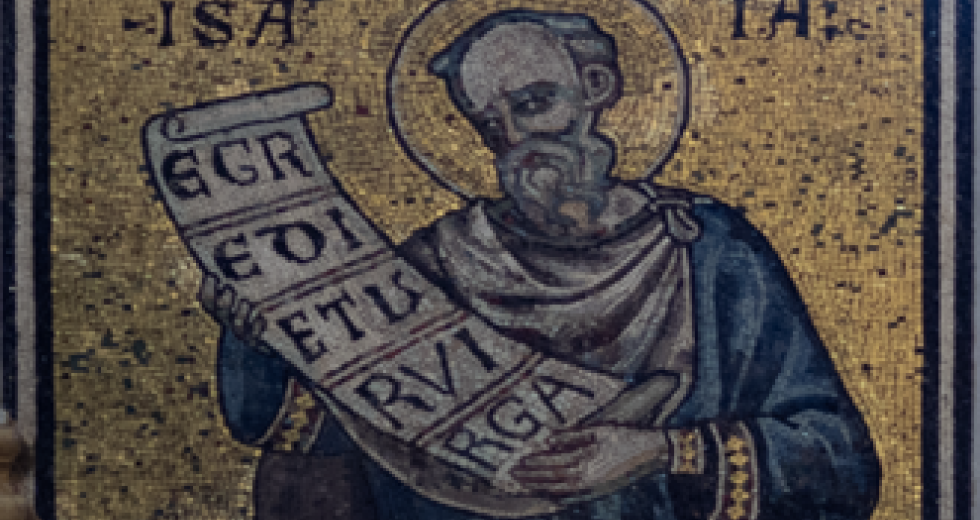
This home truth ought not to dishearten us. We know — or should know — that we are a remnant in the nightmare. The best description of the Remnant in the social and political sense was penned by Albert Jay Nock 90 years ago, as the storm clouds of the Second World War were lowering, in the essay entitled ‘Isaiah’s Job’.
The point of Nock taking Isaiah as his theme was that that eloquent and erudite prophet was heartbroken by the failure of the upstanding members of his society failing to grasp that it was their own rulers, and their very own passivity in the teeth of wicked rule, that had brought an end to the power and prosperity that their nation had enjoyed for long decades until a sudden decline. Isaiah’s job, in the sense of the essay’s title, was to address the Remnant, not society at large. Error in this would be fatal to his credibility and his message.
I quote:
If, say, you are a preacher, you wish to attract as large a congregation as you can, which means an appeal to the masses; and this, in turn, means adapting the terms of your message to the order of intellect and character that the masses exhibit. If you are an educator, say with a college on your hands, you wish to get as many students as possible, and you whittle down your requirements accordingly. If a writer, you aim at getting many readers; if a publisher, many purchasers; if a philosopher, many disciples; if a reformer, many converts; if a musician, many auditors; and so on. But as we see on all sides, in the realization of these several desires, the prophetic message is so heavily adulterated with trivialities, in every instance, that its effect on the masses is merely to harden them in their sins. Meanwhile, the Remnant, aware of this adulteration and of the desires that prompt it, turn their backs on the prophet and will have nothing to do with him or his message.
Isaiah, on the other hand, worked under no such disabilities. He preached to the masses only in the sense that he preached publicly. Anyone who liked might listen; anyone who liked might pass by. He knew that the Remnant would listen; and knowing also that nothing was to be expected of the masses under any circumstances, he made no specific appeal to them, did not accommodate his message to their measure in any way, and did not care two straws whether they heeded it or not. As a modern publisher might put it, he was not worrying about circulation or about advertising. Hence, with all such obsessions quite out of the way, he was in a position to do his level best, without fear or favour, and answerable only to his august Boss.
Nock goes on to point out that consoling and equipping the Remnant is a thankless, uncertain and poorly remunerated task, before injecting his note of cheer:
In any given society the Remnant are always so largely an unknown quantity. You do not know, and will never know, more than two things about them. You can be sure of those — dead sure, as our phrase is — but you will never be able to make even a respectable guess at anything else. You do not know, and will never know, who the Remnant are, nor what they are doing or will do.
Two things you do know, and no more: First, that they exist; second, that they will find you. Except for these two certainties, working for the Remnant means working in impenetrable darkness; and this, I should say, is just the condition calculated most effectively to pique the interest of any prophet who is properly gifted with the imagination, insight and intellectual curiosity necessary to a successful pursuit of his trade.
It is obvious to any UK Column member or supporter who has stayed the course that these words of Nock’s are borne out by our experience. We have been turned on by many for a multitude of reasons; we have been derided for being skint and in turn derided for having a financial buffer; we have been too much of one thing for one and not enough of another for others.
Yet, the Remnant keep finding us, and restoring their sense of duty and their will to live well is joy enough for us to keep on.
How will the next 20 years differ for UK Column from our formative two decades?
Unlike Isaiah, I am no prophet. I can, however, read runes when they are written across the sky. The three likeliest new paradigms are those of war, loss of energy, and breakup of the United Kingdom. The chance that none of these evils befalls us in the next twenty years is so negligible that we cannot responsibly assume that outcome.
1. In the case of the threat of war, I wonder whether we should be anticipating it in the next 20 weeks rather than 20 years. The key risk here is obviously that all of us end up branded as enemy sympathisers and some of us find ourselves interned. For the younger generation, the concomitant risk is obviously conscription — of both men and women. The ultimate risk in the war scenario is occupation of our islands after defeat.
I can offer no magic bullet, pardon the pun, for any of these scenarios. The history of both world wars amply demonstrates that even at that far less decayed state of our national fabric, men who refused to be conscripted on constitutional and lawful grounds — such as that His Majesty had sent troops to war zones beyond our islands without parliamentary consent — were deliberately lumped together with pure pacifists by conscientious objection panels.
The man known to be brave and capable of self-defence who cogently said that the goings-on of Eastern Europe were not his fight because his land and home had not been jeopardised was fatuously accused of being prepared to stand idly by and let Hitler rape his sister, and this by men who wouldn’t be going off to fight anyone themselves.
The author of a pamphlet reminding Englishmen of the war-making provisions of our constitution was arraigned for sedition under Defence Regulation 18B and interned for the duration of hostilities without any recourse to statutes or Parliament. Will it be any less lawless at home in the next war?
The only constitutional insight that I do have to impart for those who may face these injustices is that our right to keep and bear arms fit for our defence is acknowledged to be our inalienable birthright by a treaty that neither Parliament nor Government have any powers to alter; the Declaration of Right 1689. Since Gerald Gardiner, as Lord High Chancellor in the 1960s, ordered chief constables (who are political magistrates, not policemen) not to grant gun licences to anyone who applied on the grounds of self-defence, the Government has been in breach of our birthright and has taken pains not to let the matter go to court in either England and Wales or Scotland.
One of my earliest formative experiences with UK Column was a conversation with a Galloway farmer in 2014 who was doing his darnedest to get the matter to the Court of Session for a ruling on the right to keep and bear arms. Matters are still more lawful in this regard in Northern Ireland, where gun licences can be obtained.
But our Constitution knows nothing of an obligation to seek a licence from a government or police in order to defend ourselves against the abuses of the same government and police. If armed men come round mob-handed, Ukraine-style, to take your granddaughter off to the Russian front, let conscience be your guide as to what is lawful. Many bees will not make it back to the hive.
Occupation by a foreign conqueror is a fate that Great Britain has not known for 960 years; a national legacy unique in the world. We cannot confidently say that our islands will not be occupied in the next 20 or 40 years to take us to the millennium of the Norman Conquest. Should the Russian Federation decapitate our strategic forces and government, it lacks the troops to hold continental Western Europe, let alone these islands, but Asian powers allied with Russia could very feasibly send the millions of troops required.
The other war risk is that of civil war, together with Balkanisation, in which no-go zones for the autochthonous population (of the kind described by Raja Miah) become sovereign fiefdoms, and our own neighbourhoods are ruled by warlords, glorified gangsters, of our own kith and kin. In the seventeenth century, our civil wars were far shorter and less horrendous than the civil wars waged by our Continental neighbours (seeing our German friends in the audience, I think particularly of their Thirty Years’ War) because we proved to have far more regard for Magna Carta and far less propensity than they to torture and burn each other over political differences. I can give no such prediction for any British civil war in the coming generation, and I expect you feel intuitively that all bets are off if fighting breaks out in our own towns because we live in an ignorant and amoral age that glorifies and rewards mindless cruelty from top to bottom.
Much as it would be irresponsible of me to claim that history and common sense offer us grounds to expect an easy ride in the event of war, I can offer the insight from UK Column findings that our rulers are fools and above all cowards. They are likely to flee if they sense that they have lost the war they instigated, leaving the field to us to seize back the Great Seal of State, as indeed we literally did when James VII/II abandoned the realm during the Glorious Revolution. Those of us who survive to such a moment will have standing to assume responsibilities in the reconstruction of our society on lawful, British, and constitutional lines.
2. Loss of energy is the second risk I identified, and I mean it in the widest sense. In the narrow sense, our homes could be rendered cold and dark, our vehicles prohibited from travelling far by means both financial and technological, our health wrecked with environmental and adapted microbial pathogens, and our industrial capacity reduced from a shell to a primitive husk. More broadly, loss of energy can take the form of ever-encroaching nihilism and fatal passivity, in which the next generation resigns itself to subsistence and stasis, as if these were self-evidently how the British people live.
Surviving and thriving through this loss of energy is something that UK Column has devoted a great deal of effort to addressing, just as we have with the war risks. The key insight here is that we need a community of some sort around us to mitigate risks that are orders of magnitude greater than individual households. Many of us will choose, or be obliged by family circumstance and personal ethics, to stay put in a home at high risk of going dark, and there are ways to survive that situation which can be discovered by talking to the right people and making the appropriate sacrifices in other domains of life. Long-distance travel at a moment’s notice is a luxury and a privilege. It formed no part of the life of even the nobility until very recently indeed, and we have no good grounds for despair if we lose it in the same blink of an eye as we gained it.
3. The final leg of our tripod of doom is the breakup of the United Kingdom. All of a sudden, the line-up of those wanting it is vigorous, stretching seemingly from the White House via Belfast and Edinburgh to Brussels, never mind Moscow or Peking. The consequences of any loss of the Union will be wider-ranging than many of us have bargained for. The home nations other than England may end up as republics that, unlike the Irish Republic a century ago, do not carry across Magna Carta and the Bill of Rights onto their new blank statute book, since they will have been born in the age of woke.
The UN Security Council may take this pretext to be reformed and the former UK permanent seat could be awarded directly to NATO or the European Union. The pound sterling, and whatever replaces it in Scotland and Wales if not the euro, will be junk money. Our inland and offshore mineral resources, our fishing and farming, which under UK governments we have been shutting down, may well suddenly be opened up to colonialist foreign concessions.
The effect of all of this is a greatly enhanced exposure to the aforementioned two risks of war and poverty. To borrow the enemy’s language, we seem to be facing a polycrisis, each of whose elements reinforces and exacerbates the others. The only way for a remnant to remain in such a scenario will be to know what it believes, be prepared to die for it, and be able to spread persuasively the convictions by which it lives.
Our task in this scenario will be to educate such as will listen — and more will listen on an empty belly than a full one — on what our British heritage is, how distinct it is from government at Westminster, and how universal and easily replicable it is once our constitutional values have been digested by a critical mass of earnest people at local level. A parish with a council and sworn constables is a sufficient scale to revive our pristine constitution after a cataclysm. One village. This relies on literacy, my great passion, and so I am delighted that after me, you’ll be hearing from UK Column’s information specialist, Diane.
Cutting across all three of these major threats to us is the new reality of the State of Emergency, more accurately described by the Italian political philosopher Giorgio Agamben as the State of Exception — because when our rulers declare medical martial law, or wartime censorship and internment of dissidents, or climate emergency, or the need to share power with terrorists and child rapists, they are declaring an exception from the Constitution and from universal common sense and common decency. Agamben summarises his position thus:
What is manifest is the growing tendency to use the state of exception as a normal governing paradigm. The executive decree (decreto legge), approved by the government “for reasons of hygiene and public safety,” produces a real militarization of those municipalities and areas in which there is at least one person who tests positive and for whom the source of the infection is unknown, or in which there is at least one case that is not connected to a person who recently travelled from an area affected by the contagion.
The other factor, no less disquieting, is the state of fear, which in recent years has diffused into individual consciousnesses and which translates into a real need for states of collective panic, for which the epidemic once again offers the ideal pretext.
Therefore, in a perverse vicious circle, the limitation of freedom imposed by governments is accepted in the name of a desire for safety, which has been created by the same governments who now intervene to satisfy it.
Now, the impalatable truth that Agamben is hinting at in his second conclusion is that the people allowed themselves to be terrorised into obedience to a wicked government; nay, they begged to be locked down harder. Summarising G.K. Chesterton, and just a year after Albert Jay Nock described Isaiah’s Job, Émile Cammaerts wrote the now-famous line, “When people stop believing in God, they don’t believe in nothing; they believe in anything.”
Once fear of eternal moral judgement and a sense of shame in the presence of our august forebears is displaced at the top of our hierarchy of motives, survival and comfort in the here and now inevitably take that apex position so that we allow ourselves to be bullied literally to death by pathetic tyrants for a mess of pottage.
The bitterest pill for us to swallow in preparation for survival, then, is that we have inexorably reached the depths of civilisational decay. Bushell’s Case of 1670 used to be common knowledge among us: that when a judge ordered William Penn’s jury to condemn him for having exercised his indefeasible freedoms of speech and assembly on the streets of London, the jurors said no.
Before the gag went over Penn’s mouth, he cried out to the jurymen, “You are Englishmen! Mind your privilege; give not away your right!”, to which the foreman of the jury, Edward Bushell, called back, “Nor shall we ever do”, before being locked in a room with no toilet in a vain attempt to torture the state-approved verdict of Guilty out of him. Clive Ponting was able to draw on this to obtain jury nullification forty years ago, and Katharine Gün had her judicial outcome just 20 years ago for effectively the same reason.
What about now, when a King’s Counsel, Mr Menon, is being threatened by the legal establishment for reminding the jury that they very much can find a law to be a bad law after agreeing with the prosecution on the facts of the case and the technical guilt of the accused?
What about 2046? Can we avoid the conclusion that the jurymen would call back, “You wot?”, before voting Guilty and returning to their inane entertainment? “My people perish for lack of knowledge,” bemoaned Isaiah’s contemporary, the prophet Hosea.
What sense will UK Column’s campaigning against child abuse make in a society that has abandoned monogamy and lifelong parenting in favour of polycules and late Roman Empire orgies? How can the righteous remnant arouse indignation to stanch the flow of the abusers’ key income stream, drugs, when so many upper middle-class professionals are snorting and cavorting?
Many of us understandably take aim at the phrase ‘a Judeo-Christian worldview’ and trace the popularisation of it to political Zionism just half a century ago, but that knowledge does not do away with the awkward reality for the Remnant in our day that it is the Old Testament that has inculcated our entire society’s morality.
When no-one reads the tale of Joseph in Genesis, it is forgotten that this is the earliest literary account of righteous forgiveness in world history. When none learn the Ten Commandments, we stoop to sneering at “Thou shalt not kill”. When we do not learn the maxims “Thou shalt not go up and down as a talebearer among thy people” and “Thou shalt not follow a multitude to do evil”, we gossip and back-stab and, if rumbled, protest that it’s just what everyone else is doing — even in the truth movement.
When we cease listening to the prophets, we lose our knowledge of how to dissent, or even our conviction that we should be dissenting.
The Prophet Daniel discerns who it is who will survive the worst that the next generation can throw at us:
“But the people that do know their God shall be strong, and do exploits”.
Cover image: Mosaic of the prophet Isaiah in the Florence Baptistery. Source: SuzzaneMcg, CC BY 4.0, via Wikimedia Commons