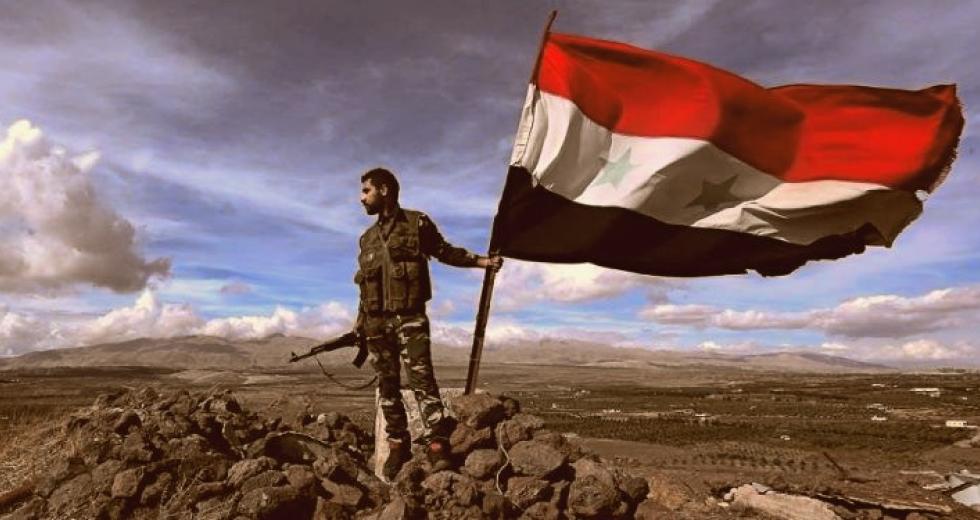
The claim to a national culture in the past does not only rehabilitate that nation and serve as a justification for the hope of a future national culture. In the sphere of psycho-affective equilibrium it is responsible for an important change in the native. Perhaps we haven't sufficiently demonstrated that colonialism is not satisfied merely with holding a people in its grip and emptying the native's brain of all form and content. By a kind of perverted logic, it turns to the past of the oppressed people, and distorts, disfigures, and destroys it. This work of devaluing pre-colonial history takes on a dialectical significance today.
— Frantz Fanon, The Wretched of the Earth
In Syria, since the fall of Damascus, the perverted logic of the colonialist powers and their proxy Al Qaeda-origin unelected regime has been distorting, disfiguring, and destroying Syria’s anti-Imperialist history, stone by ancient stone.
In the last few days, the HTS-affiliated (rebranded Al Qaeda/Nusra Front in Syria) thugs have been running a poster campaign in Latakia. This is an area on the Syrian coast which endured some of the most brutal massacres and ethnic cleansing pogroms conducted by Abu Mohammed Al Jolani (rebranded as Ahmed Al Sharaa by MI6 and CIA agencies) and his sectarian militia. There are still almost daily shootings, kidnappings, arbitrary detention, and abuse of Alawite citizens, justified by the ‘regime remnant’ accusation which rarely applies.
The poster campaign calls for the boycotting of music described as the ‘Devil’s Flute’. The newly created group has called itself Ahl Al Tawhid — People of Monotheism — which automatically qualifies them as sectarian fanatics. The posters include Quranic verses that allegedly forbid musical instruments. This is not Syria. When I was working and living in Syria, music was a uniting force for all communities across the country. Many an evening was spent in the company of military or civilian hosts during which local people would bring their instruments and provide ad hoc entertainment. Everyone sang traditional songs and stories set to the music of their ancestors, their land, and their struggle.
The Diminished Role of Women in ‘New Syria’
Under both Assad presidencies, Syria was a secular-unified nation. Women held positions of influence across all sectors — healthcare, government, education, military, and civil society. Under the Jolani regime, women are gradually losing their place in society. Their role is gradually disappearing.
The Ministry of Higher Education and Scientific Research announced on September 30 that admission to programs in law, economics and management, and social sciences at the National University of Defense Sciences will exclude women. At the Syrian University for Security Sciences, women can only apply to cybersecurity programs. Elsewhere, programs on kindergarten teaching at public universities, some midwifery programs, and the nursing schools in Damascus and Aleppo are reserved for women.
A Syrian friend reminded me:
Aisha al-Dibs, the lady who was appointed head of the Women's Affairs Office by the new regime right after fall of Damascus, said back in December 2024 that women were not fit for certain professions, and thus wouldn't be allowed to serve in the army, for example. I guess they kept some promises.
“Syria’s authorities are rebuilding the army without women”, said Hiba Zayadin, senior Syria advisor at Human Rights Watch. “Women can’t train as officers, and they can’t even study to be the army’s lawyers or administrators. This is discrimination, plain and simple.” The irony is, of course, that HRW was instrumental in peddling the ‘humanitarian’ anti-Assad propaganda that would eventually contribute to the fall of Syria into the hands of these backward-thinking Takfiri conservatives.
In October 2025, it became clear that Syrian religious minorities and women would be underrepresented in Syria's new parliament, following an election that was tightly controlled by Jolani and in which the Syrian public was not allowed to vote.
Preliminary results of the election showed that of the 119 new lawmakers, only six are women, while just 10 come from Syria's Turkmen, Kurdish, Alawite, and Christian populations, Reuters reported.
Among these male MPs, one said recently that:
He is not against women, but rather against the feminisation of education, arguing that the presence of female teachers has a negative impact on students’ personalities and makes them weak-willed. He believes that education has lost its authority and prestige because of the large number of female teachers. He therefore suggests that retired male teachers could perhaps be brought back to make use of their experience and help instil a stronger character in students, unlike female teachers.
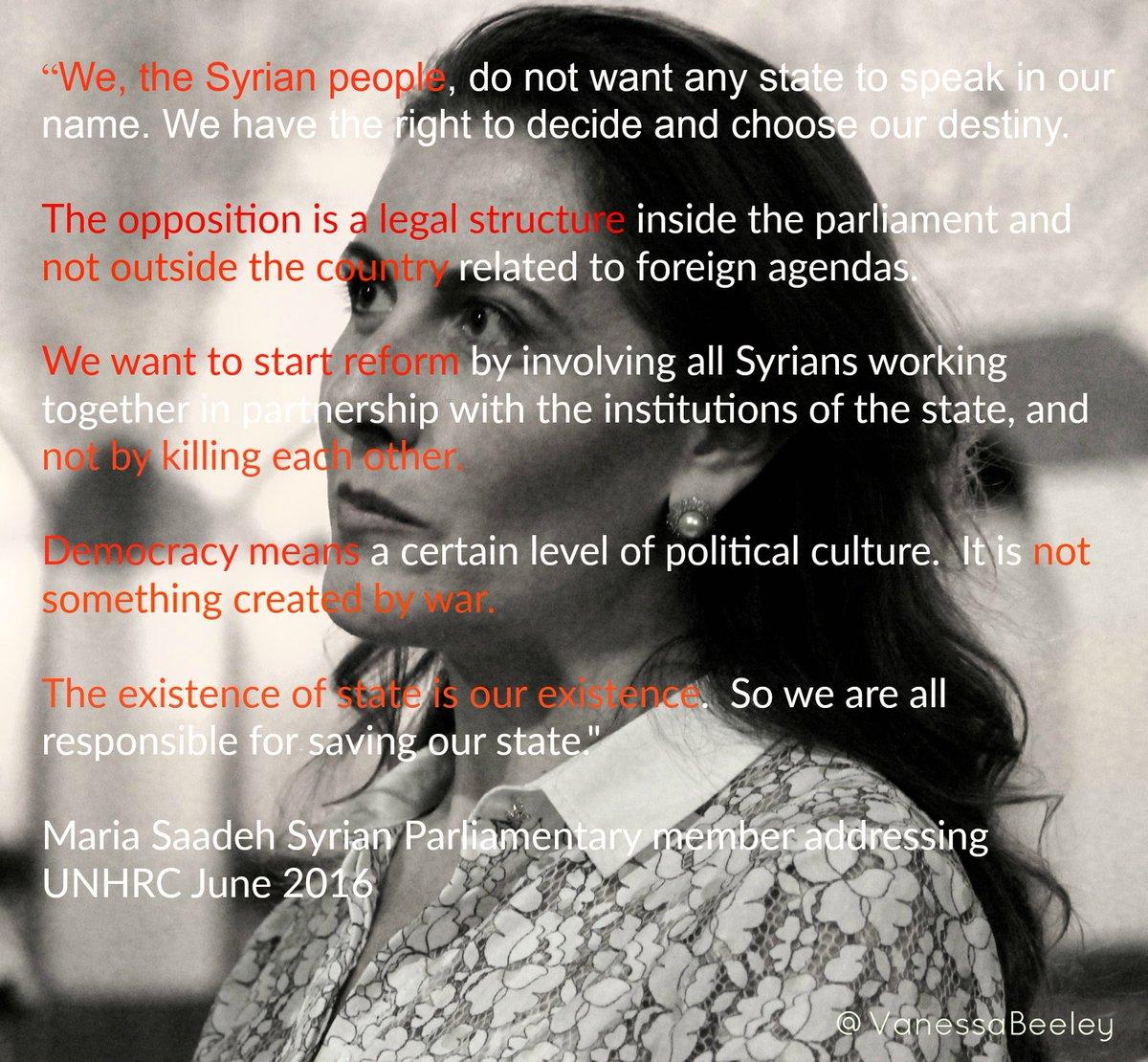
In 2021, I posted a quote from Christian female MP Maria Saadeh (above). I said back then:
It is worth noting that Maria, a Syrian Christian, female MP would not exist in the ‘democratic’ extremist-controlled areas of Idlib where men & women are forbidden interaction at University, women must be hidden from view and are stoned to death for any transgression of Sharia law.
A friend in Aleppo told me that on 15 September 2026:
A woman attempted suicide in the Al-Ismailiya neighbourhood of Aleppo, near the Zaki Pasha Mosque. She was overwhelmed by poverty, dire social conditions, and life pressures. Nobody knows if she survived. The Syrian Observatory has documented a rise in suicide cases in Syria, with the total reaching 63 since the beginning of 2026.
The Removal of Monuments, Cancellation of History, and Conversion of Historic Sites into Elite Hotels
I have covered, in depth, the crony capitalist deals that Jolani is brokering with his sponsors in Syria. These luxury complexes and projects do nothing to prevent the crushing poverty that the huge majority of the Syrian population continues to endure. Despite the US and EU lifting economic sanctions, releasing Jolani and members of his regime from their terrorist designation, the regime is unable to improve living conditions except for the corrupt, the powerful, and the necessary allies, many of whom are foreign Takfiri elements who have been given land and property stolen from displaced or murdered Syrian citizens. Recent 24-hour fuel and diesel queues in Damascus and Aleppo demonstrate very clearly that Jolani is failing to manage Syria, just as he failed in Idlib.
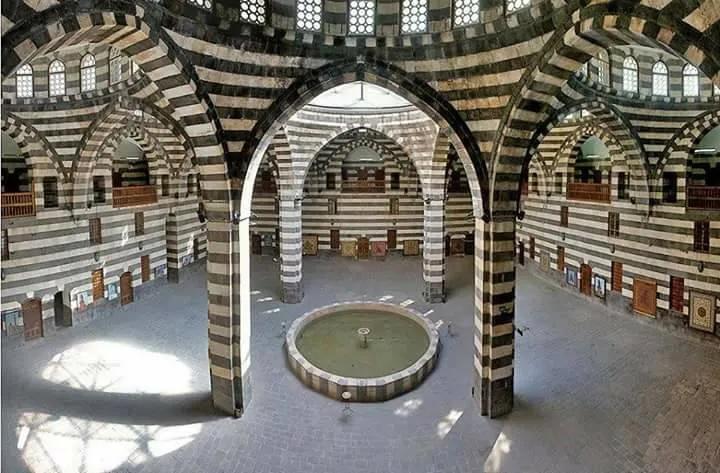
Khan As’ad Pasha Al-Azm is a towering and stunning caravanserai in the Old City of Damascus, covering an area of 2,500 square metres. It was built between 1751–1752 by the Ottoman governor of Damascus and is revered as one of the finest examples of late Ottoman architecture in the region. It has been described as an “architectural masterpiece defying time”.
You pass through the massive ornate and iron-clad wooden doors into a vast inner courtyard where light descends from the central, latticed dome. In the centre is a marble fountain surrounded by circular balconies spanning two floors. The roof is made up of nine vast stone domes supported by granite beams. There is no need for descending central pillars, and it is this design that gives the Khan its sense of light and space. Sunlight filters through openings in the roof, creating a dance of light and shadow below. Historically, the Khan was a bustling trade hub. Caravans would arrive from Baghdad, Mosul, and Aleppo. Valuable goods were stored on the ground floor. Horses or pack animals were also stabled around the fountain. The upper floors housed rooms and offices for the merchants, where deals were haggled for the luxurious silks, fabrics, and spices.
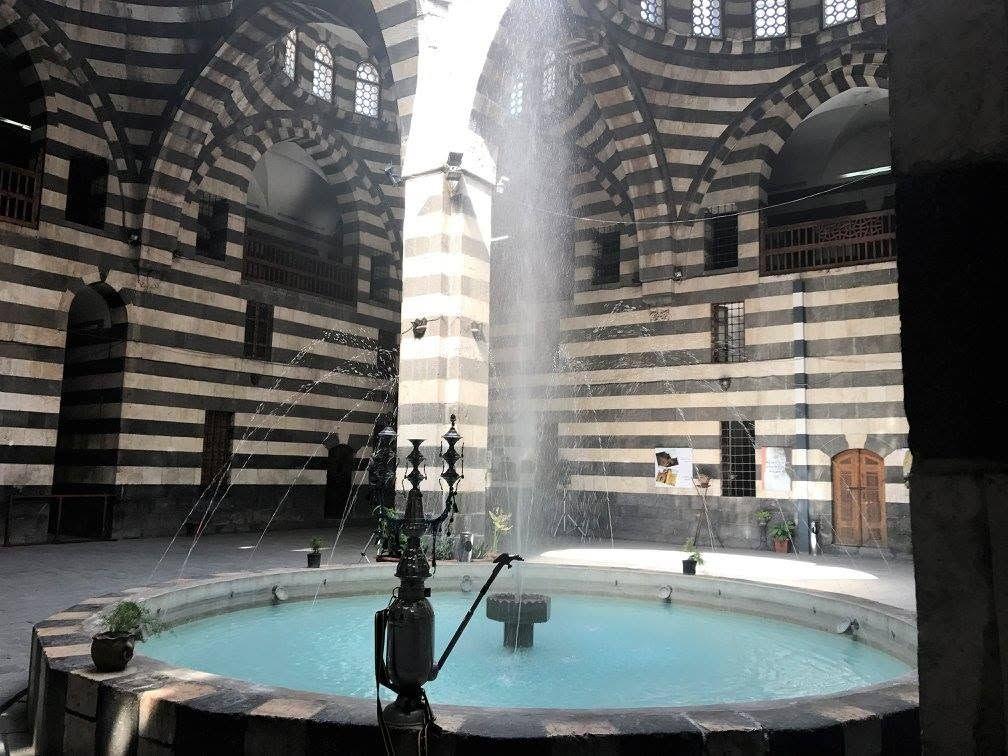
The Old Damascus Municipality ‘Anbar Office’ sealed the entrance to Khan As'ad Pasha al-Azm with red wax in October 2026. The ‘New Syria’ Ministry of Culture has offered it for investment as a luxury hotel. See the photo below sent by a merchant in the area.
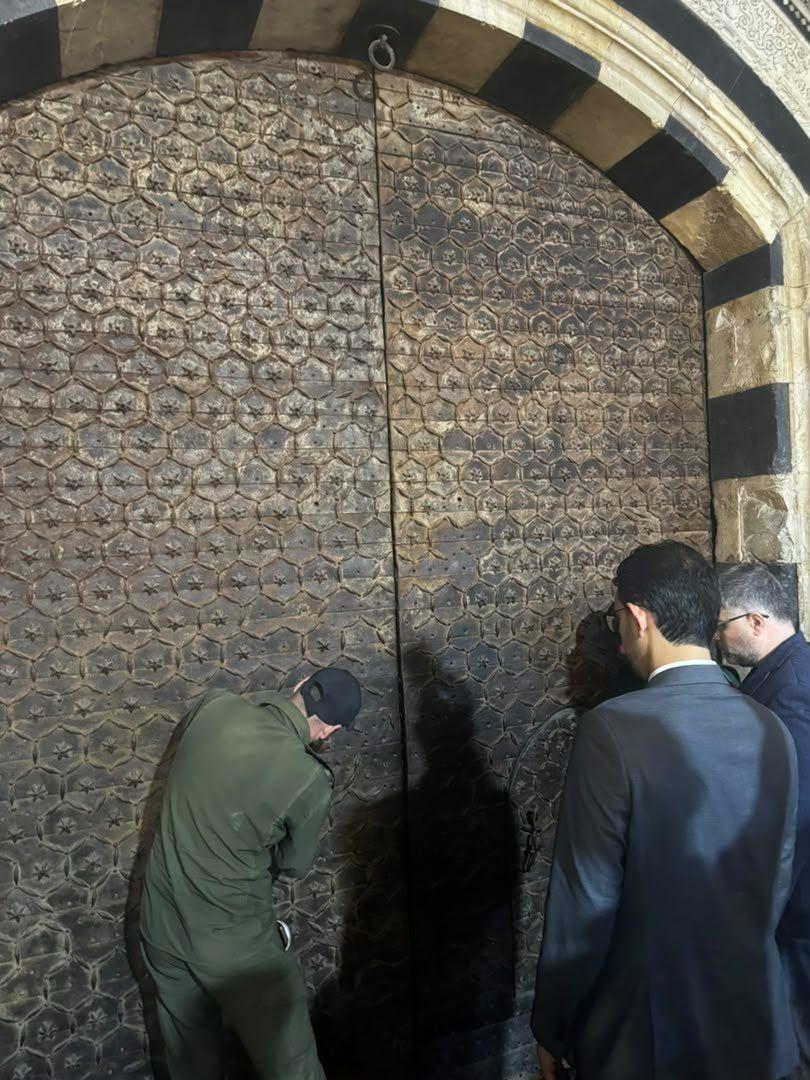
The building is ‘owned’ by the Ministry of Culture, but it also falls under the protection of the Old Damascus Municipality and is UNESCO-listed. The sealing of its doors with red wax could only happen under the Al Qaeda regime. These historic buildings were preserved and protected since Syria achieved independence in 1946 until the West-Israel-Gulf States-Turkey brought Jolani to power and the colonialist eradication of history was set in motion.
A source from among the merchants in the area told me:
Any modification violating archaeological standards could jeopardise the building’s historic status and could lead to its removal from the UNESCO catalogue. The Old Damascus Anbar office has tried to intervene and protect the site, but an investor has been lined up to appropriate the Khan by the end of 2026 and to commence work on the conversion to a five-star hotel. At that point, we will lose this magnificent heritage and history. It will be forgotten. Our own memories of it will fade and be replaced by an environment open only to the rich and powerful.
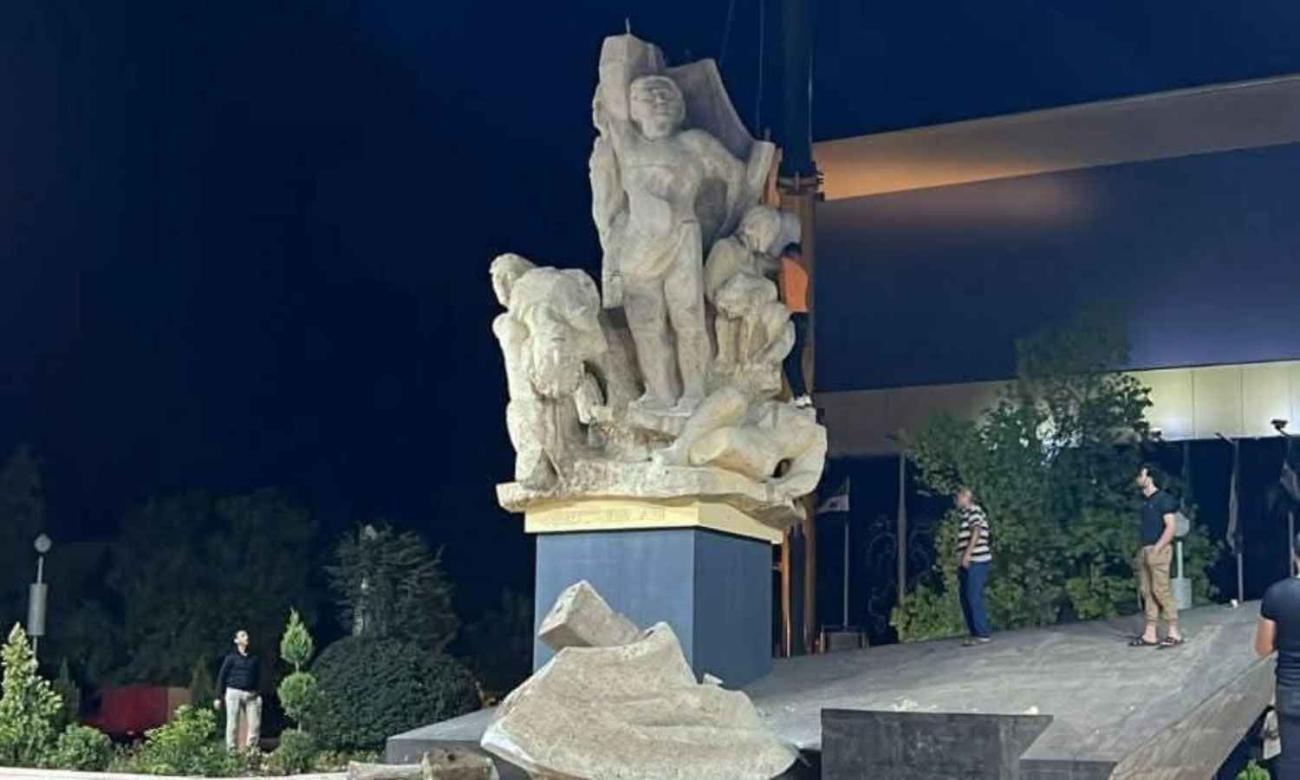
The Martyrs' Monument in Aleppo was created in 1984 by artist Abdul Rahman Moqat to represent martyrs of the resistance battles against French occupation before Syrian independence. The statue symbolised the resistance struggle of historical figures like Ibrahim Hananu and Sultan Pasha Al Atrash. It was created to revive the deeply held Syrian belief in popular struggle.
The narrative circulated by the Jolani gangs is that the statue commemorated Syrian Arab Army martyrs during clashes with the Muslim Brotherhood factions, backed by Western Intelligence agencies to violently overthrow President Hafez Al Assad. This manufactured controversy led to the removal of the statue and its demolition, at night, prior to the removal.
According to some reports, the dismantling was part of a rehabilitation project for Saadallah Al-Jabiri Square carried out by the Syrian-Turkish company ‘STH’, aiming to modernize infrastructure, expand sidewalks, develop the central fountain, and create an events platform of about 200 square meters, according to Enab Baladi.
Reading between the lines, the intention was to erase any perceived connection to the past of Syria’s noble struggle against Western and Zionist interference and militarised destabilisation campaigns.
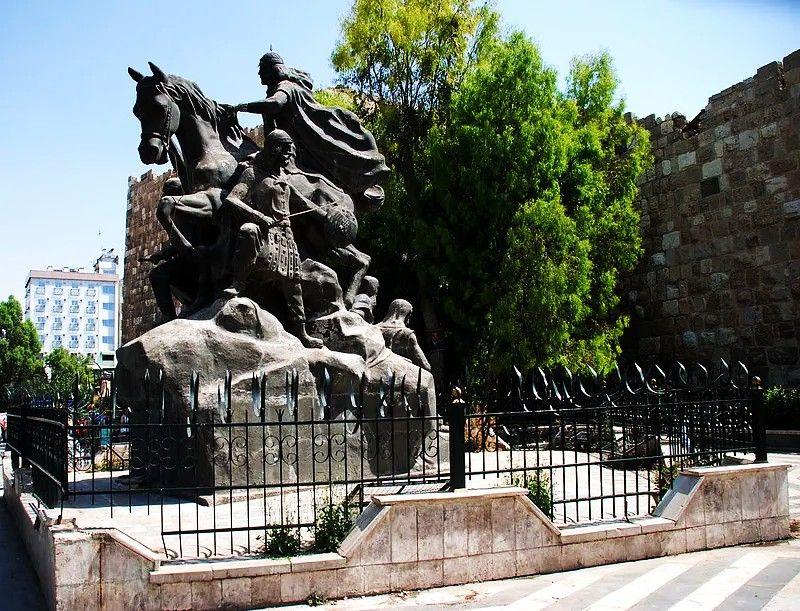
In Damascus, this statue was ordered and erected to commemorate the 800th anniversary of Saladin’s death (1138-1193). Saladin’s mausoleum is in the nearby Umayyad Mosque.
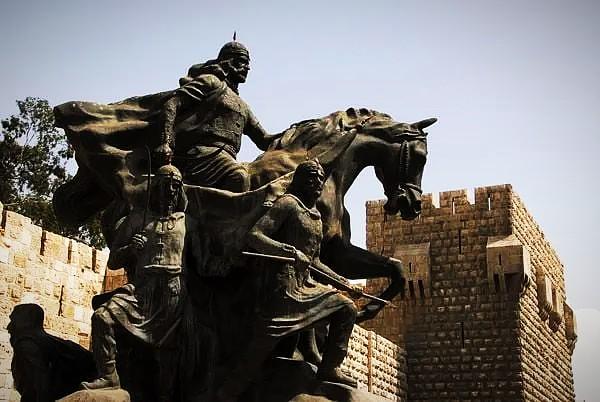
The statue of Saladin is escorted by several foot soldiers and a Sufi. Behind the statue, two crusaders are kneeling. They are Guy of Lusignan (Lord of Jerusalem, spared by Saladin) and Raynald of Châtillon (Lord of Kerak, killed by Saladin).
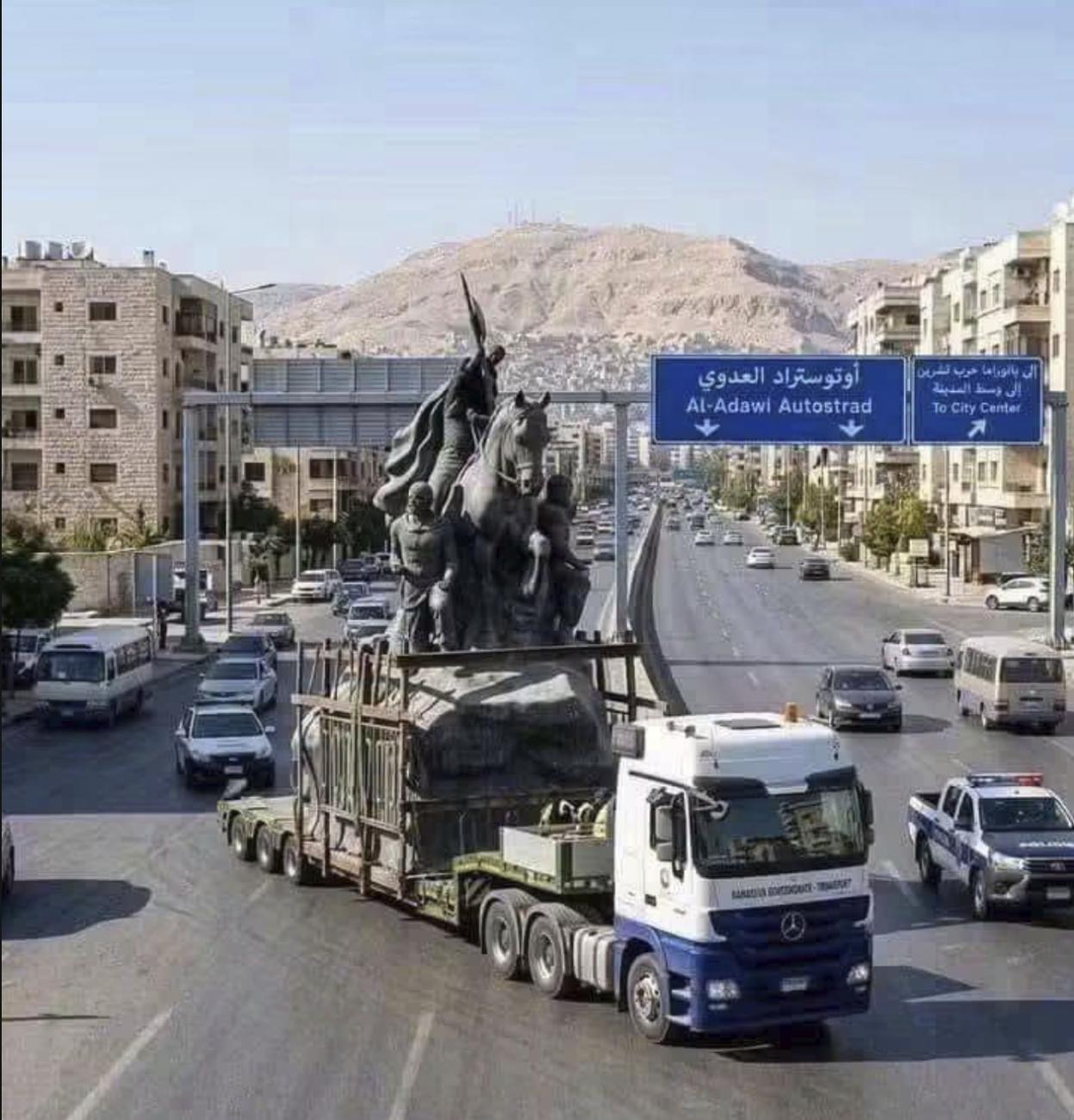
On Saturday, 10 October 2026, the statue of Saladin was removed from its historic position in front of the Citadel of Damascus and relocated in the less prominent October War Panorama Square.
Arab Christian analyst Myriam Charabaty, an author at UK Column, wrote the following:
A lot of a nation’s legacy survives through the visualisation of that legacy across the country. That visualisation takes shape through monuments, historical sites, forts, architectural styles, and the places that have come to represent particular periods of a nation’s history. In the case of Syria, what we are witnessing is the abduction of monuments and their drastic removal as part of a systematic and deliberate decision aimed at the liquidation of the Arab identity and not just the Syrian identity.
Take the Saladin statue in Damascus and the Martyrs' Monument in Aleppo's Saadallah al-Jabiri Square. These are not simply monuments occupying public spaces. They are part of the lives of hundreds of thousands of people who, over multiple generations, have passed by them, gathered around them, and formed memories in their presence. They have also kept alive the stories of the individuals, struggles, and battles they commemorate. Some of these stories are grounded in historical accounts, others have been shaped by myths, controversies, and conflicting interpretations of history. But it is precisely through this accumulation of memories and stories, passed down from one generation to another, that these historical figures and the causes they represented continue to occupy a place in the consciousness of a population. Their identities, their struggles, their political positions, regional alliances, and the revolutions they led remain present not only in history books, but in the everyday surroundings of a society, shaping its morals, its understanding of history, its vision, and ultimately its collective identity.
When these disappear, the impact is not instantaneous. If a statue disappears today, people won’t lose that memory tomorrow. But the generations to come will have no depth of understanding of the complexities faced by the individuals represented in those statues, the circumstances in which their positions altered history, or the contradictions that shaped their historical roles.
Ultimately, these once-revered symbols become lost not just in memory and affinity, but even in the historical narrative itself, opening the door for, in this case, the US-led bloc to rewrite history in a way that strips Damascus of its symbolism as a first line of defence against the Crusaders, and its memorial for those who paid the ultimate price to uphold the Arab identity and land in the face of colonial projects. Once stripped, the plan, I believe, is to rewrite history into subjugation through chaos, lack of identity, and ultimately ideology, making way for occupation to be upheld without difficulty.
But time will show that destroying a legacy of a thousand years will appear to succeed only until a new one emerges. However, some historic monuments and artefacts will undoubtedly be destroyed forever at the hands of mercenaries of the imperialist war.
Regional social media accounts have posted a video of Takfiri elements in Damascus saying that the statue of Yusuf Al Azma, a prominent Syrian national Resistance hero against the French occupation — who commanded the Battle of Maysalun in 1920 — will face the same fate as the other Syrian resistance symbols.
The Infiltration and Destabilisation of Syrian Society and History by All Means Available
“They realize at last that change does not mean reform, that change does not mean improvement.” — Frantz Fanon, The Wretched of the Earth
Imperialist damage to indigenous peoples in the 21st century is gathering momentum — whether Jolani’s mercenaries in Syria, the Saudi bloc in Yemen, or the Zionist genocidaires in Palestine, Lebanon, and Syria. This long-term project to destroy the history of counter-colonialist struggle and resistance is now an accelerated one. It involves systemic erasure, genocide, and psychological stripping of a national identity of the nations that are still standing against the predation of Empire.
It is a war waged against vibrant and diverse cultures that have survived historical campaigns to dehumanise and disenfranchise them. History and heritage is being fragmented, communities are being turned against one another in order to sustain the imposed power structures on behalf of the Zionist-Expansionist bloc.
Statues have been dislodged or destroyed, and not only in the physical world. Images of archaeological artefacts and statues in school textbooks have been altered to conform with the Takfiri ideology. Instead of one unified curriculum, the multiple sects that make up Syria’s societal fabric are being targeted individually. As noted by Syria Justice Archive:
Salafists in the Jolani Government Rewrite History in School Curricula, Giving a New Name to the Fatimid State, Sparking Anger Among Syria's Ismaili Community
Amendments in the circulating version of the history textbook for first-year secondary school (literary track) for the 2025–2026 academic year have sparked controversy and concern among members of the Ismaili community, particularly in the city of Salamiyah, after the term ‘Fatimids’ was replaced with "Ubaydids," and passages were added describing the origins and beliefs of the founder of the Fatimid state (the state that followed the Ismaili doctrine and was established in 909 CE) using language describing him as ‘Majus (historical term for Zoroastrians)’ which is considered a form of declaring Ismailis and their beliefs as infidels.
The Ministry of Re-Education made a series of amendments to Syrian curricula without referring them to Parliament or any other oversight committee. Images of women were removed and replaced with niqab-wearing women. They deleted topics related to democracy or citizenship. They have blatantly and significantly distorted Syrian history, removing criticism of the Ottoman occupation. National figures from Syrian history such as Egypt’s Gamal Abdel Nasser and Sultan Pasha Al Atrash, the Druze leader of the Syrian Revolution, have been deleted from reading matter. Historical figures who spoke out against occupation and tyranny have also been erased. None of this would happen without the approval of the hostile Intelligence Agencies controlling policy in Damascus.
Other prominent analysts have described the Turkification of Syria. Sameh Asker describes the abolishment of the term ‘Ottoman occupation’ and replacement with the term ‘Ottoman administration, and the period of Ottoman rule’. Asker writes:
A collective cancellation of terms related to Arab nationalism and the removal of everything linking Syria to the Arab nation [..] What’s happening is a systematic Turkification of the Syrian state—meaning the cultural annexation of the Syrian entity to the Turkish state in stages, which could be a prelude to political annexation, turning Syria into part of Turkey in the future.
The commemoration of the 1973 October War against ‘Israel’ and the martyrs that were honoured every year on 6 October was abolished in 2025 by the Jolani regime. It was removed from the calendar by the Zionist-aligned quisling regime in Damascus that has watched passively as the Zionist militia have invaded and occupied Southern Syria, kidnapping, killing civilians, destroying agricultural land, and advancing to the outskirts of Damascus itself. The heroism of the Syrian Arab Army forces, Air Defence, and Air Force personnel that fought alone against ‘Israel’ after Egypt unexpectedly ceased fighting is being written out of Syrian history by those who have opened the roads for Zionist expansion.
Not only is the noble history of these Syrian Arab Army units being disfigured and eradicated; Jolani is also running a campaign to eliminate surviving Syrian Air Defence and Air Force personnel, pilots, missile technology experts, and scientists. The targeting of these specific officers and experts increased after the meeting between Takfiri Foreign Minister Asaad Al Shaibani and the head of Mossad, in Jordan, in August. According to the family of one of the arrested officers:
The detainees were officers who held sensitive positions in the field of scientific missile research and development, and whose names were present in the scientific facilities that Israeli forces stormed in the famous landing in Masyaf in the Hama countryside in September 2024, prior to the fall of Damascus.
Palestinian resistance factions operating from Syrian territory under the Assad Presidencies have also been under attack by the Jolani regime and militias since December 2024. Palestinians have been reclassified as foreign refugees rather than Syrian-Palestinian residents which threatens to undermine decades of social and legal recognition. Palestinian groups have been dissolved, disarmed, and restricted from conducting any political activity. Palestinian leadership has been targeted; some have been deported or detained. Groups have been forced to reform into ‘civil’ organisations. An estimated 40 per cent of the remaining 438,000 Palestinian ‘refugees’ are internally displaced, facing starvation and a lack of legal clarity over their future in Syria and the region.
This article does not cover all the ongoing eradication of Syrian identity and history. It represents only a small percentage of the Jolani-led controlled demolition of what Syria represented to the region and to the Resistance Axis.
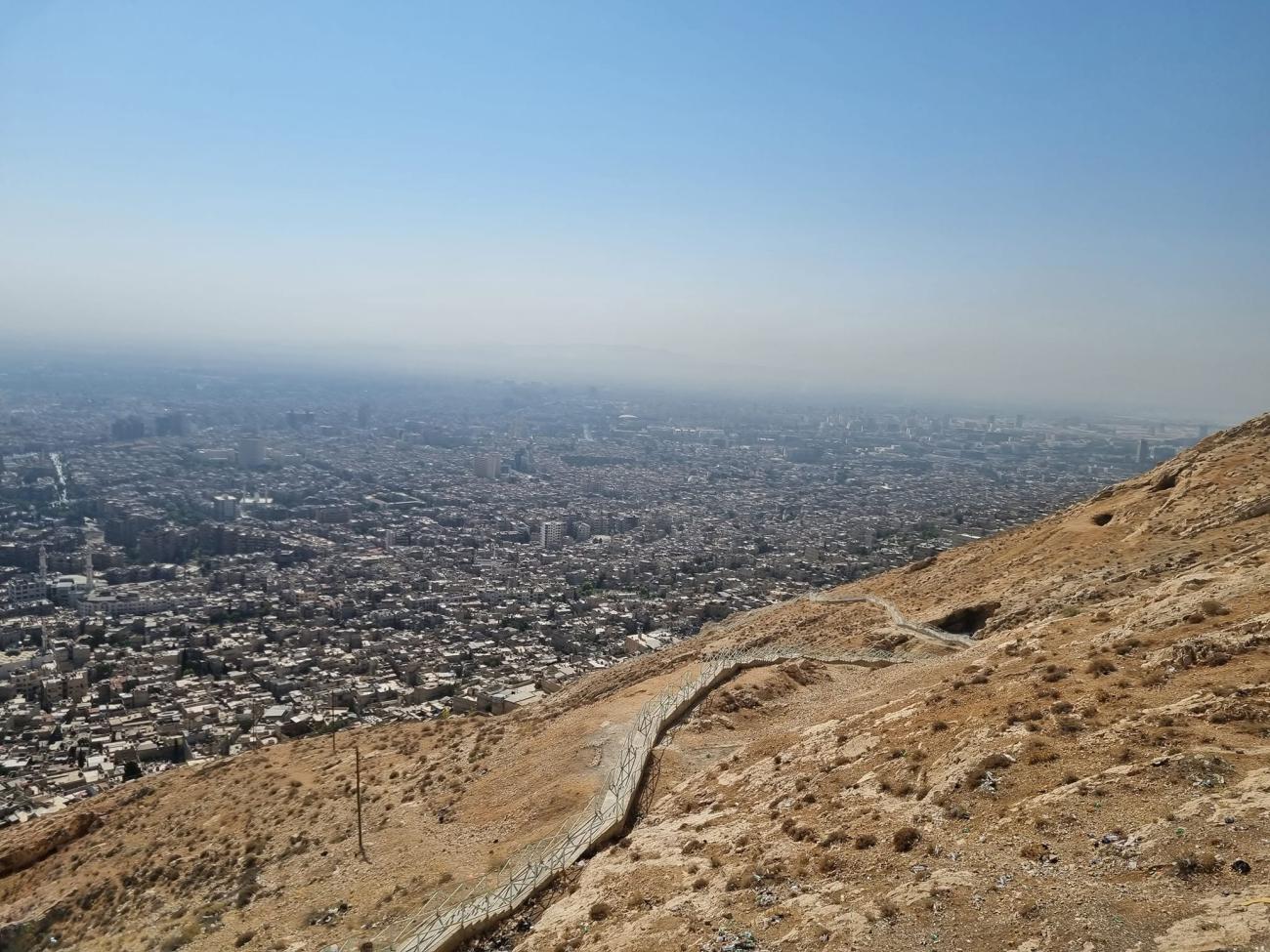
Mt. Qassioun is a dramatic mountain peak overlooking Damascus. It has been a site of profound religious importance for thousands of years. Its history spans pre-Islamic Aramean to Roman-era Christian monasteries to an Umayyad summer retreat and a Hanbali scholarship hub for the Ottomans. The mountain is a pilgrimage high point because of the Cave of Blood believed to be the place where Cain murdered his brother Abel. According to the ancient scribes, “the blood of Abel has stained the mountain red from its base to halfway up, ending only at the cave”.
In 1184, the Andalusian travel writer and poet Ibn Jubayr visited Damascus, and noted: “The blood reaches from about halfway up the mountain to the cave [where Abel was dragged up by his brother after being murdered], and God has preserved red traces of it on stones on the mountain”.
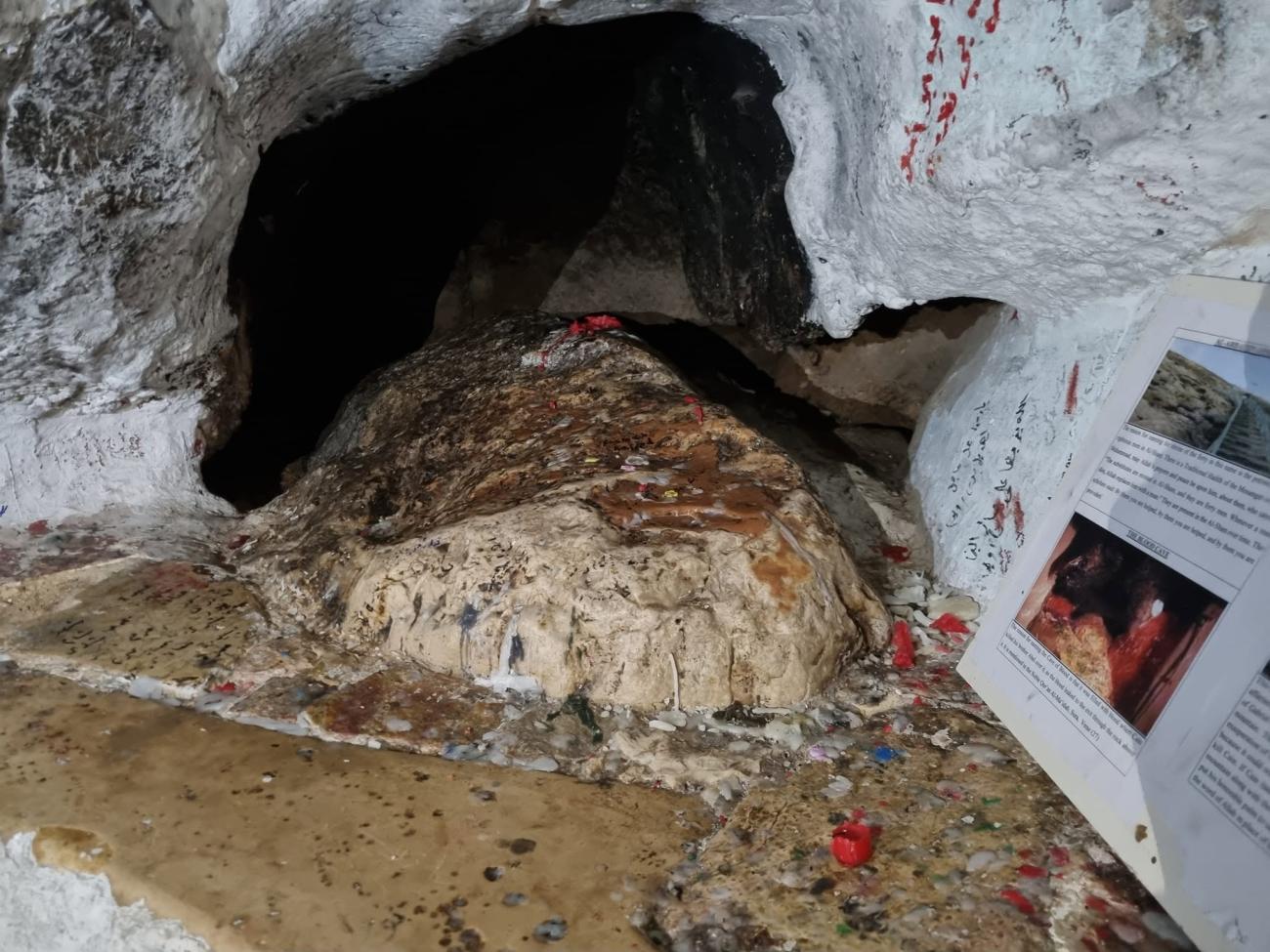
In local tradition, it is said that when the murder took place between the sons of Adam, the mountain shook in horror and began to crumble, and if it were not for the intervention of the archangel Jibreel (Gabriel), who stopped the shaking with one of his hands, the mountain would have collapsed. A marker of the event is a handprint indented on the roof of the cave, associated with Jibreel. (See image above, taken by Vanessa Beeley in 2023). Part of the simple complex is the cave where it is believed the prophets Abraham and Khidr would kneel in prayer.
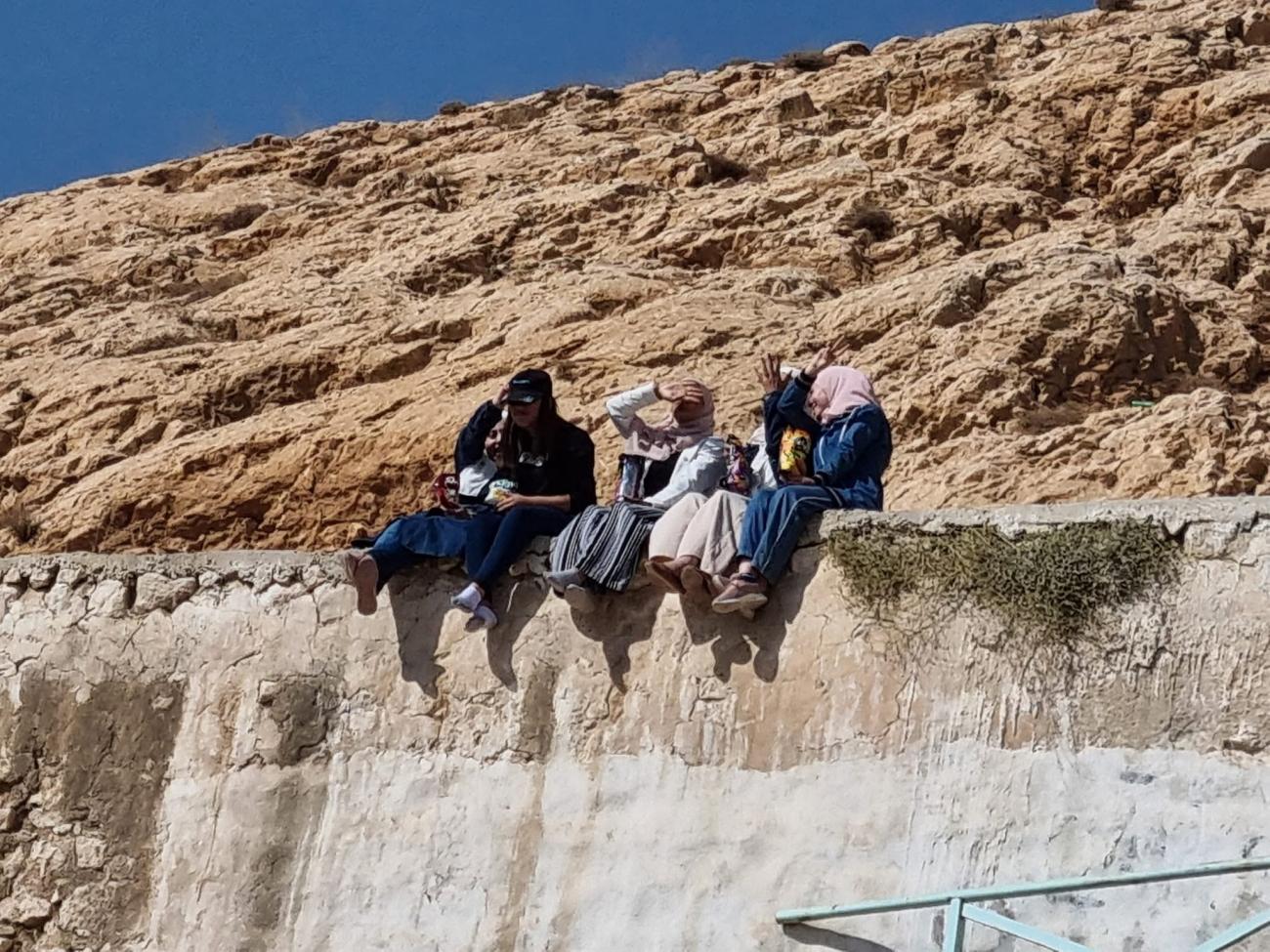
Friends in Damascus have told me that detonations into the mountainside began in 2025, in preparation for the construction of an opulent five-star hotel and tourism complex on the site of Mt. Qassoiun. A complex that will automatically exclude the majority of Syrians living below any recognised poverty parameter. One of the most iconic sites of worship and religious lore will be ring-fenced. What has traditionally been a place of peace, meditation, and respite for the beleaguered Syrian population will effectively be off limits. The Jolani regime has tried to reassure its detractors but without success.
The people come to understand that wealth is not the fruit of labour but the result of organised, protected robbery. Rich people are no longer respectable people; they are nothing more than flesh eating animals, jackals and vultures which wallow in the people's blood.
— Frantz Fanon
Christian churches are under attack, graveyards are regularly desecrated. Christians are being further cleansed from Syria after resisting 14 years of persecution at the hands of the oppressive Takfiri factions and leadership during the war waged against Syria since 2011. Syria’s historically independent banking system is being absorbed into the Western debt enslavement complex. Syrian healthcare, once the pride of the Middle East, is being gradually privatised. Friends told me that while the Jolani regime is denying this, the public hospitals are deliberately left without staff, electricity, and equipment to degrade the service — in order to push people to accept a privatised system of healthcare long-term.
The Colonialist Project in Syria Will End
Colonialism and global capitalism are designed to burn the history and culture of prey nations to the ground through forced assimilation into systems branded onto entire countries by violence and oppression. Education systems are dismantled and discarded. Language and tradition are driven underground. Connections to a historic belonging and ancestral resistance to repression are severed brutally. In such an environment, colonial narratives prevail until the past is an ember, slowly fading as future generations are born into the new reality. Trauma and fear turn people from resistance, to acceptance, and finally to the abandonment of the principles that once held society together. The loss of their land, their homes, and their identity is deliberate to ensure they lose their roots and origins in the upheaval of everything they believe in. This method of disintegrating indigenous institutions and ecosystems forces people into ever shrinking sectarian rivalries and finally, hatred, that is intended to persist for eternity.
However, history also teaches us that indigenous cultures show extraordinary resilience when faced with such barbaric ravages. There is always a struggle, albeit a reduced one for some time, to reclaim their heritage and to ensure their civilisation survives the complex damage caused by colonisation and occupation. Syria is no exception. Now it is in the throes of perhaps the most debilitating stage of the colonial project, but resistance does not die completely, ever. It goes underground. It reorganises, it rearms, it strategises, and it waits until the opportunity arises for it to strike and to expand. The scars of the colonialist project never fade, but they become a driver for the resistance, towards a future of liberation, just as they have always done in Syria’s long and fractured past.
On 26 October, a young former Syrian Arab Army soldier was murdered in Beirut. Ali Alawi Aaqel was originally from the Ghab Plain in Hama and resided in Latakia City until October 2026. He was the son of a folk artist who had died when Ali was a child. Ali completed his military service before Damascus fell in 2024. Takfiri agents had threatened his life for months, generating fake AI images online to run an incitement campaign against him. He fled to Lebanon to escape death. His tormentors found him and shot him in his car. Ali was from a poor community but, in Syria, he was famous for his Facebook posts during his military service, defending Syria against the Western-Israeli-Turkey-Gulf State-backed terrorist invasion. Ali always advocated unity and an end to sectarian talk and ideology. Ali will always be what Syria represents: courage, inclusivity, and humanity. No amount of colonial pressure will ever fully eradicate the cradle of Resistance from the region.