
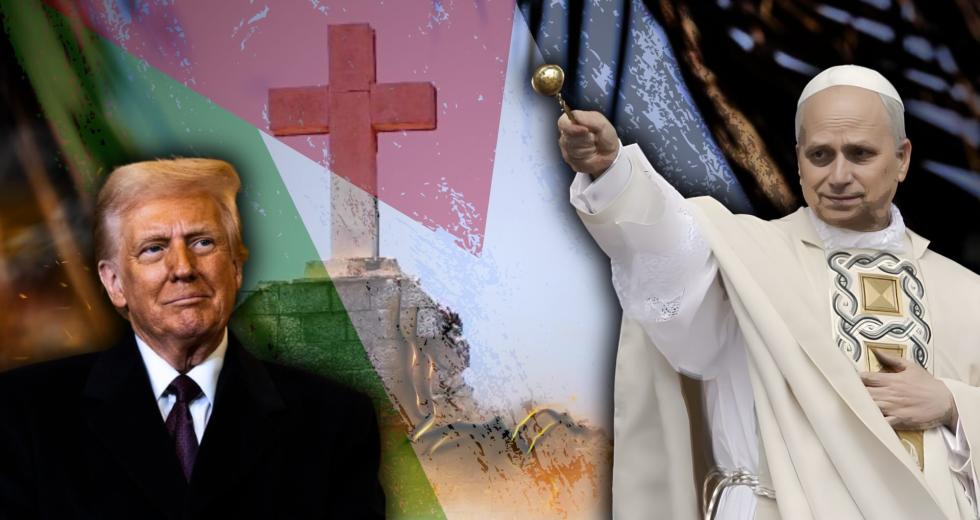
Donald Trump is vile, but he is simply a consequence. He is the profane explanation of what the United States has always been. Every policy he pursues was already in the imperial playbook: the invasions, the sanctions killing hundreds of thousands of children, the vetoes shielding genocide, the coup against elected presidents, and the assassinations amid negotiations.
He simply says the quiet part out loud and acts with enough arrogance that he does not feel the need to curate a narrative to neither to hide it nor to be perceived as consistent.
So when the Vatican opposes Trump's war on Iran, one must ask: is it opposing the man, or the empire that produced him? And does that opposition entail acknowledging people’s ultimate right to self-defence by all means possible within the scope of upholding human dignity?
Because the same Vatican that now calls Trump's war ‘unjust’ refused to recognise Iraq's right to resist the same empire when it wore the face of George W. Bush.
The question at heart here is whether the Vatican's stance is one of rebellion for Justice or, unfortunately, another foreign policy manoeuvre?
What Is a ‘Just War’?Before analysing the Vatican's position on Iran, one must define the moral lens upon which the Church founds its position, asserting the US war on Iran is ‘unjust’.
Classical Just War Theory (jus ad bellum) traditionally requires six conditions for a war to be morally legitimate:
- Just Cause: defence against aggression or protection of innocents
- Legitimate Authority: declared by a competent governing body
- Right Intention: pursuing good and avoiding evil
- Last Resort: all peaceful alternatives exhausted
- Probability of Success: reasonable chance of achieving the just aim
- Proportionality: the good achieved must outweigh the evil inflicted
The Catechism of the Catholic Church (CCC 2309) further stipulates that “the use of arms must not produce evils and disorders graver than the evil to be eliminated” (Proportionality) and that “all other means of putting an end to it must have been shown to be impractical or ineffective” (Last Resort).
If a war is unjust, and it fails under these conditions, then the question immediately follows: what right do the people under attack have to resist it? And since Just War Theory recognises that right, why does that standard never recognise resistance by the people of West Asia?
The Catholic tradition has historically affirmed the right of self-defence, including for nations and peoples. But when the aggressor is a superpower, and the victim is a country of the Global South, that affirmation has often been withheld.
This is the contradiction at the heart of the Vatican's critique of Trump's Administration, which is deeply concerning for Christians who understand that resistance has been the only power, after God Almighty, standing between them and ethnic cleansing.
This article will not discuss the US war's legitimacy because, by all standards, it is a war of aggression with clear geostrategic aims. The aim is rather to ask, with honest intention: where does the Vatican truly stand, especially after openly delegitimising the US war of aggression on Iran, vis-à-vis the right of the people to resist until liberation?
The Historical Precedent (2003)Let’s put the proposal into perspective, given that Pope Leo XIV has proclaimed, “God’s heart is torn apart by wars, violence, injustice, and lies. But our Father’s heart is not with the wicked, the arrogant, or the proud”. What remains missing is to identify those and understand their reality in a material sense. Who are the wicked, and what about the ‘humble’ people? How do they survive the violence of unjust wars?
Pope Leo XIV was not the first pontiff to speak against war. In 2003, Pope John Paul II warned that the US invasion of Iraq would be an unjust war and attempted through Vatican diplomacy to prevent it.
In a New Year address to Vatican diplomats, John Paul II declared: “War cannot be decided upon, even when it is a matter of ensuring the common good, except as the very last option and in accordance with very strict conditions”.
Yet, the Vatican's position contained a contradiction. While opposing the invasion, it did not recognise Iraq's right to resist it. Moreover, the Pope's official written text for his January 2004 ‘state of the world’ address, after the invasion, acknowledged that Iraq had been “ridded of an oppressive regime”, but he skipped over that phrase when speaking aloud. One could wonder whether this was to avoid appearing to endorse the war's outcome.
Spoken as if the people of Iraq could not have made the choice themselves, it needed to be imposed upon them with lies spewed blatantly by Powell at the UN, claiming “weapons of mass destruction”. Knowing Washington had geostrategic motives, which will be discussed later, it cannot be denied that the Vatican should have had the knowledge, or at least the concern, that US wars in the Arab world were never about the people, but about imposing puppet regimes they can control and coerce.
Later, when it came to the question of resistance operations against foreign troops, which by then officially occupied Iraq, the distinction was clear. After a truck bomb killed 19 Italian soldiers in Nassiriya, Iraq, in November 2003, Pope John Paul II wrote:
I received with deep sorrow the news of the vicious attack in Nassiriya, Iraq, in which Italian soldiers lost their lives while generously fulfilling their mission of peace … I express my firmest condemnation of this latest act of violence which, in addition to other savage acts which have taken place in that tormented country, does not aid the process of reconstruction and pacification.
The Pope, throughout the US-led NATO occupation of Iraq, did not distinguish between occupier and occupied. Instead, as America Magazine reported directly: “To those who view Iraqi attacks on US and allied soldiers as legitimate resistance to an illegal occupation, the Vatican has offered no support whatsoever”.
Yet, the Pope also affirmed that the invasion had not made the world safer, and that troops could not simply withdraw, surrendering to the state of things and trapping the people of Iraq between occupation and chaos, as if resistance and unity in battling US-backed forces were a ‘non-option’, stripping the people of their agency and right to resist, forcing them to become passive in their own destiny.
A Vatican official explained the reasoning: “If the military pulls out of Iraq now, the country would fall into chaos. The vase has been broken, and we have to try to find a way to mend it”.
In his June 2004 meeting with President Bush, the Pope stated: “In the absence of such a commitment, neither war nor terrorism will ever be overcome”.
This was presented as neutrality. But for the Iraqi people, who had watched half a million of their children get killed at the hands of the US and NATO, that the then-US ambassador to the UN, Madeleine Albright, infamously defended as “worth it”, what choice did this framework truly leave? Resistance was condemned as terrorism. Cooperation with the occupier was the only path offered. And the occupier had already calculated the worth of Iraqi blood.
The Strategic Context that the Vatican Pretended Did Not Exist (1996–2009)Long before the invasion of Iraq, strategic proposals had already outlined ambitions for regional reordering that had nothing to do with Iraqi welfare. In 1996, a policy paper titled ‘A Clean Break: A New Strategy for Securing the Realm’, prepared for the incoming Government of Benjamin Netanyahu, argued for removing Saddam Hussein in Iraq and weakening Syria as part of a broader strategy to confront forces seen as threatening Israeli and Western influence.
Richard Perle led the study group that authored the paper, which included Douglas Feith and David Wurmser. All three later held influential positions in the George W. Bush Administration: Perle as Chairman of the Defense Policy Board, Feith as Under Secretary of Defense for Policy, and Wurmser as the Middle East advisor to Vice President Dick Cheney.
Years later, the RAND Corporation's 2009 report ‘Which Path to Persia? Options for a New American Strategy Toward Iran’, explored options for confronting Iran, including approaches that relied on regional pressure (sanctions and fabricated animosities through proxyism) and the reshaping of surrounding states (coups and destabilisations).
Taken together, these documents reflected a strategic view of Iraq, Syria, and Iran as interconnected pieces of a regional balance of power, not as countries with peoples whose lives mattered.
That being said, one could, without hesitation, conclude that the war on Iraq was never about liberating Iraqis. It was about geostrategic gain against liberation movements that had challenged Western and Israeli dominance in the region. The Iraqi people were the price. But the questions in the context of this piece are: what did the Vatican truly believe, and why did it not speak the truth for what it is?
Iran's Proof of Upholding of ‘Just War’In an interview on 60 Minutes, US cardinals explaining the Pope's anti-war position reasserted the Vatican's perception of the Islamic Republic of Iran: “It's an abominable regime, and it should be removed”.
They simply argued that the war through which it is being done is wrong. This comes notably after the Iranian diaspora returned by the thousands to Iran to defend the homeland, and after more than 40 days of Iranians filling the streets in the hundreds of thousands, if not millions, asserting unity in rallying behind the Islamic Republic.
Even more, due to the change of opinion in support of the Islamic Republic in Iran, the office of the Martyred Leader Ayatollah Sayyed Ali Khamenei was forced to put out a statement asserting the following:
In the Name of God, the Most Gracious, the Most Merciful. We hereby inform the dear, honorable, proud, and valiant Iranian people of the following: Groups of citizens have contacted the Office of the Leader of the Islamic Revolution, expressing deep sorrow over having taken unjust positions, or perhaps having committed offenses against the exalted status of the Great Leader, the Martyr Imam (may Allah's mercy be upon him), under the influence of the enemy's false media outlets and disinformation networks. They express their regret for failing to seek his forgiveness, inquiring about their duty in this regard.
Based on His Eminence's repeated responses to similar cases during his blessed lifetime, in which he would often say: 'The entire Iranian people are my children, and I pray for them. I have pardoned these dear ones and absolved them of their debts, and I will always do so'.
Contrary to the narrative of a ‘terrorist regime’ seeking conflict, the Islamic Republic of Iran has been under continuous assault, diplomatic, economic, and military, for 47 years, and has chosen, repeatedly, the path of negotiation and self-defence rather than aggression.
From 2015 to 2025, Iran was under the strictest inspection regime in history via the Joint Comprehensive Plan of Action (JCPOA). According to a December 2015 report by then-IAEA Director General Yukiya Amano, the Agency issued a “final assessment on the resolution” of outstanding issues regarding Possible Military Dimensions (PMDs), closing the file. For years, the IAEA verified that Iran was complying with the deal.
However, this agreement was shattered by external aggression, aside from Trump having unilaterally withdrawn from the JCPOA. On 13 June 2025, Israeli and US forces attacked Iran. In response, Iran invoked its inherent right of self-defence under Article 51 of the UN Charter. Ambassador Reza Najafi stated before the IAEA Board of Governors: “The deliberate targeting of Iran's nuclear facilities constitutes a grave and reckless violation of international law … The Islamic Republic of Iran ... reaffirms that it will not leave such aggression unanswered”.
And most recently, on 28 February 2026, amid negotiations as well, the US and Israel launched a war of aggression against Iran, assassinating the martyred leader of the Islamic Revolution, Ayatollah Sayyed Ali Khamenei, resulting in a regional confrontation, especially since the attack symbolised an attack on all liberation movements in the region, which find in Iran’s Islamic Republic an ally after the world abandoned the people of the region decades ago. It also marked the start of a strategy to attempt to eradicate, albeit not successfully, the legacy of this Revolution, which expanded far beyond Shiism and Islam to impact the people of the region and the world.
While the Pope underscored his dismay at the attack, he never voiced his support for Iran as a sovereign nation and an elected government whose Islamic foundations have long respected the Christian presence and faith in Iran and beyond.
Iran demonstrated its commitment to religious coexistence in numerous ways, but one which holds significance today, aside from the efforts to bring closer the Qom Seminary and the Vatican, is perhaps the Iranian Christians’ mourning of the passing of Ayatollah Sayyed Ali.
This once again comes as a testament to the behaviour of a nation that has chosen, repeatedly, the path of just peace, negotiations, and self-defence rather than aggression.
The Pope in Iraq: Failure To Speak Truth and Ultimately Defending War without Intending To Do SoOn 13 April 2026, Pope Leo stated from Algeria that “The future belongs to men and women of peace. Justice will always triumph over injustice in the end, just as violence will never have the last word, despite all appearances”. He also commended Christian-Muslim ties, saying, “In a world where division and wars sow pain and death, living in unity and peace is a compelling sign”.
Very interestingly, this comes at a time when Islam is being demonised, and particularly the Islamic Republic in Iran, whose leadership has repeatedly highlighted its view of Christianity in a book titled Lady Mary and Prophet Jesus (PBUT) in the Words of Imam Khamenei unveiled in the Vatican, in which the imam wrote: “If Jesus (PBUH) were among us today, he wouldn't have hesitated even a single moment to fight the leaders of global oppression”.
But the Vatican has a history of speaking words of wisdom without recognising them in a practical sense. Let us go back to the example of Pope Francis and his visit to Iraq in 2021. Fulfilling a dream of John Paul II that had been blocked by the US under Bill Clinton, who feared it would strengthen Saddam Hussein to the extent that Baghdad was ultimately forced to cancel the Pope's trip at the time, the world watched to see if Pope Francis, more than a decade later and following the Islamic Resistance's defence of Christians in the face of US-backed ISIS, would speak the truth.
The truth was this: the Popular Mobilization Forces (PMF), the largely Shiite, though not exclusively, paramilitary umbrella group, were the ones who had liberated Iraq from ISIS. They were established in 2014 following a fatwa by Grand Ayatollah Ali al-Sistani, who called on Iraqis to take up arms against the terror group that was beheading Christians, Yazidis, and Muslims alike. They fought street by street in Mosul, Ramadi, and Fallujah. They secured the churches. Thousands of them were martyred. And once they liberated Mosul, for example, it was them who remade our crosses, raised them atop churches, and made the bells toll again. It is worth noting that even the Christian brigade, Kataib Babiliyoun, were dubbed by US-backed and NATO-led think tanks as “Iranian-backed militias”, and making up stories as one would expect them to do, proving that Iran’s position is not one of proxyism, but one of opposing US imperialism.
And when Pope Francis arrived, the PMF were tasked with protecting him, specifically in Mosul, where they would be “securing the churches”. These were the same fighters who Western media often demonised as “Iran-backed militias”, painting them as Islamic fanatic proxies without national identity, goal, or agency, but were guarding the then-successor of Saint Peter, Pope Francis.
Yet, Pope Francis did not honour their martyrs in a way that denies the imperial core’s rhetoric now one that allows the average Christian in the world to have enough questions and go look for their answers. And this was documented: “The pope's visit in Iraq highlights Iranian-backed militias' failure to successfully depict themselves as saviors of Iraqi Christians”.
The pontiff visited the Syriac Catholic Cathedral of Our Lady of Deliverance in Baghdad, where 48 Christians, including two priests and a three-year-old child, were murdered by Al-Qaeda-linked militants in 2010, and spoke of those martyrs. He said: “The memory of the 48, whose sainthood cause is underway, and of the countless other Christians killed in the decade since, should inspire us to renew our own trust in the power of the cross and its saving message of forgiveness, reconciliation and rebirth”. He called the cathedral “hallowed by the blood of our brothers and sisters” murdered in a terrorist attack that shook the world.
But when he stood in Mosul's Church Square, surrounded by the ruins of four churches destroyed by ISIS, he did not say: these churches were liberated by Muslim fighters who gave their lives for Christians they had never met. He also did not say: the United States, whose 2003 invasion created the conditions for ISIS to rise, bears responsibility for this destruction.
He said: “Fraternity is more durable than fratricide, that hope is more powerful than hatred, that peace more powerful than war”. He also said: “Hostility, extremism and violence are not born of a religious heart. They are betrayals of religion”.
These are beautiful words. But they are not courageous words, and they hide the truth that ISIS is a US-funded fabrication that is as divorced from Islam as so-called ‘Christian Zionism’ is from Christianity. And it fits the narrative that Islam is a threat to Christianity, when it was Muslims who defended Christians and not the so-called coalition which caused the chaos in the first place.
The Pope did not mention the US-led invasion of Iraq and the toppling of the Government. He did not name the US as the architect of the chaos that followed. He did not acknowledge that the very forces protecting him, the PMF, had risen precisely because the Iraqi state collapsed after Washington's ‘war of destruction’. And he certainly did not do what would have been an act of true moral leadership: accuse Washington of using proxies (ISIS, Israel, Al-Qaeda, etc.), which fundamentally undermines civil peace and results in the bloodshed of millions over decades.
In response to the silence of the Pope, Iranian officials noted that without the sacrifices of General Qassem Soleimani and Abu Mahdi al-Muhandis, assassinated by a US drone strike in 2020, the Pope's visit would have been impossible: “The Pope's safe visit to Baghdad would never have happened had it not been for the significant self-sacrifices of Abu Mahdi Muhandis, Lieutenant General Soleimani and those who were martyred in the fight against terrorism and Daesh in Iraq”.
The Pope met with Grand Ayatollah Sistani and praised him for having “raised his voice in defence of the weakest and most persecuted”. He accepted the protection of the PMF. He clearly did not demonise Islam and showed openness. But what was missing was the statement of truth against a narrative that has led to millions of martyrs and the existential crisis that Arab Christians face today. In simpler words, he did not speak the truth that the world needed to hear: that the real defender of Iraq's Christians was not the US, which invaded in 2003, or the coalition that bombed from the air, but the Iraqi fighters assisted by their ally Iran, which offered weapons and advisory roles at a time when the West abandoned Iraq to its fate, and bled and died on the ground.
Muslims who protected churches while Washington protected its strategic interests. That was a missed opportunity for justice to the martyrs. And for those who watched, those who knew who had really saved the churches, it was a disappointment and, on a geostrategic level, a green light saying the Vatican will not defend justice in the Arab world in the face of Western aggression.
If speaking theologically and pragmatically of a people's right to a life of justice and dignity, would it not be the primary step to name aggressors and defenders instead of beating around the bush?
Have we not been taught to speak truth without fear? Why did the Vatican instead choose to believe the myth of an international world order built on justice, when all the evidence pointed to the fact that it was nothing more than an imperial myth?
As Ephesians 4:24-26 states, “So then, get rid of lies. Speak the truth to each other because we are all members of the same body”.
The Inexcusable Knowledge: Why the Vatican Cannot Claim IgnoranceFor the average person watching television in New York, London, or Rome, the genocide in Gaza that began in 2023 may have been a shock. The images of children pulled from rubble, of hospitals turned into battlegrounds, and of entire families erased from civil registries may have shattered an illusion that the post-WWII international order, with its UN Charter and Geneva Conventions and Universal Declaration of Human Rights, had placed some limits on the cruelty of empires. That illusion, however, was always a privilege of distance.
For the colonised world, for the Congolese who watched Patrice Lumumba be murdered and then dissolved in acid, for the Salvadorans who buried Archbishop Oscar Romero after a US-trained soldier pulled the trigger, and for the Burkinabè who saw Thomas Sankara, who dared to feed his own people, overthrown and killed with documented foreign intelligence involvement, the system's true nature was never hidden. It was experienced as a daily reality.
But the Vatican is not the average person. The Vatican is a permanent observer at the United Nations. It receives intelligence briefings, diplomatic cables, and pleas from its own bishops stationed in every conflict zone, including in Palestine, Syria, Lebanon, and Iraq. It has seen the vetoes. It has read the cables. If the average person can be forgiven for having believed, until 2023, that the UN might eventually act, that the ‘international community’ might finally enforce its own laws, the Vatican cannot. And still, as in 2003, it did not recognise the right to resist.
The Israeli occupation’s genocide in Gaza, backed by Washington and NATO countries alongside Gulf monarchies, has merely confirmed what was always visible. After more than two years of denial, an Israeli occupation military official acknowledged in January 2026 that the IOF has killed over 70,000 Palestinians in Gaza since October 2023. The Palestinian Health Ministry in Gaza estimates at least 72,344 martyrs as of 15 April 2026, with thousands more missing and believed buried under rubble, and at least 440 confirmed dead from starvation. A study by Max Planck Institute found that “by October 6, 2025, the number of conflict-related deaths in Gaza had likely surpassed 100,000”.
Yet, the United States has vetoed at least six UN Security Council resolutions seeking to halt the war, continuing a pattern dating to 1970 of using its veto power at least 51 times to shield Israel from accountability. When the UN Security Council finally passed a ceasefire resolution in March 2024 with a US abstention, Washington immediately declared it “non-binding”, effectively telling Israel it could disregard the Council with impunity.
This is the same United Nations that could not protect Lumumba in 1961, a UN that some scholars now say was “not entirely blameless” in his assassination, has proven equally unable to protect Palestinians.
The same pattern of Western powers shielding their allies from accountability has continued, decade after decade, genocide after genocide. With, at best, some words of denunciation of particular incidents or actions, but never addressing the origin or cause.
The questions, then, are: is it possible the Vatican did not know? And why did the Vatican choose not to act on what it knew?
We are talking about generations living and dying in wars across the Arab world and across the entire Global South. Would one dare to speak of the Vatican as an entity with interests? It has a centuries-old investment in a particular vision of international order, one in which the Church is a respected partner, not a voice crying in the wilderness.
Is it possible that, for the Vatican, recognising the right of the occupied to resist would require it to fully, without hesitation or restraint, align with the colonised and the oppressed against the colonisers? And it is also possible that in doing so, it would ultimately be forced, by the power of that truth, to acknowledge that the UN is not a neutral arbiter but a tool of Western power — a recognition that would impact the Vatican’s own influence?
The shattering of the illusion of a life-valuing world order was not shattered in front of the Vatican’s eyes during Israel’s 2023 genocide against Palestine. That impact could only be accepted vis-à-vis the average person in the world.
This drives me to a conclusion I wholeheartedly wish I had not reached, but it appears that the Vatican had more times than not, simply chosen not to see, to turn a blind eye, and to allow oppression so long as the defendants do not have the capacity to alter reality and the existing balance of power.
Let me give a simple explanation. In 1948, the Vatican knew that Zionist militias had genocided Palestinians (multiple massacres killing thousands and the forced displacement of others). While the Vatican refused to recognise Israel for some time, albeit without putting any real effort to liberate Palestine either, rather simply chose to secure a status quo in Jerusalem under the guise that this would ‘protect Christians’, as standing for what is right required proof of faith beforehand and was measured based on sect.
By 1993, under John Paul II, the Vatican had recognised Israel. What changed? Did the reality of a history of occupation, forced displacement, and genocide change, or had it simply been normalised? Or is it that once the world recognised Israel and accepted its atrocities as a de facto reality, cloaking them in speeches and diplomacy, the truth itself was expected to change, and the oppressed were to lose their right to liberation, return, and dignity — even without beginning to discuss the foundations of Israel as a proxy state with expansionist ambitions and geostrategic objectives?
Moreover, it was only in 2015 that the Vatican recognised Palestinian statehood.
This leaves many questions unanswered in the face of an institution like the Vatican, which is bound to uphold standards of truth and dignity for Christians, and for humanity across the world without fear or hesitation. What happened? Whatever the explanation may be, it leads one to question whether the Vatican’s innocence indirectly allows blood to be spilled, or whether it has simply chosen not to take any pragmatic steps to halt that bloodshed under the pretences of ‘peace’ and ‘neutrality’.
What about Now?If the Vatican could not see in 1993, and would not proclaim in 2021, it cannot claim ignorance in 2026. The evidence is no longer ambiguous. The genocide in Palestine, all televised, has stripped away every pretence, and Islam has proven itself ‘not the enemy of Christianity’.
Today, as the United States and Israel escalate threats against Iran, the Vatican's attempt to stand above the conflict echoes the assumptions of 2003. Pope Leo XIV has publicly opposed the war on Iran. He even told reporters en route to Algeria: “I have no fear of the Trump Administration ... Too many innocent people are being killed. And I think someone has to stand up and say: there's a better way to do this”.
Yet, despite clear signs that the reason this conflict spilled regionally, it was intrinsically bound to do so, given the nature of the Arab and Islamic worlds. That nature mandates that the fate of the region is intertwined: either we all attain liberation or fall to subjugation. And, for some time now, the Vatican's responses have been inconsistent.
Take Lebanon as an example. Israel seeks to occupy Lebanon and has historically mocked and humiliated Christian communities in various ways. Yet, Pope Leo has repeatedly called on Hezbollah to disarm. According to the National News Agency of Lebanon, the Pope stated: “The Church proposes to Hezbollah to lay down its arms and engage in dialogue”.
Hezbollah has defended Arab Christians in Syria and Lebanon without hesitation. It has liberated nuns and protected churches and people. In the face of Israel, the only protection has become the resistance. The entire world’s diplomacy has yielded nothing; it has only bought Israel time for more bloodshed of our people in a war of attrition against those who seek liberation.
How, then, is it morally explained that the demand to surrender weapons is addressed to the resistance, and not to the perpetrator of genocide? How is the demand to compromise addressed to those forcibly displaced and besieged, and not to the settlers on occupied land?
And if all fails, will the Vatican call on an army to defend Lebanon? Or will it consider resistance morally ‘just’? Or, as was the case with Iraq, will the people be abandoned to their fate, had Iran not stepped up to help them fight the war for liberation?
Pope Leo XIV, unfortunately, called on the resistance to surrender, and not to be ‘peaceful’ because how can the oppressed be blamed for the aggression of the occupier?
One could perhaps, with a heart filled with sorrow at the sense of abandonment but equally with pride in a people who have forged even stronger bonds through tragedy, argue that the Vatican has for decades, if not centuries, alienated believers from their right to resist oppression by separating faith and the lessons of the Bible, the letters of the disciples, from the daily life of Christians who would most need that support, and the call to organise, rally behind resistance, and defend their existence alongside their Muslim neighbours against an occupier.
Resistance, Your Holiness, if I were to explain it in a few words, is particularly protecting life. It is loving the sanctity of life so much that one would be willing to sacrifice themselves and their loved ones to protect it: the right for life to be lived with dignity as God intended for it to be.
Instead, the Vatican has continuously backed the delegitimisation of the resistance, since the era of the Crusades, and indirectly played into the narrative which legitimised the attacks on Lebanon, including the resistance and the community that upholds it, despite now claiming his heart is with the civilians and asserting the importance of keeping civilians away from harm's way.
Here lies the same moral rupture: while calling the US war on Iran ‘unjust’, the Vatican refuses to define the region's right to resist as ‘just’.
To make clear the intent, no one is calling for aggression against Washington or any other country. The demand is simply for the liberation of a region that has watched Washington assassinate a religious leader in broad daylight amid negotiations, without a single worthy act of defence or condemnation beyond vague slogans and ambiguous statements.
The demand is for the US to exit the region and allow the people to manage their own affairs without coercion. It seems like a reasonable demand. Would that not incline the Pope to reassess Iran's right to self-defence and acknowledge its right to self-determination?
Dialogue, Justice, and the Blood of Christ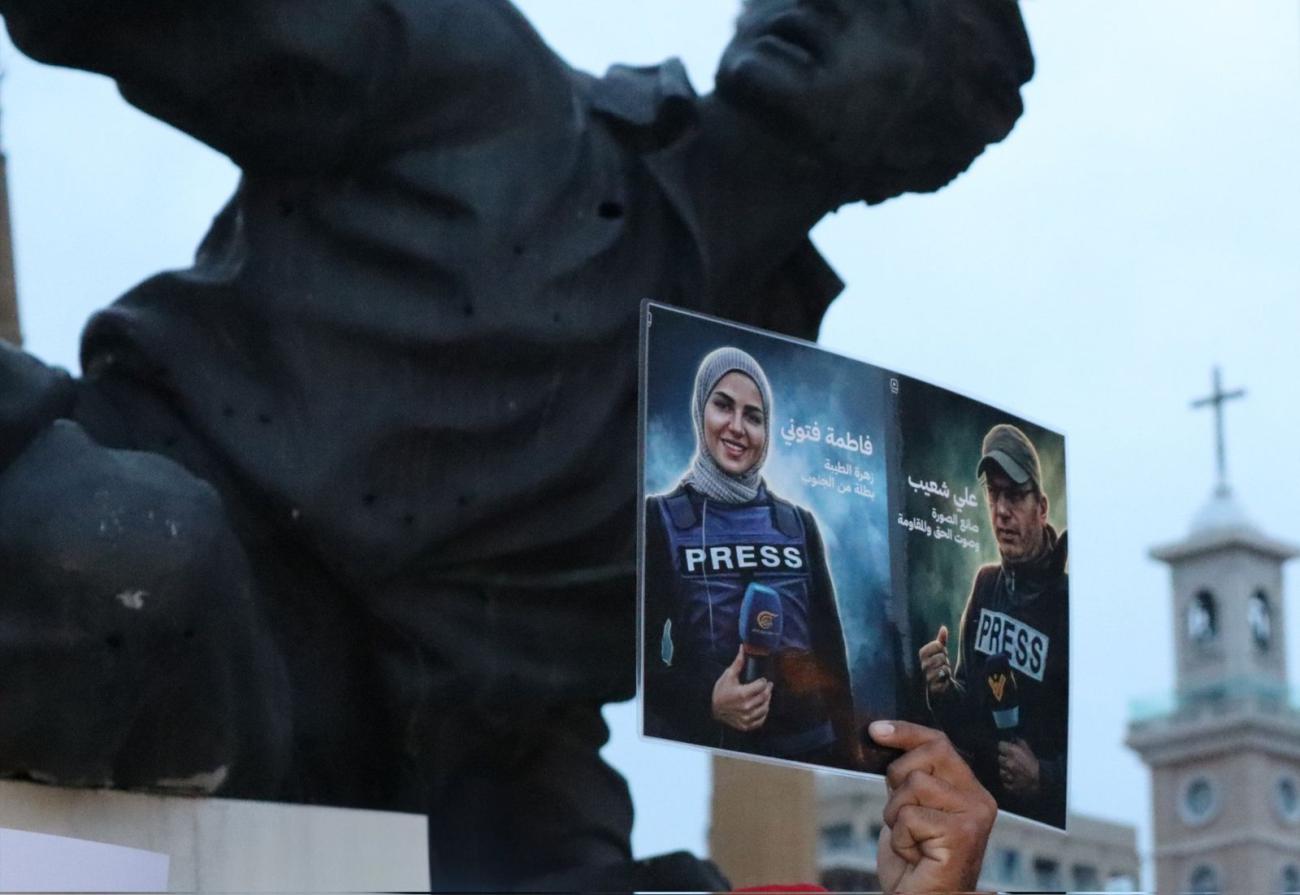
Christ called us to choose righteousness above all else. That means recognising that the right to resist oppression is not a political opinion; it is a moral imperative.
It is the same right that Catholic priests in Latin America recognised when they stood with liberation theology in defence of the poor.
It is the same right that Polish Catholics recognised when they resisted Nazi occupation.
It is the same right that the Vatican itself claims to respect until the resistance is Muslim-majority, and the oppressor is the imperial West. And more often than not, the defence for that is the defining of Israel as a ‘Jewish state’.
To that end, I must reassert that the Muslim world has already confronted Takfirism, not only by denouncing it theologically, but by materially resisting it, even through war when necessary. It recognised that an ideology claiming divine authority to justify violence had to be confronted directly.
Christianity faces a similar challenge today. It cannot claim to oppose Christian nationalism or Christian Zionism while refusing to confront Zionism itself. Zionism is not Judaism, just as Takfirism is not Islam and Christian Zionism is not Christianity. Judaism is a faith; Zionism is a political ideology that invokes religion to justify domination. So fundamentally, it would be a rejection of a political project and not of faith.
Christ called believers to stand with the oppressed and to support one another in the pursuit of justice. To refuse to name the ideology that sustains oppression is not dialogue. It is hesitation in the face of truth.
If the Church has the courage to denounce distortions of Islam, it must also find the courage to confront Zionism with the same moral clarity.
If the church has no courage to denounce Zionism, would it at least have the courage to end its demonisation of the resistance, the last stronghold defending Christian presence in the land of Christ and miracles, in the Levant?
There is really no neutrality in a burning house. There are only those who try to put out the fire, and those who stand outside saying the fire is a tragedy while doing nothing to stop it, or, worse, telling those trapped inside that they must accept the fire, and find a way to integrate into this new reality, preferably quietly even if it will, without a doubt, ultimately kill them.
For centuries, the Vatican has made its choice, and while today Pope Leo XIV stands up to Trump, that is not enough in the face of the challenges the world faces, and the existential threat that Arabs, and particularly Arab Christians, face at the hands of the imperialists.
So, the question is not whether the Vatican sees the fire, but rather, will it choose to stand with those trying to put it out?

Myriam Charabaty
Myriam Charabaty is an Arab political analyst and journalist focusing on Arab liberation, soft power, and the colonisation of Christian identity across the region, with particular attention to the role of Arab Christians as an inseparable part of the Arab world’s social and cultural fabric.