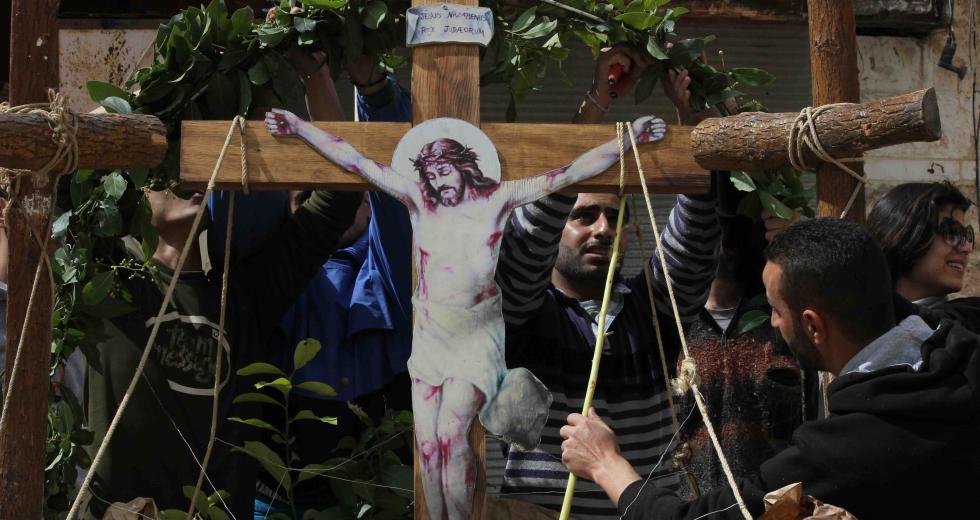
If Christ were among us today, he would not spare even a single moment to fight the leaders of despotism and global arrogance; nor would he tolerate hunger and wandering of millions of people, degenerated by the hegemonic and colonialist powers into war, corruption, and violence. Jesus Christ, who is the manifestation of divine attributes, raised the flag of guiding and saving humans at a time when ignorance, injustice, and inattention to human values were prevalent. He stood up to oppressing powers — which were dependent on their wealth and power — and he promoted justice, mercy, and monotheism.
— Ayatollah Khamenei, 28 December 1991
On 28 February 2026, the US and Israel assassinated Ayatollah Khamenei. This heinous crime followed decades of maligning the Iranian leadership and attempting to destabilise and overthrow the Islamic Revolution that rose out of the ashes of the Western-imposed Shah’s cruelty and repression.
The history of the exodus of Christians from the ‘Middle East’ has been a long and arduous one. While successive Western regimes make the lofty and hollow claim that they are protecting the Christian communities across the region, the reality is much more sinister. However, my focus in this article will be on the defenders of Christianity in Syria and Lebanon — defined by Western ruling classes as ‘terrorists’. Hezbollah has sacrificed many of their fighters in defence of Christian communities since 2013 and the start of the dirty war against Syria in 2011. This is further evidence that Islam is not the enemy of Christianity when the Western media distorted lens is removed and facts supplant narratives designed to foment division and misunderstanding.
As an example, in 2019, the UK Conservative Party leadership candidate, Jeremy Hunt, vowed to protect Christians — “the most persecuted religious group in modern times”. The Bishop of Truro’s independent review commissioned by Hunt was seeking a heavyweight UK Foreign Office response to the ‘persecution’ of Christians described as “some of the planet’s most vulnerable people” in the report. The review’s recommendation was that a UN Security Council Resolution be formulated to urge all governments in the Middle East and North Africa to protect Christians and other persecuted minorities. The report also called for sanctions to be imposed on any entity committing human rights abuses against Christians and other religious minorities.
The hypocrisy of this hue and cry over the fate of Christians in the West Asia region should be apparent to anyone following the history of UK- and US-led support for the Al Qaeda and ISIS-linked factions slaughtering and ethnically cleansing Christians in Syria and Lebanon since 2011.
Those who defended the Christian communities of all denominations were the very groups demonised by the West and scorned by the aligned media outlets as proxies of Iran operating illegally while resisting the sectarian, savage extremist mercenaries masquerading as ‘moderate rebels’.
This article will provide a verified timeline of the Hezbollah interventions to protect and defend Christian communities in Lebanon and Syria from 2013 to 2017. I personally reported from the majority of the Christian towns and villages following savage attacks by the US-UK-Zionist terrorist proxies designed to drive these historic communities from their homes and from the region.
The General Strategic Framework
The regime change war against Syria began in 2011 following years of planning. It was another in a long line of government-overthrow operations and attempts by the collective West to bring Syria to heel, on behalf of ‘Israel’. The purpose was to break the spine of the regional Resistance Axis in preparation for US-Zionist-led aggression against Iran.
The period between 2013 and 2017 experienced a radical shift in the nature of the armed conflict in Syria and had direct repercussions on security, stability, and civil peace in neighbouring Lebanon. The expansion of extremist Islamist groups was dominated by the Islamic State in Iraq and the Levant, better known as ISIS. Other groups like Nusra Front (the Al Qaeda affiliate in the Levant) and splinter factions like Ahrar and Sham, Jaish Al Islam, Jaish Al Fatah, and the Turkistan Islamic Party also rose to prominence during these years. Religious minorities in Syria, from Aleppo to the Western Hama countryside to the Qalamoun Mountains and the eastern mountain range on Lebanon’s borders, suddenly faced an unprecedented existential threat in recent history.
Hezbollah became involved militarily in this complex geographical battleground based on a strategic vision rooted in the concept of ‘preemptive security’ and the protection of the vital hinterland of the border with Syria and inland towns and villages at risk. The territorial integrity and security of Lebanon was at stake, but so was the fabric of society in both Syria and Lebanon. Their diverse cultures, heritage, and ancient civilisations were being torn apart by the marauding sectarian militia that had as their mission to slaughter or expel religious minorities that did not comply with their fanaticism and supremacist barbarism.
What began as localised operations quickly evolved into large-scale military operations that the Party managed, either independently or in full field and operational coordination with the Syrian Arab Army (SAA), local Syrian National Defence Forces, or Popular Committees.
Maaloula — Preserving the Language of Christ
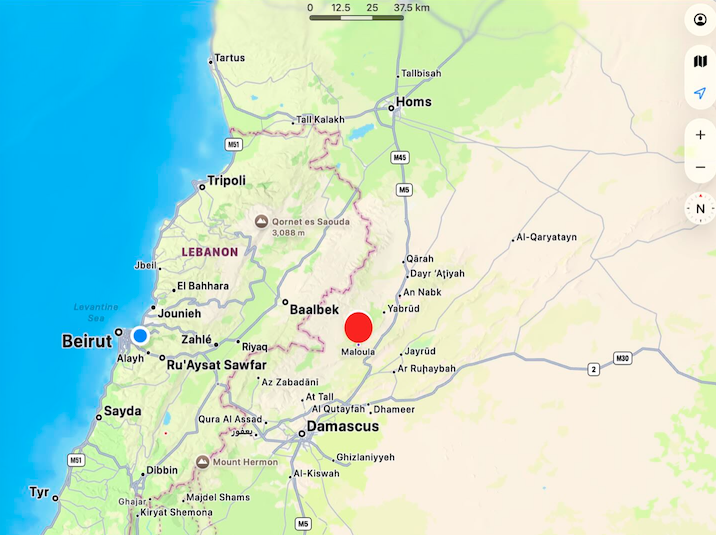
Maaloula is an ancient Christian town around 50 kilometres to the north of Damascus. The name Maaloula derives from the Aramaic word maʿəlā, which means ‘entrance’ or ‘gateway’. It is apt to describe the location of the town at the mouth of a narrow gorge in the dramatic Qalamoun Mountains and its historic role as a gateway to salvation and connection to God. The town itself is built into the mountainside; its houses are either clustered on precipitous ledges or emerging from the caves that are believed to date back to the prehistoric era.
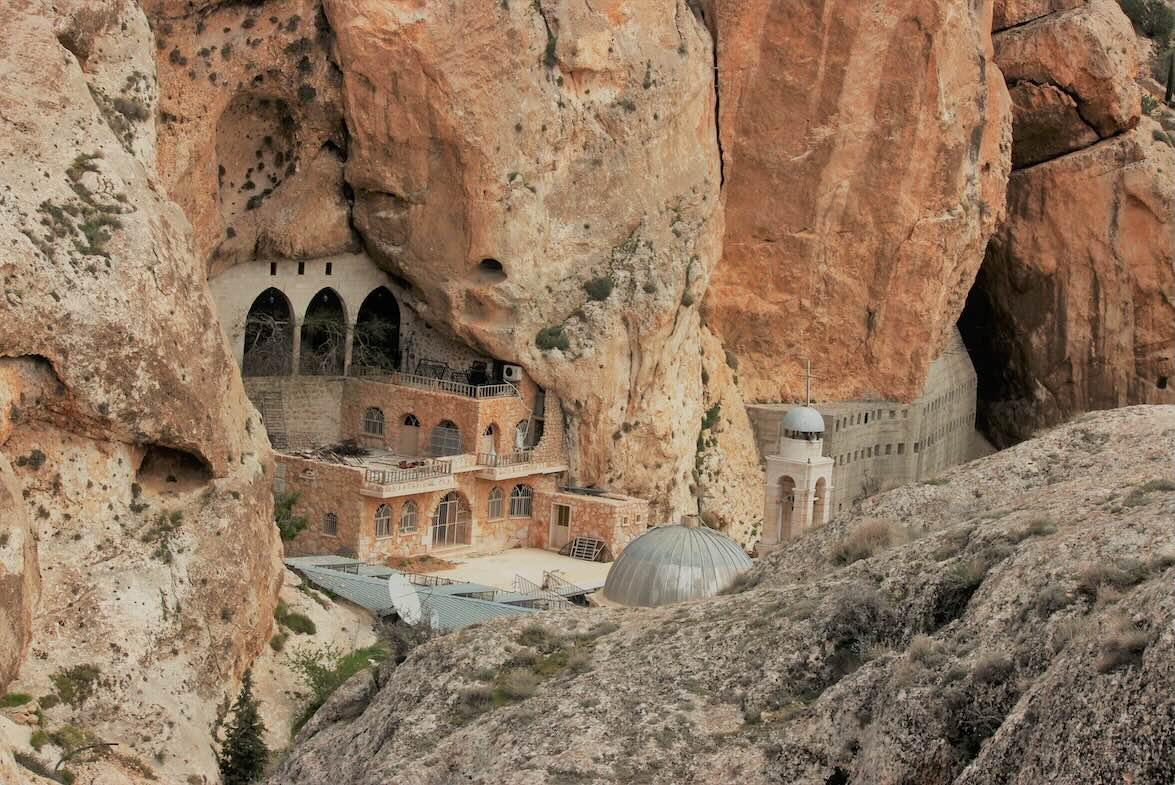
Maaloula holds exceptional religious and historical significance in the global Christian consciousness as one of the few places in the world where residents still speak Aramaic, which they believe was the language of Jesus Christ. Iconic and ancient monasteries are contained within the town. They include Mar Takla and Mar Sarkis. Tradition describes how St. Thecla, a first century disciple of St. Paul, vowed to devote her life to Christ, fled persecution, and found refuge in Maaloula. Thecla was widely venerated in the early Church and in the Eastern Churches.
In September 2013, Al Nusra Front led a surprise and violent attack against the town in alliance with the Free Syrian Army, the Al Farouq Brigades, Ahfad al Rasul, Jabhat al Nusra, Jaish al Islam, Ahrar al Sham, Jabhat Islammiya, Palestinian Hamas fighters (Jabhat Tahreer al-Qalamoun), and Jabhat al Ruhr Qalomoun. Among them were fighters from Libya, Tunisia, Afghanistan, Chechnya, and Uyghur Turkic Chinese, as well as Syrians.
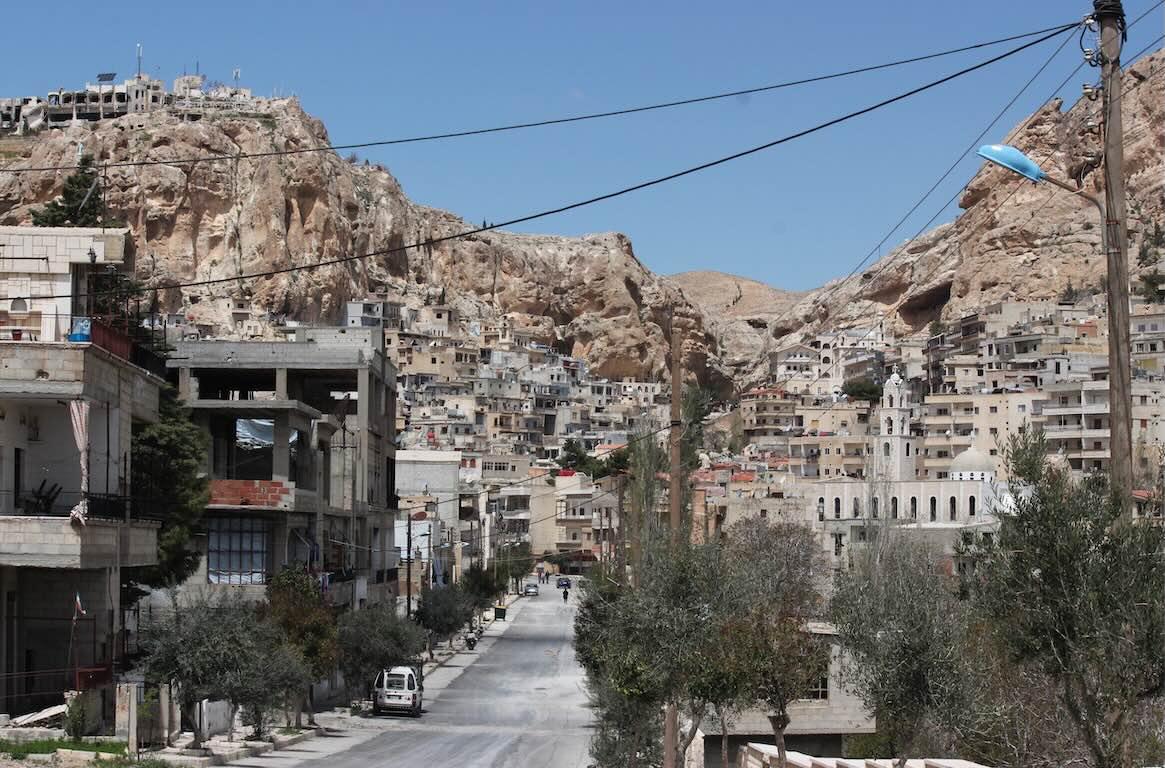
A Jordanian suicide bomber attacked the Syrian Arab Army checkpoint on the road into the town; the car filled with explosives killed many of the soldiers on duty. The terrorist factions forced their way into Maaloula and proceeded to execute and murder civilians who refused to convert to their extremist version of Islam. Six young Christian men were kidnapped during this attack; their bodies were finally recovered in 2016, three years later. A funeral was held in Damascus, which I attended.
Many of the Maaloula residents escaped via the underground sewer system, and local National Defence volunteers remained behind to defend the town. The terrorist factions dug up graves and desecrated the bodies. Looting gangs were brought to the town to strip homes of valuables and furniture. Graffiti was scrawled on the doors of Christian homes: “We will slaughter you”. More than 90 homes were destroyed, and every church was looted, burned, and extensively damaged. Tyres were soaked in tar and set alight before they were rolled down the mountain to set fire to the homes beneath the terrorist positions. Surrounding farms were also seized, and their fruit trees were cut down. The wave of violence and fanaticism was relentless for the next few months, and battles to recapture the town were intense, involving the Syrian armed forces, Syrian National Defence (local Resistance) and Hezbollah elite forces led by the Radwan Unit.
In December 2013, Nusra Front kidnapped 13 nuns from the Mar Takla Monastery in the Convent of St. Thecla. They were held for three months in different locations before being taken to Yabroud in the rugged Qalamoun Mountains close to the Lebanese border. This was an act of terrorism outwardly condemned by international ‘human rights’ organisations, but clandestinely supported by the Western regimes that facilitated such acts by their terrorist proxies from 2011 onwards.
The military operations to liberate Maaloula were divided into two phases.
Phase One: Security Operations and Securing the Captive Nuns of Mar Takla
Hezbollah assisted in negotiations for their release in coordination with Syrian and Lebanese security agencies and with Qatari mediation. Extremely complex negotiations finally achieved the freedom of the nuns in exchange for a number of prisoners detained in Syrian prisons. This step was essential to deprive the armed insurgents of a key human bargaining chip prior to launching a full-scale offensive to liberate the town.
A complete archive of details surrounding the operation to liberate the nuns is available (in Arabic) on the Hezbollah official relations website.
Phase Two: the Raid and Liberation, April 2014
Due to the craggy mountainous terrain of Maaloula with houses hewn from the dramatic outcrops, ledges, and caves, the Joint Operations Command ruled out indiscriminate heavy artillery or intensive aerial bombardment to ensure protection of homes, sacred ecclesiastical sites, and ancient relics.
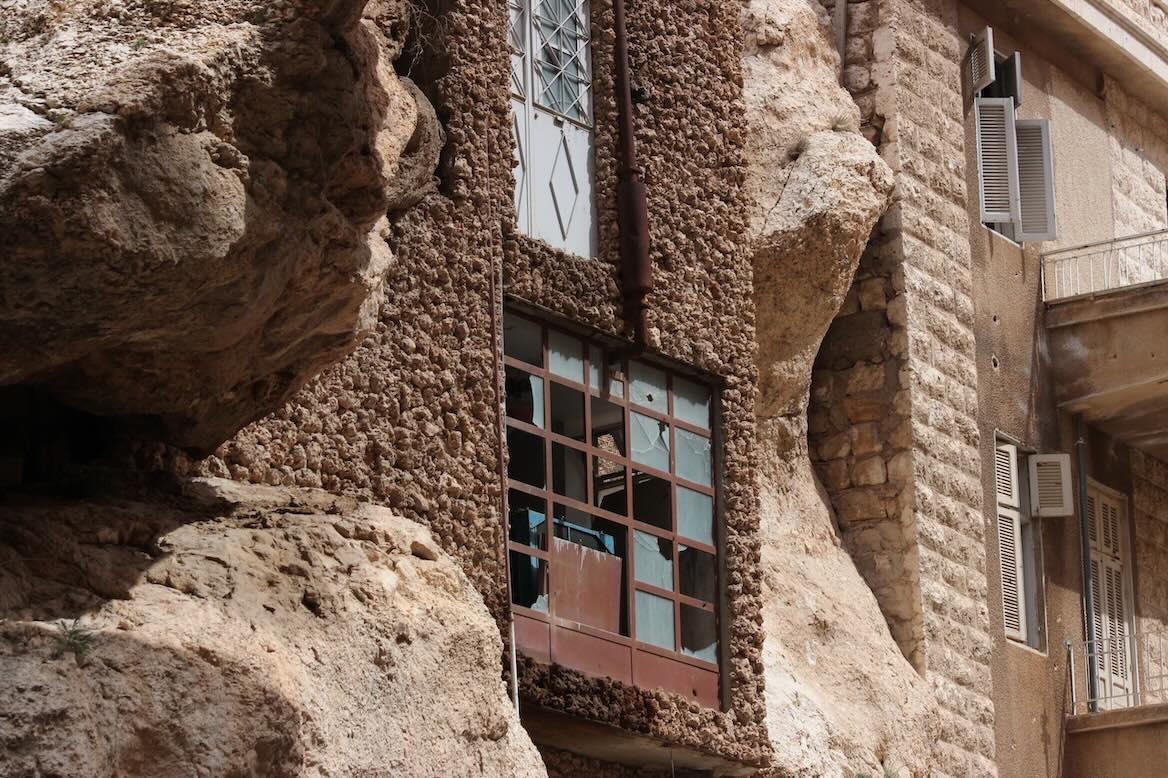
Military strategy relied on high-risk urban warfare, in which elite forces infiltrated on the ground under precise, targeted covering fire from allied forces. The commanding hills surrounding Maaloula were seized first by a vanguard of elite Hezbollah cadres. The first target was the Al Safir Hotel, which the enemy militia had been using as their primary observation and sniper post, as it overlooked the entire Maaloula neighbourhood. From there, they could detect any movements on the roads or terrain leading to Maaloula from the lowlands.
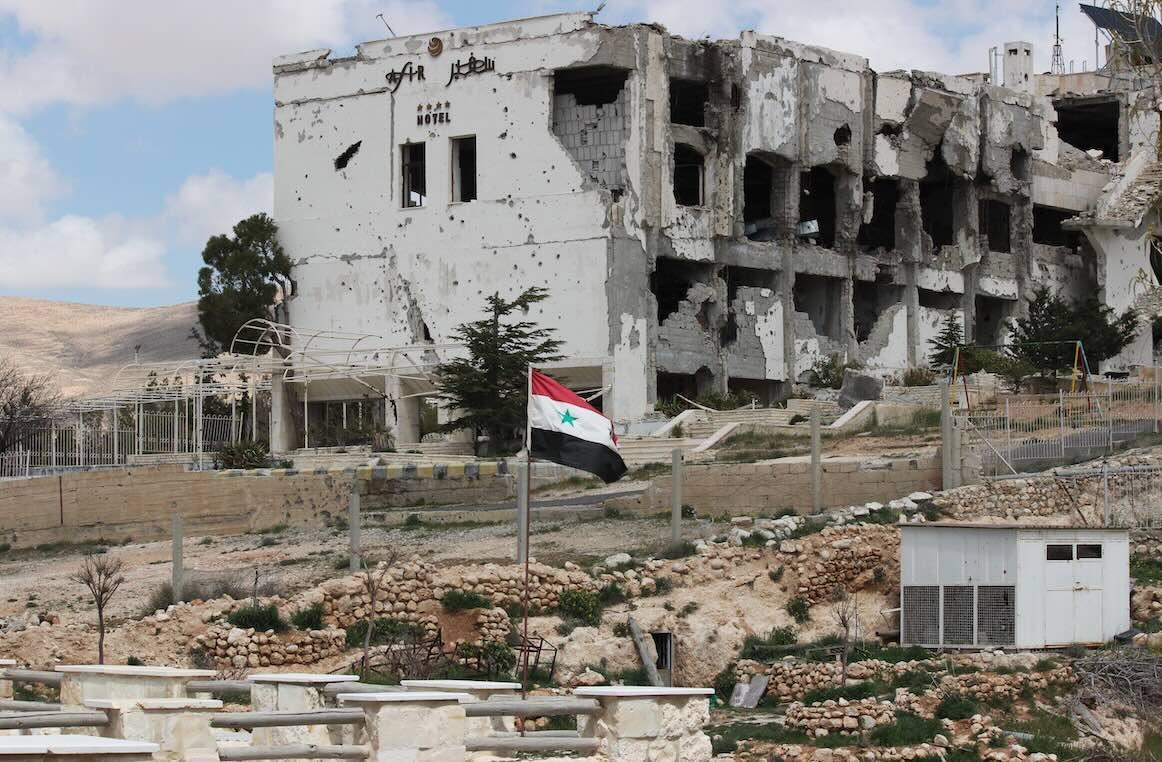
Hezbollah advanced through the narrow crevasses and passes, protected from view by the immense mountain overhangs and cornices. They passed just as St. Thecla had passed centuries before, kept safe by the landscape they were fighting to liberate. Units from the Syrian Arab Army supported the advance with light and medium fire. The defence lines of Nusra Front were outflanked, and supply routes from the town of Sarkha and the Qalamoun region were cut completely. What followed were fierce, close-quarters battles within the historic Maaloula alleyways and steep inclines. The enemy was routed and fled towards the mountains and the Lebanese border. On 14 April 2014, Maaloula was declared ‘liberated,’ and the path to recovery began.
Footage later showed the Hezbollah commander Mustapha Badreddine being welcomed by the nuns of the Mar Takla monastery. Badreddine was killed close to Damascus International Civilian Airport in 2016 by a huge blast. Those responsible were believed to be either Israel or the Zionist-backed Takfiri groups.
The Washington Institute for Near East Policy released an in-depth military and research study on Hezbollah’s deployment on the ground in Syria, highlighting the strategic importance of the battles in Qalamoun and Maaloula in securing ethnically mixed areas, and the group’s decisive role in tipping the balance of the battle.
Testimony of a field fighter (from Hezbollah’s field media and the Syrian Arab Army) taken during the final offensive which coincided with the Battle of Yabroud:
The fighting was neither ordinary nor a classic battle. The fighting in Maaloula was a tactical nightmare; the town is carved into the rock, and the militants had barricaded themselves inside the historic caves and on the roofs of the ancient monasteries. It was like storming mountains that appeared deserted on the surface but were booby-trapped beneath, where a mine could explode in your face under every rock.
Strict orders from the command prohibited the use of heavy weapons or airstrikes within the old town’s boundaries to protect the monasteries of Mar Takla and Mar Sarkis and the rest of the Christian archaeological sites, which forced us to engage in street fighting and close-quarters combat that resulted in many martyrs among our ranks as we worked to tactically dislodge the al-Nusra Front militants.
The Battle of Qara, 2012–2013 — Monastery of St. James the Mutilated
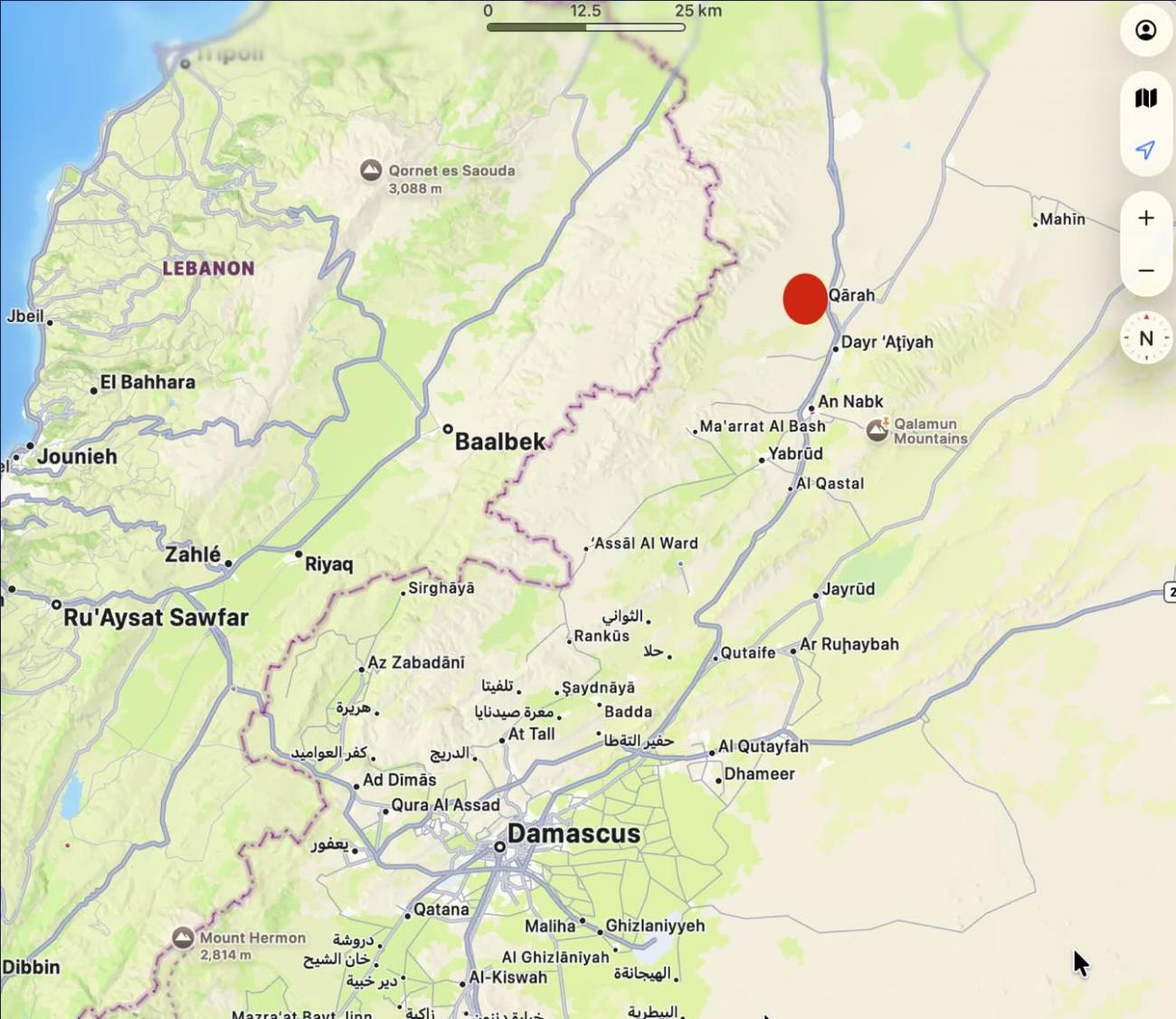
The town of Qara is also located in the Qalamoun Mountains in the northern Damascus countryside. It lies on the Damascus-Homs international highway and is characterised by mountainous terrain that is linked to the hills of the Lebanese border town of Arsal. During the war, Qara was a strategic hub of huge importance both to the Syrian Arab Army defenders and the enemy terrorist factions supported by the enemies of Syria and the Resistance Axis.
In late 2012 and throughout 2013, Qara became the main stronghold and largest logistical hub for Nusra Front and associated armed factions. From this vantage point, the enemy could conduct murderous operations to shell neighbouring villages. The influx of foreign mercenary extremists was managed from this base. Perhaps most important, Qara housed the key factories and workshops for rigging vehicles with explosives, which were then despatched via unofficial mountain tracks into Lebanon. There, the targets were Beirut’s southern suburbs and the Bekaa Valley, both considered Hezbollah ‘strongholds’, but both areas are predominantly crowded civilian residential areas. Additionally, these operations directly impacted on Christian towns in the Qalamoun Mountain region. These included Maaloula, Sadnaya, and Deir Atiya.
The battle of Qara was launched in November 2013 by the Syrian Arab Army in cooperation with Hezbollah’s leadership. This was the first phase of the Great Qalamoun Battle. The operation began with the seizure of the strategic hills surrounding the city of Qara. Hezbollah used precision-guided missiles and mortar shells to immobilise the enemy’s vehicles and to cut off supply lines from Yabroud and Al Nabk. As soon as the strategic hills were under Hezbollah control, ground forces and units from the SAA Special Forces advanced from three main axes. The speed of the assault combined with targeted firepower caused confusion and collapse within the ranks of Nusra Front, and they retreated towards Al Nabk and Yabroud.
The battle lasted less than four days. The city was declared fully liberated on 19 November 2013. Qara was the first domino to fall in the battles for Qalamoun. The Damascus-Homs international highway was secured, and the defensive flank of the various religious towns and villages in the isolated region was protected. The car bomb attacks launched from Qara towards Lebanon were halted.
The Melkite Catholic Monastery of Mar Yakub, or St. James the Mutilated, is to be found in Qara. The terrorist factions besieged monks and nuns from 12 different nationalities during their control of the city. These Christians faced the daily threat of death or kidnap. On the day of liberation, one nun speaks about hearing the voices of Hezbollah telling them that they were freed. The Monastery community had no drinking water; they had been surviving only with cow’s milk. Hezbollah immediately brought supplies for them. “They helped us in a humble way,” said another Spanish-speaking nun. She added, “They used a very beautiful sentence. They said your service is our mission”. A French nun pointed out the respect that Hezbollah had for the church: “They never enter without our permission”. A fourth nun describes Hezbollah as “angels who came to serve God and to serve each one of us without anything in return”. All these testimonies can be watched here.
Father Daniël Maes had been living in the Monastery since 2010. During his testimony, he said that the image of Hezbollah presented by the media in Europe is totally divorced from reality. Meeting with the fighters after liberation persuaded him of their humility and devotion to the Christian community. In 2015, he had not changed his opinion:
Since the beginning of 2011, tens of thousands of mercenaries have crossed the mountains from Arsal, Lebanon, a stronghold of terrorists, to come here to kill and destroy … Fortunately, in Qalamoun we receive important support from the Lebanese Hezbollah. The Zionist lobby has managed to give Hezbollah a bad name and label it as terrorists. Nothing could be further from the truth, as became apparent during the dramatic siege in November 2013. They saved and protected the population and also us. Hezbollah was founded because Zionists came to kill their families and destroy their homes. They are young idealists who want to serve and protect their people, but also help those who are similarly threatened by the same brutal aggression.
Bloudan and Al-Zabadani (Damascus Countryside, Syria)
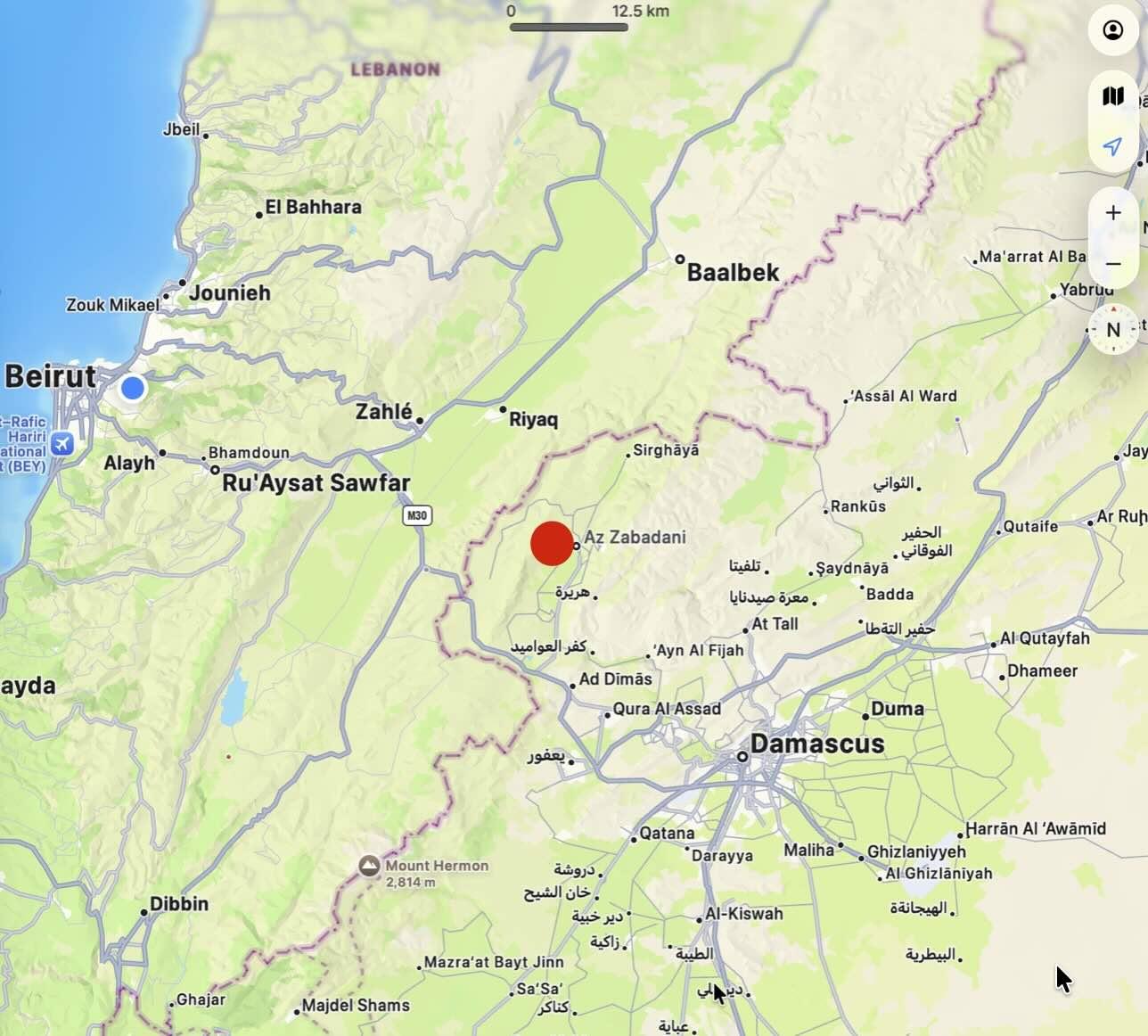
The town of Bloudan, located in the Damascus countryside in the southwestern Qalamoun mountain range at an elevation of over 1500 metres above sea level, had a history of being a popular tourist resort with a predominantly Christian population. Bloudan is surrounded by towering mountainous terrain that directly overlooks the city of Zabadani and the Zabadani Plain.
Between 2012 and 2015, Zabadani and neighbouring Madaya were occupied by the extremist factions, most notably, Ahrar Al Sham and Nusra Front. The Christian town of Bloudan became militarily and operationally besieged from the west and south.
Western media, led by the BBC, was distorting and fabricating the Madaya siege narrative to further criminalise the Syrian Government and allies. The fact that, for three years, the residents of Bloudan lived under a permanent threat of assault, and abduction was largely overlooked. They were subjected to near-daily mortar shelling and regular sniper fire from the surrounding high ground controlled by the terrorist factions. This paralysed public life, and people lived with the constant threat of ethnic cleansing.
Hezbollah’s leadership realised that the liberation of Bloudan and the removal of the military threat could not be achieved through static positional defence but required ending the presence of armed factions in the main stronghold of Zabadani. In July 2015, Hezbollah and the SAA launched the Great Battle of Zabadani.
This involved a siege of Zabadani and the cutting of military and logistics supply lines coming from the Lebanese Arsal highlands and the eastern Qalamoun region via tunnels and mountain tracks.
Hezbollah surrounded Bloudan with a defensive military cordon to protect the people and to ensure that it was secure enough to be used to launch their military operations. The Battle of Zabadani stood out as one of the fiercest battles fought by Hezbollah. The city was divided into security sectors, and Hezbollah fighters began the capture of each sector, neighbourhood by neighbourhood. They faced complex networks of booby-trapped tunnels and mined houses.
Hezbollah employed sophisticated tactics, including advanced military engineering to dismantle improvised explosive devices (IEDs), the use of mine sweepers, and intense fire support directed by short-range missiles with high destructive power (such as the Burkan missiles) to destroy the fortifications of the terrorist militia.
After weeks of fierce battles and the tightening of the noose around the militants, the enemy military defences collapsed completely. This forced them into political and military negotiations that led to the Four Cities Agreement (Zabadani and Madaya in exchange for the long-term besieged Shia Muslim towns of Kefraya and Al Foua in Idlib).
Under the agreement, the militants were completely evacuated from Zabadani and Madaya and transferred to northern Syria (Idlib). While transfers were being made, it is worth noting that Ahrar Al Sham and Nusra Front carried out the horrendous massacre of refugees from Kefraya and Al Foua in Rashideen, Aleppo. They enticed starving children and their families out of the buses with food and then murdered them with a suicide bomb before kidnapping dead and dying children from the scene of carnage.
Under the agreement, the Christians of Bloudan were saved, and full stability and calm were restored to the region at that time. A video report on the reception given to Hezbollah from the residents of Bloudan can be watched here. A young man in the video said:
Thanks to the blood that was shed and the Grace of God, now we live safely, and this is the result of the blood these young men have sacrificed.
A lady said:
As a Christian woman, I am proud of Sayyed Hassan Nasrallah because he protected me, my honour and my daughters. We didn’t even have to leave the village (Bloudan). You have only heard about these events, but we have actually witnessed them, he protected our honour.
A resident, Rania Murad, said:
What burns our heart the most is every drop of blood that falls from Hezbollah martyrs, particularly because they are martyred on a land that is not theirs. They did it out of loyalty, they were loyal to us, they loved us.
Finally, Father Akil El Khoury said:
Thanks to Hezbollah, peace prevailed in Bloudan, in Syria, and the whole region.
Sadly, we now know that it was peace not destined to last.
Our Lady of Saydnaya
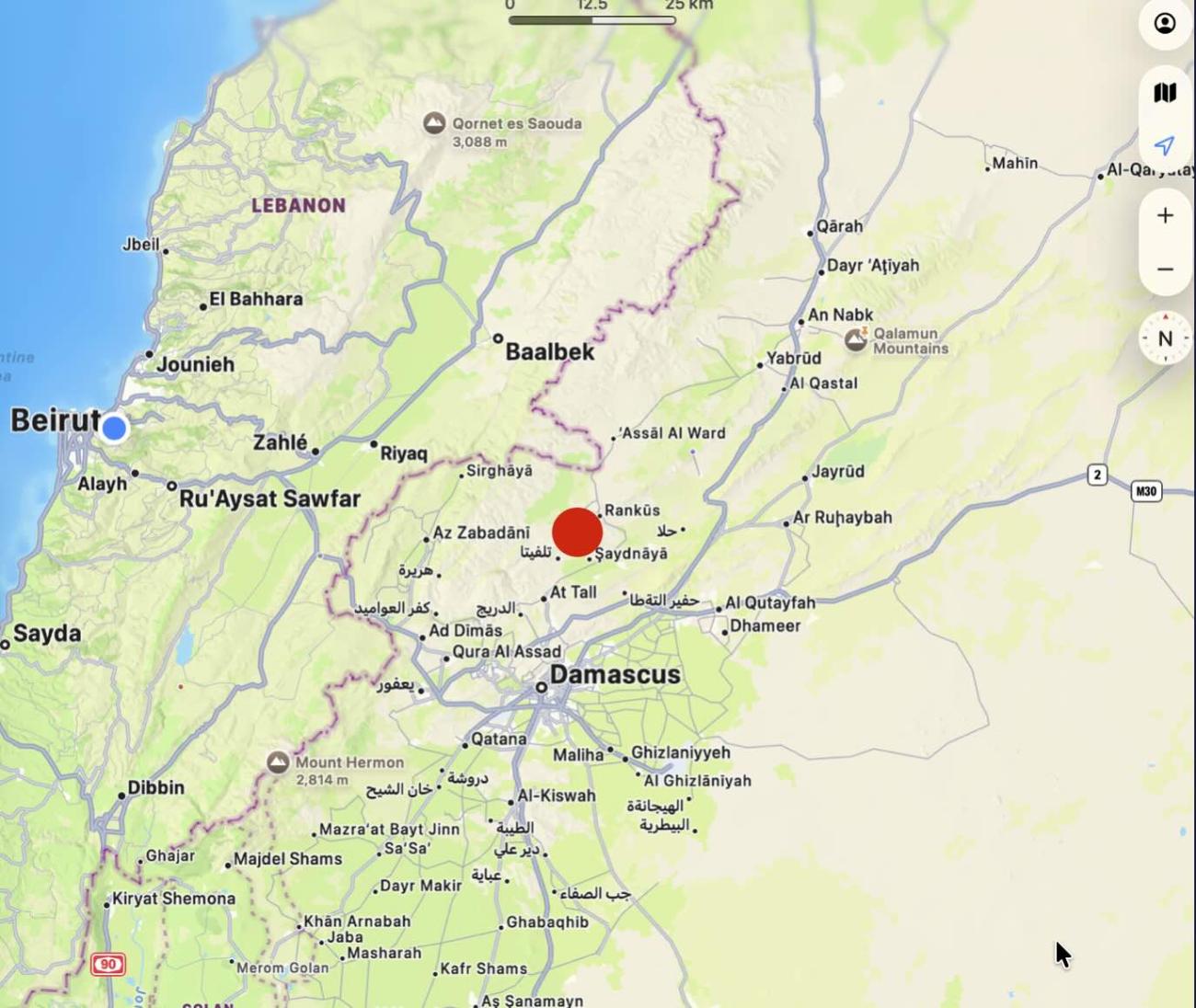
Another mountainous city, Saydnaya, is in the northern countryside of Damascus. It is considered by many to be one of the holiest Christian cities in the ‘Middle East’ and home to the historic Greek Orthodox monastery of Our Lady of Saydnaya. Here there is a renowned icon of the Virgin Mary which attracts pilgrims from all over the world.
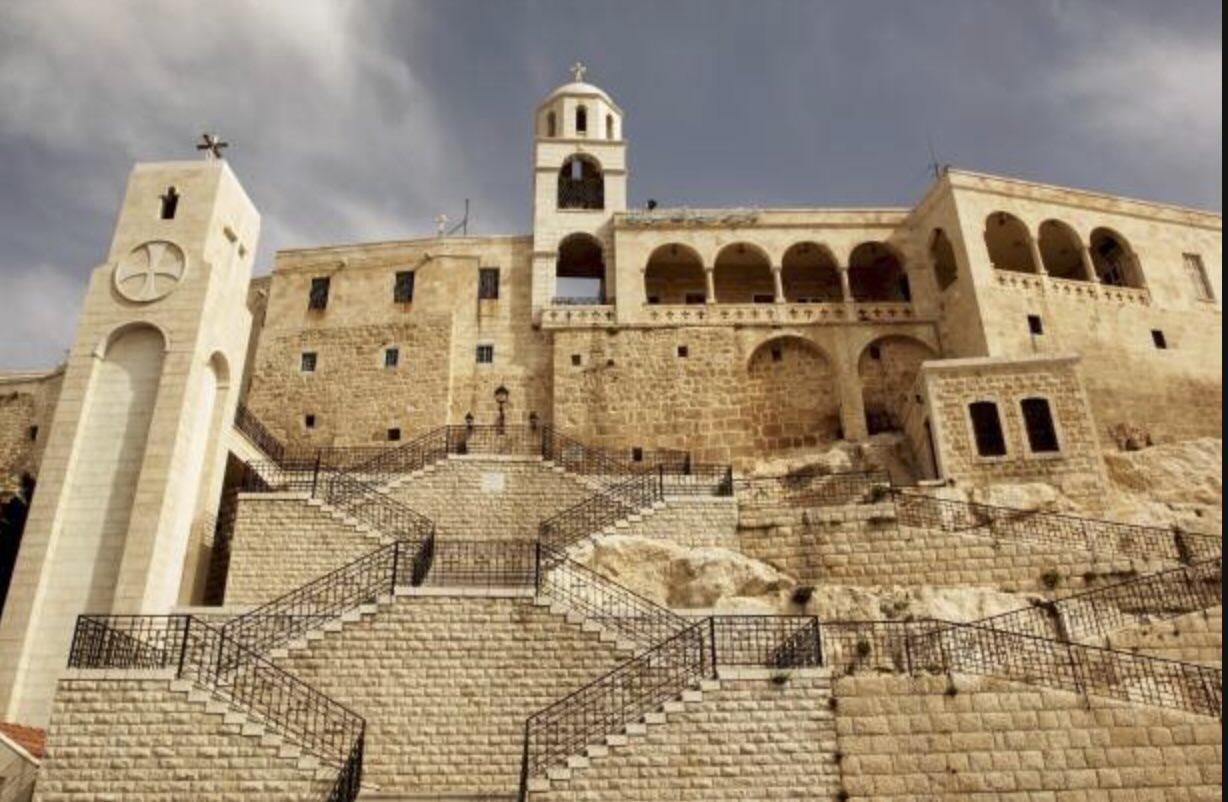
During the war years in Syria, Saydnaya was surrounded by a ring of towns and villages that witnessed intense military activity and the occupation of extremist armed factions. There were repeated infiltration attempts by suicide bomber cars and regular mortar shelling that targeted the venerated monastery with the primary aims of destabilising the town, destroying its religious symbolism, and ethnically cleansing the Christians that lived in the town and surrounding countryside.
Unlike Maaloula or Zabadani, Saydnaya did not witness an internal assault or street fighting within its city walls. This was due to the preemptive success of the military strategy implemented by Hezbollah in coordination with the SAA. This strategy was based on the concept of preventive buffer zones.
Once again, control was taken of the high ground surrounding Saydnaya after fierce and protracted battles. These positions provided an essential vantage point overlooking Saydnaya, specifically the Rankus Hills and their expansive farmlands, Mount Mar Takla, and the areas surrounding the town of Talfiita. Taking control of these areas deprived the armed factions of the ability to launch rockets and mortar shells at Saydnaya. Hezbollah coordinated directly with the local defence committees formed by residents of Saydnaya to defend the town.
Further, Hezbollah provided logistical support and tactical training. They supplied local defence forces with accurate intelligence on the armed group movements in the surrounding valleys. In this way, nighttime attacks were thwarted, and the enemy groups were unable to establish any military beachhead that would enable an invasion of the holy city.
One of the leaders of the local groups who took charge of guarding the hills overlooking the town recounted:
The Party’s fighters were distinguished by their ethical conduct, especially after the military operations ended. They visited the churches to ensure their safety, and their devout reverence and respect for their sanctity were striking. Hezbollah fighters did not enter the town of Saydnaya in large combat formations to avoid sectarian and political sensitivities, but they established a special training centre for us in a nearby mountainous area.
They supplied us with mortar shells, DShK machine guns, and, most importantly, highly advanced night-vision thermal imaging scopes. On the night of the famous attack launched by opposition militants from the Rankus area with the aim of capturing the Saydnaya Monastery, we were able to detect the infiltration from a distance thanks to the technology provided by the Party, and we repelled the attack in coordination with their artillery, which was covering our rear lines.
Al Sqeilbiyyeh and Mhardeh — Targeted for Extinction
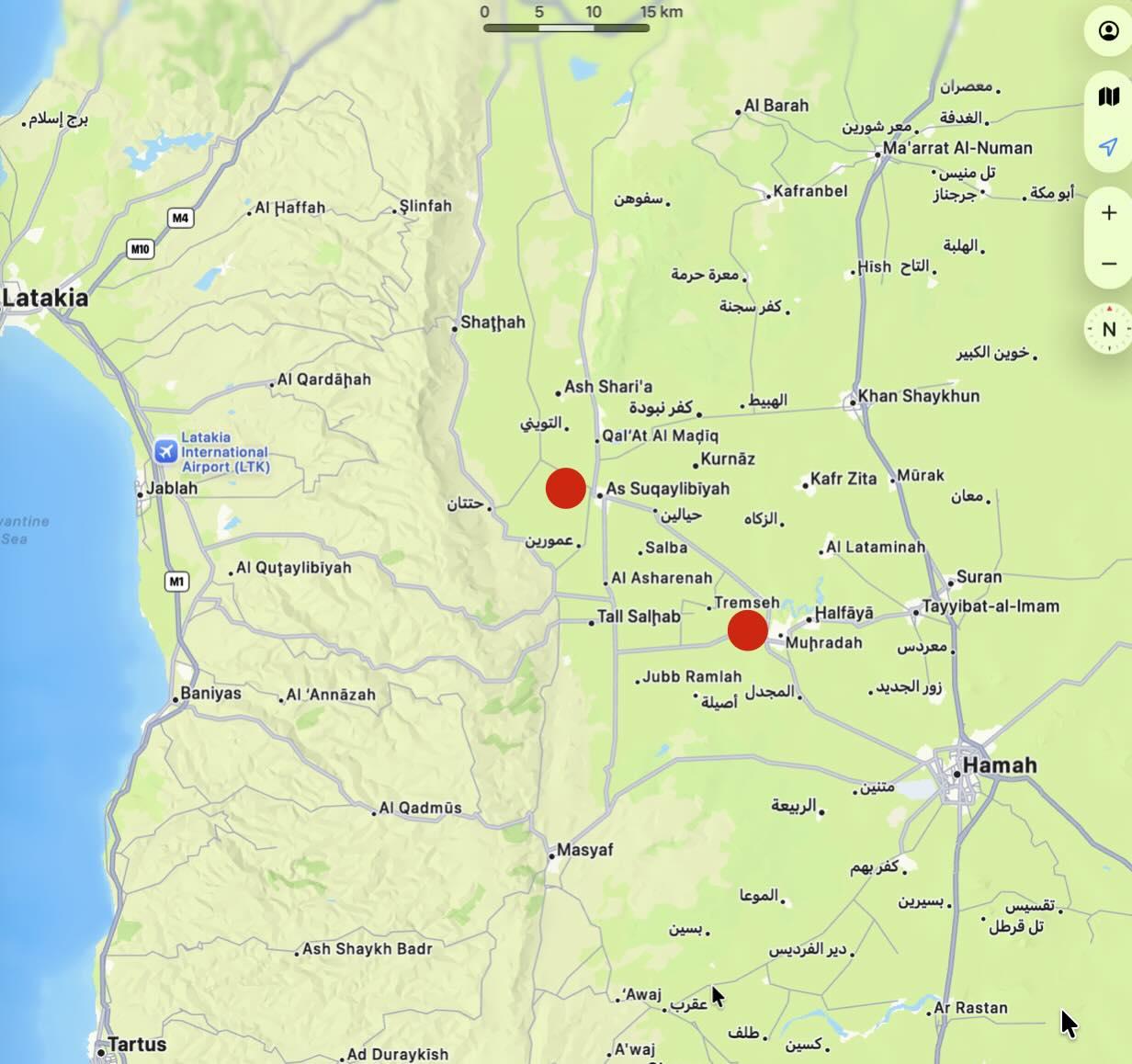
The Syrian Christian towns of As Suqaylibiyah and Mhardeh are home to the largest Greek Orthodox communities in the western and northern Hama countryside. As Suqaylibiyah is located on the former front lines adjacent to the strategic Al Ghab Plain, Mhardeh lies further to the east near the lines of contact with southern Idlib. Between 2014 and 2016, the residents of both towns found themselves on direct confrontation lines with the most dangerous of the extremist factions. This was following the formation of the deadly Jaish Al Fatah coalition led by Nusra Front and including the Turkistan Islamic Party and other associated terrorist brigades.
Both towns were targeted with violent and almost daily indiscriminate rocket and artillery shelling with Grad rockets, heavy mortar shells, and even cluster bombs, an attack that I investigated on the ground. These attacks led to hundreds of civilian and child casualties and murders. Homes and essential infrastructure were destroyed, including schools, community centres, and hospitals. Electricity was cut, supply lines were blocked, and entry roads were lined with terrorist snipers at one point. Mhardeh faced a greater risk of ground invasion to seize control of the Mhardeh thermal power plant, which is of strategic importance to the entire country. As Suqaylibiyah was positioned less than 1km from the Nusra Front militia that were embedded in Qalaat Al Madiq, the majority of enemy missiles were launched from close proximity.
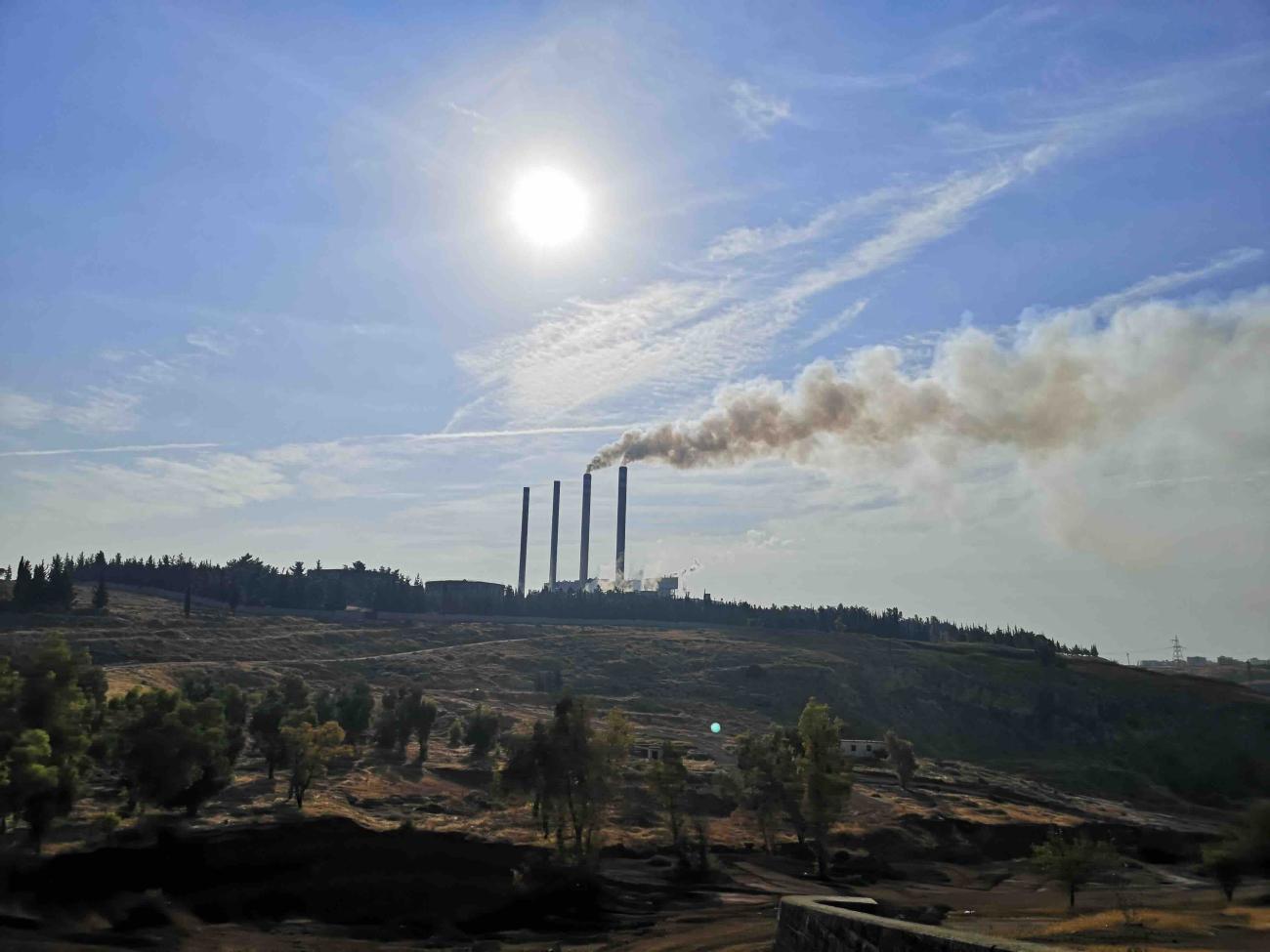
Given the political and delicate sectarian composition of the Hama countryside, a tapestry of religious minorities including Sunni and Shia Muslim and the Ismaili sect in Salamiyah, Hezbollah adopted a different military tactic to the Qalamoun battles. Internal defence and perimeter security tasks were left to the local National Defence Forces, composed almost entirely of the Christian residents of the two towns.
Hezbollah focused on supporting heavy fire and guided missiles. Specialised artillery and missile support units were deployed at strategic rear positions in the Hama countryside. These units carried out preemptive and intensive strikes against the source of incoming attacks and launch pads in the terrorist-occupied areas which included Qalaat Al Madiq, Kafr Zita, Al Latamnah, and Halfaya. Hezbollah also deployed anti-armour guided missiles (Kornet) to prevent mechanised attacks by the terrorist groups and to destroy their booby-trapped vehicles before they could reach the front defence lines of the two towns.
During the battles of the Al Ghab Plain and the northern Hama countryside, Hezbollah actively engaged alongside Syrian Arab Army units in the major counteroffensives. These large-scale military operations aimed to destroy the militants’ military supply lines coming from Jisr Al Shghour and deep within Idlib province in the northwest on the Turkish border. Nusra Front and Jaish Al Fatah (Army of Conquest) were forced back dozens of kilometres. This hugely reduced the threat of direct artillery fire against As Suqaylibiyah and Mhardeh. It also pulled both towns from the jaws of a military defeat and a ground invasion that would have threatened their very existence.
Al Qaa — A Lebanese Christian Village on the Border with Syria
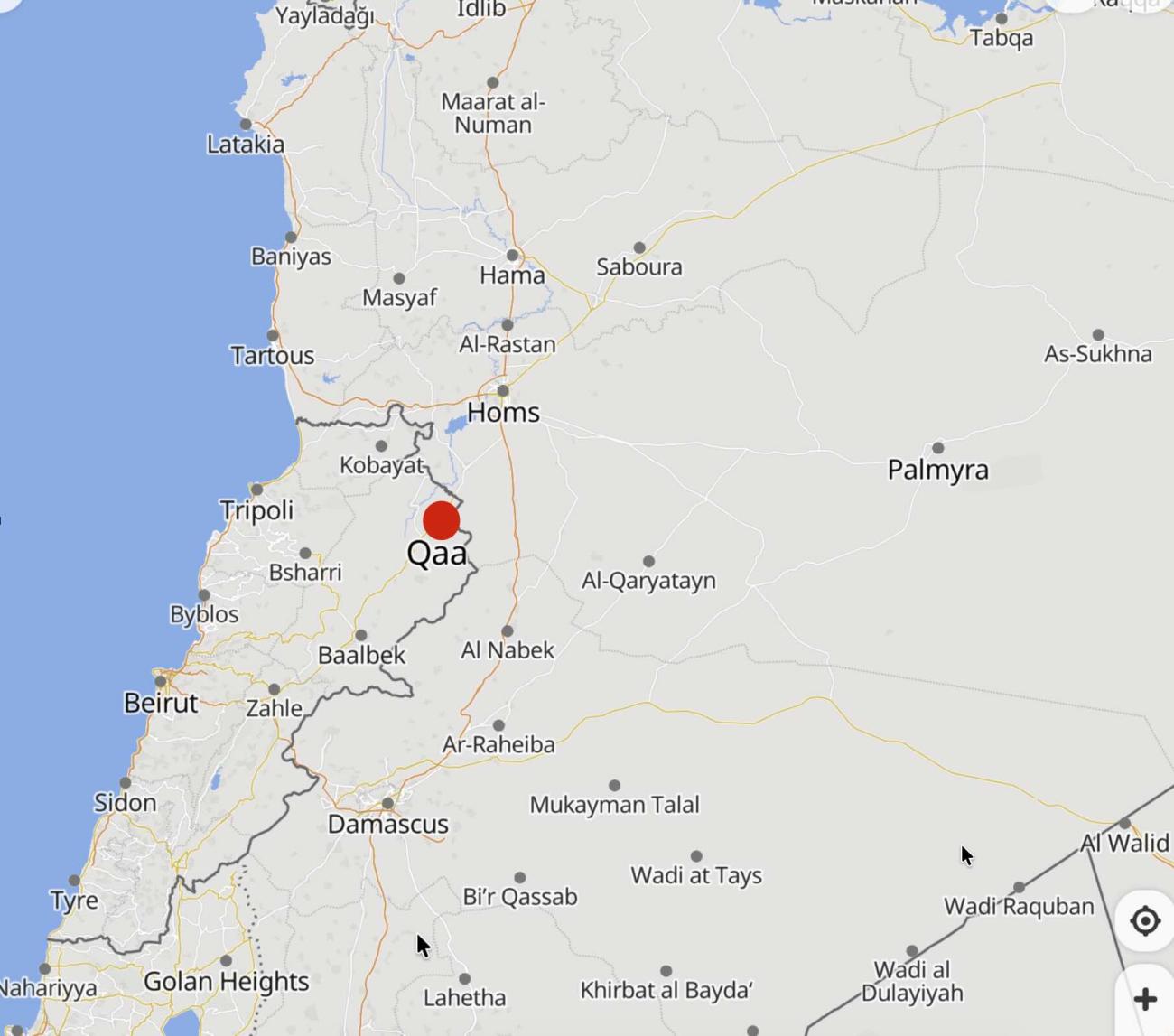
The Christian Lebanese town of Al Qaa is located in the predominantly Christian district of Baalbek-Hermel, and it is considered Lebanon’s northeastern gateway on the Syrian border. As the Syrian crisis expanded and intensified, thousands of ISIS and Nusra Front fighters took up positions in the high, treacherous mountain ranges stretching between Arsal, Ras Baalbek, and Al Qaa in Lebanon — the Eastern Range. The town of Al Qaa became a constant target for ISIS and Al Qaeda infiltration operations, mortar shelling, and a corridor for transporting car bombs intended to cause bloodshed and destabilisation inside Lebanese territory.
The threat reached a tragic peak on 27 June 2016. The town, with a population of around 3000, was struck by an unprecedented terrorist attack. Four suicide bombers entered the town clad in lethal explosive belts and self-detonated at dawn amidst the civilian population. As the citizens gathered to mourn the morning’s victims around the church in the early evening, another four suicide bombers reached the town square and the church. The second wave murdered five civilians and injured dozens. The entire town was at risk of security collapse and mass displacement.
Immediately after the Al Qaa bombings, Hezbollah increased its military and security deployment along the town’s rear and front lines. Defensive security perimeters and fixed observation points equipped with thermal cameras and night vision goggles were established in the hills and valleys separating the town from the highlands. This prevented the entry of dozens of subsequent ISIS suicide bombers and car bombs.
Hezbollah provided this support to the local Christian volunteer defence teams, which established watch parties on the roofs of houses on the borders of the town. The operation was conducted with the indirect field and security coordination with Lebanese security agencies.
After the attack on Al Qaa, Hezbollah’s leadership made the strategic decision to end the terrorist military presence in the eastern mountain range permanently. This operation was called ‘If you return, we return’ and it began in August 2017. The Lebanese Armed Forces launched Operation Fajr Al Juroud from the Lebanese side of the border. Hezbollah and the SAA launched their joint operations from the Syrian side opposite the Juroud, the Western Qalamoun region.
Hezbollah deployed a ‘fire-pincer’ tactic, with the Syrian and Lebanese forces operating out of a centralised operations centre led by Hezbollah field officers. Infantry units supported by artillery and tanks launched a large-scale assault to clear the high altitude caves and mountainous crevasses where ISIS elements were dug in.
The field coordination and relentless firepower led to ISIS being cornered in a very confined area. Their field command surrendered, and they agreed to deport their surviving members to eastern Syria and to completely clear the mines and IEDs from the Al Qaa and Ras Baalbek regions. Lasting security was restored to the Christian border towns. At the same time, this operation secured Lebanon’s eastern flank and prevented the expansion of ISIS elements to the religiously diverse villages and towns in the northern Bekaa.
Conclusion — Islam Is Not the Enemy of Christianity
It would be easy to politicise and criminalise Hezbollah’s intervention to protect religious minorities in Lebanon and Syria during the 14 years of war waged against Syria and her allies by the most disparate and sinister extremist versions of an Islam that exists predominantly in the Zionist-Arab Persian Gulf states. It was incubated there and shuttled across the region by the predator regimes in the West to carry out their filthy war against independent and sovereign nations that have historically resisted the global capitalist neo-feudalist agendas. All this death, bloodshed, and chaos is in service to the national security of a Zionist entity expanding genocide across the wounded region.
Western media, think tanks, and policy-shaping institutions have tried to distort what Hezbollah sacrificed for their Christian brethren. However, what counters their cynicism and misrepresentation aligned with the enemies of the region are the testimonies from those ordinary citizens of Syria and Lebanon saved from extinction by young men who believe in justice, mercy, and the message of Jesus Christ.
Jesus Christ called on people to follow the path of God, which is the path of prosperity for human beings. And he warned people against pursuing carnal desires and undermining their spiritual purity through engaging in evil deeds and oppressing others … Those corrupt and oppressive powers who pursued carnal desires, caused wars against people, and deceived them could not tolerate the existence of divine faiths and prophets and those who followed the path of God. Today, too, those kinds of powers would not tolerate the servants of God and the followers of the divine religions or truth seekers. Following Jesus Christ (peace be upon him) requires supporting the truth and abhorring the powers against the truth; hopefully Christians and Muslims anywhere in the world, will keep alive in their life and deeds this great lesson taught by Jesus Christ.
— Ayatollah Khamenei, 1995
Christ in the Night of Glory is a book containing 34 memories of the visits that Ayatollah Khamenei made to the grieving families of Iranian Christian martyrs. During the Western-orchestrated Iran-Iraq war in the 1980s, the small Armenian Christian minority in Iran suffered 48 killed, 105 wounded, and 35 prisoners taken from within their community. The Assyrian Christians in Iran lost 30 from their smaller community. Both Christian communities perceived the war as a national defence against the powers of injustice and oppression, as they do in 2026.
One such visit was to the family of Galoust Baboumian, who was working for an oil company in Ahvaz during the Iraqi aggression. His mother had begged him to return to Tehran, fearing what the Iraqis might do to him if they captured Ahvaz. Galoust was killed by Iraqi bombs the same day he had this conversation, and he died holding the photograph of his two children, Varuzhan and Talin. The Supreme Leader entered the family home, and the mother of Galoust busied herself preparing tea and making sure the Leader was taken care of. He gently chided her and said he came only to bring comfort and to talk with the family, not to be waited upon. The mother left the kitchen and joined her family, but when the Leader got up to leave, this is how she described her feelings:
The Leader then rose up from his chair and said goodbye to all of us. His behaviour and manners were so simple and intimate that at that time I was no longer anxious, and my heart had calmed down. Now I wished that this visit could have lasted for hours. I wished I could tell him more about Galoust’s character and Varuzhan’s similarity to his father, but there was no more time as he was leaving when such thoughts went through my head.
The Covenant of the Prophet Muhammad with the Monks of Mount Sinai is attributed to the Prophet Muhammad ibn ‘Abd Allah, the Messenger of Allah. The document was written in the handwriting of Imam ‘Ali during the fourth year of the Hijrah which would place us approximately around 625 CE. The monks from St. Catherine’s Monastery consistently upheld its authenticity since the early days of Islam. A summary of the conditions in the covenant has been recorded, part of which is cited below:
It was about this time [after the Treaty of Hudaybiyyah] that the Prophet granted to the monks of the Monastery of St. Catherine, near Mount Sinai, his liberal charter by which they secured for the Christians noble and generous privileges and immunities. He undertook himself, and enjoined his followers, to protect the Christians, to defend their churches and the residences of their priests and to guard them from all injuries. They were not to be unfairly taxed; no bishop was to be driven out of his diocese; nor Christian was to be forced to reject his religion; no monk was to be expelled from his Monastery; no pilgrim was to be stopped from his pilgrimage; nor were the Christian churches to be pulled down for the sake of building mosques or houses for the Muslims.
Compare this to the savage and brutal treatment of Christians in Syria and Lebanon by the (Ahmed Al Sharaa) Mohammed Al Jolani-led Takfiri militia that now rule Damascus and under whose reign, Christians continue to be displaced, murdered, and have their churches desecrated and bombed.
As Arab-Lebanese Christian analyst Myriam Charabaty wrote in her article covering the regional relations between Muslim and Christian:
What the West calls a ‘religious war’ is in truth a war between landowners and occupiers; between those who build and those who plunder. And while Western narratives are collapsing under their own hypocrisy, this region’s unity, Christian and Muslim, stands as a living testimony to the question of shared values between Christianity and Islam.
Cover image: Easter in Maaloula, Syria, 2017. Photo: Vanessa Beeley