
There was a time when legacy broadsheets were content with simply reporting the news. Today, they are inviting you to write the apocalypse.
In an interactive feature dubbed The War Room: Can You Outsmart Russia?, The Telegraph crossed the Rubicon from journalism into speculative geopolitical fiction.
The Game
It is the summer of 2027. An uneasy ceasefire with Russia has held for six months, but the troops remain mobilised. Out of the blue, Belarus demands access through the Suwałki Gap for a ‘medical convoy’ responding to a Covid-like crisis, while religious tensions flare on the Estonian border. As the crisis escalates, Russia moves on the Swedish island of Gotland.
The Suwałki Gap is the 65-kilometre stretch of Polish–Lithuanian border land between Belarus and Russia’s Kaliningrad exclave.
With a few clicks, the reader is thrust into the role of the UK’s representative on NATO’s decision-making council. Rudely awoken by your military assistant at 0500, you are given a map, a ticking clock, and the heavy burden of European freedom.
It is a Tom Clancy thriller seamlessly integrated into your morning news feed. Beneath the glossy interface of hover-to-discover maps and cinematic video briefings, a quieter operation is unfolding.
By placing the reader directly into the pressure cooker of military escalation, the publication is arguably engaging in a subtle form of psychological engineering: conditioning the public for the unthinkable whilst assessing its appetite for it.
Normalising Mayhem
As you progress from D-Day to D+2, the choices presented to you swing between diplomatic hand-wringing and breathtaking acts of aggression.
Do you inspect the convoy with civil police, or do you call for F-35 strikes on Russia's Chkalovsk air base? Do you launch an electronic warfare attack, or do you authorise maritime 'thunder runs' through a Baltic blockade?
In three simulated days, the reader is coaxed from managing a border dispute over a convent to contemplating the deployment of a tactical gravity nuclear bomb in the Baltic Sea.
The game explicitly warns: “the nuclear dimension is closer than any of us has had to think about since the end of the Cold War”.
By wrapping it as a multiple-choice morning puzzle, Pandora's box is cracked open, and the public is inducted to view a catastrophic European land war not as an abject failure of diplomacy, but as a logical inevitability.
Intelligence Mining
After making your final choice, the game categorises your psychological profile – perhaps labelling you a ‘Steady Hand’, a ‘Dove’, or a ‘Nuclear Gambler’. More importantly, it shows you the maths: 37% of players chose to de-escalate. 50% chose to push units to the maritime exclusion zone. 45% chose an electronic warfare response. It even contrasts digital readers with the audience of a live Telegraph event.
As players voluntarily click through these scenarios, they are providing a real-time, granular map of public sentiment. For defence analysts and policymakers, such data would be invaluable. How many ordinary citizens are willing to push the nuclear button? Quite a few, if the comments section of the feature is to be believed.
At what point of escalation does the public lose its nerve?
How effectively has the media prepared the populace to accept a first-strike scenario to “save Gotland”?
When a newspaper transforms its readership into a focus group for the outbreak of World War III, the lines between journalism, statecraft, and propaganda blur.
The Telegraph’s War Room isn't just asking if you have the mettle to stand up to the Kremlin. In effect, it is measuring the temperature at which the British public will consent to the flames.
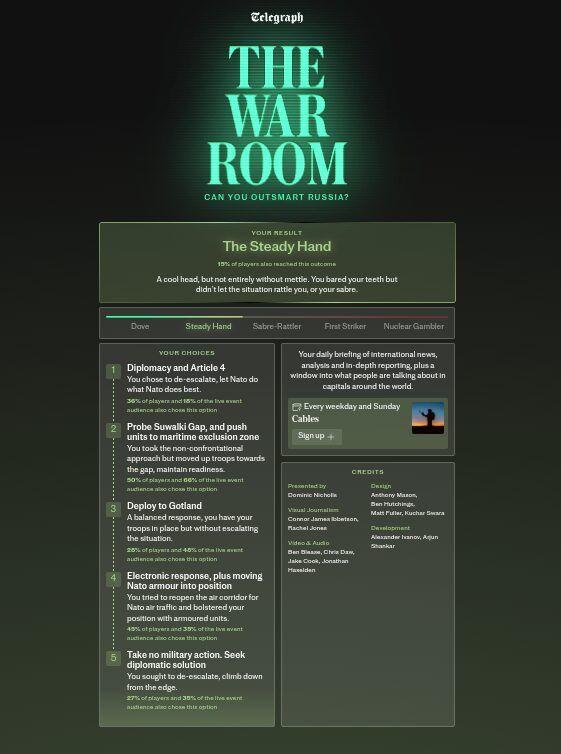
Screenshot of The Telegraph's interactive feature 'The War Room: Can You Outsmart Russia?'
Why Gotland?
Why did The Telegraph choose Gotland for its fictional interactive?
The Telegraph does not bother to explain or even speculate as to why Moscow, in the game, sees itself compelled to invade the island.
The unstated reason — standard in Western defence analysis — is control of the Baltic in a wider war. Any other possible motive is left out.
A likely consequence of presenting the aggression in a vacuum is a more militaristic response from the reader — rather than a potentially more diplomatic one had context been offered.
If the interactive is about assessing and manipulating the public, the closer the fictional plot is to the real-world scenario for which the public is being assessed and prepped, the more accurate the analysis and the more effective the manipulation.
On that basis, let's take The Telegraph’s scenario as a working hypothesis for real life.
NATO's Unsinkable Aircraft Carrier
General Micael Bydén (Supreme Commander of the Swedish Armed Forces), speaking to Germany's RND in May 2024 said, “Who controls Gotland controls the Baltic Sea”.
Lieutenant General Ben Hodges, Commanding General of United States Army Europe, after visiting Gotland in 2017, said, “I do not think there is any island anywhere that is more important”.
Since the end of the Napoleonic Wars in the early 19th century, Sweden has been non-aligned and mostly neutral, or at least has tried hard to be perceived as such. Its last war against Russia, in 1808–1809, was incidentally the only time Russia ever occupied Gotland. The Russian navy invaded it in the spring of 1808 but abandoned it after only 27 days. A brief campaign against Norway in 1814 was the last war Sweden fought.
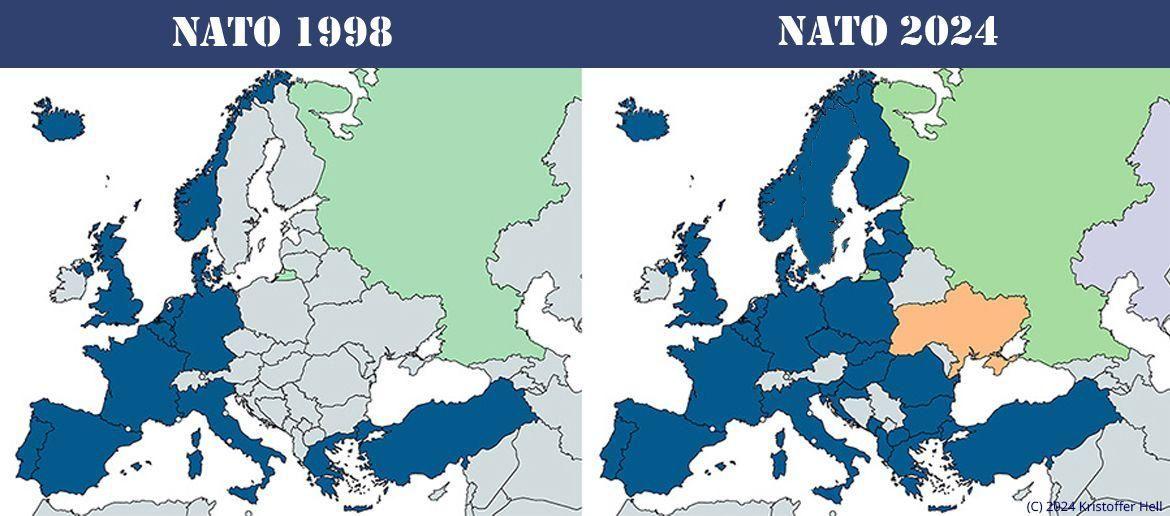
The relaxed and stable state of affairs that ensued – though diluted by EU membership in 1995 and ever-closer ties with NATO – lasted over 200 years and survived two world wars and the Cold War. It was finally blown up in April 2023, when Finland joined NATO, and in March 2024, when Sweden followed suit.
With Sweden inside NATO, Gotland has become a piece of prime real estate for both sides.
Nukes in the Baltic?
On 5 December 2023, three months before joining NATO, Stockholm signed a bilateral Defence Cooperation Agreement (DCA) with Washington, giving US forces access to 17 agreed military bases and training areas in Sweden. Parts of the facilities were reserved for exclusive US use, including the Gotland regiment, and the agreement also provided primary jurisdiction over its personnel.
Unlike Norway's and Denmark's agreements with the US, Sweden's contains no clause that bars the deployment of nuclear weapons.
Colonel Douglas Macgregor said in an interview with Swedish media outlet NewsVoice in May 2024:
You are now essentially hostage as a nation to whatever the United States does or does not do against almost any enemy anywhere, not just Russia, but potentially any adversary.
If you read [the DCA agreement] carefully, [it says] we have unobstructed access to all 17 bases.
There’s nothing in there that prevents us from bringing in nuclear weapons or any other advanced weapon system that we may develop.
Pandora's box was opened further on 2 March 2026, when France's President Emmanuel Macron unveiled a doctrine of “forward deterrence”, under which nuclear-armed Rafale jets may be deployed temporarily to allied countries, with Sweden among them. Though separate from NATO's nuclear mission, it makes nuclear-armed aircraft on Swedish soil a real possibility.
The Post-Russia Dystopia
In April 2023, the US magazine Foreign Policy published an article entitled ‘The West Is Preparing for Russia's Disintegration’.
In late January that year, a conference inside the European Parliament in Brussels, organised by Polisha MEPs Anna Fotyga and Kosma Złotowski, openly discussed the creation of independent states in the post-Russian space. Its official event description reads, “… we should discuss the prospects for the creation of free and independent states in the post-Russian space”.
The event was the fifth session of the Free Nations of Post-Russia Forum, founded in Warsaw in 2022. Later gatherings took the project to Tokyo, Washington, and Ottawa. At its 2023 London–Paris meeting, participants envisaged a post-Russia made up of some 41 states.
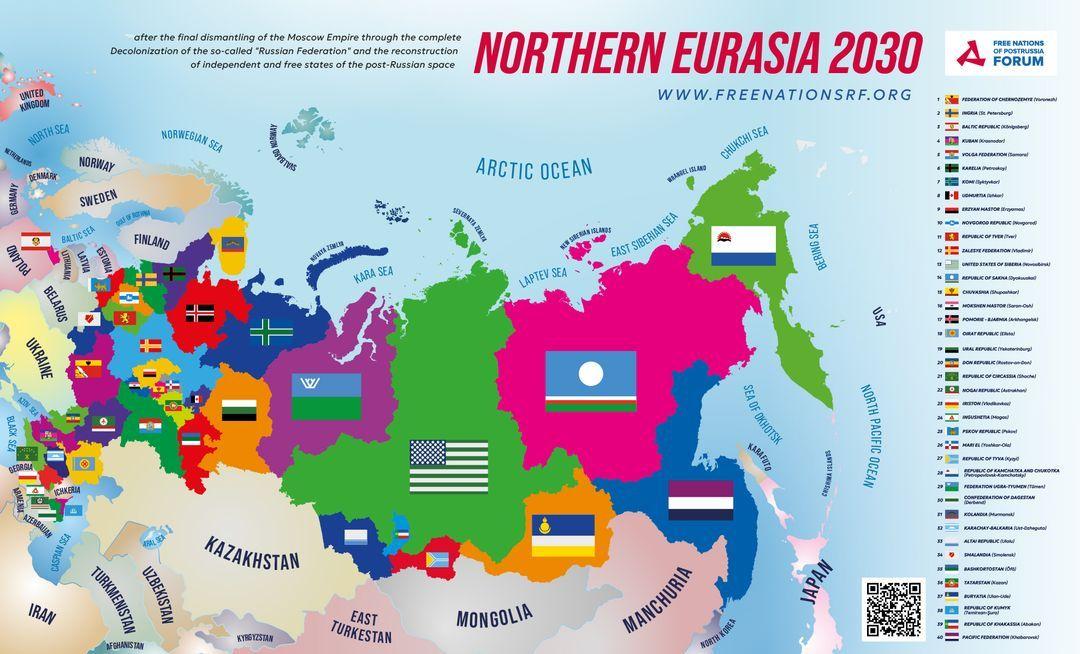
The above is a post-Russia map published by the Free Nations of Post-Russia Forum – which presented its vision inside the European Parliament at the invitation of MEPs.
The idea of a dismembered Russia goes back in time.
In 1997, former US National Security Adviser Zbigniew Brzezinski proposed replacing the centralised Russian state with a loose confederation of three: European Russia, a Siberian Republic, and a Far Eastern Republic.
In June 2026, Andreas Umland of the Stockholm Centre for East European Studies told Ukraine's Ukrinform, “We should prepare for such a scenario … certain Russian regions will begin to leave the federation, which could potentially even lead to a civil war within Russia”.
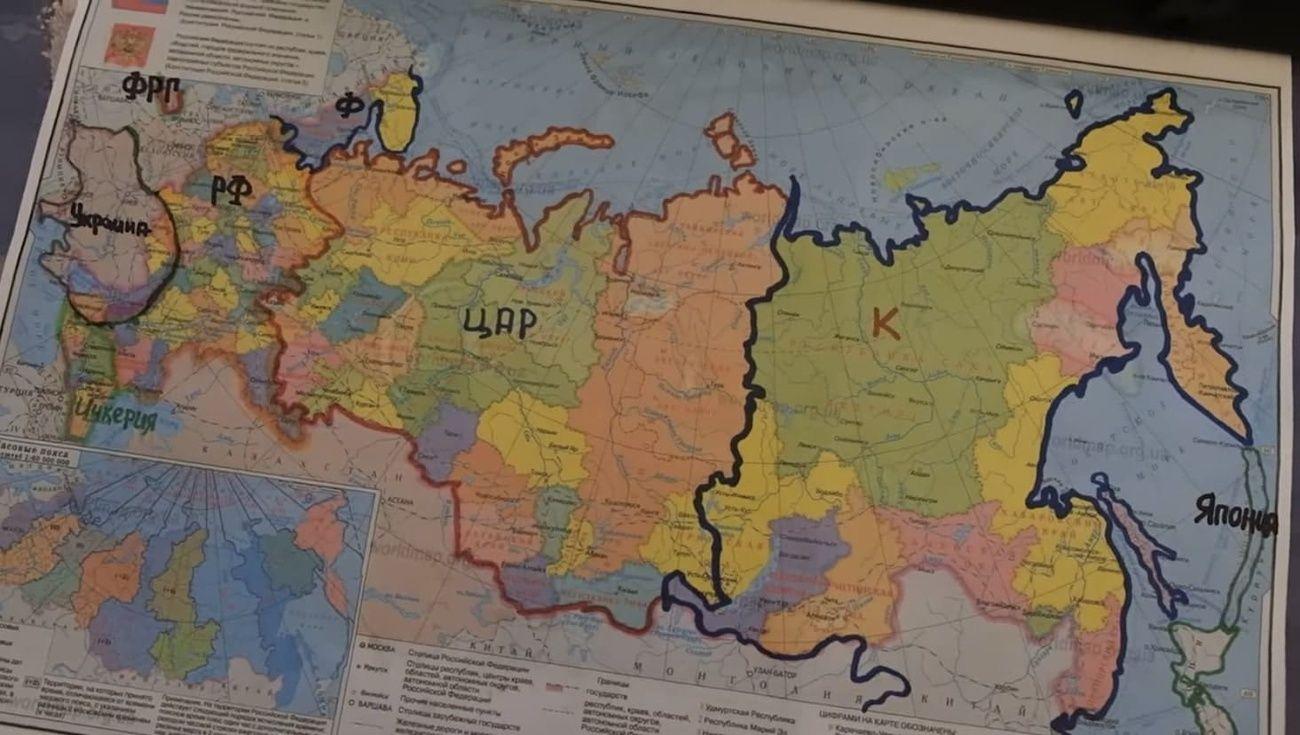
The above is a photo of a map that hung on the office wall of Kyrylo Budanov, head of Ukraine’s military intelligence (HUR), with Russia's borders redrawn in black marker. Journalists noticed it in December 2022.
From Moscow's vantage point, these threads connect: an island open to US forces with no nuclear ban, French offers of nuclear-armed jets, and Western voices openly discussing Russia's break-up.
Whatever the West intends, the Kremlin is likely to read them as a threat to Russia's very existence – and Gotland as an island it might feel compelled to move on sooner rather than later, while it still can.
Seen in this context, The Telegraph's gamified interactive feature ‘The War Room: Can You Outsmart Russia?’ does more than abandon journalism for speculative geopolitical fiction — it risks making the outlet part of the drumbeat for war.

Kristoffer Hell
Kristoffer Hell is an independent writer and journalist covering high politics and how technology shapes human experience. He holds an MLitt in Strategic Studies from the University of Aberdeen and a Diploma in News Journalism from the London School of Journalism. He previously worked as a software developer, contracting in banking, pharmaceuticals, and retail.