Editor’s note: This article was originally published on Vanessa Beeley’s Substack.
For decades, the standard strategy of Western intelligence agencies in West Asia relied on:
- Deploying elite special forces on the ground, in complete secrecy and with no government oversight.
- Supporting, funding and arming ‘local’ extremist factions dominated by national Al Qaeda brigades or ISIS cadres through complex financial networks and armament channels.
- Outsourcing operations to shadowy Private Military Contractors (PMCs) who are notorious for sidestepping international law on rules of engagement.
However, the tectonic geopolitical shifts that have been triggered by the NATO war against Russia in Ukraine have apparently introduced a new operational strategy into the traditional mix. The collective West is faced with an increased domestic economic and political fatigue, international law constraints and the simmering risk of direct escalation with either Moscow or Tehran and Iran’s ‘ring of fire’.
The Western intelligence agencies and ‘Israel’ have come up with the perfect alternative that provides a convenient shadow war and full plausible deniability: delegating highly sensitive and deniable operations to the Main Intelligence Directorate of the Ukrainian Ministry of Defense (GUR). Kyiv has become the ideal global asymmetric proxy — the global agent of chaos for the US alliance.
A June 2026 report from the Tel-Aviv Institute for National Security Studies (INSS) covers the rise of Ukraine’s role in the West Asia region.
… the Ukrainian issue is becoming part of the Middle Eastern agenda on an operational level, as well. Israel should take this into account, reducing unnecessary friction and making full use of Ukrainian experience in areas relevant to its needs.
Ukraine’s sphere of operations in a turbulent West Asia
Syria
I have talked previously about intelligence indications that Ukraine is back in Syria for months now. Initially, the presence of Ukrainian special forces and drone experts was noted in the countryside, west of Aleppo and south of Tartous. More recently, information received from inside Syria points to a build up in the Western countryside of Homs, close to the border with Lebanon. At least three bases have been established, and are expanding, in strategic locations.
It is important to understand that this operational expansion is underpinned by Western geopolitical and intelligence support that directly serves the Ukrainian Main Intelligence Directorate (GUR), which manages its operations through three main bases whose roles complement one another to impose a new reality on the ground.
Combined, the three bases will provide:
- Border surveillance and interception, monitoring the Lebanese border and ensuring tactical intervention when necessary. Using advanced remote sensing and long-range tactical surveillance drones, Ukrainian specialists monitor and disrupt the remnants of pro-Iranian supply convoys and Russia’s (presumed) transit networks moving through the border region. The Ukrainian presence provide central coordination and support for the mobilisations of the ‘New Syria’ 84th Division, which includes foreign mercenaries in the Jolani militia. This brigade has reportedly completed its deployment along the Syrian-Lebanese border. (local source)
- Radar surveillance, counter-reconnaissance, and strategic early warning, effectively provision of an air defence umbrella for Jolani’s Takfiri brigades.
- A high-tech facility for assembling and customising first-person view (FPV) kamikaze drones, as used by Hezbollah in Lebanon with devastating consequences for the Zionist occupiers. The Ukrainian experts will also train local militia in drone warfare. This had been done previously, in Idlib 2024, which I will cover briefly in this article.
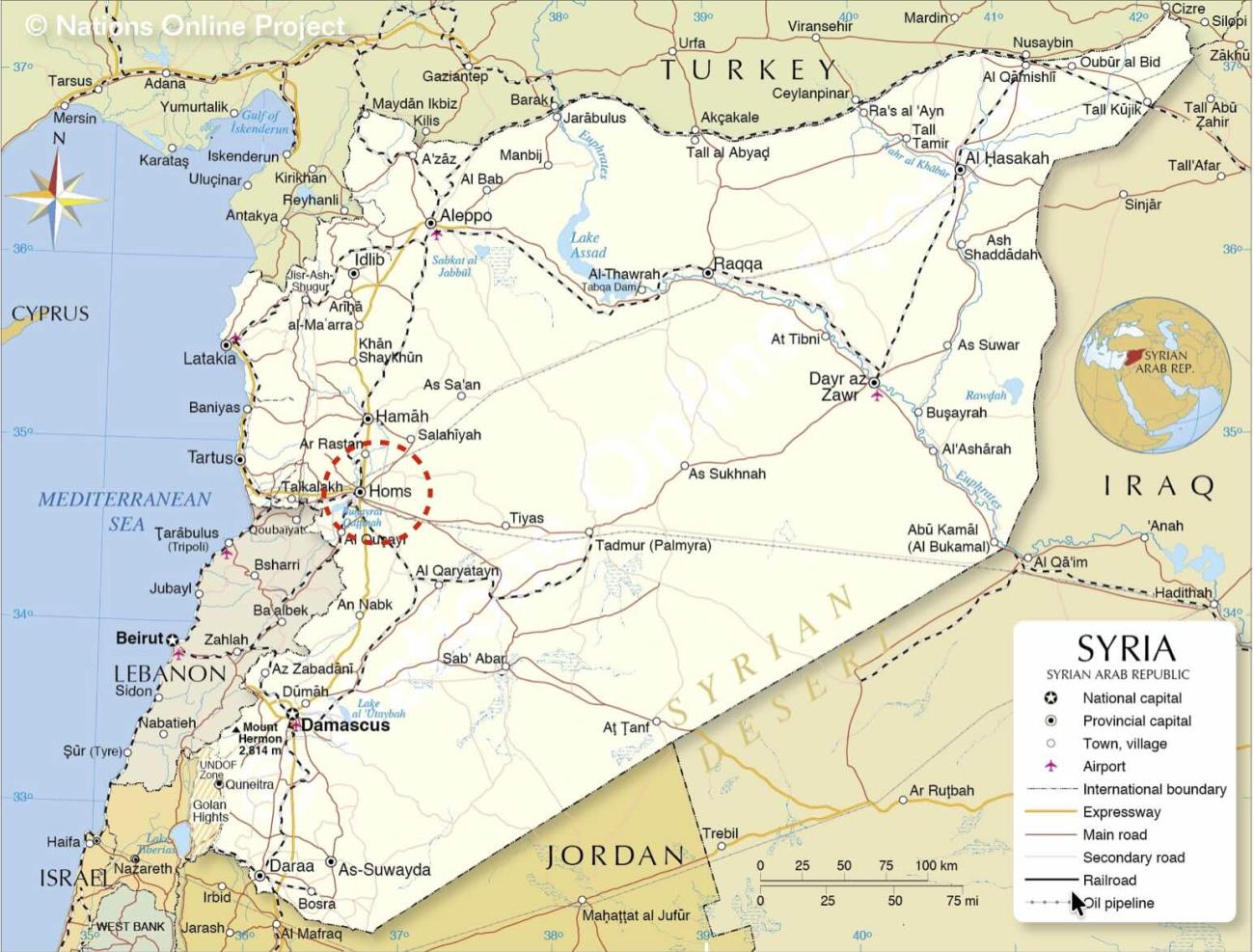
Ukraine’s role in Syria began before this current deployment at the behest of Washington and Tel-Aviv. The precedent was set prior to the fall of Damascus in December 2024.
While some reports circulating in the Western press try to downplay the role of the Ukrainian unit known as Khimik in Syria and claim that they appeared weeks before the Al Qaeda/HTS advance on Aleppo, the reality is that Ukrainian and isolated Western reports demonstrate that they made their move to support Jolani’s power bid and to weaken Russian capabilities in Syria from the end of 2023.
As far back as April 2023, The Washington Post reported that:
Ukrainian officers considered training operatives of the Syrian Democratic Forces (SDF), the military force of Syria’s Kurdish-controlled autonomous northeast, to strike Russian targets and conduct “unspecified ‘direct action’ activities along with UAV [unmanned aerial vehicle] attacks,” according to the (leaked US Intelligence) document.
A report in Defence Blog dated June 2024:
According to a source from Ukraine’s Main Intelligence Directorate (GUR), these coordinated strikes have been ongoing since the beginning of the year [emphasis added], significantly impacting the Russian military presence in the region. The GUR reports that these operations have successfully hit numerous Russian military installations under the so-called ‘Armed Forces of the Russian Federation in the Syrian Arab Republic’.
Army Recognition article:
According to Kyiv Post, videos indicate that Ukrainian commandos, supported by Syrian rebels, have conducted operations against Russian positions on the Golan Heights, an area where Russia recently established several observation posts. This initiative aims to counter Russian support for the Bashar al-Assad regime while keeping Shiite militias at bay to maintain amicable relations with Israel. The attacks reportedly involve the use of improvised explosive devices against checkpoints and Russian patrols in an operation named ‘Khimik’.
A July 2024 attack on Kuweires Airbase (north-west Aleppo) was reported by Kyiv Post and The New Arab based on special forces insider information:
According to Kyiv Post sources in the special service, the Khimik group carried out another complex strike on Russian occupation forces in Syria in late July 2024. This time, the target of the attack was Russian military equipment at the Kuweires airfield, located east of Aleppo.
There are multiple videos that appear to record a number of Khimik attacks on Russian bases and positions.
In September 2024, Khimik targeted a Russian drone and IED assembly hub in Aleppo. Two months later, Jolani launched the attack on Aleppo. Quote from the Defence Blog:
The targeted base in Aleppo was reportedly a hub for Russia’s drone warfare efforts and the assembly of makeshift IEDs. Ukrainian intelligence believes that these facilities were directly linked to Russian operations in the region, providing critical support to Russian military activities both in Syria and beyond.
A report in Sputnik dated September 2024 detailed the arrival of 250 Ukrainian specialists who were distributed across Idlib City and Jisr Al Shughour (Idlib). According to a local source quoted in the report, “More than 250 UAVs were delivered to HTS in Idlib in batches in the form of components along with civilian goods.”
During the same period, Syrian media (Al Watan) reported that Kyrylo Budanov, head of Ukraine’s intelligence services, was in consistent contact with Jolani and was recruiting Takfiri militia to fight against Russia in Ukraine. It is also reported to me that Budanov has been instrumental in providing weapons to the Jolani regime since they were brought to power in Syria.
According to a number of reports based on testimonies from Syrian Arab Army soldiers and officers who resisted the HTS advance (contrary to the Russian rumour mill that they surrendered en masse) the drone firepower from HTS during the early stages of the advance overwhelmed the Syrian Arab Army forces and was not countered by Russian air strikes or air defence:
A Republican Guard officer told Al-Akhbar that the critical moment unfolded far from the Idlib front, but days earlier, when a command post in the Syrian Desert came under heavy drone attack. The unit held out for some time, but the strikes were more than it could absorb. Firepower proved overwhelming. Requests for reinforcements and logistical support went unanswered.
Republican Guard units around Saraqib in northern Syria remained in their positions without any operational guidance. According to the officer, the only instruction was to ‘reinforce fortifications,’ even as drones and artillery struck from ranges ‘we weren’t used to.’
A young lieutenant who retreated from Aleppo and Idlib to Homs told Al-Akhbar that “the collapse did not start when the attacking forces entered, but when Russian forces withdrew from their base in Maarrat Misrin.” With their positions exposed to relentless drone strikes, Syrian units began to fall back toward the M5 highway under fog and nonstop shelling.
It has also been reported to me that Ukrainian Special Forces were alongside the US Special Forces when Iran bombed the Al Tanf base that straddles the borders of Syria, Jordan and Iraq. You can read more here.
Iraq — the False Flag Doctrine
While Ukraine’s presence in Syria is increasingly overt and focused on capacity-building, its cross-border activities in Iraq follow a highly classified and sensitive intelligence doctrine.
A source following the Iraq-Ukraine affair closely told me:
This mechanism involves a Ukrainian GUR cell carrying out a deniable drone or missile strike targeting a deep-seated Iraqi sovereign target, while deliberately leaving tactical evidence at the scene; this step is designed to ensure that the strikes are entirely attributed to pro-Iranian factions. Stunning public revelations made by Iraqi National Security Advisor Qasim al-Aboudi have exposed a sophisticated network of active foreign intelligence operations within Iraqi borders, where Iraqi security agencies intercepted and arrested members of a specialized espionage cell directly linked to Ukrainian intelligence.
A report in Military Watch confirms this information:
This represents one of the most significant cases of Ukrainian intelligence operations extending beyond the European theatre and into the Middle East, following prior operations that similarly targeted Western adversaries in Syria, Sudan and West Africa. Ukrainian intelligence personnel were alleged by Iraqi authorities to have sought to conduct attacks and subsequently attribute them to Iraqi ‘resistance groups’, a term commonly used to describe the network of predominantly militias supported by Iran.
GUR systematically designed these strikes to be attributed to local pro-Iranian militias. The purpose is to provoke harsh political and potential military backlash from the US-controlled central government in Baghdad, already under pressure from the US-Zionist alliance, to disarm the Iraqi resistance factions. It is also designed to intensify scrutiny from the weaponised ‘international’ regulatory and security complex.
Additionally, the broader geopolitical objective is to destabilise Iraq’s internal security landscape. By dragging the local resistance factions into political crisis and security confrontations with the state, resources would be focused internally, and operational capability would contract. This would inevitably prevent or limit the deployment of fighters or equipment across the border into Syria should Jolani launch any operations against Hezbollah in Lebanon.
The arrested agents admitted to orchestrating precision attacks using missiles and drones against the Iraqi state’s sovereign infrastructure and sensitive government facilities.
Sudan and Mali
In October 2025, Military Watch reported on the elimination of GUR personnel during operations in Sudan’s Darfur region. They had been deployed as support for the Western-backed and genocidal Rapid Support Forces (RSF) attempting to overthrow the Sudanese Army and state.
Multiple West African countries that have recently expelled French forces and influence from their territory, most notably Mali, have also widely alleged that Ukrainian personnel are supporting insurgents there, particularly in the field of drone warfare, with footage of insurgents posing with Ukrainian units having supported these allegations. A Sudanese Foreign Ministry official in June referred to Ukraine’s actions as doing the West’s ‘dirty work’ across multiple African states.
The UK, one of Ukraine’s staunchest sponsors, hosted a ‘discreet’ Sudan event featuring UAE-aligned RSF representatives.
A discreet British foreign office event beginning on Wednesday is mired in controversy after it emerged that a representative of the Rapid Support Forces‘ (RSF) political wing was scheduled to attend, Middle East Eye can reveal. Nasredeen Abdulbari, a leader in the Sudanese paramilitary’s Tasis coalition, was invited to a UK-run conference at Wilton Park, alongside other figures aligned with the United Arab Emirates, according to multiple British and Sudanese sources.
Mali: in 2024, The Guardian reported that Ukrainian forces were involved in operations against the Russian PMC Wagner in Mali. Wagner and the Malian armed forces had “fought fierce battles” over a five-day period against a coalition of Tuareg separatist forces and jihadi groups, who had used heavy weapons, drones and suicide bombers. Numerous Wagner fighters, including a commander, Sergei Shevchenko, were killed.
Andrii Yusov, spokesman for Ukraine’s GUR military intelligence agency, said … ‘the rebels received necessary information, and not just information, which enabled a successful military operation against Russian war criminals.’
The Maritime Corridor Dimension — the Caspian Sea
The GUR’s strategy did not stop at the borders of ground bases in Homs or hybrid intelligence operations in Baghdad; rather, it extended to attempts to paralyse the maritime shipping lanes that sustain the military efforts and trade of its adversaries on their own turf.
The incident involving Ukraine’s precision drone strike on an Iranian cargo ship in the Caspian Sea underscores the radical nature of this mandated operational role.
According to official statements confirmed by Iranian Foreign Minister Abbas Araghchi and statements by Ukrainian President Volodymyr Zelenskyy, Ukrainian forces carried out an attack using long-range drones targeting Ana, an Iranian ship that was sailing from the Russian port of Astrakhan to the Iranian port of Anzali in the outer anchorage of the Volga River.
The attack completely destroyed the ship’s bridge, killed one sailor, and injured others, in a move that Kyiv justified as targeting ships transporting military cargo linked to Iran on behalf of Russia.
What is forming is an integrated interception loop targeting Ukraine’s adversaries and their regional allies, while, simultaneously, providing cross-theatre operational coordination for Washington and Tel-Aviv.
Special forces embedded in Syria, concentrated in the Homs region, cut off the land smuggling routes towards the Mediterranean and Lebanon. Ukrainian drone strikes have been proven capable of endangering direct maritime corridors between Tehran and Moscow in the Caspian Sea. This has the potential to close or handicap transit across waterways historically classified as safe zones for exchange of technology and equipment between Russia and Iran.
Western complacency or deliberate encouragement has facilitated GUR operations outside traditional frameworks to the point of launching long-range strategic strikes without warning — a tactic that Iranian Foreign Minister Abbas Araghchi described as a flagrant violation of the UN Charter and an attempt to expand the conflict internationally.
Had this strike been carried out by a Western nation, it would be perceived as an open declaration of war and the UN Security Council would have been involved. Ukraine can disregard international laws, with the covert backing of NATO member states, and threaten the safety of maritime navigation and state sovereignty over territorial waters and then back down with claims that it was “unintentional” to appease the target nation and deescalate.
Bottom line: the West has granted Kyiv carte blanche to act as a ‘legitimate international pirate', striking ships and sinking commercial and military cargo in international waters, with impunity.
The Israeli interest in facilitating the rise of Ukraine as a shadow-military is explained in the INSS document that I reference earlier in the article:
Another area of Ukrainian interest in the crisis with Iran is the Caspian Sea — the corridor connecting Russia and Iran, which is utilized for transport, sanctions evasion, and weapon supplies. Ukraine has previously targeted this corridor, and even though the Israeli strikes in the Bandar Anzali area on the Caspian coast in March 2026 were not linked to Ukraine, they certainly contributed to Ukrainian interest in disrupting this two-way Russian-Iranian axis.
Ukrainian ‘Security’ Expertise Is Exported to the Zionist-Arab Persian Gulf States and Jordan
Very shortly after the US-Zionist aggression against Iran commence, and the Supreme Leader Khamenei was assassinated, Ukrainian experts were deployed to the Persian Gulf states. Reuters reported, citing Ukrainian ‘President’ Zelensky:
‘Regarding the situation in the Middle East, we have sent our teams: three professional, equipped teams,’ Zelenskiy told reporters. He did not give details on the teams but said they should all be in place this week.
His communications adviser also said Ukrainian specialists had already been deployed to a U.S. military base in Jordan, without providing details.
Zelenskiy said the presence of Ukrainian pilots was key to the effectiveness of interceptor drone operations.
‘Even those countries that were quietly buying interceptors have, I think, realised that without our military, our operators, our software... without all of that, the interceptors simply don’t work.’
Citing the INSS report, Ukraine's interests are equally clear. In exchange for the procurement of Ukrainian interceptor drones, training, and the optimization of air defence systems, options are being explored regarding the transfer of outdated or surplus air defence components to Ukraine, alongside investments, joint defence manufacturing, and technological partnerships.
The INSS report also claims that President Zelenskyy’s April 2026 visit to Turkey and Syria, as part of his broader series of regional meetings, demonstrates that Ukraine’s Middle Eastern policy is not being shaped solely through the Arab monarchies.
Turkey has long served as a distinct regional channel for Kyiv: it supplied weapons, played a role in maritime export logistics during the period of Russian dominance in the Black Sea in the early years of the war, and hosted direct negotiations between Ukraine and Russia. Following the fall of the Assad regime, the Turkish connection also helped Ukraine formalize contacts with the new government in Damascus. In this sense, Turkey serves Ukraine not only as a regional partner, but also as an access mechanism to arenas where Kyiv’s independent reach remains limited.
The Israel Dossier — Ukraine’s Anti-FPV Expertise
The success of the Hezbollah FPV drone against the Zionist invasion forces has exposed an Achilles heel in ‘Israel’s’ defence shield. The devices that are not reliant on wireless communication and are immune to electronic warfare measures, originated on the Russia-Ukraine front.
According to INSS, “Therefore, Ukraine’s experience — both in developing such systems and in confronting them on a daily basis — could be highly valuable for Israel in areas such as detection, physical protection, counter-fiber measures, and the rapid training of operational units.”
Strategic Objectives
The shadow front. Ukraine’s calculated expansion into West Asia (Middle East) is not an isolated or random project. It represents a highly coordinated multi-layered international strategy specifically designed for the modern attrition warfare.
The project is backed by Washington and the US military industrial complex; Zelensky met with Lockheed Martin during his trip to the US for the funeral of Lindsey Graham. Zelensky commented:
I met with the team of the Lockheed Martin defense company – one of the strongest enterprises in the United States, with which we have been cooperating for a long time. Lockheed Martin is the company that produces ATACMS, HIMARS, F-16s, and missiles for Patriot systems. Today, we discussed further development of our cooperation – joint production and technology exchange.
Zelensky also met with President Trump during his visit. The strike on the Iranian vessel in the Caspian Sea had been artfully carried out three days prior to the meeting. Christopher Granville, managing director at TS Lombard forecasting consultancy, said this:
The Ukrainian President Volodymyr Zelenskyy has himself spoken of these strikes with satisfaction and justified them on the grounds that Ukrainian intelligence has evidence that Russian intelligence is helping Iran with targeting U.S. military sites in neighboring Middle Eastern countries.
One of the primary objectives of the Ukraine project is strategic depletion of the Iran ‘ring of fire’ resources - as demonstrated in Syria and Iraq. Kyiv appears to be forcing Moscow to redeploy critical air assets, electronic warfare systems and military personnel away from the primary European conflict to protect its overseas interests and logistics.
Ukraine is shaping up to be the deniable global proxy. It possesses battle-tested specialised technical expertise and combat experience. It can operate outside the complex domestic legal frameworks and unimpeded by the political oversight that might constrain Western military operations.
This unique positioning facilitates GUR global operations or strikes on highly sensitive targets worldwide without the associated risk of direct diplomatic, political or even military crisis among the back-room world powers.
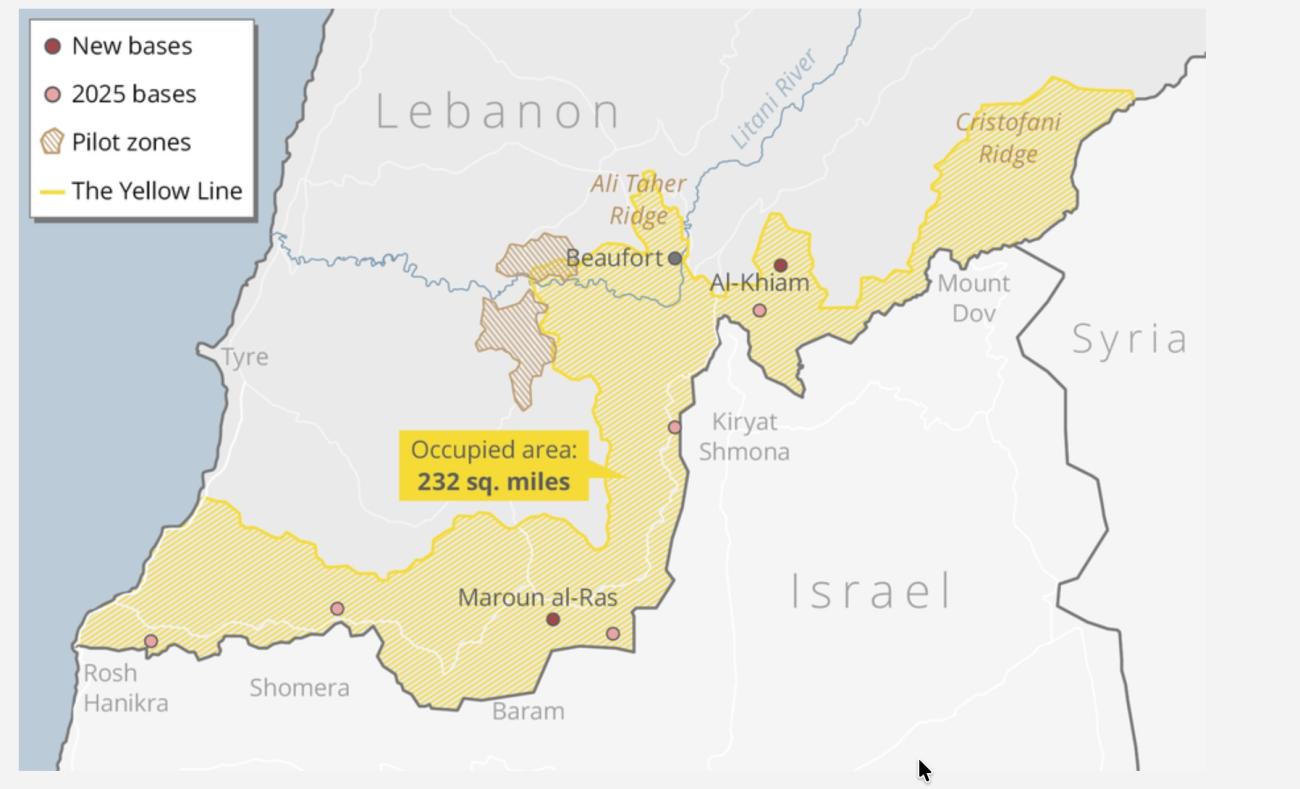
It is possible that Lebanon will be kept tied up with security operations, internal strife and division and the dead-in-the-water direct ‘negotiations’ with ‘Israel’ while the Zionists occupy an estimated 230 square miles of Lebanese territory in the south. The map above is taken from the linked Haaretz article. While Lebanon is hamstrung internally, Ukraine can pivot to Iraq and Iran on behalf of the US-Zionist alliance - working with the Kurdish separatist factions to create instability and chaos inside both countries.
Jolani is currently dealing with internal divisions and recent operations against opponents inside Syria like Abu Amsha, known as the ‘chicken thief’ and backed by Turkey. As one Telegram channel pointed out, the terrorist Omar Muhammad Jiftçi (a Turkish national), known as "Mukhtar al-Turki," has been appointed Commander of the 62nd Division, succeeding the terrorist Muhammad al-Jasim (Abu Amsha). Terrorists all.
While the internal instability in Syria may mean a delay in operations against Lebanon, Ukrainian presence will very probably remain and increase. The threat remains active.
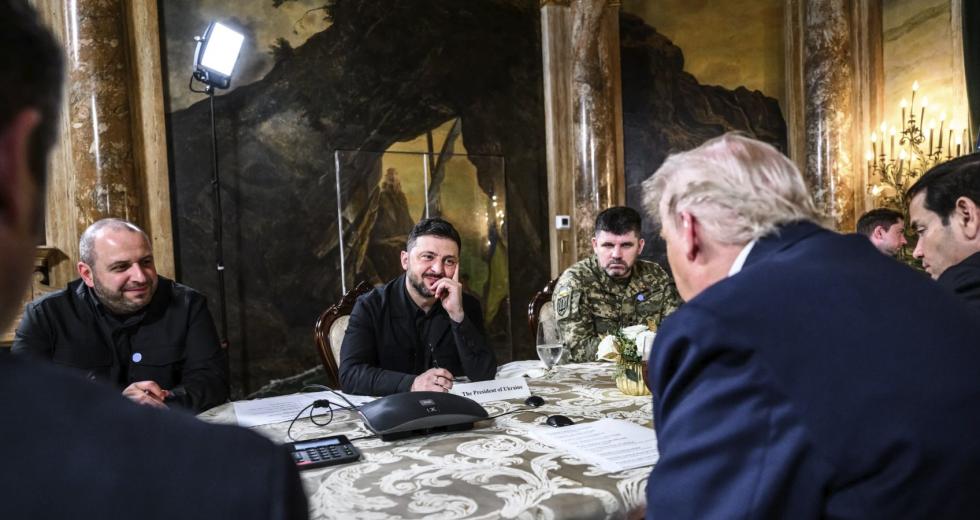
Cover image: Ukraine’s Zelensky meets with US President Donald Trump at Mar-a-Lago. Source: The White House