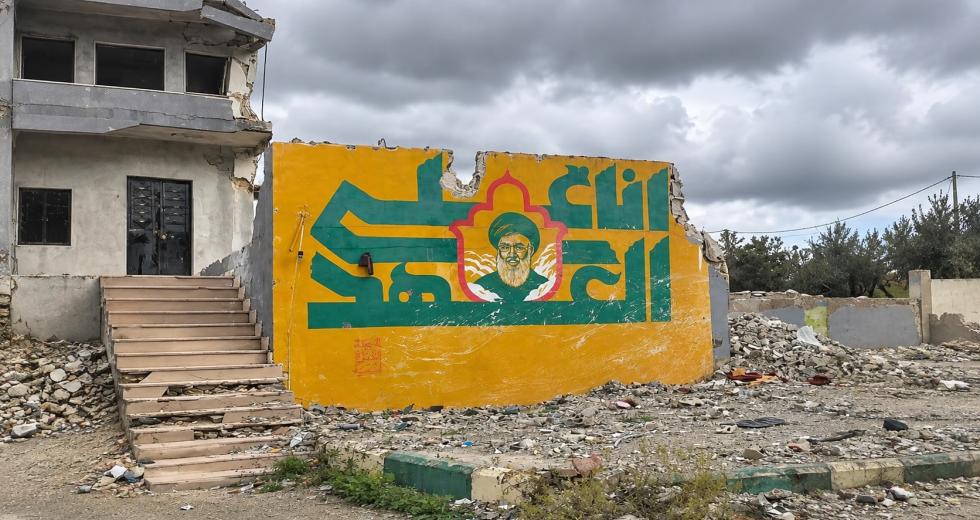
The stretch of high ground linking Jarjou’, Kfar Fila, and the upper folds of southern Lebanon's Iqlim al-Tuffah carries a quiet significance that may be easy to overlook. At first glance, it reads like any other limestone ridge in the south, with terraced slopes, pockets of scrub oak, and stone houses clinging to the mountain as it rises out of the Nabatieh basin. Yet these villages sit directly on the threshold between the low-lying interior and the resistance's mountain strongholds of Jabal Safi and Mleeta, standing right opposite the heights of Sujud and Mount Rihan. For generations, they have functioned as both a hinge and a shield for southern Lebanon's people.
During previous years of the occupation, when Israeli forces and the Southern Lebanese Army (SLA) held the elevated outposts along the Sujud and Jezzine ridges, the terrain itself was weaponised. High ground was meant to translate into total visibility and total control, leaving every road and valley below under constant surveillance and thereby constant threat. Jarjou’ and Kfar Fila lay directly beneath that gaze. Rather than collapsing and emptying under shelling, the villages quietly absorbed the pressure from above while keeping open the rugged paths that connected the interior towns to the mountain front.
What held this front together was arguably less a matter of military engineering than of social fabric. In Iqlim al-Tuffah, survival was never treated as something separate from ordinary routine. In speaking with the older generations I encounter, I learn more about how families continued pruning their olive trees, harvesting figs and thyme, and rebuilding stone walls within range of the outposts. They have turned their persistence into an unremarkable daily habit. There was no clean dividing line between the village and the resistance front.
The people who stayed to keep the houses lit and the land worked formed the living infrastructure without which no position on the ridges could have held. The summits above them were fortified for decades, yet the villages remained intact; they were tilled and inhabited. All this proves that high ground only holds value if the land below can be emptied. And that is why people here have started to return and rebuild, even if the Israeli strikes continue.
On the way to the southern Lebanese village of Majdal Selm, the chaos of Israeli aggression is being subdued by a veil of determination that has wrapped itself around the community like a cool compress. The people are quietly returning and attempting to rebuild, sometimes multiple times. They are doing this not solely for the sake of economic relief, but so they may leave an enduring trace of their existence despite the attacks and devastation.
“That area of the South”, a local man, Hussein, tells me, “that is what we call Khan Younis, just because of the sheer devastation; Israelis are blowing up everything that still stands”. Hussein works in a small van in the middle of the village alongside his son, serving coffee and small foodstuffs to those who make their way through. When I ask about Bani Hayyan, a southern Lebanese village that has been almost wiped clean off the map by Israeli airstrikes and demolition attacks, he sighs deeply and shakes his head. “It’s almost gone,” he says. Another man chimes in, “Everything that is gone will be rebuilt,” he says with determination. “The Israelis are comfortable with the current situation, but it won’t last for them, you will see,” he emphasises. We all nod and drink our coffee, listening to the sound of Israeli attacks in the distance and a drone that menacingly hovers nearby.
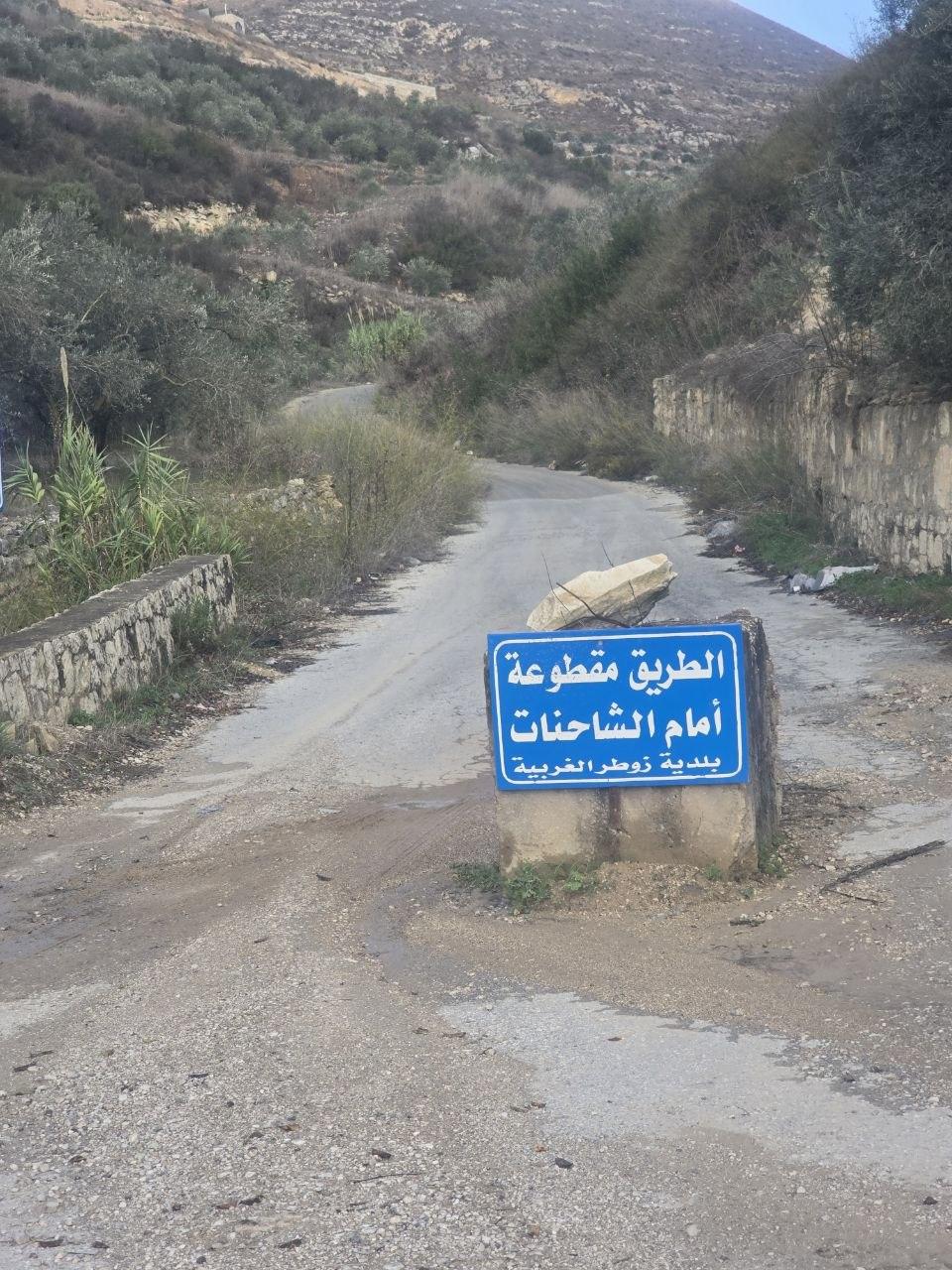
Moving further through the district, stopping by Zawtar al-Gharbiya, I meet Fady, who captures the same relentless spirit when he describes the dangerous journeys residents undertake just to maintain their connection to the land. “We have been sneaking into the village as much as possible, just trying to get any olives that survived the Israeli bombardment,” Fady tells me. “Our people raised these olive trees as though they were our children, they are that precious to us that we will do anything to reach them,” he says.
To understand the full weight of these communities, one must look beyond the immediate flashpoints and examine the historical architecture of southern Lebanese resilience. The topography of Iqlim al-Tuffah is characterised by steep ravines and dense vegetation, which historically provided natural concealment and tactical depth. Yet terrain alone does not sustain a population under siege. The real anchor has always been the social cohesion of the villagers, whose roots in the soil predate modern conflicts by centuries. Families trace their lineage through generations of agrarian labour, cultivating the stony terraces with a quiet obstinacy that defies the volatile geopolitics of the borderlands.
In villages like Jarjou’ and Kfar Fila, daily life was forged in the crucible of prolonged friction. Every household functioned as a logistical node, storing provisions, tending livestock, and maintaining communication lines through networks that bypassed official infrastructure. When shelling cut off paved roads, mule tracks and footpaths across the rocky hillsides became lifelines for the people in the area. Women and elders played a central role in this enduring routine, hauling water from subterranean springs, baking bread in traditional clay ovens, and ensuring that the generational continuity of the village was never broken. This domestic endurance was not passive; it was an active form of defiance that denied the occupying forces the psychological victory of depopulation.
The landscape itself serves as an archive of endurance. Ancient olive groves, some bearing trees with trunks gnarled and hollowed by centuries of weather and conflict, are treated with a reverence that borders on the sacred. To the villagers, these trees are silent witnesses to every phase of struggle. The annual harvest is not merely an economic event but a communal ritual that reaffirms belonging. Even when military patrols monitored the valleys from the heights of Sujud and Mount Rihan, farmers would time their movements between artillery salvos, slipping into the groves at dawn to strip the branches of their green and black fruit.
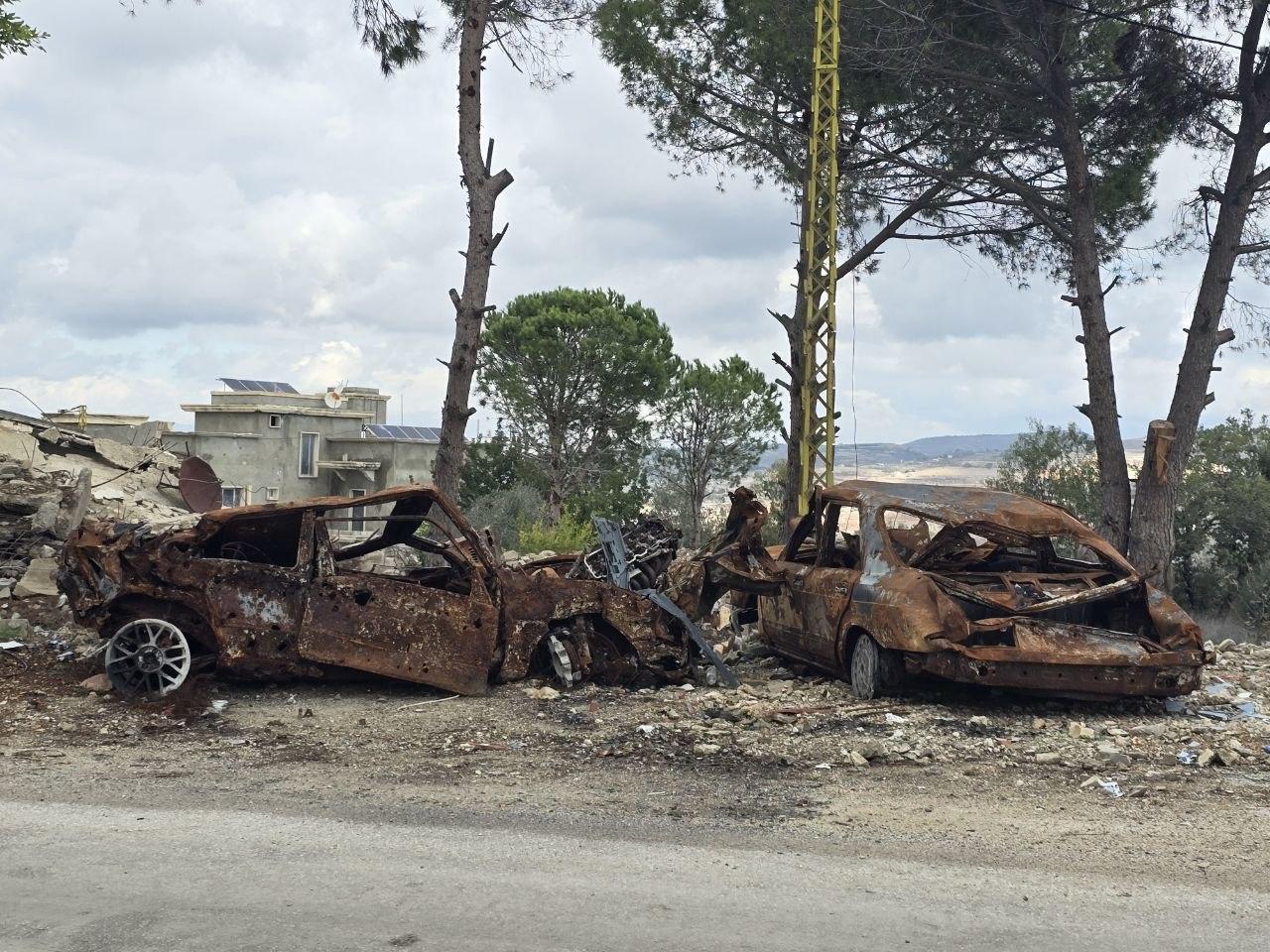
This profound attachment to the land explains why physical destruction, no matter how systematic, fails to erase the community. When homes are reduced to rubble, the rubble itself becomes temporary seating for neighbours who gather to drink coffee and discuss the logistics of clearing the site. The return of displaced residents is rarely orchestrated by grand political directives; it is driven by an instinctive gravitational pull toward home. As soon as a ceasefire window opens or the intensity of strikes dips momentarily, cars loaded with mattresses, gas cylinders, and basic tools begin navigating the pockmarked roads back to the south.
The resilience observed in Majdal Selm and neighbouring hamlets relies heavily on informal economies of mutual aid. Formal banking systems and state infrastructure have long been fragile or entirely absent in these frontline zones, compelling communities to rely on localised networks of solidarity. Small enterprises, such as Hussein’s mobile coffee van, function as informal town halls where residents exchange news, pool resources, and assess security conditions. These micro-economies are sustained by remittances from family members working in Beirut, West Africa, or the Gulf, creating a financial circulatory system that pumps life back into shattered villages.
A bridge damaged by an Israeli airstrike in Froun. Source: Roqayah Chamseddine
At the same time, local agriculture adapts to the constant threat of disruption. Beekeeping, herb gathering, and small-scale vegetable cultivation are organised in decentralised pockets, ensuring that the loss of one garden does not spell total deprivation for a household. Neighbours share equipment, coordinate harvesting schedules, and look after one another’s children when air raids force sudden evacuations. This collaborative survival model transforms vulnerability into collective strength, ensuring that the community operates as a single organism rather than a collection of isolated families.
Living beneath the persistent hum of surveillance drones and the distant concussions of airstrikes produces a distinct psychological state, one characterised not by panic, but by a hardened normalisation of risk. Children grow up learning to distinguish the acoustic signatures of different aircraft, while adults calculate their daily errands around weather patterns and perceived threat levels. Yet this hypervigilance coexists with a stubborn commitment to normalcy. Weddings are still celebrated in unfinished courtyards, schools are reopened in damaged basements, and gardens are replanted within days of being scorched by incendiary munitions.
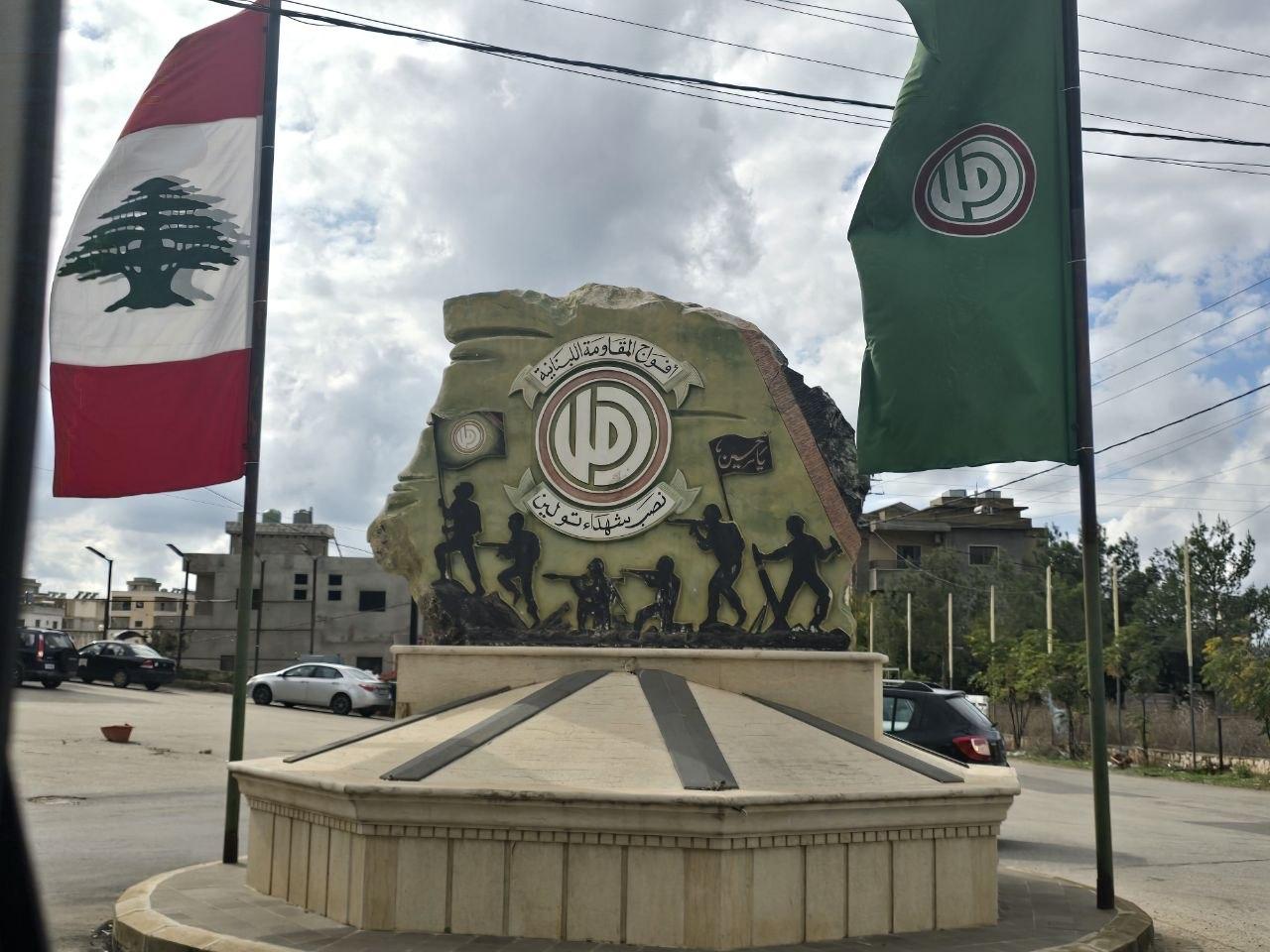
This mental fortitude stems from a collective memory of displacement and return. Older residents remember previous invasions, the long years of occupation, and the gradual reclamation of the hills following the withdrawal of foreign forces. They view the current wave of destruction as another chapter in a protracted historical struggle rather than an absolute ending. This generational perspective imparts a sense of inevitability regarding reconstruction. Just as previous ruins were cleared and rebuilt stone by stone, the current devastation is met with the quiet certainty of eventual renewal.
Rebuilding in Iqlim al-Tuffah and the wider southern districts is an act of deliberate defiance against demographic engineering. The strategy of total destruction pursued by occupying forces aims to create uninhabitable buffer zones, rendering the land sterile and empty. By returning swiftly, clearing debris, and pitching tents or setting up prefabricated units amid the wreckage, the residents actively dismantle that strategic objective. Every repaired roof and every replanted sapling reasserts sovereignty over the landscape, signalling that the frontier remains inhabited and defended by its rightful owners.
The material challenges of this reconstruction are immense. Contractors face severe shortages of building materials, disrupted supply chains, and the constant threat of renewed hostilities. I spoke with multiple engineers across the south who described an intentional campaign being carried out by Israel that is aimed at destroying even their ability to access things as simple as concrete and excavators. Yet local solidarity networks mobilise quickly to pool labour and expertise. Masons, electricians, and carpenters donate their time to help neighbours patch roofs and restore water connections before the winter rains set in. This grassroots mobilisation bypasses bureaucratic delays, embodying the self-reliant ethos that has kept these communities anchored to the mountains for centuries.
As evening falls over the Nabatieh basin, the silhouette of the Iqlim al-Tuffah ridges merges with the deepening dusk. The drone overhead continues its mechanical rotation, a reminder of the precarious peace that hangs over the borderlands. Yet down in the village squares, lights hastily connected by temporary wiring flicker in windows. Voices carry across narrow alleys where neighbours share news of the day's recovery efforts.
The high ground has changed hands across history, and the valleys have absorbed wave after wave of violence, but the fundamental reality of the south remains unaltered. The strength of the resistance and the resilience of the villages are two sides of the same coin. They are both forged from the same limestone, nourished by the same ancient groves, and anchored by an unshakeable refusal to let the land fall silent.
To walk through these spaces is to witness a community continuously stitching its world back together, threading patience through the fractures of conflict, and refusing to let the horizon of the south be defined by its ruins alone. Every stone replaced and every field cleared tells the same enduring story of a people who belong to the earth beneath their feet. They prove that persistence is not merely a reaction to circumstance, but a profound and deliberate way of existing in a landscape that has known too much sorrow and yet continues to yield life season after season.