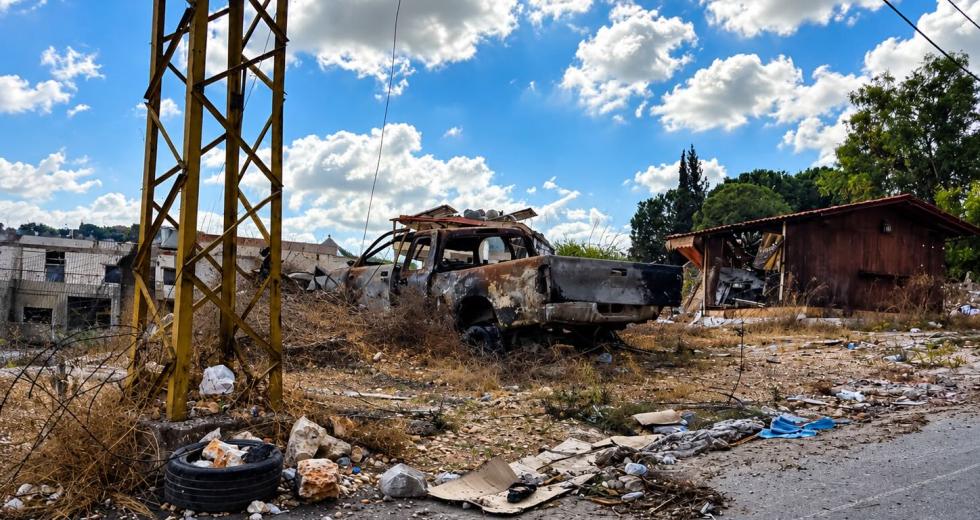
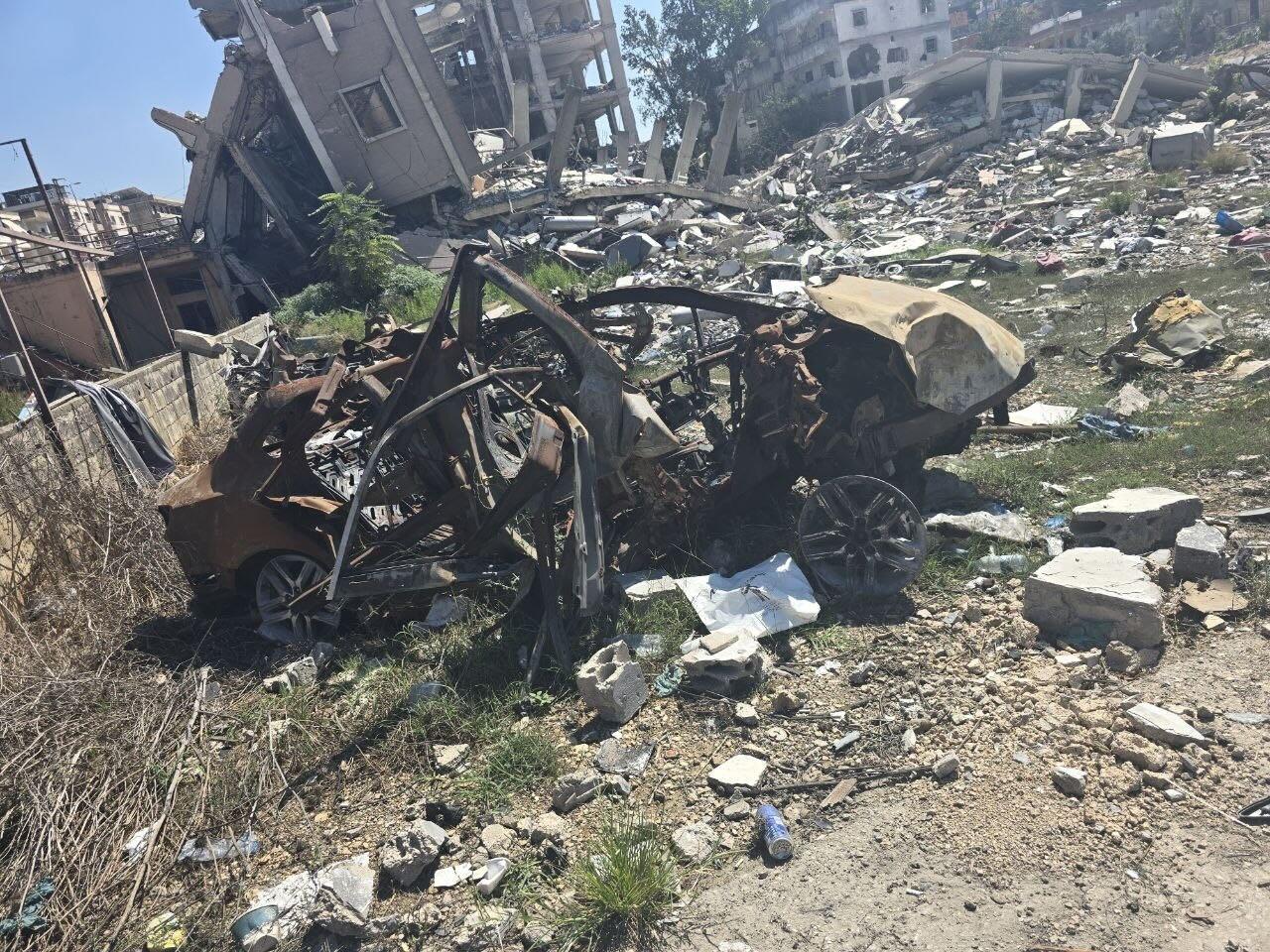
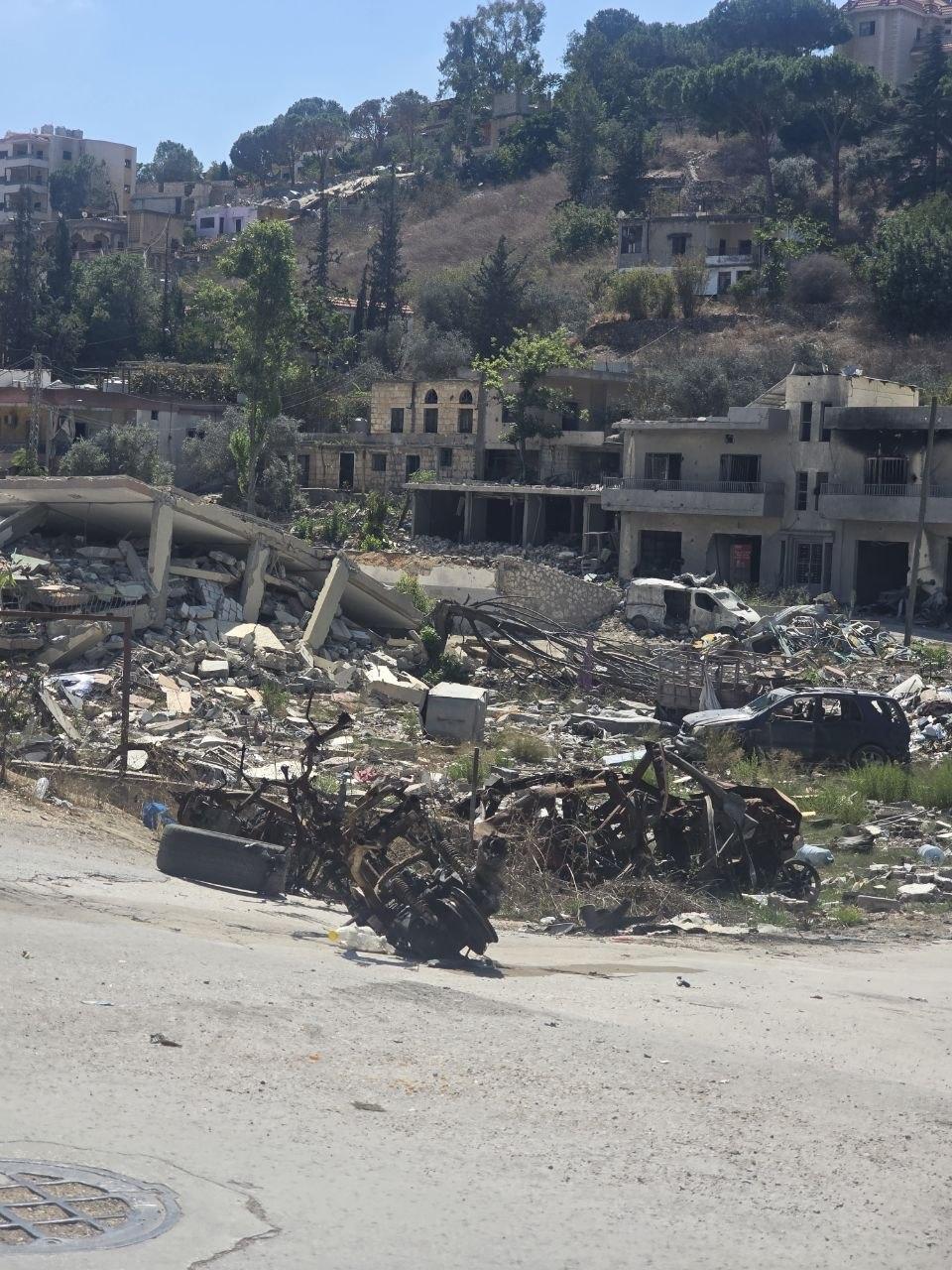
During a recent journey through Nabatieh al-Fawqa in southern Lebanon, a region that has endured decades of foreign aggression, I came across a pickup truck that had been burned almost beyond recognition in an Israeli attack. Its metallic frame had been reduced to a blackened skeleton, its windows were gone, and what remained of its chassis sat exposed beside the road like a monument. It was one of many destroyed vehicles scattered across southern Lebanon, where Israeli airstrikes have devastated residential neighbourhoods and left cars mangled across streets that people once travelled without a second thought.
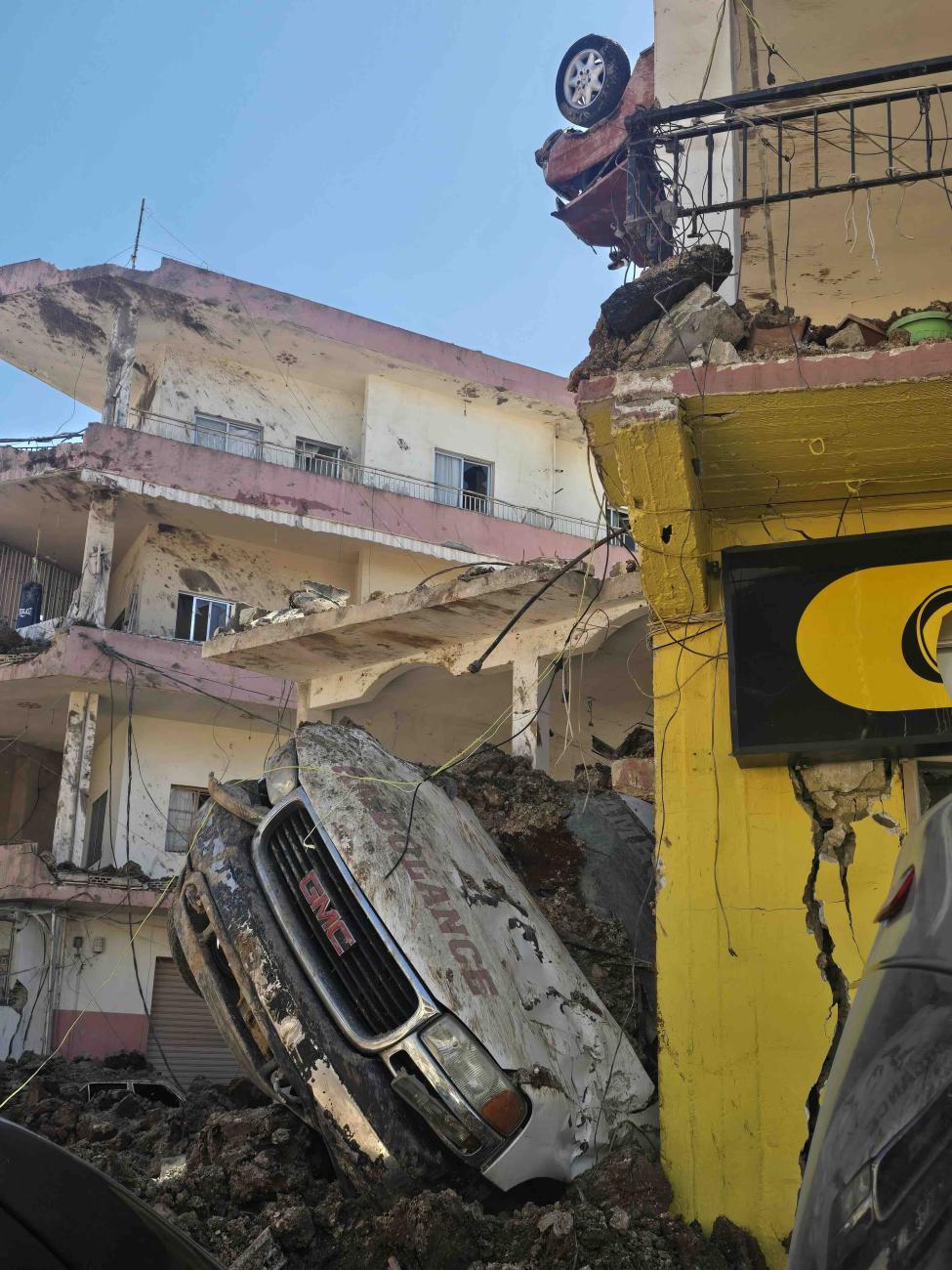
I had already witnessed the effects of these airstrikes throughout Lebanon. In one Beqaa Valley village, an Israeli missile had thrown vehicles, including an ambulance, many metres and destroyed them. There was so much destruction that a burned-out truck along the roadside no longer attracted attention.
I stopped to photograph the scene before continuing through the district to document the destruction caused by Israeli attacks. I took dozens of other photographs that day, all showing the violence that is intended to cause forced displacement in southern Lebanon. I shared the above photograph online, and later I received a message from a stranger named Ali that said, “This [is] the truck my dad was martyred in.”
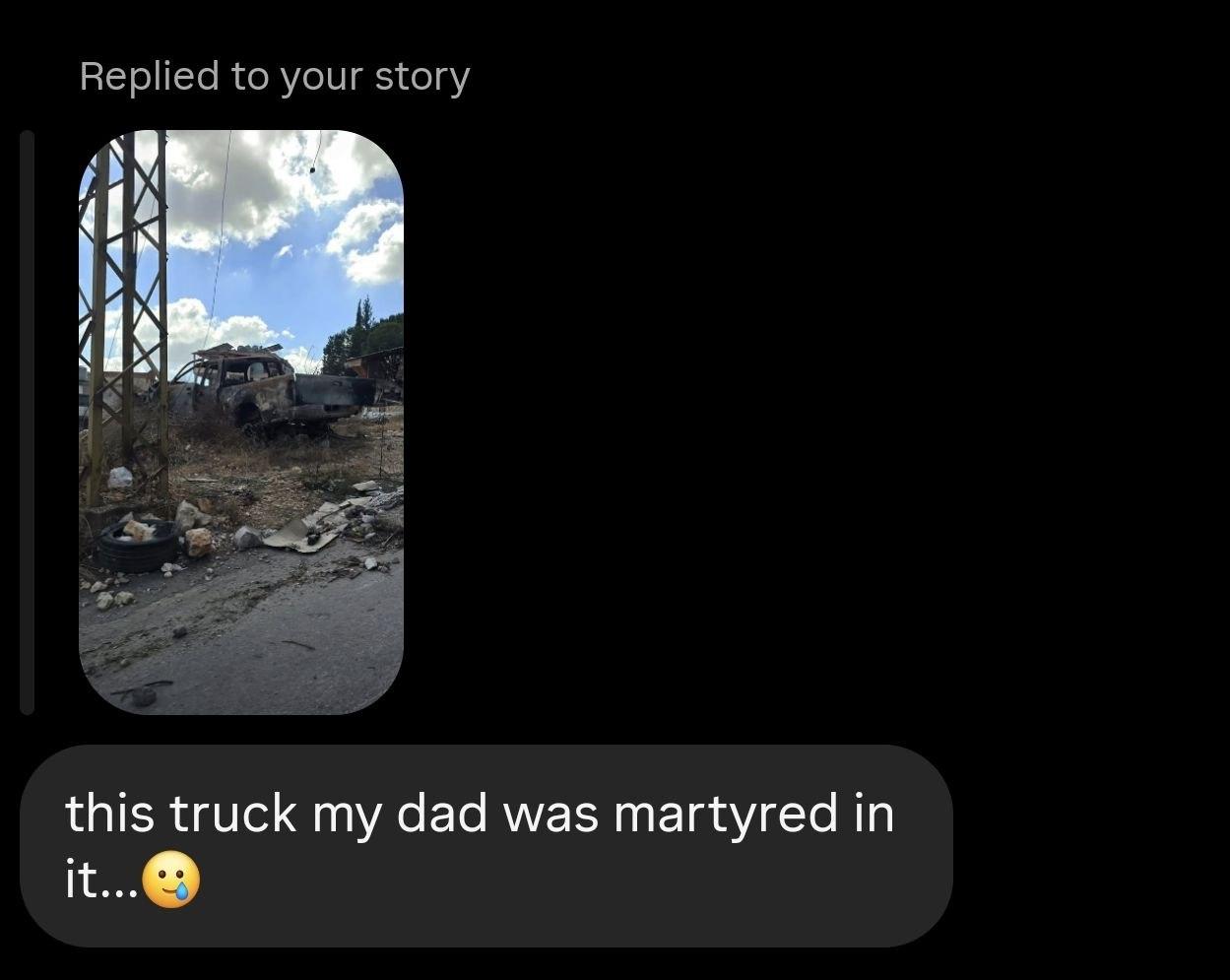
I had not known whose vehicle I had photographed. When Ali reached out, the photograph took on a new significance. The wreckage belonged to Ali’s father, Hassan, a man who had been murdered in a targeted drone strike while delivering food to the village. Ali’s message connected the destruction with a human life that I had yet to understand.
I spoke with Ali about his father. As the attacks escalated, Hassan had refused to leave his beloved Nabatieh al-Fawqa in order to bring essential food and supplies to the village.
Ali said, “Even though he knew he didn't have formal work that required him to stay during the war, he would say he was staying to serve those who remained and help them.” Hassan knew that while he could not stop the intensifying attacks on the community, he could deliver essential supplies there. Travelling in his pickup truck became increasingly treacherous as the villagers’ needs became more desperate.
Remaining in one’s own community during wartime requires the support of the people who stay. Yet even delivering bread can require driving a truck into danger.
Hassan understood the peril but also the importance of his work. “As we all know, the war roughly had two phases, split by a short truce of about 10 days”, Ali recalled. “After that, my father would come visit us now and then, but he became deeply attached to the village and to the people there. They loved him, too, and were always waiting for him. He was constantly worried about how to secure their provisions, food, and necessities, and he was deeply content, happy, and loved what he was doing”.
On the day Hassan was murdered, the village had gone three days without receiving bread or basic food supplies. He had set out to provide them. A drone tracking his movements locked onto his civilian vehicle.
“While he was driving his pickup truck to deliver them, the Israeli enemy targeted him with two drone missiles,” Ali told me.
The truck I had photographed weeks later was the exact vehicle obliterated during that targeted assassination. While my photograph documented the physical aftermath, the viewer does not see what led to the devastation.
In the immediate aftermath of Hassan's death, his family struggled with his absence.
“Naturally, after his martyrdom, since he was the one who kept my grandfather's entire family together and resolved their problems, there was a period of dispersion and disorientation”, Ali explained. “But because of his wisdom and his words, the family pulled itself back together: 'Hassan used to do this, Hassan used to say that, don't do this or that'. In other words, we kept walking according to his words even after his martyrdom”.
As Ali spoke to me, he kept returning to his family’s realisation that they had not fully grasped Hassan’s impact on the wider community. “Yes, we lost my father, but his impact grew and flourished within us”, Ali told me with quiet pride. “We came to love him after his martyrdom far more than we did before, because of the stories people started telling us about him, what he used to do, how he worked, both in the past and recently. The love people had for him showed us who my father really was.”
Hassan's story shows how resistance can extend beyond armed operations to the act of feeding communities. The effects of Israel’s ethnic cleansing in southern Lebanon cannot be understood solely through photographs of the destruction. Ali's testimony revealed the story behind Hassan and his truck, from the events before the strike to the community bonds that continue today.
The burned-out truck remains permanently etched in my memory, both as physical evidence of Israeli violence and as the threshold of a story I never expected to uncover.
Cover image: A burned-out vehicle belonging to Hassan, in Nabatieh al-Fawqa, southern Lebanon. Source: Roqayah Chamseddine