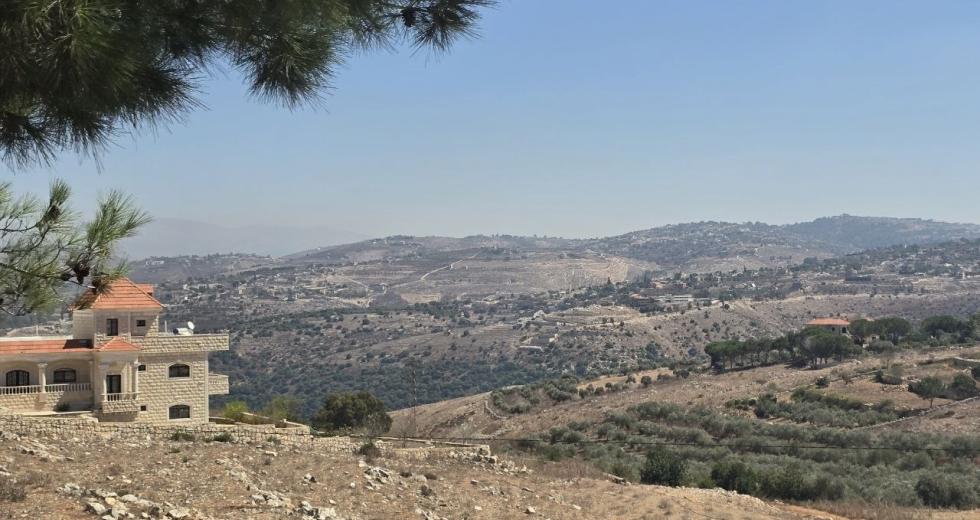
Facing relentless Israeli aggression, displacement, and exorbitant rents in the capital, southern Lebanese families continue returning to harvest their fields between strikes. Their quiet determination forms the final barrier against the complete depopulation of the southern frontier.
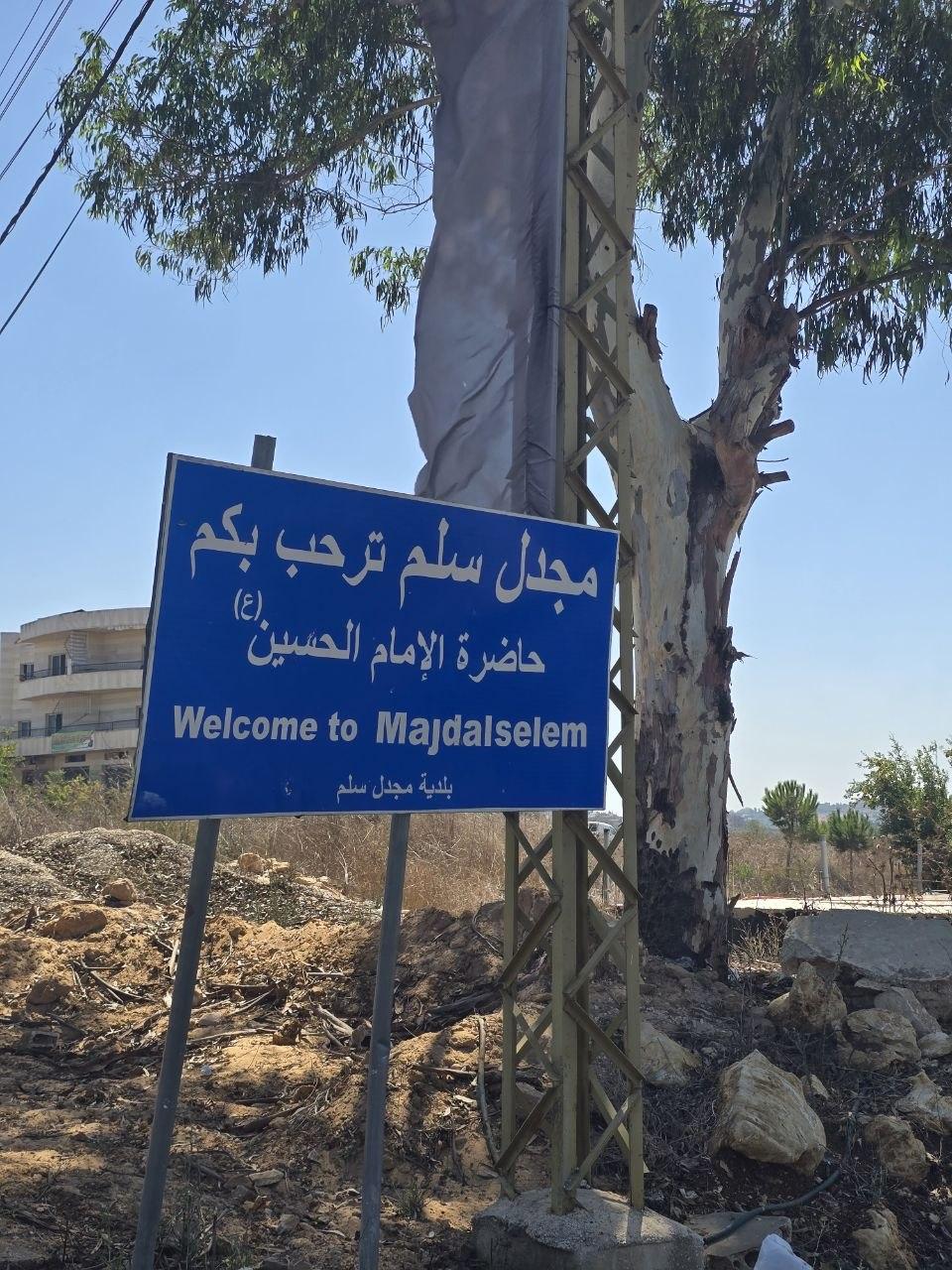
On the edges of the southern Lebanese village of Majdal Selm, roughly 10 kilometres in a direct line towards occupied Palestine, the immediate reality is defined by artillery craters, unexploded ordnance, and the constant hum of Israeli reconnaissance drones overhead. Since 7 October 2023, Israeli shelling and airstrikes have repeatedly and intentionally targeted homes, farmland, and water sources around Majdal Selm. Yet whenever the firing stops, residents head back to check the damage and start fixing what they can. For the people who live here, remaining on this land is not an abstract ideological stance, but an everyday necessity driven by economic survival and a long history of institutional abandonment by the central government in Beirut.
Historically, the Lebanese state treated the southern frontier as a secondary concern, allocating minimal to no funding for public infrastructure, schools, roads, or medical facilities, while leaving the local population largely unprotected against Israeli attacks. This lack of state support forced southern communities to rely on local solidarity networks, agricultural trade unions, and local political organisations that began mobilising rural labourers in the mid-20th century.
The Regie, the state-backed tobacco monopoly, routinely purchased crops from southern farmers at depressed prices, sparking widespread strikes and labour protests during the 1960s and 1970s. These early economic movements created a durable political framework across the south, linking agrarian worker rights directly to national defence and anti-imperialist organising.
The geographical proximity to the so-called armistice line established after 1948 means that residents of Majdal Selm live within a direct line of sight of Israeli military positions and monitored border fences. As I stood on the village’s edge, I spoke to residents who warned me to be careful “because the Israelis can see you recording”. In the distance, we could see several depopulated villages, including Bani Hayyan. All of them nearly destroyed in their entirety by Israel.
The artificial partition split historic trade routes and separated families, turning former commercial hubs into militarised border posts. During the eras of Palestinian resistance activity and the 18-year Israeli occupation, southern border communities suffered continuous Israeli bombardment and blockades before the Lebanese Resistance secured liberation in 2000. Rather than giving up their land, farming families adapted to survive, returning to their crops during breaks in the firing, so their fields wouldn't be clear-cut or designated as military buffer zones.
Agricultural production in the south remains heavily centred on tobacco and olive cultivation, two crops that require multi-year investments of labour and cannot be easily relocated to other parts of the country. Tending to these crops under active surveillance and intermittent fire requires direct physical risk, yet it remains the primary income source for thousands of families who lack access to jobs in Lebanon’s capital. With nearly one million Lebanese forcibly displaced, living in Beirut has become a severe struggle for families facing sectarian housing rejections and predatory rent prices that take advantage of their desperation.
Meanwhile, in the south, local municipalities and agricultural cooperatives are forced to plan field work around Israeli military aggression, working quickly to harvest before new attacks trigger temporary displacements. This determination to stay tied to the land is what ultimately prevents the total depopulation of the border region.
The political orientation of southern Lebanon was further reinforced as successive wars destroyed local infrastructure, leaving non-state actors and local committees to manage emergency services, rebuild roads, and restore electricity grids. The failure of international diplomatic frameworks and state security forces to prevent recurring cross-border attacks consolidated a local consensus that military deterrence and self-reliance were the only viable means of security. Leftist political heritage, rooted in the early Communist Party and trade union movements, merged over decades with broader regional resistance dynamics, creating an environment where armed readiness is viewed by locals as a direct extension of civil defence.
Today, ongoing Israeli shelling and airstrikes continue to damage homes, farmland, and water resources around Majdal Selm; nevertheless, residents assess the damage and begin repairs as soon as the firing subsides.
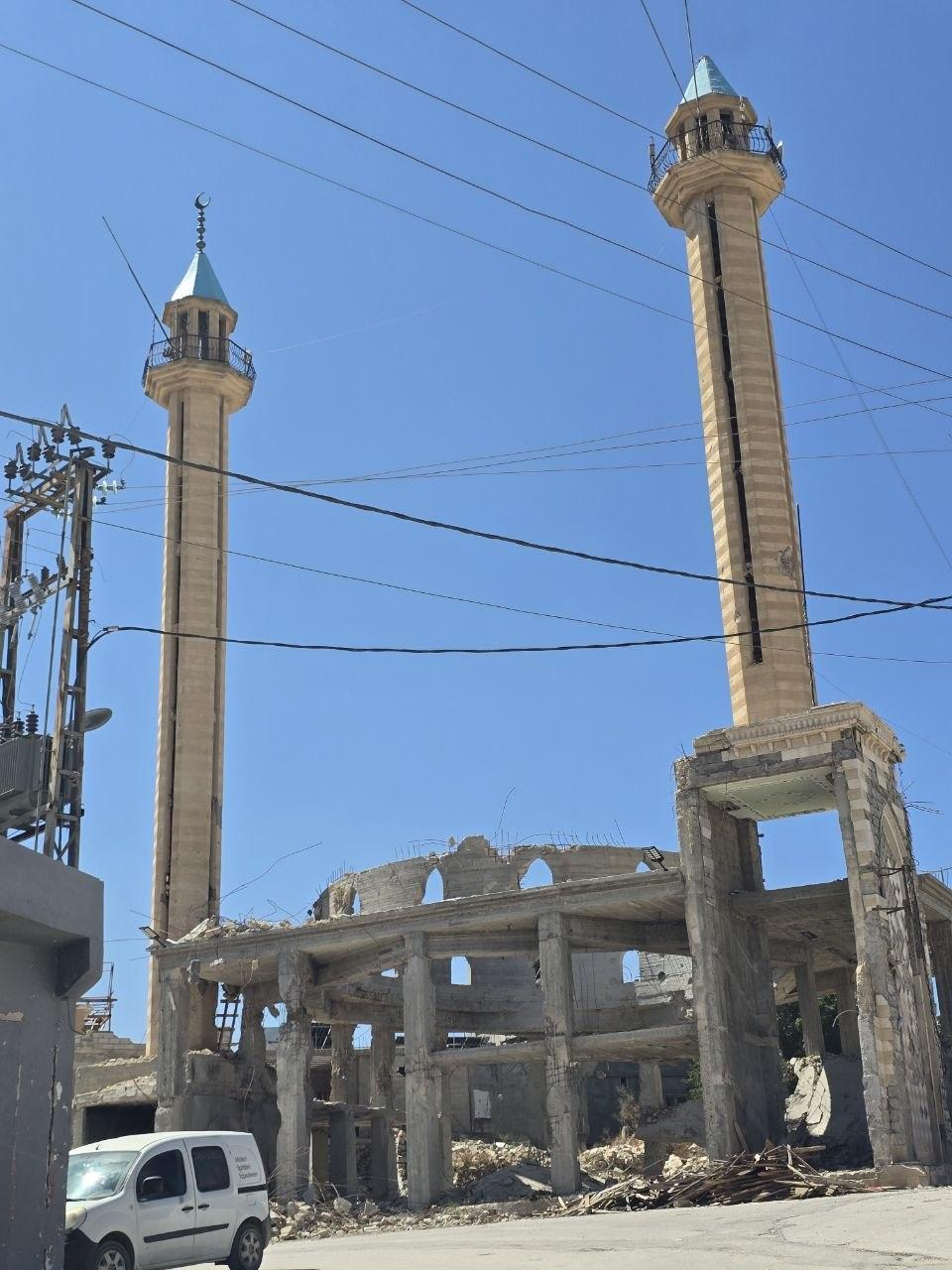
A young man named Hussein expressed to me his eagerness to rebuild his café and bring his family back, but he is in two minds about doing so until he can ensure his family's safety. “Right now, I can’t bring my wife and children because no one knows when it will explode. We could return to a state of open war at any moment”, he said.
Field reports from the ground consistently confirm that despite repeated destruction of civilian infrastructure, the population returns to rebuild on the exact sites of their demolished properties. This repeated cycle of destruction and reconstruction is the defining feature of life in southern Lebanon, where economic necessity, political history, and border geography combine to keep the civilian population anchored along the frontier.
Cover image: Majdal Selm, with Banni Hayyan in view. Source: Roqayah Chamseddine