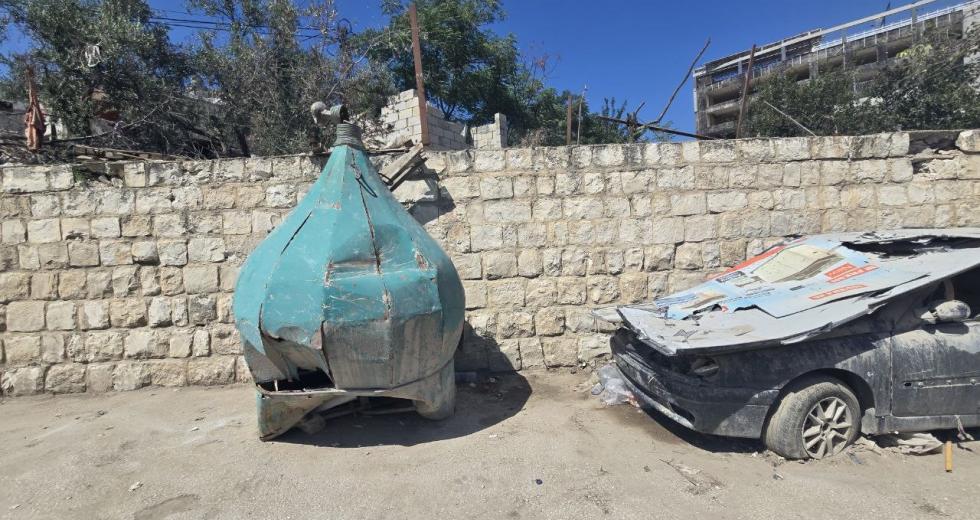
From Nabatieh al-Fawqa to the borderlands, decades of US-backed scorched-earth tactics and targeted attacks have failed to break the enduring defiance of southern Lebanon.
Observing the landscape of southern Lebanon, historically known as Jabal Amel, reveals a physical reality shaped by shrapnel and ash alongside the persistence of local populations refusing to leave their homes. For generations, the borderlands of Jabal Amel have lived under the mechanical shadow of Zionist militarism, operating as a violent apparatus that treats civilian life and community structures as acceptable collateral in an unceasing project of regional displacement and demographic engineering. When Western newsrooms speak of escalations, they commit a profound linguistic violence by neutralising a continuous campaign of deliberate aggression into a series of disconnected and isolated accidents. There are no accidents in the systematic destruction of the Lebanese south because there is an evolving and ruthless doctrine of annihilation stretching from past scorched-earth policies to the technological massacres defining the current era.
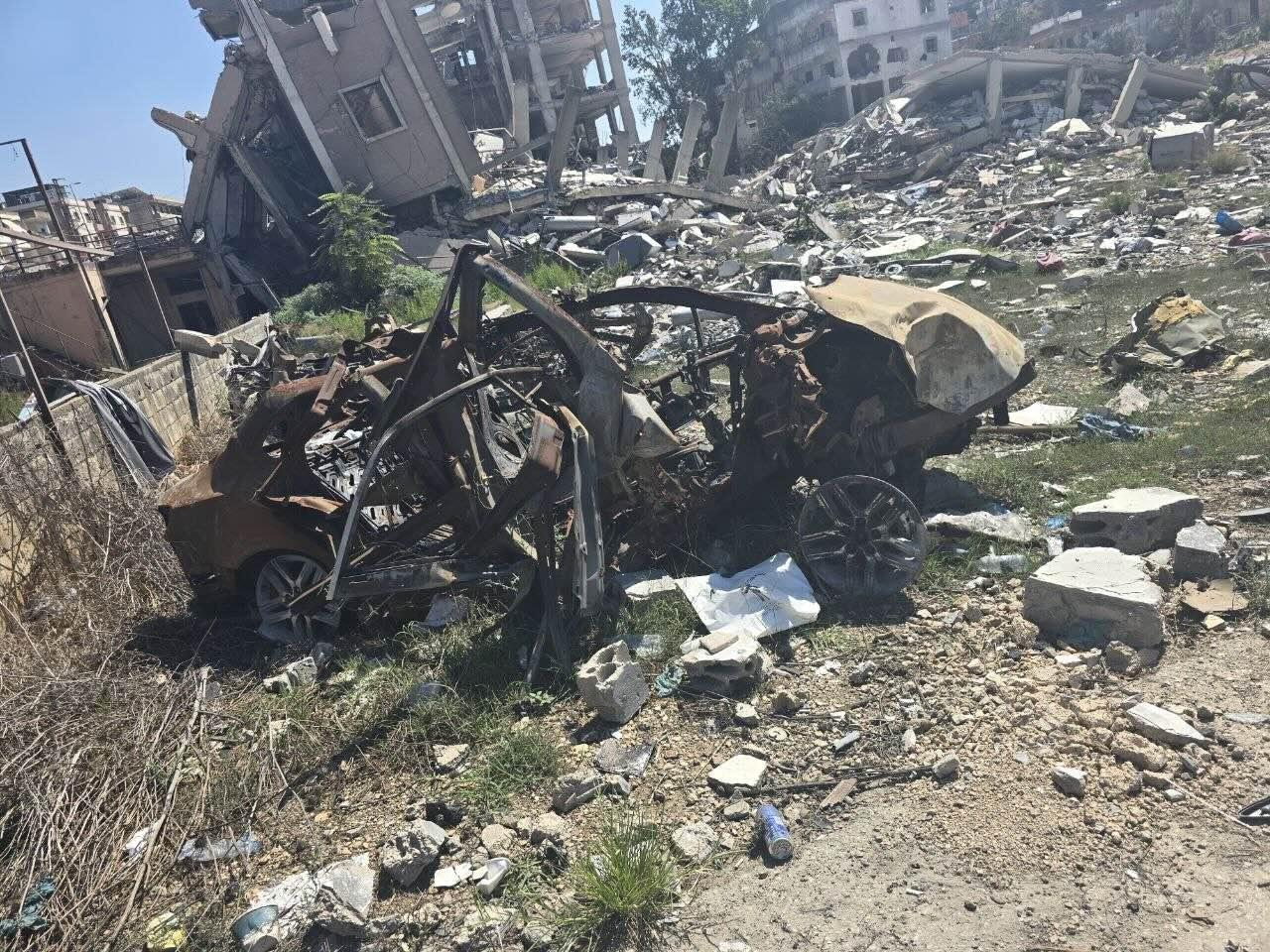
Examining the ongoing Israeli assault on historical regional centres like Nabatieh al-Fawqa requires pushing past the language used by major media outlets that frames these events as routine military friction. The violence forced upon the south is not an aberration of modern warfare, but the logical culmination of a Greater Israel project that views southern Lebanon as territory to be annexed and ethnically cleansed, with its people subjugated through sheer force and depopulation. From early incursions and the decades of occupying the so-called ‘security belt’ to the levelled neighbourhoods of the July 2006 war and the technological massacres of recent years, the playbook remains remarkably consistent, differing only in the lethality of its ordnance and the absolute impunity granted to its US and Israeli perpetrators by international patrons and allies.
This spirit of defiance has deep historical roots in the region, embodied forever by the October 1983 Ashura uprising in Nabatieh, when an occupying Israeli military convoy attempted to force its way directly into the dense crowds of the holy Shia commemoration. Unarmed residents met the armoured vehicles with bare hands, stones, and boiling oil, overturning and torching an occupation jeep in an explosive rejection of subjugation that laid the foundational template for all armed resistance that would soon follow.
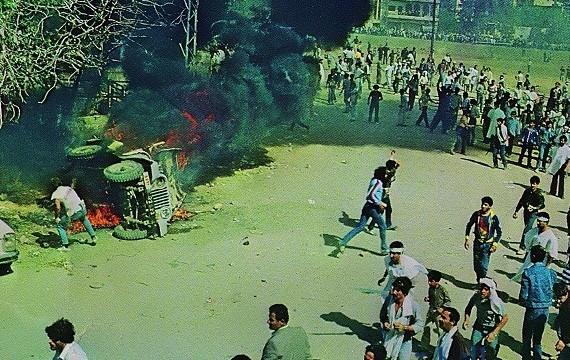
Lebanese citizens burn Israeli military vehicles during Ashura in Nabatieh, 1983. Photo: Bahrain Mirror
Israel’s aggression toward southern Lebanon has never been about what US and Israeli leaders, as well as media stenographers, describe as ‘defensive security’, but rather a long-standing territorial ambition rooted in imperialist expansion and water resource acquisition. It dates back to Zionist demands at the 1919 Paris Peace Conference for the Litani River to form the northern border of a future state. Long before the devastating Israeli air campaigns of the 21st century, the south faced a relentless strategy of attrition designed to enforce colonial domination. The decades following the 1948 Nakba carried out against the people of Palestine, and parts of Jabal Amel witnessed repeated military encroachments, such as Operation Hiram in November 1948 and subsequent displacement campaigns that aimed to uproot indigenous rural communities. Following the June 1967 war, this aggression escalated into a steady rhythm of cross-border incursions, artillery shellings, and naval blockades explicitly engineered to destabilise and ultimately break rural agrarian economies, empty border villages of their residents, and subjugate the region to permanent Zionist hegemony backed by Western imperial power.
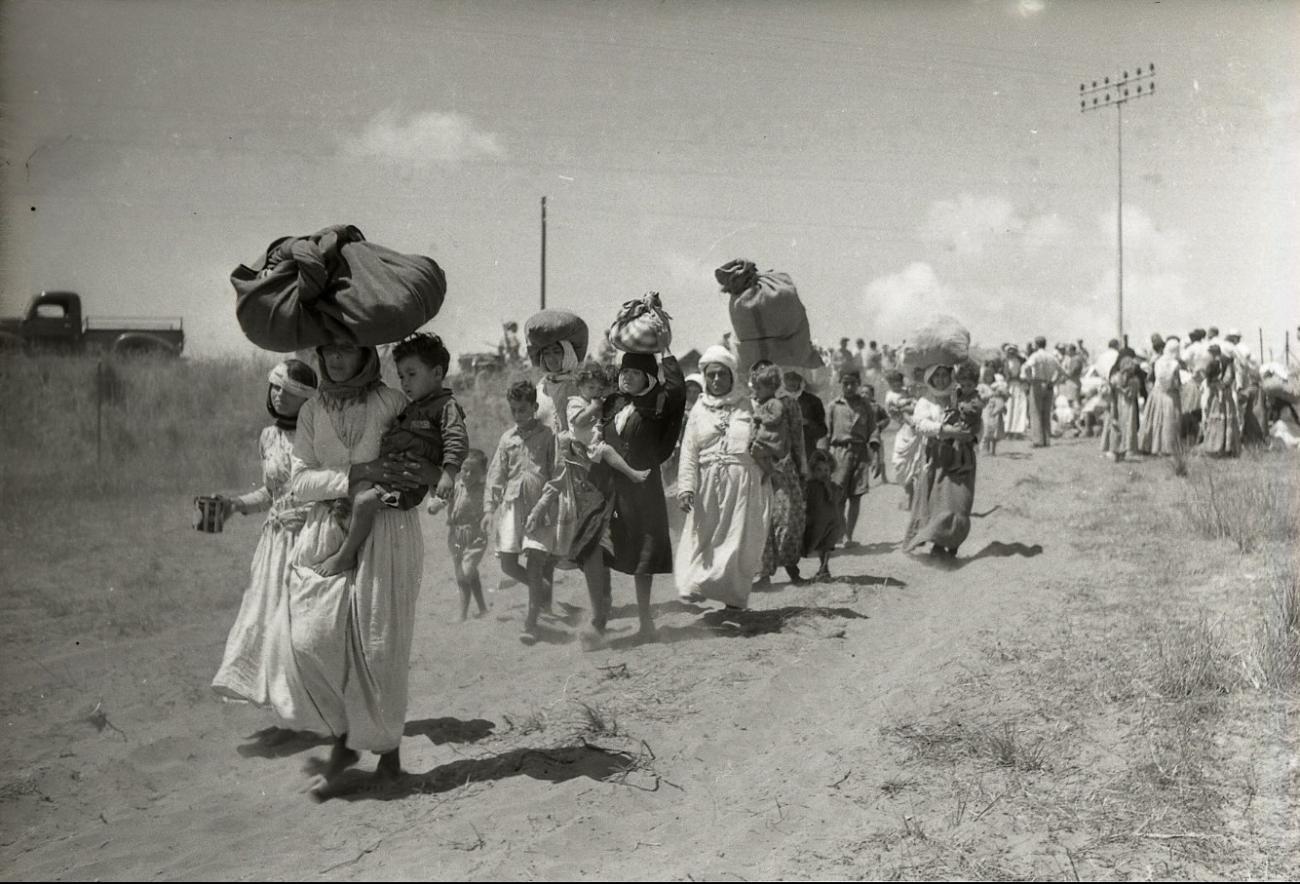
Palestinian women and children being forcibly expelled from the Palestinian village of Tantura in 1948. Photo: Benno Rothenberg /Meitar Collection / National Library of Israel / The Pritzker Family National Photography Collection / CC BY 4.0
The March 1978 invasion, code named Operation Litani, and the June 1982 invasion that saw occupation tanks rolling into Beirut established the structural framework of occupation choking the south for 18 agonising years until the Lebanese Resistance brought forth the south’s initial liberation in May 2000. During this dark epoch, major administrative cities and district capitals like Nabatieh, Bint Jbeil, and Marjayoun suffered under a regime of Israeli checkpoints and arbitrary detentions, alongside notorious detention facilities like the Khiam prison functioning as monuments to state-sponsored torture operated directly by occupation forces and proxy militias like the SLA. The structural intent was clear in its desire to force the indigenous southern Lebanese population off their lands and reduce a proud society into a fragmented diaspora.
Even the eventual liberation of the south in May 2000, forcefully wrung from the occupier through decades of indigenous guerrilla resistance, did not end the aggression. Instead, the military aggression shifted toward a doctrine of constant, high-altitude surveillance and daily violations of Lebanese airspace and sovereignty, alongside the calculated planting of millions of cluster bomblets across agricultural fields during the dying days of the July-August 2006 summer war serving as a parting gift designed to ensure the earth would remain hostile to those returning to farm and rebuild their homes.
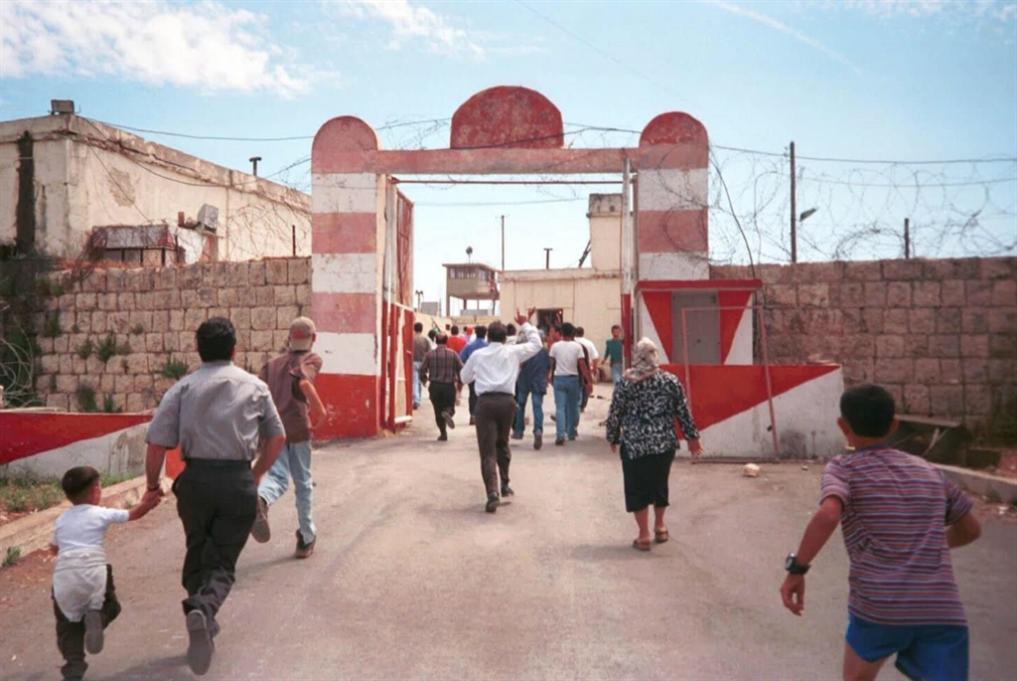
In the sprawling theatre of ongoing US-backed Israeli aggression, the district of Nabatieh occupies a tragic position in the crosshairs of Zionist air and artillery commands. Perched strategically as a gateway between the coast and the inland hills, Nabatieh al-Fawqa bears the brunt of a relentless campaign seeking to reduce its historic fabric to rubble. This historical vulnerability was starkly underscored on 16 April 1996, during Operation Grapes of Wrath, when Israeli warplanes bombed a residential building in Nabatieh al-Fawqa, killing nine civilians, including a mother and children. Despite all the ink spilled over diplomatic frameworks, the Israeli onslaught has never truly ceased, shifting into intense aerial bombardments and systematic infrastructural sabotage across the governorate.
Recent attacks in Nabatieh al-Fawqa lay bare the ruthless reality of the occupation's ongoing violence. Israeli warplanes, drones, and artillery units have repeatedly pummelled the city's historic neighbourhoods, including strikes recorded through the late summer months of 2026, reducing ancient stone architecture and the historic heart of the city to rubble. Yet, the brutality of these attacks transcends the initial impact. In a flagrant demonstration of complete disregard for human life, Israeli strikes across Nabatieh have repeatedly targeted emergency rescue workers and ambulance teams rushing to sites of initial blasts, mirroring fatal strikes like the one in nearby Kfar Rumman that killed paramedic Ali Shahrour. These calculated bombings are designed to ensure that no sanctuary remains, cutting off any possibility of rescue and leaving families to bleed out amidst the ruins of their own homes.
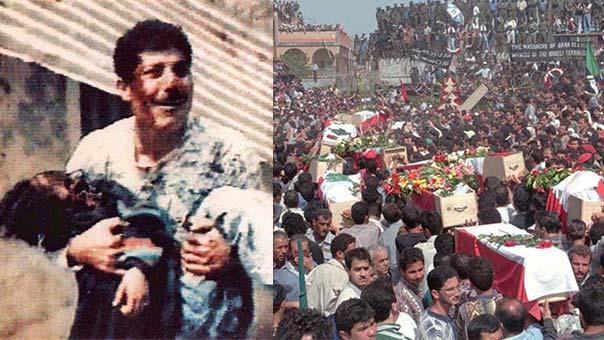
Abbas Jiha holds one of his killed daughters after an Israeli attack on his ambulance (L); funeral procession for the victims of the massacre (R), 1996. Source: Palestinian Broadcasting Corporation
This methodology of targeting civil defence and medical transport carries a dark historical precedent rooted in the very same military playbook. Decades earlier, on 13 April 1996, during Operation Grapes of Wrath, an Israeli Apache helicopter fired missiles directly at a clearly marked ambulance in the southern village of Mansouri. Driven by Abbas Jiha, a local farmer and volunteer ambulance driver, the vehicle was evacuating wounded civilians when it was struck in cold blood, killing six people, including four children — an atrocity immortalised by the enduring image of Jiha clutching the lifeless body of his young daughter in his arms.
What emerges from this record is a consistent and brutal reality of Israel targeting first responders as a form of coercive pressure on Lebanese society at large. Hitting civilian areas, waiting for rescue teams to arrive, and launching secondary ‘double-tap’ strikes to kill survivors and emergency workers is a calculated measure designed to terrorise civil defence networks and induce a paralysing atmosphere of total vulnerability. If one cannot even rely on ambulances to come to their aid for fear that they, too, will be targeted — just as families fleeing Al-Mansouri discovered — then victims of ongoing Israeli attacks are entirely cut off from survival.
Across the wider US-backed Israeli war spanning into the 2023–2026 aggression, where dozens of health workers have been intentionally targeted and killed, countless ambulances destroyed, and vital medical facilities systematically bombed or burned down, including the deliberate torching of the Mays al-Jabal Governmental Hospital by occupation forces after converting it into a military barracks, this open policy aims to dismantle the infrastructure of life itself. Throughout surrounding valleys and woodlands, such as the Ali al-Taher ridge and the outskirts of Kfar Tebnit, the landscape is continuously reshaped by the concussive force of heavy artillery shells and white phosphorus illuminating the southern sky. Homes in villages like Bani Hayyan and Khiam are systematically blown up or burned to the ground, orchards and olive groves that have sustained families for multiple generations are incinerated, and the basic ecology of the region faces a scorched-earth policy aimed at making civilian life completely untenable.
The human cost of this Israeli violence reverberates directly through the shattered lives of those forced out of the south, scattering families across Lebanon away from the only homes they have ever known. Zahraa N., a university student forcibly displaced from her home in Nabatieh, tells UK Column that the ongoing Israeli aggression, largely ignored by the Lebanese state, has torn her family into pieces as they attempt to resettle over and over again:
We are in a state of limbo. Nothing changes until the Israelis are gone, and not just from south Lebanon, but from occupying the rest of the region. This is a project that impacts all of us, and until this is understood as a project designed to displace us all, to steal from us all, then we will face the same consequences. You either resist together, or fall apart together.
Addressing the collapse of state protections and the ongoing violations during recent appearances on Al-Manar television, senior Lebanese lawmaker and member of the Loyalty to the Resistance bloc, MP Hassan Fadlallah, stressed that the resistance maintains its operational readiness and will not compromise on national sovereignty. “Who said we do not want diplomacy?” Fadlallah asked during his televised address. “We want diplomacy, but we want it based on rights, national consensus, and strength”. Emphasising that field units remain actively fortified and prepared for confrontation, he declared that “the Resistance today is firm, it is regaining its strength, and actively preparing to confront the enemy”.
Rejecting political manoeuvres and pressures from domestic authorities or foreign intermediaries attempting to impose unequal terms under fire, Fadlallah made clear that the local population and the resistance refuse to accept any framework that normalises ongoing aggression or strips the south of its defences. He pointedly criticised the domestic political establishment for creating deep rifts with the public and failing to safeguard the country, maintaining that the steadfastness of the people on the front lines renders any submission impossible.
Yet, the history of the south is equally a history of stubborn resistance and community rebuilding. Across ruined alleyways of border cities and tent encampments of displaced families scattered from Beirut to the Beqaa, people engage in the arduous labour of holding their social fabric together. They form informal solidarity networks and cling to the conviction that local roots and the right to return are non-negotiable political principles. Ongoing assaults on Nabatieh al-Fawqa and neighbouring hamlets are designed to break this spirit of defiance and compel the population to surrender political agency for the hollow promise of security under the boot of imperial dominance.
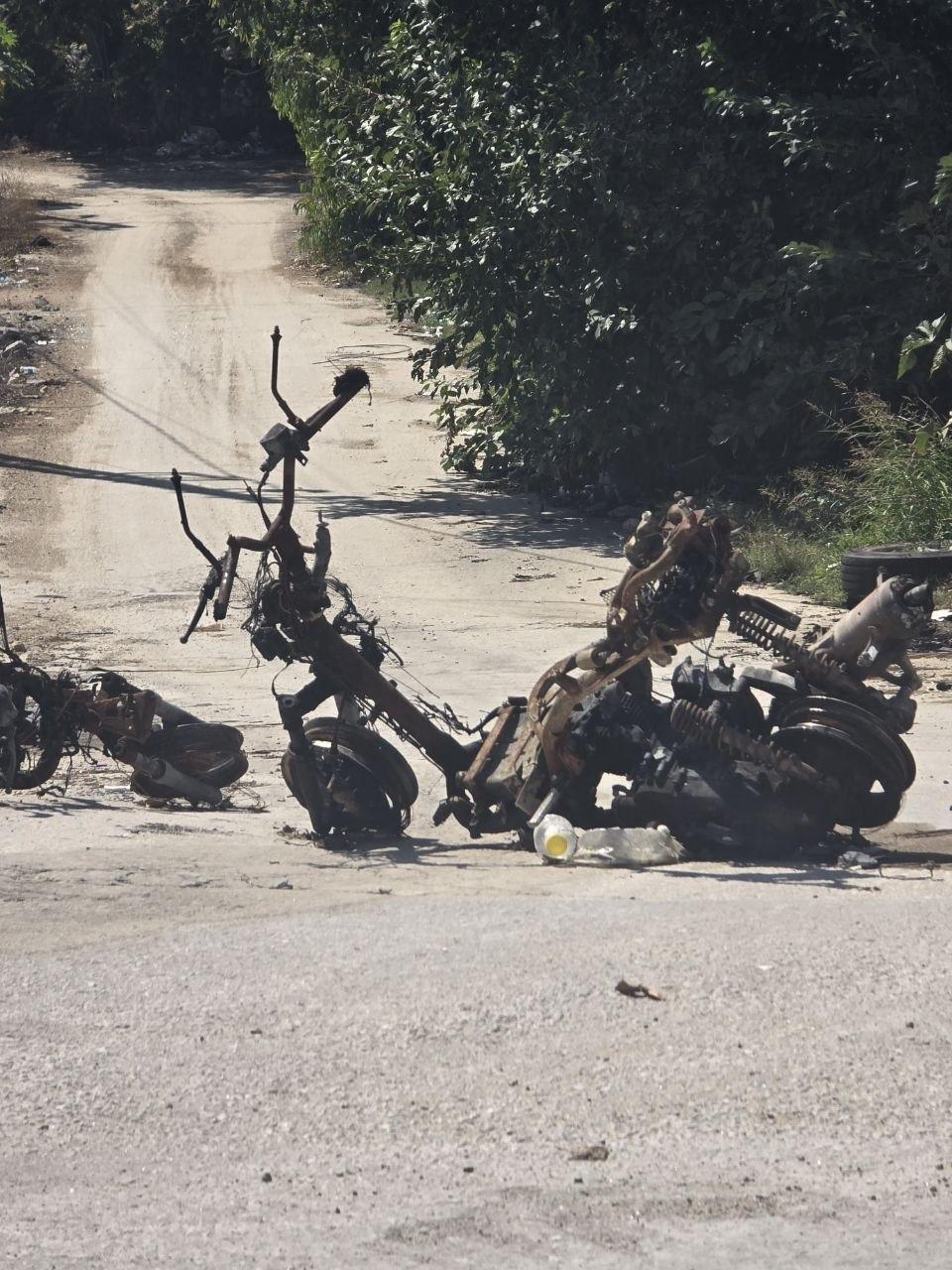
As Israeli bombardment continues regardless of empty diplomatic agreements and paper truces, the reality on the ground demands a complete rejection of the sanitised language pushed by mainstream corporate journalism. Observers and solidarity networks must drop the pretence of neutral analysis and recognise that the destruction in Nabatieh al-Fawqa and across the southern valleys is part of a calculated colonial project rooted in historical displacement.
The invocation of international law is a hollow exercise designed to manage violence rather than stop it, serving as a legalistic smokescreen that legitimises occupation while criminalising those who fight back. History proves that imperial aggression does not retreat before toothless treaties, nor do occupying states yield to the moral theatre of global bodies whose primary function is to protect Western geopolitical interests. The blood spilled in Nabatieh and the systematic destruction of agricultural lands in the greater south lay bare the fundamental bankruptcy of any framework that places the occupier and the occupied on equal footing. South Lebanon teaches us that liberation is forged through the material reality of unyielding and oftentimes armed resistance against a settler-colonial apparatus driven by ethnic cleansing and resource theft, securing the absolute right of an indigenous, displaced people to reclaim not only their land but their absolute freedom.
Cover image: Part of a destroyed minaret and burned vehicle in Nabatieh al-Fawqa, southern Lebanon. Photo: Roqayah Chamseddine