
On the night of 11–12 October 2026, hackers took control of commercial refrigerators in about 700 supermarkets in France, spoiling food worth an estimated tens of millions of euros. Three weeks later, on 1–2 November, also over a Sunday and a Monday, an attack using the same modus operandi took place, destroying perishables in over 100 stores across at least nine European countries. That same night, and far more portentous, the emergency alert apps in both Russia and Ukraine were hacked and started to broadcast false nuclear alerts.
The supermarket attacks grabbed headlines across the planet.
The public nuclear alerts received less attention, and few outlets connected the two.
Weaponising Food
The attacks on supermarkets across Europe were reportedly not technically sophisticated.
What was staggering was the scale.
Since no ransom was demanded, and no other monetary motive could be established, speculation about alternative reasons surfaced.
EU agriculture commissioner Christophe Hansen said on the morning the damage was discovered: “The weaponisation of food has become a reality.”
Two pro-Russian hacker groups, NoName057(16) and Z-Pentest Alliance, claimed responsibility for the November attacks on Telegram, and then deleted their posts.
The Kremlin dismissed suggestions of Russian involvement as “absolutely absurd”, and Belgium's Centre for Cybersecurity said that the perpetrators “may never be determined”.
The vague and familiar echoes of Russian involvement were reinforced by Politico in an article on 3 November, though it failed to capture the public imagination in the big way it may have been hoped to do. On 9 November, it was ultimately eclipsed by France's Minister for Foreign Affairs, Jean-Noël Barrot, when he took the podium and presented the world with a new suspect: Iran's Islamic Revolutionary Guard Corps (IRGC), saying, “This attack is unprecedented in both its scale and its level of aggression.”
False Nuclear Alerts
At 22:47 Kyiv time (20:47 UTC) on Sunday 1 November, smartphones across Ukraine began flashing a warning that appeared to come from the authorities: “Radiation threat declared in Kyiv”. A minute later, a second message followed, written in Russian: “Hi! There will be a nuclear alert across all of Ukraine right now! Don't worry, the Oreshnik is coming!”
Less than three hours later, at about 02:45 Moscow time (23:45 UTC), phones in 33 Russian regions lit up in the middle of the night with a warning of their own: “Nuclear warheads on P1-SUN carriers have been launched at all regions of Russia (swamps)!”
Both warnings were fake. In each country, the official emergency alert app had been hacked. Ukraine blamed Russia for hacking its app, and an alleged Russian hacker group, Hitcore, claimed responsibility. Russia blamed no one.
On 2 November, Ukraine's President Zelensky declared that his country had indeed hacked the Russian alert system, but that it was in retaliation for the Russians first hacking into the Ukrainian system. Asked by PBS whether Ukraine had hacked Russia's emergency app in return, President Zelensky confirmed it: “We just responded on the attack.”
The question not asked by PBS was how Ukraine could respond so quickly — within less than three hours of being hacked.
Had Ukraine, in this remarkably short time, procured or developed a cyberweapon of its own — or did it already have it?
Cognitive Warfare
How connected the nuclear alerts and the attacks on the refrigeration systems may have been is not publicly known. Their coincidence in time, though, offers a lead for examining the competing narratives that ensued.
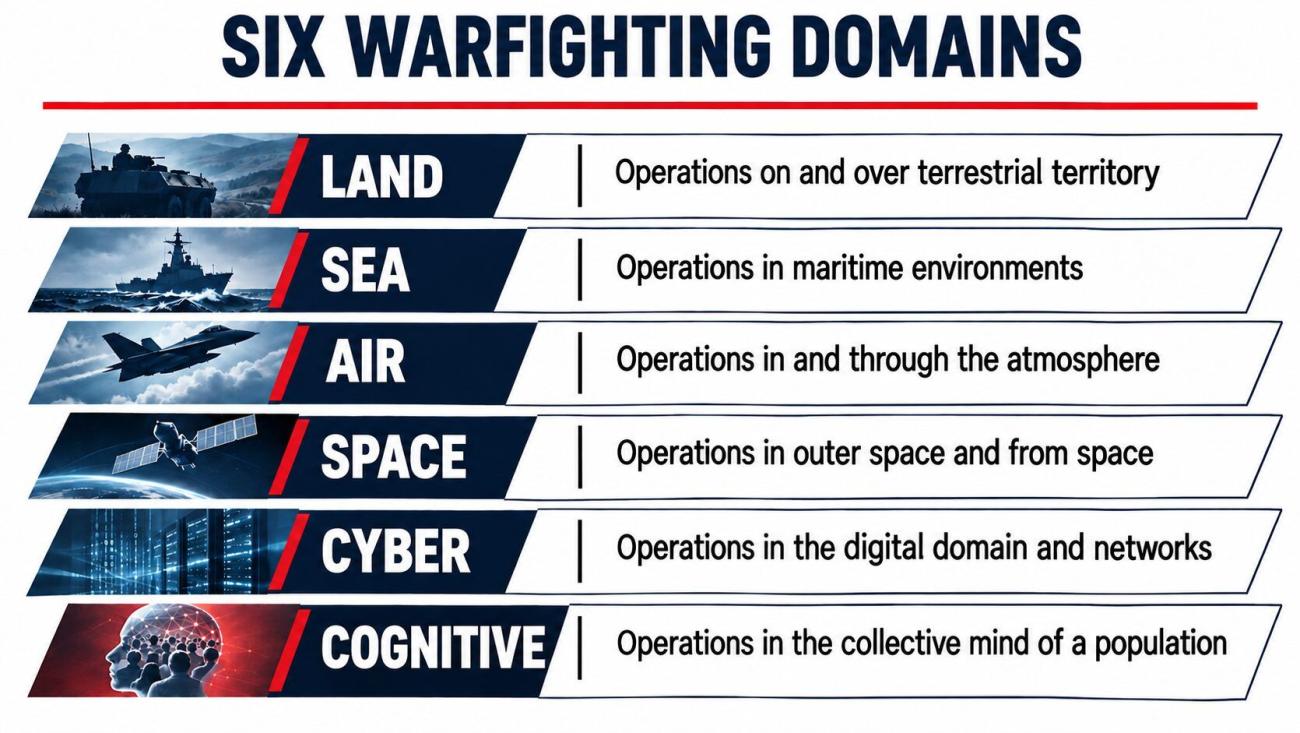
Since then, media coverage has expanded the conflict from cyberspace into what military thinkers call the ‘cognitive domain’: a sixth domain of warfare alongside land, sea, air, space, and cyber — where the battlespace is the collective mind of a population.
When Canada hosted a NATO innovation challenge on ‘cognitive warfare’ in 2021, its defence department described the objective of cognitive warfare as “to sow dissonance, instigate conflicting narratives, polarize opinion, and radicalize groups.”
The October–November attacks have become a two-domain conflict: one in cyberspace, the other in the public's understanding of what is unfolding.
The Timeline
The freezer attack timeline counts three events, not just the two attacks on cooling systems across Europe.
9 August 2026
Claroty, a New York-based cybersecurity firm specialising in industrial control systems, published ‘Freeze the Controller, Defrost the Food’, a technical write-up of three flaws found in Danfoss AK-SM 800A refrigeration control units.
Claroty found that 2,765 of the controllers were reachable from the public internet. Those without the fix could be accessed using a hidden login bypass. Claroty also presented the flaws at DEF CON 34, a hacker convention held in Las Vegas on 6–9 August.
By then, Danfoss, a family-owned Danish engineering group with some 39,000 employees and sales of €9.4 billion in 2025, had already shipped a patch (firmware R4.3.1) for these vulnerabilities, giving its customers a year to download and install the fix.
But R4.3.1 covered only the AK-SM 800A. According to Danfoss, most of the units hacked in France were older AK-SM 800 and AK-SC 355 models that no longer receive security updates. For those, there was no fix to install.
The First Wave: 11–12 October 2026
On 13 October, the French finance minister, Roland Lescure, told Parliament that about 700 of the country's 10,000 supermarkets had been hit on 11–12 October, whilst Intermarché's chief executive, Thierry Cotillard, estimated the loss at “tens of millions of euros” nationwide.
Affected chains included Intermarché/Netto, Coopérative U, Carrefour, E.Leclerc, Casino (owner of Monoprix), and Metro, along with small butchers, a slaughterhouse and food-processing cooperatives. The attack caused at least 15 fires.
The Second Wave: 1–2 November 2026
Three weeks later, a similar attack hit over 100 stores in at least nine countries: Belgium, Luxembourg, the Netherlands, Sweden, Ireland, Estonia, Finland, Portugal, and Italy. The EU later counted eleven.
What the victims on both nights reportedly had in common was internet-reachable refrigeration controllers from two leading global makers: Danish group Danfoss (AK-SM 800, AK-SM 800A and AK-SC 355) and US group Copeland, whose Dixell brand sells the XWEB supervisors.
The Blame Game
Russia
The main source of Politico's article pointing to Russia on 3 November was Xavier Bellekens, CEO of the UK-based security firm Lupovis. He told the news outlet that servers attacking the firm's decoy systems had previously been used by groups he believes were Russian.
But shared servers are weak evidence.
IT infrastructure is rented and reused, and attackers routinely plant false traces.
Cybercriminals shopping for hardware to run their attacks from usually have three options:
- They can rent servers from ordinary hosting firms, typically using false names.
- They can rent from so-called bulletproof hosts — providers that ignore abuse complaints and sell to any paying customer.
- They can hijack other people's machines: servers, home routers, cameras — and route the attack through them (often how sophisticated distributed attacks are executed).
In all these cases, the same address can serve one group this month and another the next.
The servers Bellekens pointed to were of the second kind: bulletproof hosting.
Moreover, the probes he cited — 256 attempts from 91 sources between 20 and 30 October — came after the French attack had made world news, when researchers and copycats of every kind would be probing such systems. Nothing but timing ties them, among what would usually be an avalanche of visitors, to whoever attacked the stores on 1–2 November.
Who is this Xavier Bellekens?
He used to be a nonresident senior fellow at the Atlantic Council, a pro-NATO Washington think tank with offices in Europe that Moscow declared an “undesirable organisation” in 2019.
Iran
The source for France's accusation against Iran for the 11–12 October attack is a five-page report from the C4, France's cyber crisis coordination centre. It brought together the cybersecurity agency ANSSI, the military cyber command, the arms procurement agency, and both intelligence services.
The report names Shahid Kaveh, a cyber unit of Iran's Islamic Revolutionary Guard Corps, as the unit that carried out the attack, and the IRGC as the party that ordered it. For the fridge attack, the report does not speak of proof. It speaks of a “faisceau d’indices” — a bundle of clues:
- The infrastructure used in the attack was used in the same period to scout Schneider Electric industrial equipment, with techniques the unit is known to use.
- The attackers used FOFA, a scanning tool the unit usually uses.
- CyberbanNews, a propaganda outlet tied to the unit, relayed the attack on 13 October.
- Traces of Farsi were found in the attack infrastructure.
The C4 also links the attack to simultaneous targeting of Schneider Electric equipment at small hydroelectric plants in France, with “moderate” effects.
Taken one by one, these are not strong points.
FOFA is a public search engine open to anyone. CyberbanNews is, by the report's own account, the unit's mouthpiece. But, by 13 October, the attack was world news, and the report does not say the unit claimed the attack as its own.
Language traces are the kind of false trace attackers plant to confuse investigators.
The least weak point is the first: the same infrastructure, during the same period. But the technique the report names, Modbus on port 502, is simply the standard way of talking to industrial equipment.
The French report publishes no technical indicators and states no level of confidence. Nobody outside can check it. And it covers only the attack on France, not the second wave.
And it fails to explain why Iran would attack French supermarkets.
Finally, only about half of the short report concerns the 11–12 October attack. The rest is a list of what else Paris accuses Iran of. These include older attacks attributed to a different IRGC unit, Shahid Shoostari, such as against the satirical weekly Charlie Hebdo.
The same day France made the accusation, it summoned Iran’s ambassador to the Foreign Ministry and called for EU sanctions. Paris prosecutors opened a judicial investigation into the unit's leader and his two deputies and requested international arrest warrants against them. The report names Shahid Kaveh's two commanders as Reza Salarvand and Mahdi Lashgarian.
As of 10 November, Iran had not officially responded.
Means and Opportunity
Means
As a convenience to its customers, Danfoss made it possible to reach its refrigerator control units remotely over the internet.
According to France's ANSSI, that was all the 11–12 October attack needed to be successful: controllers exposed directly to the internet, with unprotected administration and weak passwords.
A more demanding route also existed.
Perhaps for vendor support or maintenance, Danfoss had also left a shared authentication mechanism: a daily ‘code of the day’ password, calculated from the control unit's current date. An attacker only had to disassemble the firmware to read the algorithm: a short script produced the password — not just for one Danfoss control unit, but for every unpatched unit showing the same date.
This vulnerability had been known by the industry for at least 12 months before the attacks — and for the older models that most victims ran, there was no patch at all, only replacement. Either way, IT departments at leading retail chains in Europe may have been reluctant to prioritise reflashing or replacing the control units for a geographically dispersed fleet of freezers that cannot tolerate downtime.
Should something go wrong during the update, on-site technicians would have had only a few hours to sort out the issue before food would start to go to waste.
Multiply the costs for that scenario by France's 10,000 supermarkets and the reader may see why commercial IoT units rarely get patched: researchers at Forescout found that 80 per cent of the Danfoss AK-SM 800A systems they observed online were running outdated firmware with known vulnerabilities.
How easy a target the units were broadens the pool of suspects.
It need not have taken a state-like actor with budgets in the millions to engineer the breach. Claroty's lecture at DEF CON 34 in Las Vegas, and its brief on the company's homepage, put Danfoss controllers on the radar of hackers worldwide.
Opportunity
The vulnerability was known, yet many Danfoss customers never patched it. So why no takers among the 110 to 150 ransomware and extortion groups active globally, which collected at least $820 million in on-chain payments in 2025?
Picture the ransom attack: destroy the perishables in one supermarket, then tell the chain's HQ the same will happen to every outlet, unless …
All the chain had to do was patch its control units or pull them off the internet.
For a ransom crew, this was a gun that empties fast: once the first victims were hit, everyone else could simply unplug. Criminals do run one-shot mass campaigns, but those leave them with stolen data to hold hostage. Spoiled food gives them nothing to trade.
Such a gun might still interest other actors, and the searchlights swing back to a state-like actor staging an attack for a political outcome.
The same logic may help explain why there were two attacks, not just one.
There is also a limit to how many times the gun could be fired in a political context: only until the retail industry woke up and patched or unplugged.
Immediately after the first attack, that window began to close.
Exposed Danfoss control panels online fell from more than 1,800 on 11 October to 537 on 14 October in France, while the rest of Europe continued to drag its feet.
First Blood
Something that has gone almost unmentioned outside Russia is that one of the first known attacks on a Danfoss refrigerator control unit took place near Moscow on the night of 25–26 February 2022. This was two days after Russia launched its Special Military Operation in Ukraine.
A remote intruder broke in and changed the target temperature at Selyatino, a cold-storage complex holding some 40,000 tonnes of frozen meat and fish, from −24°C to +30°C before security staff spotted it.
Who Benefits?
Perhaps this is a good moment to pause and ask: in an era of cognitive warfare, cui bono? Who benefits from readers believing that Russia did it? Or Iran? Or anything else purveyed by mainstream media?
The rumours, factoids, and whispers swirling around these attacks illustrate the cognitive battlespace: the public mind, simultaneously weaponised and confused by competing actors, becomes part of the battlefield itself.
Lost in the fog remain the two questions most people would want an answer to: who actually carried out the two waves of cyberattacks against European supermarkets in October and November 2026? And why?

Kristoffer Hell
Kristoffer Hell is an independent writer and journalist covering high politics and how technology shapes human experience. He holds an MLitt in Strategic Studies from the University of Aberdeen and a Diploma in News Journalism from the London School of Journalism. He previously worked as a software developer, contracting in banking, pharmaceuticals, and retail.