
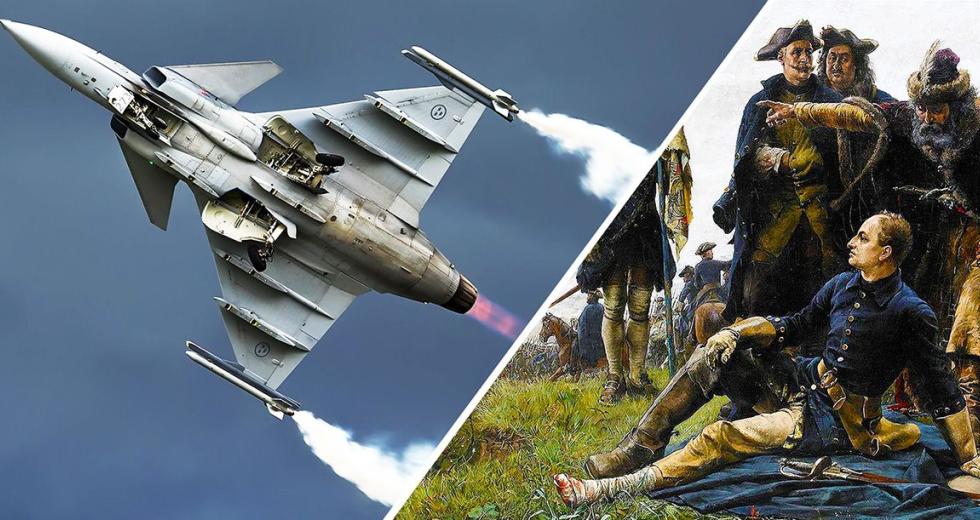
A recently published Reuters article suggests that the upshot of the donation and sale of 36 Saab JAS 39 Gripen jets to Kyiv is that Sweden has now become the backbone of the Ukrainian air force in NATO's proxy war against Russia.
This new military-industrial posture has radical defence consequences.
Although London, Paris, and Berlin are supplying advanced weapons systems to Kyiv — Mirage jets, Leopard tanks, and the British-French Storm Shadow missile — this is a collective multinational effort in which exposure is spread thin and responsibility diluted.
Sweden has embraced the opposite strategy.
If, in the near future, a Eurofighter Typhoon shoots down a Russian fighter jet, Moscow's war planners face a difficult question. Against which of the four countries that designed, built, and funded that aircraft should they respond: one of them, all four, or none?
If, on the other hand, a Swedish JAS 39 Gripen fires a possibly nuclear-tipped Ukrainian missile at a target deep inside Russia, and Moscow wants to deny its enemy the capability to do so again in the future, the list of return addresses to which it could dispatch its hypersonic missiles is painfully short.
Swedish Arms Manufacturing — Then and NowUntil rather recently, Sweden's defence industry has been a winning formula tied to 200 years of peace and neutrality: world-class weapons systems, friends in every direction and nobody's enemy.
Since the end of the war in 1945, is there any European politician who has expressed themselves in public in the way that Sweden's Social Democratic former prime minister Magdalena Andersson recently did in the debate about French nuclear weapons in Europe: “Even today Europe does have nuclear weapons, so we can bomb Russia to smithereens”.
Analysts in the Kremlin are today trying to understand the thinking in Stockholm’s find in Andersson’s evidence that, for the Swedish political establishment, Ukraine is not about the outbreak of armed hostilities in 2022, or even 1999, when NATO began its eastward expansion that ultimately resulted in war breaking out. Rather, Ukraine is about 1709, when Russia, at Poltava (in present-day Ukraine), brought the curtain down on Sweden's era as a great power.
On 4 July 2022, after Britain's then-prime minister Boris Johnson succeeded in sabotaging the peace negotiations between Russia and Ukraine — and two years before Sweden joined NATO — Andersson travelled to Kyiv, where, during a joint press conference with President Zelensky, she handed over a copy of the Swedish king Charles XII's letter from 1711, in which he instructed his ambassador in Russia to work, even back then, for a split between Moscow and Kyiv.
Since 2022, at the very latest, a number of Swedish governments, in close cooperation with the influential Swedish arms-industry Wallenberg family, have laboured to cast Sweden as Russia's principal enemy in Europe. Through the JAS Gripen deal with Kyiv in summer 2026, they may well have succeeded.
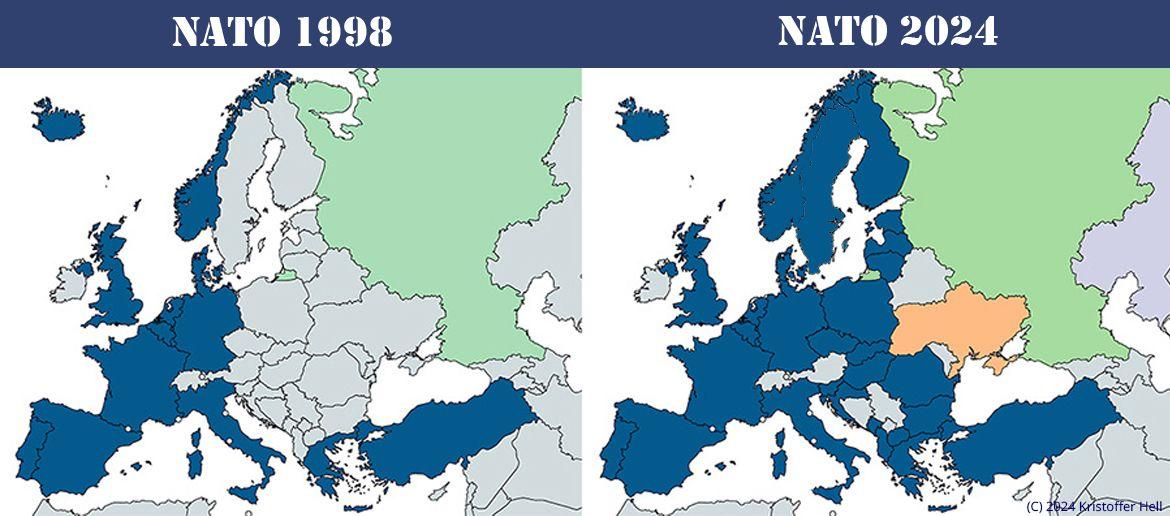
Image and video sources: Kristoffer Hell and Wikimedia Commons

Kristoffer Hell
Kristoffer Hell is an independent writer and journalist covering high politics and how technology shapes human experience. He holds an MLitt in Strategic Studies from the University of Aberdeen and a Diploma in News Journalism from the London School of Journalism. He previously worked as a software developer, contracting in banking, pharmaceuticals, and retail.