In 1939, it took Neville Chamberlain’s Conservative Government just a month to pass the Military Training Act, thereby conscripting 240,000 single men between the ages of 20 and 21. It is noteworthy that the process started in late April, with the declaration of war still more than four months away, and it was, of course, a “temporary provision”. On 3 September of that year, the gear change was dramatic: The National Service (Armed Forces) Act wrapped its long arms around all men aged 18 to 41, with exemptions only for those medically unfit or working in ‘key industries’.
General Sir Patrick Sanders — former head of the British Army — may be regarded as a trailblazer insofar as the most recent round of ‘peace through strength’ propaganda is concerned: he was pushing it back in June 2022. Confirming the political status of all members — civilian and military — of the Defence Council, Sanders told the RUSI Land Warfare Conference that “… the British Army is not mobilising to provoke war - it is mobilising to prevent war.” Nearly four years on, with a number of glaciers reported to have overtaken this mobilisation, the ‘combat indicators’ point toward 2026 being a year of ‘acceleration’.
As yet, no legislation accompanies the rhetoric, but the Government’s Armed Forces Bill should rightly be regarded as the warm-up act. The prospective section 69a deals with “Recall for warlike operations”. Just what would meet such a threshold? Well, it meets the threshold “if it appears to the Secretary of State that warlike operations are in preparation or progress”. This makes it more interesting that the age parameters for recall have been increased to cover any “person” up to the age of 65. Not just that, but these provisions are under the heading of “Reserve Forces”, and the first item listed is “Transfers between regular and reserve forces”. This clause deals with the transfer of reserve personnel, below the rank of warrant officer, to regular service, which considerably extends the reach of the proposed law.
The Ministry of Defence describes the Armed Forces Bill as a move designed to “strengthen preparedness” in “times of crisis”. This “approach” is said to reflect “lessons from Ukraine’s innovative use of Reserves and whole of society response to Russian aggression”. Despite the fact that, unlike Ukraine, the United Kingdom neither shares a border with Russia, nor is she (officially) at war with Russia, the British are told that they, too, must adopt a “whole of society” approach to face “Russian aggression”. In fact, those parts of the Armed Forces Bill which deal with the spectre of “warlike operations” rest very heavily on the well-armoured biases running through the Strategic Defence Review 2025 and the National Security Strategy 2025.
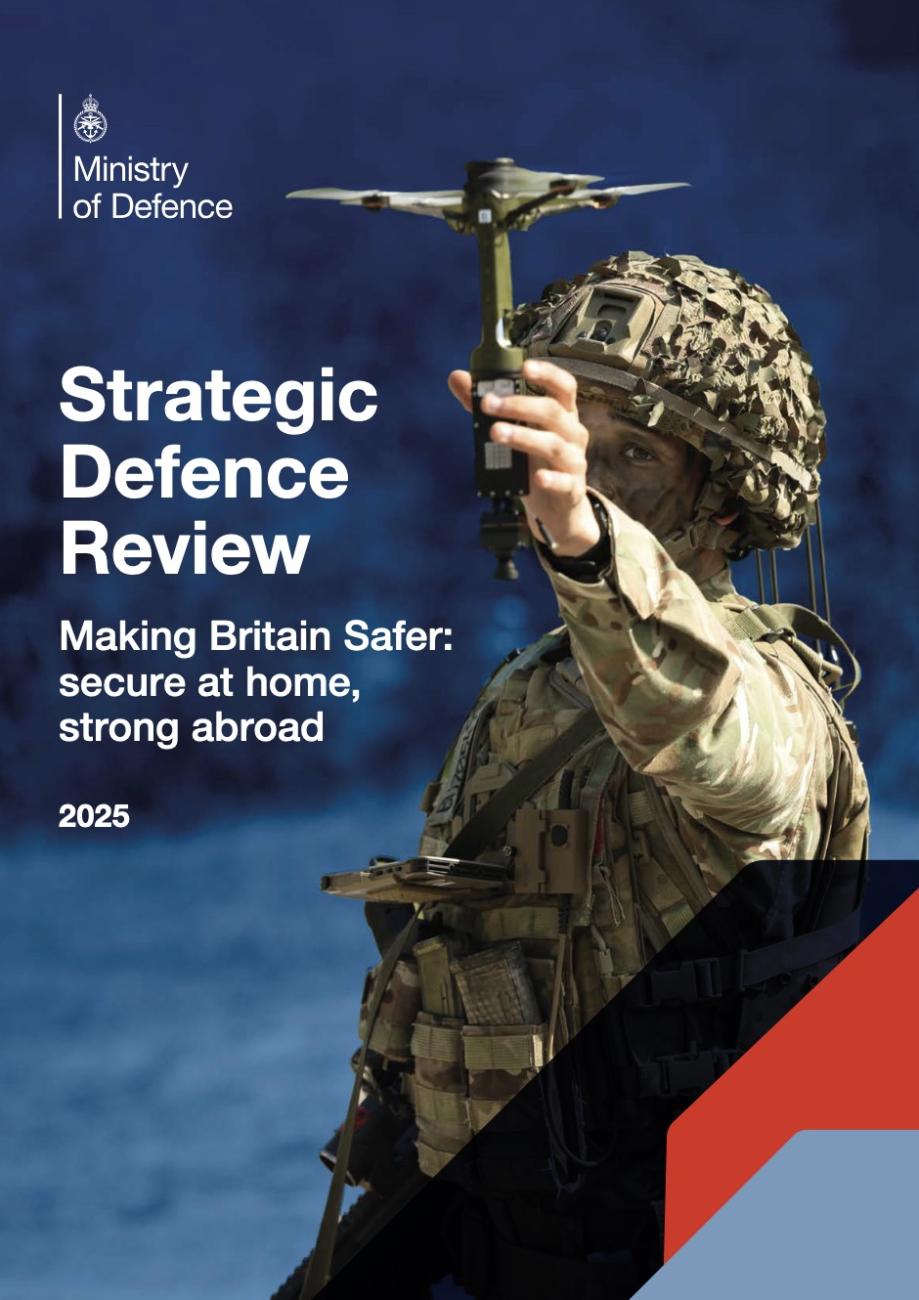
It will be clear by now that in order to legislate in favour of war and all that goes with it, there is a requirement for a backstory. As an umbrella term, ‘emergency’ is usually the best fit. If the Secretary of State determines that there are “warlike operations” in the offing, an emergency will precipitate. Where legislation is concerned, the emergency is the gift that keeps on giving. In 1939, 21 General Acts included the word ‘emergency’ in their title, with a further 14 between 1940 and 1945. In explaining why conscription is even being considered, the 2025 Research Briefing from the House of Commons Library explains that:
… the covid-19 pandemic and the changing security situation in Europe in the last decade has prompted discussions about the need to improve civilian resilience in the face of emergencies up to and including a state of war.
As euphemisms go, “civilian resilience” may turn out to be one of the most versatile of the period. The apparent necessity to “improve” it will know no bounds as each layer of paint is added to the canvas depicting the existential threat posed by Russia. With but a hop and a skip, the Government has jumped from the mortal peril posed by a fabricated ‘pandemic’ to the same posed by a fabricated ‘war’. Readers will remember that there appeared to be a direct correlation between the arrival of ‘Covid variants’ and the arrival of secondary legislation appended to the backsides of the Coronavirus Act 2020 and the Public Health Act 1984. The point to drop out of this is that once the Government has crafted its emergency, it will legislate like crazy to enhance and exploit it.
The Armed Forces Bill may point towards things to come, and the potential for acceleration is well illustrated by the various conscriptions of 1939, but what of the status quo? Of the levers the Government has at its disposal already, which will dispense young men (mostly) into the theatre of conflict, if pulled? The most obvious answer is the Civil Contingencies Act 2004 (CCA), which deals with “Emergency Powers” in Part 2. What should define an emergency? According to the provisions of the Act, there are three (very) broad categories:
a. an event or situation which threatens serious damage to human welfare in the United Kingdom or in a Part or region
b. an event or situation which threatens serious damage to the environment of the United Kingdom or of a Part or region
c. war, or terrorism, which threatens serious damage to the security of the United Kingdom
Not only are the definitions broad enough to accommodate an aircraft carrier, but they are entirely subjective. What should constitute “serious damage” and how is it determined that such a threshold is met or — since “threatens” is effectively hypothetical — could be met? Moreover, who should decide? As if enough 2020 was not already fit to burst with irony, it must take some beating that the Civil Contingencies Act had not even the dust blown off it. Indeed, it has never been used. The Institute for Government reminds us that “The Cabinet Office guidance states that the CCA should only be used for a ‘category three’ emergency (the highest level), and only as a last resort”, which makes one wonder what kind of ‘measures’ or ‘restrictions’ we are yet to behold.
With specific regard to an armed presence on the streets, or an action akin, regulations emanating from the CCA may “enable the Defence Council to authorise the deployment of Her Majesty’s armed forces” and “make provision (which may include conferring powers in relation to property) for facilitating any deployment of Her Majesty’s armed forces”. Though this may be the case, the more important clause — with specific regard to conscription — is found at section 23: “Emergency regulations may not require a person, or enable a person to be required, to provide military service”. Cold comfort.
Dusty it may be, the CCA does enable Military Aid to the Civil Authorities, or MACA. Such a response is generated by a request to the Ministry of Defence, which will resource as appropriate, or not. In 2020, applications for MACA shot up from 157 the previous year to 550, though only 314 were responded to. For a better idea of the sort of lunacy that may drive the ‘Civil Authorities’ to apply for MACA, the House of Commons Library Research Briefing accepts that the “effects of climate change could potentially result in increased demand for the armed forces to respond to crises”. Unless suggesting that civvies will have melted, it is hard to imagine what this might mean. What the MACA Briefing does do is provide the ying to the conscription Briefing’s yang.
The watery premise of the conscription document is that a key part of improving civilian resilience is to puff up numbers of serving military. In ‘Deploying the Armed forces in the UK’, the circle is squared with the assertion that “current government policy is for Defence to be more involved in preparing for potential emergencies”. In fact, the then-Vice Chief of the Defence Staff (Admiral Sir Timothy Fraser) was quoted as saying “defence should be ready and configured to play an early role in providing civil resilience”. Putting the apparent oxymoron to the flank, the effort to conflate the concept of “civil resilience” with “emergencies up to and including a state of war” is most concerted.
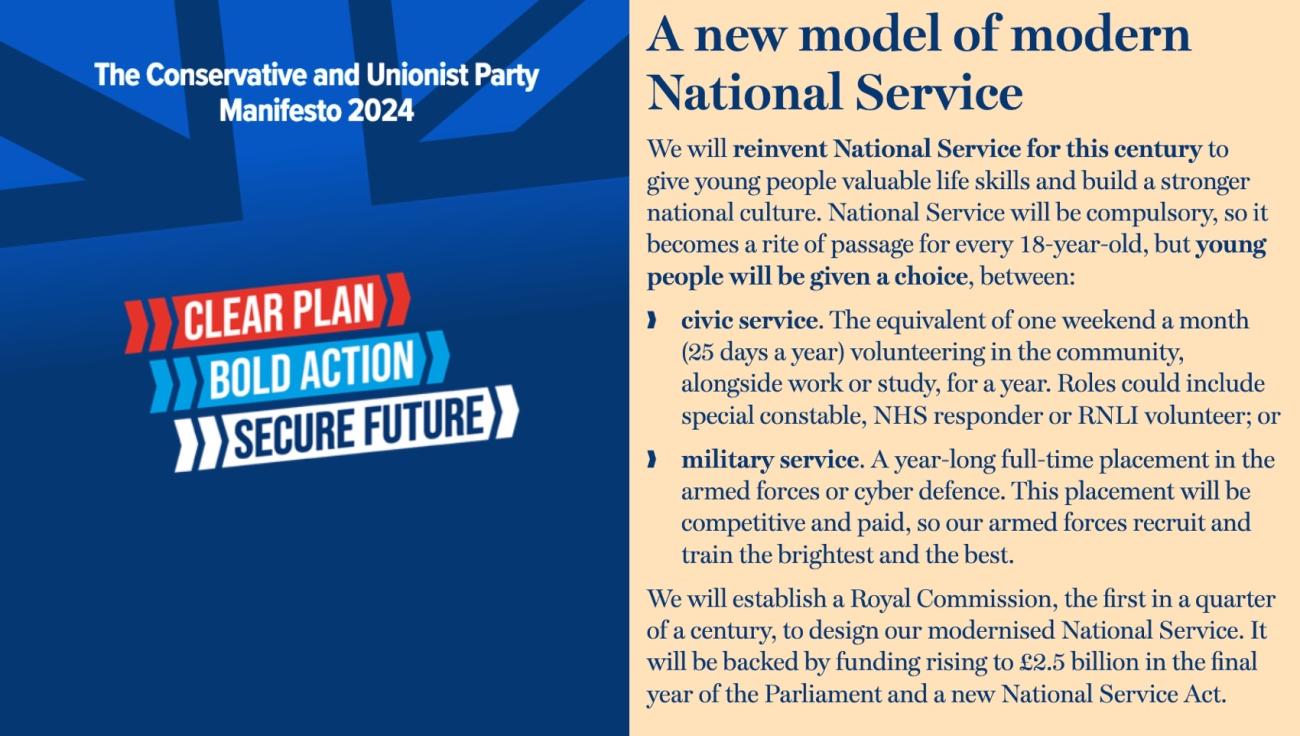
Among the swirling narratives concerning ‘resilience’ and ‘threats’, it must not be forgotten that it was not even two years ago that Rishi Sunak had a crack at winning votes on the promise of a “new model of modern National Service”. When pushed by Fiona Bruce on BBC Question Time, Sunak blurted out that the compulsory nature of such a programme would be enforced by “a set of sanctions and incentives”. It would be a naivety of the highest order to imagine the Starmer (or Farage) regime would not do exactly the same: a handy tool of conditioning for the acceptance of conscription when it comes.
2026 looks well set to be a year that the ‘defence’ industry will look back on fondly. For their aspirations to come to fruition, the onus will be on the young men and women of the country to step, if not into the breach, pretty close to it. Considering that there might be reasoned debate on the matter would be rash. After all, when sending the RAF into bat for Israel and her ‘self-defence’ in 2024, Starmer said that “the whole House will understand that there will be occasions when it is important for a Government to act without first coming to this House”. Quite so, and even if any sort of discourse does come to “this House”, how much time would it be given? It was always said that the Blair Government’s attack on the rural economy, via the hunting ban, was given 700 hours of Parliamentary time, whilst the merits, necessity, and lawfulness of invading Iraq was granted just seven.
As Brecht put it: “When the leaders speak of peace, the common folk know, that war is coming”. Despair not, but read to the end. “General, man is very useful. He can fly and he can kill. But he has one defect: He can think”.
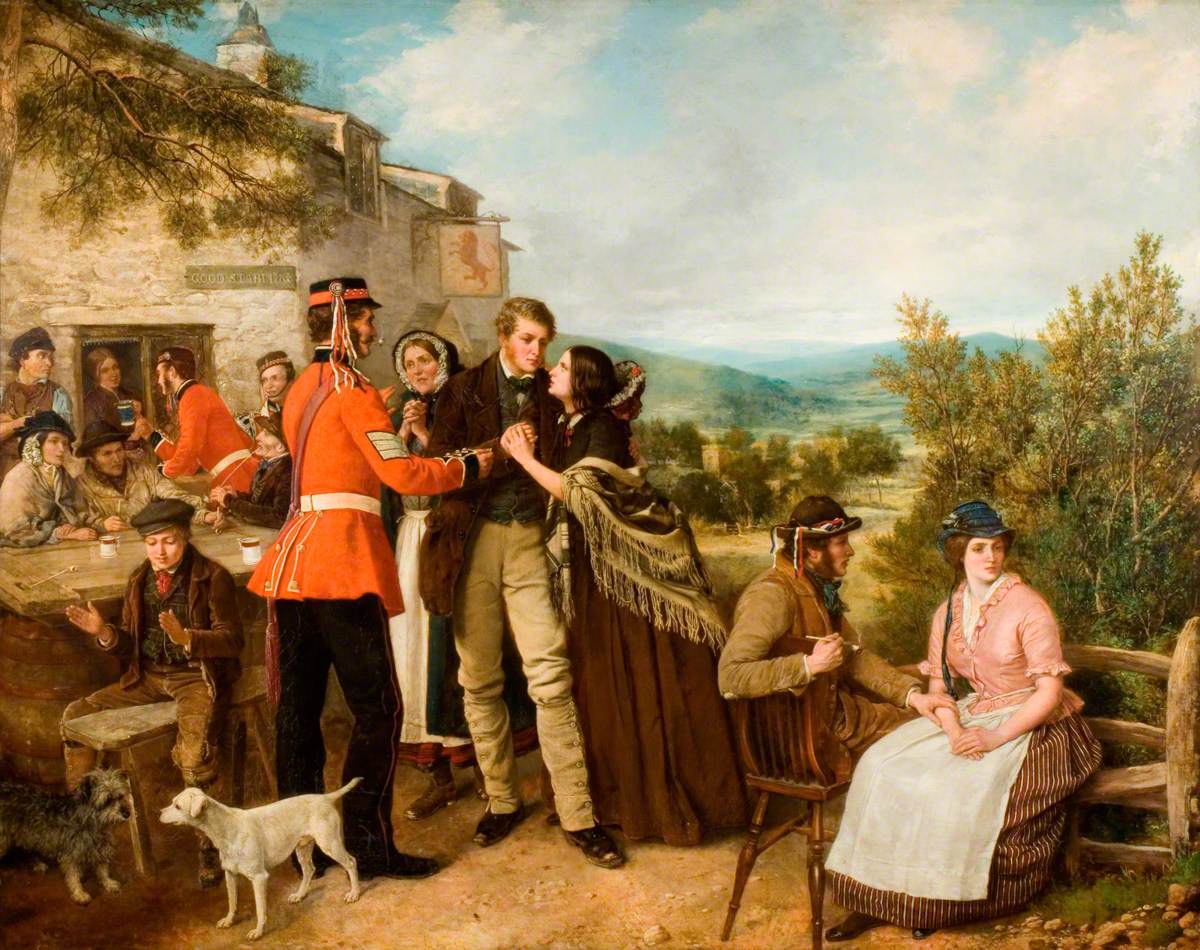
Cover Image: The Recruiting Sergeant (The King's Shilling) by Henry Nelson O’Neil (1817-1880)