
If you’re not given to reading the instructions for gadgets or self-assembly furniture, I would wager that you don’t loiter at the gates of private car parks in order to pick your way through all the ‘Terms and Conditions’. After all, why would you? Drive in, park, pay money, drive out; not always in exactly that order, but you know the form. The operators of such car parks have built a reputation of unreasonableness to rival the receptionists of GP surgeries (for those who still attend), and rightly so. In this inaugural ‘Blindfold Briefing’, I will decorate the piece with slices of a personal anecdote.

A couple of weeks back, a conversation which began with those clanging words “I’m just doing my job” and did not end in a punch-up, came as a surprise to at least one of the participants. Whilst attending County Court to contest a parking ‘fine’, this was how the claimant’s solicitor opened an ‘informal’ chat before we saw the judge. Both implicit and inherent in his opening statement is the suggestion that he is doing something wrong, that he knows he’s doing something wrong and, moreover, that he is going to do it anyway. Nonetheless, we had a short debate, which concluded with my opposite number remarking on how much of a change it made to avoid receiving any verbal or physical abuse. Even if I wasn’t going to dish any out, one rather imagines that his conscience makes up for it.
The issue at hand is both mundane and remarkable at the same time. I have no intent of drawing you into an appraisal of my ability to ‘follow the rules’ but, rather, I will use the scenario in order to look just beyond the near horizon to a future in which things might turn out very differently. As it happens, I was done for by inattention to detail and an unhappy coincidence of forgetfulness, which I shall explain (as succinctly as possible). A car park I use frequently has an ‘overnight’ charging period, which runs from 1700 until 1000 the next morning. If you enter the car park between these hours, it is the only tariff on offer, and the charge was £3. On the occasion in question, I arrived after 1700 and found that I had insufficient change to pay for a ticket. Knowing that the period ran until 1000 the next morning, I knew I need only acquire more coins and come back to buy the ticket, so I struck off to do just that.
Best laid plans. Two things happened, and I wound up in court. First, I forgot to return to the car park until first thing the following morning. This was unmitigatedly daft. Second — and completely unbeknownst to me at the time — the ‘machine’ recorded and printed just the first two characters of my Vehicle Registration Number (VRN). So far, so dull. As far as I was concerned, I had paid up for the period in question, and that was that. Not so. A couple of weeks later, a letter came through with a demand for £100. The contention, in the first instance, was that there was no record of payment. Since I still had the paper ticket, I assumed there would be no problem, once I produced a copy of it. Not so.

I had fallen victim to a system run not by people but by computers; Automatic Number Plate Recognition (ANPR) in this case. With a ‘man on the gate’, there is no way this situation could have presented itself. Since the ticket machine recorded only the start of the VRN, and it never occurred to me to check it (something I now do without fail), ANPR said that I had not paid at all. Even if this were the case, a £100 penalty for a ‘transgression’ which did not involve overstaying for a period that cost just £3 seemed both gratuitous and oppressive, which is where the Supreme Court comes in. ParkingEye v Beavis changed everything back in 2015.
The Supreme Court, in its infinite wisdom, decided that — even if no loss has been incurred — the parking company is entitled to charge such a penalty because an ‘overstay’ denies other users from parking. The Supreme Court ruled that ParkingEye (the operator, but not owner, of the car park) “had a legitimate interest in charging them which extended beyond the recovery of any loss”. Not only that, but an initial charge of up to £100 is to be considered completely acceptable. Does anyone imagine that, during the past decade, a private parking company has issued a single penalty charge for less than £100?
The trial judge, Judge Moloney QC, found that the £85 charge was neither extravagant nor unconscionable having regard to the level of charges imposed by local authorities for overstaying in car parks on public land. The Court of Appeal agreed and so do we.
It was the lack of humanity in all of this which leapt out at me. In being able to demonstrate, beyond any doubt, that I had paid for the period, it seemed utterly perverse that no account would be taken of this. Indeed, it was to this that the judge turned out to be very sympathetic in recognising that I had had no intent whatsoever to deceive, nor to withhold payment from the operator. But, rules is rules, and he found it reasonable that £100 should be coughed up. Until, that is, I asked for the exact cost of being located by a search from ANPR. It turned out, of course, that the claimant had inflated the cost of this and the (non-itemised) amount of £70 was reduced to a maximum of £30. I will spare the rest of the details, suffice it to say that going through the process was, in many ways, terribly satisfying as it exposed — beyond any reasonable doubt — the inbuilt and deliberate corruption of the system. I even wrote a personal letter to one of the car park directors, for goodness’ sake, to appeal to his ‘better’ nature!
Now, quite apart from providing an insight into the unseemly and unprincipled process of extorting money from honest (if forgetful) folk, this sorry tale encourages a glance through a different prism. Even if things may not have turned out as I may have hoped or expected — in a world where decency has the edge — I was presented with a choice at every stage of the process. I decided whether to enter the car park, I decided whether to pay, I decided whether to argue the toss, and I decided whether to pay up or to go to court. The privilege of these choices is vanishing as I type.
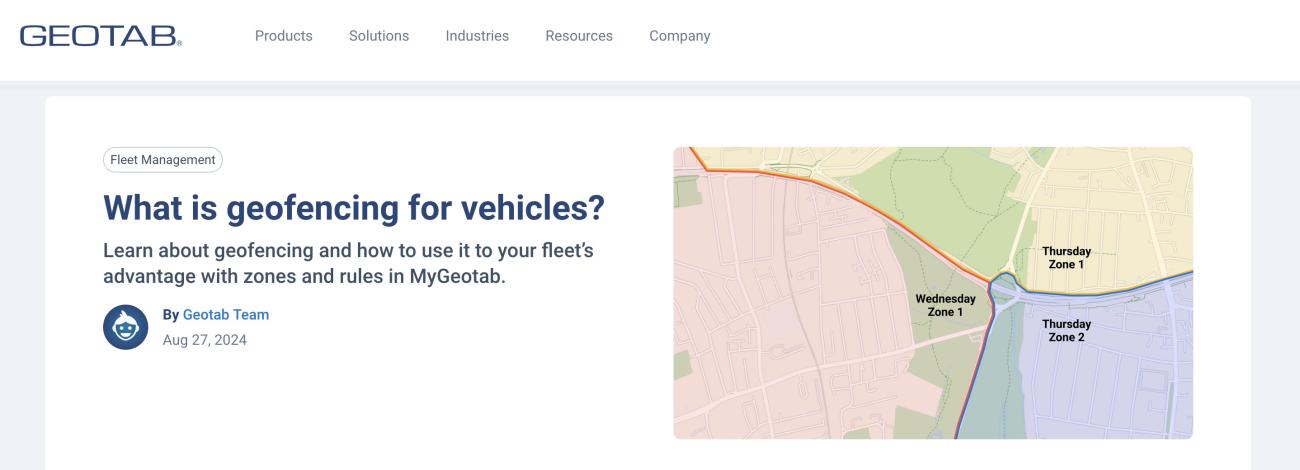
In the not-too-distant future, it would be desired by some that I would not even have a car, let alone drive it so far from home. This is easy enough to implement, even now. Geofencing, a system of remote monitoring and controlling of vehicles, has been in existence for decades, though few are aware of it. Almost all modern vehicles may be subject to it. For now, of course, it is sold as having a purely commercial application, but it is barely a stretch to consider the broadening of the parameters. Geotab, a fleet managment system, puts it like this: “Geofencing is a location-based technology that creates virtual boundaries around a physical area, often using GPS”. In pursuit of ‘net zero’ the end of sales of vehicles with combustion engines is planned, even if it has been pushed back, and a reliance on electric vehicles could reduce the user’s autonomy to absolute zero.
Even with a car, and with a dependable fuel source, there is no guarantee you would be permitted to drive it. Used as the catch-all for data harvesting exercises which are predicated on ‘security’, biometrics are finding their way into our motors, “offering enhanced protection for vehicles”, according to Automotive Technology. This means that the same facial recognition technology which keeps you ‘safe’ will determine whether or not you can start your car. The most recent set of documents produced by the Government on this technology concern a trial in late 2025, for Live Facial Recognition (LFR) at a UK port, ostensibly for ‘immigration enforcement’. The devil is parked in the detail, and the confines of this trial may stretch beyond immigration. Of the image captured by LFR, the policy document states: “The representation is then compared against known faces in a Watchlist to identify potential matches against persons of interest”. How you find yourself on such a Watchlist is anyone’s guess, but history suggests that this is the thin end of the wedge. In relation to the scenario at hand, it is but one gear change to imagine that a ‘person of interest’ may be denied access to their car, for reasons valid or otherwise, though probably otherwise.
The ‘vehicle-borne’ threat narrative has gathered much momentum over recent years, especially in the ‘West’, with ready statistics to bolster it. How to counter such a threat, you may wonder? In the UK, the ‘technique’ is called Hostile Vehicle Mitigation (HVM) and it is owned by the National Protective Security Authority (NPSA), which is part of the Security Service: “we make the UK more resilient to terrorism and state threats”. They describe HVM as “a protective security discipline focussing on reducing risks associated with vehicle borne threats posed by terrorists and criminals” and, for the time being, it is expressed by the positioning of physical and protective obstacles. However, in a world where crime is being detected shortly before the perpetrator has even conceived of a plan, thanks to — what else — AI, it would be only appropriate to have a digital mechanism of interdiction, wouldn’t it? This is not the stuff of dreams, either. The Government has leapt into bed with Darktrace, among others, which “learns you” and there is little doubt that the deployment of its technology will metastasise beyond ‘cybersecurity’. The previous CEO, Poppy Gustafsson, relinquished her role in order to become Minister of State for the Department of Business and Trade as Baroness Gustafsson.

All of the above has, so far, ignored one of the many elephants crowding the room: the digital wallet. My tangle with the ‘authorities’ would not be possible in a world where control of all of my ‘attributes’ had been ceded to the Government or, more precisely, the third-party operators contracted by the Government. Assuming I had managed to find fuel for my gas-guzzler and exploited a ‘gap’ in the geofence, entry to a car park could trigger several automatic processes. ANPR and LFR would check that the ownership, insurance and authorisation to drive the vehicle tallied. My bank account could be debited upon exit, making it impossible — in theory at least — to contravene these pesky Terms and Conditions. It could be argued that such a process would dispense with a bunch of tedious and time-consuming admin, which it might. However, it also strips the human of all agency and responsibility, just as it removes the requirement to plan or to think, or — indeed — to negotiate if things go awry.

Prosaic as parking may be, looking at it with these considerations in mind brings about the realisation that the direction of travel is towards a place where mankind is no longer active, but rendered almost entirely passive by the systems sold to us as ‘convenient’ and ‘secure’. They are, of course, neither: just try arguing the toss when the judge is made of carbon fibre and aluminium, with a noggin full of semiconductors. In a final note of multistorey irony, the legislation conferring powers related to the “recovery of unpaid parking charges” is the Protection of Freedoms Act 2012.