

When I consider the causes of the war and the necessity in which we stand, I feel great confidence that this day and this union of ours will be the beginning of freedom to the whole of Britain. To all of us slavery is a thing unknown; there are no lands beyond us, and even the sea is not safe, menacing us as it does with the Roman fleet. And thus in war and battle, in which the brave find glory, even the coward will find safety.
The former contests, in which with varying fortune the Romans were resisted, still left us some hope of aid, seeing that we, the most renowned of their enemies, were kept as a last resource. We, who dwell in the uttermost parts of the earth and of freedom, have been out of sight even of the Romans. But now all the fastnesses of Britain are thrown open; no nation beyond us remains; nothing is left us but sea and land, and the Romans, more deadly still than both.
For to plunder, to slaughter, to usurp under false titles, they call empire; and where they make a desert, they call it peace.
If you suffer their rule to go on, what will follow? They will gird our forests with chains, despoil our marshes, dictate to our wives and children, and press our youth into their armies.
Nature has willed that every man's children and relatives should be his dearest objects. Yet they tear them away for the purpose of serving in distant lands. Our wives and sisters, even if they escape violation by the enemy, are dishonoured under the names of friendship and hospitality.
Our masters do not like us to be united; and it is this very union, so late attained, which must be maintained. Though the Romans are strong by the misfortunes of their enemies, yet they have begun to be weak. They are no longer supported by the mutual hatred of their subjects; they have no further nations to plunder.
We have the men of Gaul and Germany behind us — their example shows that the Roman tyranny may be shaken. There is nothing formidable behind them, nothing in front of them. They are a motley host of peoples from all nations, which cannot be held together except by success; and if fear departs, they are dissolved.
We stand here on our own ground. The Romans have no household gods to fight for; they have no wives to encourage them. Most of them have no country or kindred; here they are, a few strangers thinking more of the lands and riches of others than of the glories of Rome.
Remove their disguises, and you will find that what inspires them is fear and terror — weak bonds of affection. On the other hand, we have every incentive to encourage us to victory — our country, our liberty, our wives, our children.
It is not for glory or wealth that we must fight, but for freedom alone, which no virtuous man loses but with life.
Have faith, and meet them with the courage which is natural to you. These Romans are no more than other men. If you look into their successes and failures, you will find nothing that need terrify you. They are protected by their armour, but it is heavy; their courage is borrowed from their discipline; when their terror wears off, their courage fails.
Strike, then, while they are still astonished, while their ranks are being formed. Think of your forefathers, and of your own posterity.
This day will either be the beginning of liberty to Britain, or of eternal servitude.
Prescient words indeed, the sentiments of which could nearly all apply today, spoken by a British General Galgacus in AD 78, nearly 2,000 years ago and somehow recorded by Tacitus. In his book on the Roman war against the indigenous British peoples, Tacitus refers to all the people of Great Britain quite rightly as Britons, and more often as the ‘enemy’. The Britons famously loved their freedom and fought for it, as the Romans recorded. Certain groups or tribes of Britons were subjugated by coercing the chieftains, others chose to fight the invaders, and Galgacus assembled the remaining massed free people of Britain and stood his ground in the Grampian Mountains in what we now call Scotland.
The battle known to the Romans, and subsequent history which they themselves wrote, was called the battle of Mons Graupius, and according to the Roman account, it was a great Roman victory. Or was it? The Romans claimed to have killed 10,000 of the fighting Britons, while 20,000 of them retreated from the field of battle and were never found. The Romans were indeed left holding the battlefield and claimed a great victory, but they were soon to retreat themselves to the Solway Firth, which they fortified and which was later to become the general line for Hadrian’s Wall, leaving the northern Britons still free. It was a classic pyrrhic victory, even if Tacitus preferred to spin it otherwise to benefit his father-in-law, Agricola, who led the campaign against the last free Britons. General Galgacus was never captured nor paraded in humiliation in Rome.
Another British chief who was however defeated by the Romans 30 years earlier, Caractacus (of the Catuvellauni tribe), and was paraded in Rome before the Emperor Claudius, made another telling speech, which contained words that would echo down the centuries: "If you Romans choose to rule the world, must all men accept slavery?"
The Britons at the time were under no illusions, they were fighting for their very freedom, and many of our British ancestors gave their lives in that cause.
But what is freedom? Do we fully grasp today what our freedoms are and what they mean, as distinct from rights? Although the UN has chosen to describe nine fundamental freedoms, there are four fundamental freedoms from which all others derive:
Freedom of thought
Freedom of expression
Freedom of association/assembly
Freedom of movement
Let’s briefly consider these freedoms.
Freedom of thought includes believing what you wish, and being free to hold whatever political, philosophical and religious beliefs that you want. One might naturally imagine that freedom of thought is one freedom that the state would find it difficult to steal. But George Orwell showed how it could be done:
The Thought Police are the most feared instrument of state control in Orwell’s 1984, responsible for detecting, suppressing, and eliminating any form of independent thought, dissent, or nonconformity — what the Party calls thoughtcrime.
They operate both as:
a secret police force, enforcing political orthodoxy, and
a psychological weapon, instilling constant fear so that citizens police themselves.
Their ultimate purpose is not merely to punish disobedience, but to prevent it altogether by destroying even the possibility of rebellious thoughts.
Unfortunately, this blueprint for the control of thoughts by self-policing through fear has been used extensively in recent years, and so freedom to think as one would wish has been abrogated. In a previous article for UK Column, I dealt with freedom of expression. Since publishing, the state has clamped down even further on this basic freedom.
As for the freedom of association and assembly, the Covid crisis showed us all just how easy it is for the state to steal this freedom. The Draconian ‘Stay at Home’ regulations of March 2020 made it illegal to gather in public without a ‘reasonable excuse’ and illegal to leave home except for a very short list of state-approved reasons. In September 2020, the ‘Rule of Six’ was introduced, making all meetings of more than six people illegal, not only outdoors but also, incredibly, indoors. Places of worship were closed. In late 2020, the state went further still; outdoor gatherings of more than two people were made illegal. This fundamental freedom was suppressed by the state in the name of a virus that was no more deadly than the common flu, a disease which humanity has learnt to live with for thousands of years. And displaying complete contempt for this fundamental freedom and his own tyrannical restrictions, Boris Johnson held the infamous garden party in May 2020, to which 100 invitations were sent out (according to the police investigation) and 40 friends of Downing Street actually attended.
The two underlying reasons for this egregious suppression of freedom, was a) to test the subservience of the British people to unwarranted suppression of their natural freedoms and b) to train the British people to ignominiously barter with the state for a piecemeal return of the stolen freedoms by accepting untested and dangerous gene modification therapies. Both preparations for the upcoming Social Credit System.
The Covid crisis was again used to suppress our fourth fundamental freedom, that of movement. The above-mentioned ‘Stay at Home’ order and Tier Four restrictions of movement of March 2020, which included banning people from seeing relatives — with those sickening scenes of families attempting to visit elderly relatives, but only through windows, the closure of public transport, and the entire population (excluding the governing elite and its enforcers) being forced to stay at home. This amounted to the most tyrannical suppression of freedom of movement ever experienced in Britain outside of wartime.
The Covid crisis revealed that the UK state was fully capable of removing all freedoms from all British people, and that there was very little that the population could do about it. The green light was given to the state that it could repeat this suppression of freedoms whenever it felt like it, so that the stage is now set for the implementation of a social credit system at a time of its choosing.
If a person is dispossessed of one’s four fundamental freedoms, that person is in effect an existential slave. The all-important question of the human condition, free or slave, is an ancient one. Aristotle defined a functional slave as “someone entirely subordinated to another’s will”; this is still relevant today in discussions of existential or coercive slavery.
The “another” is, in this case, clearly the state. During the Covid crisis, the British population were undeniably slaves, with all their four fundamental freedoms having been stolen by the state. The state has, for the moment, suspended its suppression of our freedom of movement. But, for how long, while the freedom of assembly is tolerated if that assembly is not considered to be too threatening to the belief system of the state?
At the other end of the spectrum, we have Aristotle’s definition of freedom: “He who can exist by his own reason and does not need another, is naturally free; he who needs another’s reason and guidance, is a slave by nature”.
John Stuart Mill wrote in his book On Liberty (1859):
The worth of a man is in proportion to the amount of freedom he enjoys; the worth of society is in proportion to the amount of liberty its members possess. The worth of life itself depends upon the liberty of thought, expression, association, and movement; deprive a man of these, and you degrade him into something less than fully human.
John Locke, writing on government in the 17th century, and echoing the feelings of our British ancestors, wrote, “The end [purpose] of law is not to abolish or restrain, but to preserve and enlarge freedom. Every man has a property in his own person; this nobody has a right to but himself”.
How many British people can really describe themselves as free today, if we think carefully about how much of our freedom has been deliberately suppressed or self-policed away? If we read Galgacus’ speech today and replace ‘Romans’ with ‘by the State’, the British General could have been preparing modern day British people for a ‘fight’ for their own freedoms. But do today’s British people have the will to take on the state and win, just as Galgacus and his army did? This should be a question that every one of us should be asking today, before the social credit system condemns us all to permanent slavery to the state and to the elites who comprise it.
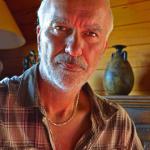
Neil Harrison
Neil Harrison achieved a degree in Pure and Applied Physics at Salford University, UK, and went on to work in the space industry for Marconi Space and the German Space Operations Centre near Munich, working on various satellite and NASA space shuttle programmes.