
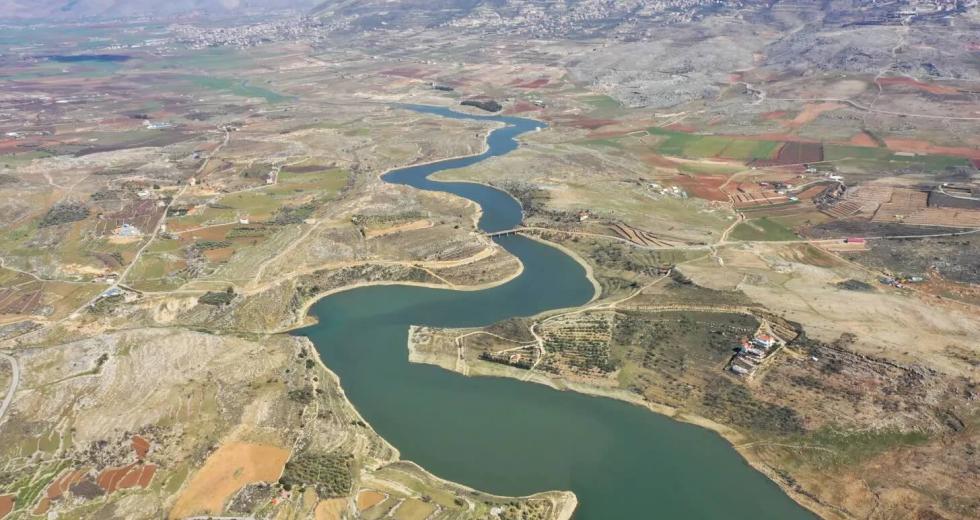
Lebanon’s rivers are more than lifelines; they lie at the heart of a long-standing struggle shaped by external ambition. From the Litani to the Wazzani, the Israeli entity’s efforts to dominate regional water reveal a deeper reality: control over southern Lebanon’s water has been pursued as power, not necessity.
Water has long shaped the politics of the Middle East, but in Lebanon, it is becoming something more: a fault line of power, pressure, and persistent external interest. In the country’s south, where rivers like the Litani, Hasbani, and Wazzani carve through fertile land and contested borders, freshwater is not just a resource; it is a strategic asset increasingly entangled in regional rivalries.
For decades, Israeli entity efforts to secure water dominance have extended beyond its borders, repeatedly intersecting with Lebanon’s most vital water systems. From attempts to reach the Litani to tensions over the Wazzani’s flow, these moves reflect more than short-term necessity; they point to a deeper, long-standing strategy rooted in control over the region’s hydrological map.
This article explores how Lebanon’s relative water abundance has placed it at the centre of a quiet but consequential struggle, one where geography, politics, and resource security converge, and where rivers have become instruments of influence as much as sources of life.
The Hydro-political Significance of Lebanese Water ResourcesLebanon occupies a uniquely sensitive position within the hydro-political landscape of the Middle East. Unlike many of its regional counterparts, which suffer from acute water scarcity, Lebanon possesses comparatively abundant freshwater resources. This relative abundance, however, is not merely a natural blessing; it is also a geopolitical liability. In a region where water is increasingly securitised, Lebanon’s rivers and aquifers have become embedded within broader regional power dynamics, particularly in relation to the Israeli entity’s long-standing water concerns.
Lebanon’s hydrological system is defined by a combination of surface and groundwater resources. The country hosts approximately 17 perennial rivers alongside numerous seasonal streams and significant underground aquifers. Among these, the Litani River stands out as the most significant internal watercourse, stretching approximately 170 kilometres entirely within Lebanese territory. Its basin supports extensive agricultural activity in the Bekaa Valley and southern Lebanon, while also contributing to hydroelectric production through facilities such as the Qaraoun Dam. This internal positioning makes the Litani particularly valuable, as it is one of the few major rivers in the region not shared across international borders.
However, the hydrological importance of Lebanon extends beyond the Litani. Southern Lebanon is home to the Hasbani River and the Wazzani River, both of which form part of the upper Jordan River Basin. Unlike the Litani, these rivers are transboundary in nature, linking Lebanon hydrologically to Syria, Jordan, and occupied Palestine. This interconnectedness elevates their strategic significance, as any alteration in their flow has implications for the broader regional water balance. Transboundary water systems in the Middle East are often sites of asymmetrical power relations, where upstream and downstream actors compete not only over resources, but also over political influence.
The Wazzani River, a modest yet strategically significant watercourse in southern Lebanon, flows through the Marjayoun District within the Nabatieh Governorate, an area where geography and geopolitics intersect with unusual intensity. Despite its relatively small size, the river derives considerable importance from its source, the Wazzani Spring, which constitutes the only perennial and stable contributor to the Hasbani River. In hydrological terms, this spring accounts for approximately one-fifth of the Hasbani’s total discharge, rendering it a vital element in the broader Jordan River Basin.
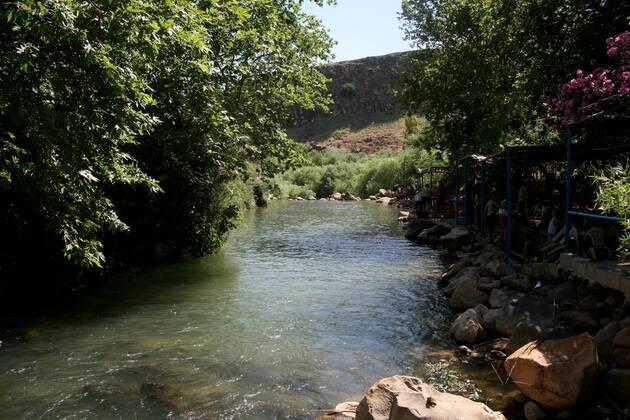
What distinguishes the Wazzani River is not merely its hydrological contribution, but its geopolitical positioning. Over a stretch of roughly four kilometres, the river delineates a sensitive boundary zone between Lebanese territory and the Zionist Israeli-occupied Syrian Golan Heights, particularly around the village of Ghajar. This dual function, as both a vital water source and a de facto boundary marker, places the river at the heart of regional tensions, where issues of sovereignty, resource allocation, and security converge due to constant Zionist aggressions on Lebanon.
Meanwhile, the Hasbani River originates from the northwestern slopes of Jabal al-Sheikh, descending through southern Lebanon as one of the principal resources feeding the upper Jordan River Basin. Flowing for approximately 24 to 40 kilometres within Lebanese territory, it represents a critical transboundary watercourse whose significance extends well beyond its geographical modesty. Hydrologically, the Hasbani integrates contributions from several springs, most notably the Wazzani, forming a steady flow that plays a vital role in sustaining downstream systems. Its position at the intersection of Lebanese, Syrian, and Palestinian hydrological networks situates it firmly within one of the most politically sensitive water basins in the Middle East.
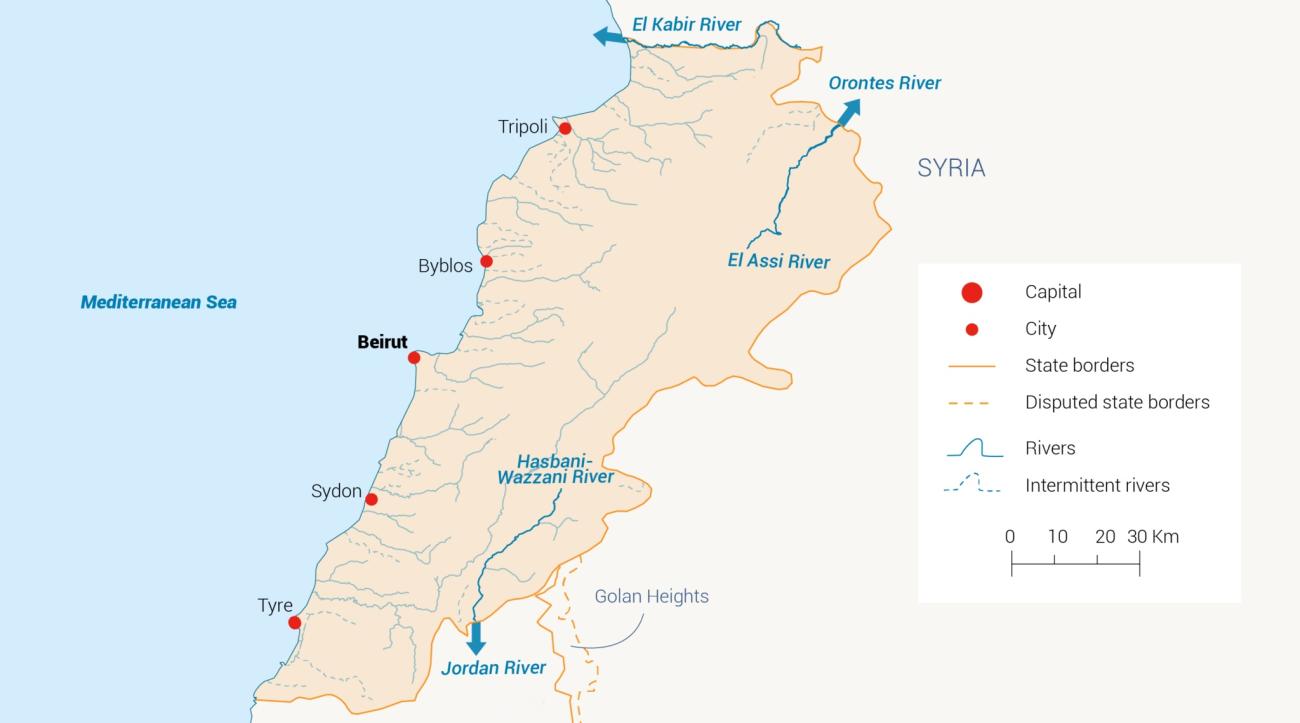
This strategic positioning has rendered the Hasbani a recurring focal point of geopolitical tension, particularly in relation to water allocation and control. Disputes over its tributaries, especially the Wazzani Spring, escalated in the early 2000s following multiple Zionist aggressions, when Lebanese efforts to utilise these waters triggered Israeli severe objections and military posturing over pumping rights. Yet, beyond its political dimension, the river also carries ecological importance.
The relative abundance of Lebanese water must also be understood in contrast to the Israeli entity’s structural water deficit. Historically, the Israeli entity claims to have faced significant challenges in securing sufficient freshwater resources to meet domestic, agricultural, and industrial demands. While advancements in desalination and wastewater recycling have mitigated some of these pressures, natural freshwater sources remain a critical component of its long-term water security strategy. This structural imbalance helps explain the persistent greed that can be otherwise explained by Zionist Israel as a ‘strategic interest’ in neighbouring water resources, including those of Lebanon.
From a hydro-political perspective, water in Lebanon is not merely a resource; it is a strategic asset embedded within regional security calculations. The concept of ‘hydro-politics’ refers to the ways in which water resources influence power relations, conflict dynamics, and cooperation between states. In the Lebanese case, hydro-politics is shaped by both internal and external factors. Internally, issues such as infrastructure deficiencies, mismanagement, and seasonal variability affect the efficient utilisation of water resources. Externally, geopolitical pressures, particularly constant aggression from the Israeli entity, introduce an additional layer of complexity.
One of the defining features of Lebanon’s water profile is the paradox of abundance and inefficiency. Despite relatively high levels of rainfall compared to regional averages, Lebanon struggles with water management challenges, including leakage, pollution, and inadequate storage capacity. According to the Ministry of Energy and Water, a significant portion of Lebanon’s water is lost due to outdated infrastructure and insufficient investment. This inefficiency has important geopolitical implications, as it feeds into narratives that portray Lebanon as incapable of effectively managing its own resources; narratives that have, at times, been leveraged to justify external interest or intervention.
At the same time, the geographic distribution of water resources within Lebanon further complicates the picture. The southern regions, which are richest in surface water, are also those most exposed to geopolitical tensions due to their proximity to the Israeli entity. Rivers such as the Wazzani and Hasbani are not only hydrologically significant but also strategically vulnerable, with their locations along contested or sensitive borders. The borders make it vulnerable to political and military pressure, especially during periods of constant Zionist wars on south Lebanon.
Climate change introduces yet another dimension to Lebanon’s hydro-political landscape. Changing rainfall patterns, rising temperatures, and increasing periods of drought all threaten to exacerbate existing vulnerabilities. Studies suggest that climate variability could reduce water availability in the region by significant margins over the coming decades, thereby intensifying competition over existing resources. In such a scenario, the strategic value of rivers like the Litani and Wazzani is likely to increase, further embedding them within regional conflict dynamics.
In this context, Lebanon’s water resources cannot be understood in isolation from broader regional dynamics. They are part of a complex system where geography, politics, and security intersect. The Litani River, while entirely Lebanese in its course, has long been perceived as a potential asset within the Zionist Israeli entity’s strategic thinking. Meanwhile, transboundary rivers such as the Wazzani are directly implicated in ongoing disputes over shared water resources.
Ultimately, the hydro-political significance of Lebanese water lies not only in its quantity, but in its position within a contested regional environment. Water, in this sense, functions as both a resource and a lever of power. For Lebanon, this dual nature presents a profound challenge: how to manage and protect its water resources in a way that ensures national development while navigating the pressures of a highly securitised regional context amid constant Israeli entity aggressions.
Historical and Ideological Foundations of the Israeli Entity’s Water AmbitionsThe question of water has been deeply embedded in the ideological and strategic foundations of the Zionist project since its earliest formulations. Far from being a secondary or technical concern, access to freshwater resources was conceptualised as a prerequisite for state viability, economic sustainability, and demographic expansion. Within this framework, the water resources of southern Lebanon, most notably the Litani River, were not viewed as peripheral, but rather as integral to long-term strategic planning.
Early Zionist discourse reveals a clear awareness of the hydrological limitations of the territory of occupied Palestine. Historical Palestine, particularly its southern and central regions, suffers from uneven rainfall distribution and limited perennial water sources. This reality shaped early territorial aspirations. Zionist leaders have consistently emphasised the need to secure reliable water supplies, often advocating for borders that would extend beyond purely demographic or historical considerations to include critical natural resources, as if that is something normal or even legal that states usually do.
One of the earliest and most frequently cited examples is the correspondence of Chaim Weizmann with British officials during the period leading up to the establishment of the Israeli entity. Weizmann explicitly argued for the inclusion of the Litani River within the borders of the proposed ‘Jewish state’ on stolen Palestinian land, highlighting its importance for irrigation and energy production. Although these demands that were not met in the official partition agreements, they nonetheless illustrate the centrality of Lebanese water resources within early colonial strategic thinking.
The Litani River, in particular, occupied a prominent place in these early visions. Unlike other regional rivers, the Litani flows entirely within Lebanese territory before emptying into the Mediterranean Sea. This makes it both a uniquely sovereign resource for Lebanon and, from an external perspective, a potentially ‘untapped’ source of freshwater. The Litani has long been perceived by Israeli entity planners as a natural extension of the Jordan River Basin, despite the absence of any direct hydrological connection.
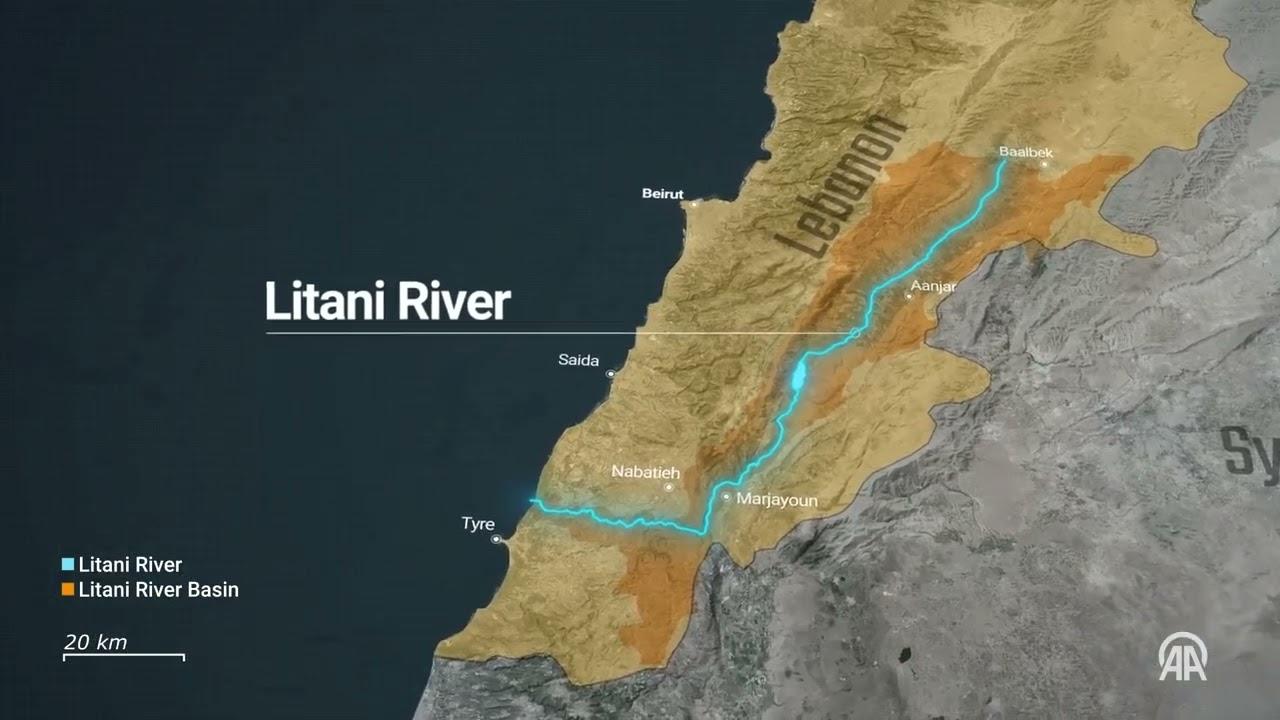
The transition from ideological aspiration to strategic planning became more pronounced during the 1940s and 1950s. During this period, a number of technical studies and proposals were developed to explore the possibility of diverting the Litani River waters southward toward the Jordan River Basin. These proposals were not merely theoretical; they were grounded in detailed engineering assessments that sought to evaluate the feasibility of large-scale water transfer projects. Such proposals reflected a broader pattern in which water infrastructure was used as a tool of state building and territorial consolidation.
Following the establishment of the Israeli entity in 1948 on stolen Palestinian land, water quickly emerged as a central axis of regional tension. The 1950s and 1960s witnessed a series of disputes over the use of the Jordan River system, culminating in the so-called ‘water wars’ of the mid-1960s. While these conflicts primarily involved Syria and Jordan, Lebanon was indirectly implicated through its control of the Hasbani River, one of the main tributaries of the Jordan.
Lebanon’s relative not getting directly involved in those confrontations did not diminish the strategic importance of its water resources. On the contrary, the Hasbani, and by extension the Wazzani, became increasingly significant as components of a broader hydrological system. Israeli entity efforts to secure control over the Jordan River Basin inevitably brought attention to upstream sources, including those located within Lebanese territory. Transboundary water systems often create conditions in which upstream states are drawn into conflicts initiated downstream.
The 1967 war marked a turning point in the regional water balance. With the Israeli entity’s occupation of the Syrian Golan Heights, it gained control over additional water sources feeding into the Jordan River, thereby strengthening its hydrological position. However, this expansion did not eliminate concerns over water scarcity. Instead, it reinforced the perception that long-term security required a diversified and controllable water supply. This was a perception that continued to shape hostile strategic thinking in relation to neighbouring countries, including Lebanon.
The 1982 invasion of Lebanon must also be understood, in part, within this broader context. While the stated objectives of the invasion were primarily security-related, some analysts have pointed to the geographical extent of Israeli entity military operations, particularly their invasion toward the Litani River, as indicative of underlying strategic considerations related to water. Although it would be reductive to attribute the invasion solely to hydrological motives, it is equally insufficient to ignore the role that water may have played within the larger strategic calculus.
In addition to military and territorial strategies, the Israeli entity’s water greed has also been articulated through discursive and legal frameworks. One recurring theme is the portrayal of Lebanese water resources as underutilised or inefficiently managed. This narrative serves a dual function: it highlights the perceived Israeli occupation’s need for water, while simultaneously questioning the legitimacy of exclusive Lebanese control over certain resources. Such narratives are often part of ‘hydro-hegemony’, where dominant actors seek to shape not only the distribution of resources but also the discourse surrounding them in sovereign states like Lebanon.
It is important to note, however, that the Israeli entity’s water policy has evolved. Advances in desalination technology, particularly since the early 2000s, have significantly reduced dependence on natural freshwater sources. Yet, this technological shift has not eliminated the strategic importance of natural water resources. Instead, it has shifted the nature of the discourse, from one of necessity to one of optimisation and regional influence for the occupation leaders.
Within this evolving context, Lebanese water resources continue to occupy a complex position. On the one hand, they are less central to the Israeli entity’s immediate survival than they may have been in earlier decades. On the other hand, they remain strategically relevant within a broader framework of regional power projection and resource security. The persistence of interest in rivers such as the Litani and Wazzani suggests that water, even in an era of technological solutions, retains its geopolitical significance.
Ultimately, the historical and ideological foundations of Zionist Israeli water ambitions reveal a pattern of continuity rather than rupture. From early Zionist thought to contemporary policy, water has remained a central element in strategic occupation planning. Lebanese resources, by virtue of their location and abundance, have been consistently positioned within this framework, not always as immediate targets, but as potential assets within a long-term vision of regional hydrological control.
The Litani and Wazzani Rivers in the Context of Conflict and ControlThe Litani and Wazzani Rivers represent two of the most critical contact points between Lebanese sovereignty and Israeli entity strategic interests. While both rivers differ in their hydrological characteristics and legal status, they converge in one essential aspect: each has been situated, at different moments, within the circle of conflict over water control in the Levant. Examining these rivers as case studies allows for a more grounded understanding of how abstract hydro-political ambitions translate into concrete tensions, policies, and occasionally confrontations.
The Litani River occupies a unique position in this equation. As the longest river entirely within Lebanon, it constitutes a rare example of a fully sovereign water resource in a region otherwise dominated by transboundary systems. This sovereignty, however, has not insulated it from external interest. On the contrary, its size, flow, and geographic location have made it a recurring point of reference in Israeli entity strategic colonial discourse. Unlike the Hasbani or Wazzani, which are directly connected to the Jordan River Basin, the Litani flows independently into the Mediterranean. Yet, Israeli entity planners have historically viewed it as a potential supplementary source that could be redirected southward through engineered projects.
The economic and developmental importance of the Litani for Lebanon cannot be overstated. It serves as a primary source of irrigation for the Bekaa Valley, often described as the agricultural heartland of the country, and supports hydroelectric generation through the Qaraoun Dam and associated infrastructure. Any threat to the integrity or control of this river therefore extends beyond resource competition into the realm of Lebanese economic security and national stability.
Despite its internal flow, the Litani has repeatedly appeared within the geographical scope of Israeli entity military operations. During 1978’s Operation Litani and later in the 1982 invasion, Israeli occupation forces advanced up to, and in some cases beyond, the river’s banks. While these operations were officially framed in terms of security concerns, their geographical borders that raised questions among analysts regarding whether control, or at least surveillance, of the river formed part of the broader strategic calculus. The naming of the 1978 operation itself underscores the symbolic and strategic weight attributed to the river by the occupation.
In contrast, the Wazzani River represents a more direct and immediate site of contestation due to its status as a tributary of the Hasbani River, which in turn feeds into the Jordan River system. This hydrological connection places the Wazzani squarely within a transboundary framework governed, at least in principle, by international water law. However, in practice, the asymmetry of power between Lebanon and Zionist Israel has shaped how these principles are interpreted and enforced.
The tensions surrounding the Wazzani reached a peak in 2002, when Lebanon initiated a project to pump water from the river to supply nearby villages in the south. From a legal standpoint, the project was modest in scale and fell well within Lebanon’s rights under the principle of equitable and reasonable utilisation. Nevertheless, Zionist Israel responded with sharp objections accompanied by military threats and diplomatic pressure, arguing, as per the usual rhetoric, that even limited Lebanese use could affect its water security.
This episode illustrates a broader dynamic in which water disputes are not solely about quantities, but about control and precedent. By contesting even small-scale Lebanese projects, the Israeli entity effectively signalled its unwillingness to accept any changes to the status quo that might weaken its position within the Jordan River Basin. Such behaviour is characteristic of hydro-hegemonic systems, where dominant actors seek to maintain control not only over resources, but also over the rules governing their use.
Beyond confrontation, the management of the Wazzani and Hasbani rivers has also been shaped by a climate of deterrence. Lebanon’s approach to these resources has often been cautious, reflecting an awareness of the potential for escalation. This caution, while understandable, has had the unintended consequence of limiting the country’s ability to fully utilise its own water resources. In this sense, control is exercised not only through physical presence or legal argumentation, but also through the shaping of perceived risks and constraints.
The contrast between the Litani and Wazzani thus highlights two different modalities of water conflict. The Litani represents a case of latent strategic interest; an internal resource that is not directly contested daily, but remains embedded within long-term strategic thinking for the occupation. The Wazzani, by contrast, exemplifies active contestation, where even limited use becomes a trigger for diplomatic and military aggression by Zionist Israel against Lebanon.
It is also important to consider the role of infrastructure in shaping these dynamics. Water control is not only about access to sources, but about the ability to store, transport, and distribute water. In Lebanon, infrastructure limitations, ranging from ageing pipelines to insufficient storage capacity, have constrained the effective use of rivers like the Litani. These limitations, in turn, triggered external narratives about inefficiency by the occupation, while also reducing Lebanon’s strategic leverage.
Environmental considerations further complicate the picture. Both the Litani and Wazzani rivers face challenges related to pollution, overuse, and climate variability. In the case of the Litani, industrial discharge and agricultural runoff have significantly degraded water quality in certain sections. These issues not only undermine domestic utilisation, but also intersect with geopolitical dynamics by affecting how the resource is perceived and valued.
Ultimately, the Litani and Wazzani rivers illustrate how water resources can become focal points of broader Zionist greed, denoted as ‘geopolitical struggles’. They are not merely physical entities, but sites where sovereignty, security development, and power intersect. Understanding their role within the Lebanese-Israeli entity context requires moving beyond technical analyses to consider the political and strategic dimensions that shape how water is contested, controlled, and conceptualised.
Legal, Geopolitical, and Future Dimensions of the Water ConflictThe conflict over Lebanese water resources cannot be fully understood without situating it within the broader frameworks of international law, regional geopolitics, and future environmental and strategic trends. Some of my other writing has demonstrated the historical continuity and practical manifestations of Israeli entity acquisitive ambition in Lebanese waters. This article, however, has sought to evaluate the legitimacy of these dynamics, their geopolitical implications, and the trajectories they may take in the coming decades.
At the level of international law, the governance of transboundary water resources is primarily guided by a set of widely recognised principles, most notably those codified in the 1997 United Nations Convention on the Law of the Non-Navigational Uses of International Watercourses. Among these, the principles of ‘equitable and reasonable utilisation’ and the obligation to avoid ‘significant harm’ are central. In theory, these principles provide a balanced framework through which riparian states can share water resources while respecting each other’s sovereignty rights.
In the Lebanese context, these legal norms are particularly relevant to rivers such as the Hasbani and Wazzani, which form part of the Jordan River Basin. From a strictly legal standpoint, Lebanon is entitled to utilise these waters in a manner that is both equitable and sustainable. The modest scale of Lebanese water extraction projects, such as the 2002 Wazzani pumping station, falls well within these parameters. However, the application of international law in practice is often shaped less by legal clarity than by political and strategic realities imposed by an active occupier constantly attempting invasion.
This discrepancy highlights a fundamental limitation of international water law: its dependence on state compliance and the absence of strong enforcement mechanisms. In asymmetric contexts, where one state possesses significantly greater military, economic, or diplomatic power, legal principles may be selectively interpreted or effectively overridden. Water conflicts in such contexts are often governed by ‘hydro-hegemony’, in which dominant actors shape both the rules and their implementation.
Within this framework, the Israeli entity’s practices, which regularly amount to illegal acts of aggression regarding regional water resources, are unlawfully projected by the occupation as reflecting a combination of legal argumentation and strategic leverage. By invoking concerns over water security or downstream impact, Zionist Israel has been able to challenge Lebanese initiatives, even when those initiatives are legally justified. This dynamic underscores the imbalance in how such concerns are articulated and enforced.
Beyond the legal dimension, the geopolitical significance of water in the Lebanese-Israeli entity context is deeply intertwined with broader regional dynamics. Water resources function not only as economic assets, but also as tools for political influence. Control over water can enhance a state’s ability to influence neighbouring actors, shape development trajectories, and reinforce strategic depth.
For the Israeli entity, water has long been integrated into ‘national security doctrine’, not merely as a resource to be protected, but as a factor to be actively managed, even through direct occupation, within the regional environment. This perspective helps explain the continued hostile interest in Lebanese water resources, even in an era where technological advancements, particularly desalination, have significantly reduced immediate scarcity pressures for the occupation. Water, in this sense, remains a strategic variable, linked to broader considerations of stability, borders, and regional influence.
For Lebanon, the geopolitical challenge is more complex. On the one hand, the country possesses valuable water resources that could support economic development, particularly in agriculture and energy. On the other hand, its ability to fully exploit these resources is constrained by both internal and external factors. Internally, issues such as governance, weak infrastructure deficits, and environmental degradation limit effective utilisation. Externally, the proximity of these resources to a highly securitised border controlled by a colonial entity introduces risks that shape policy decisions.
Looking forward, the future of the water conflict in this context will likely be influenced by several interrelated trends. First, climate change is expected to have a profound impact on water availability across the Middle East. Rising temperatures, shifting precipitation patterns, and increased frequency of droughts are projected to reduce renewable water resources in many parts of the region. In Lebanon, this may manifest as greater seasonal variability and reduced river flows, particularly during dry periods.
Such changes are likely to intensify competition over existing resources, both within and between states. In transboundary systems like the Jordan River Basin, even small reductions in flow can have disproportionate political consequences. As a result, rivers such as the Wazzani may become even more sensitive points of contention, where technical issues of water allocation intersect with broader political tensions, as we have been following since Zionist Israel’s ongoing aggression against Lebanon both in the 2024 war and the current 2026 war.
Second, technological developments will continue to reshape the strategic landscape. The Israeli entity’s path in desalination and water recycling has already altered the traditional equation of scarcity. However, these technologies are not without limitations. They are energy-intensive, costly, and dependent on stable infrastructure. Moreover, they do not fully replace the strategic value of naturally occurring freshwater resources, particularly for agriculture, which increases the possibility for constant Zionist attempts to illegally raid Lebanese freshwater resources.
For Lebanon, technological solutions could also play a role in mitigating internal challenges. Investments in water storage, distribution network and treatment facilities could significantly improve efficiency and reduce losses. Such improvements would not only enhance domestic water security, but also strengthen Lebanon’s position in any future negotiations over shared resources.
Third, the legal and institutional frameworks governing water resources may evolve. While international law currently provides a set of general principles, there is growing recognition of the need for more specific, enforceable agreements in transboundary basins. In the absence of formal Lebanese-Israeli entity agreements, due to the broader political context resulting from repeated Israeli entity aggression on Lebanon, such developments remain unlikely in the near term.
Finally, the role of non-state actors and broader security considerations cannot be ignored. In highly contested regions, water infrastructure itself can become a target or a tool within conflict dynamics. Protecting such infrastructure, therefore, becomes part of a wider national sovereignty strategy, which, in the case of Lebanon, can only be secured through intertwined efforts between the authorities and the resistance forces.
In conclusion, the conflict over Lebanese water resources reflects a complex interplay between law, geopolitics, and environmental change. While legal principles provide a normative framework, their application is shaped by power dynamics and strategic interests. The Litani and Wazzani rivers, as examined throughout this article, embody these tensions, serving simultaneously as sources of life, instruments of influence, and potential triggers for conflict.
For Lebanon, the path forward lies in a combination of internal reform and strategic awareness. Strengthening water governance, investing in infrastructure, and engaging with international legal frameworks can enhance resilience. At the same time, recognising the geopolitical dimensions of water is essential for navigating a region where resources are rarely neutral, and where even a river can become a focal point of the conflict.

Dr Marwa Osman
Marwa Osman PhD, a mother of three, is an Assistant Professor at the Faculty of Media and Communication at Maaref University. She is a producer/presenter of The MidEaStream political show, producer of the magazine show Exposé at Press TV and an International Affairs Advisor to the Secretary General of the Global Gathering in Support of the Choice of Resistance. She is a researcher, writer, and commentator at several regional and international media outlets.