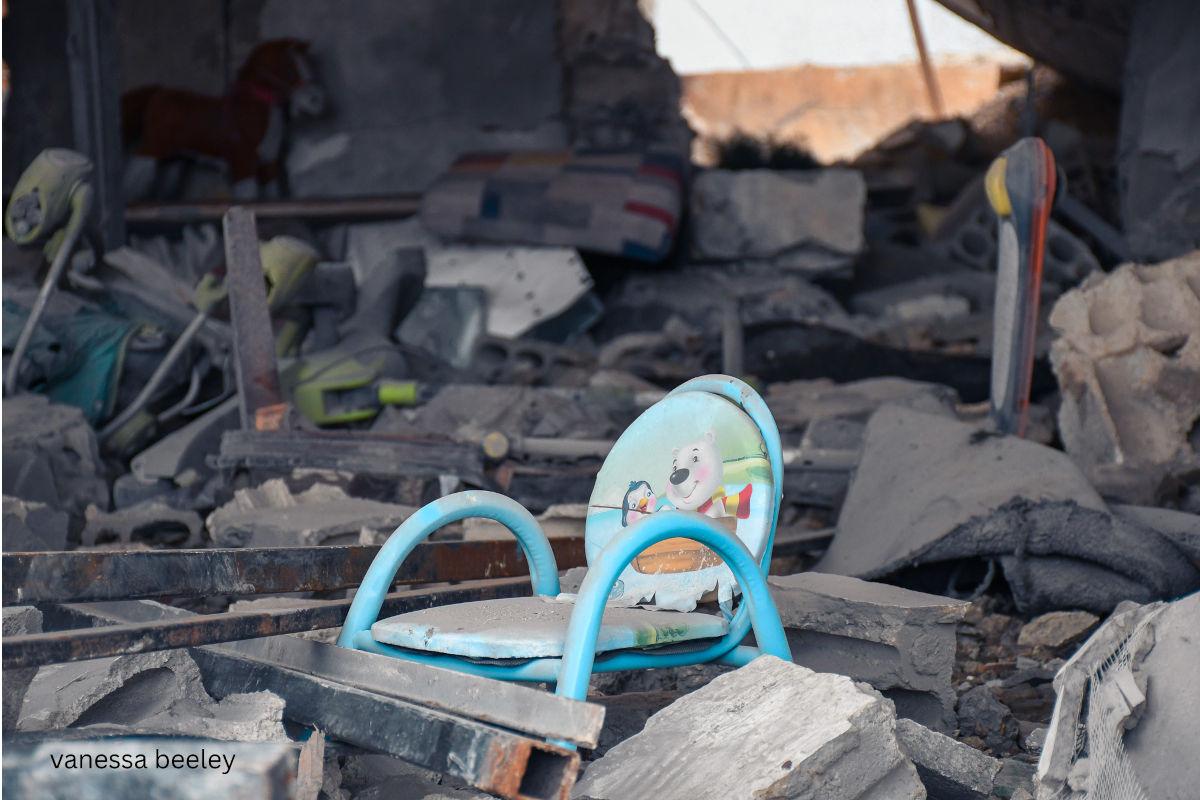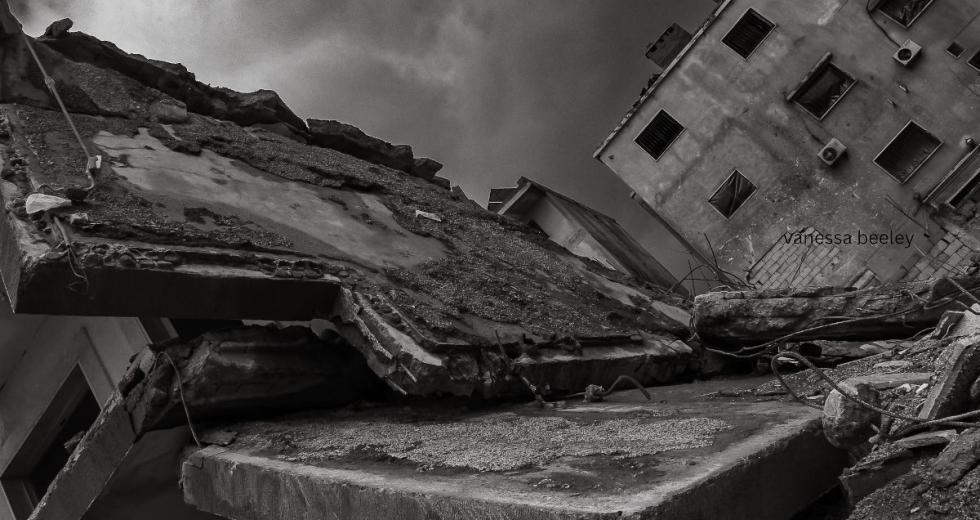
The memory of victories following harsh periods of endurance has created a popular certainty that scenes of rubble are merely preludes to reconstruction, and that what has been destroyed will be rebuilt with greater dignity. This certainty rests on the ‘credibility of the resistance’, which has demonstrated, in prior instances, the truth of its slogans — particularly the promise that ‘it will return better than before’.
— Dr Mohammad Aloush for Al Akhbar
Baalbek is the largest city in eastern Lebanon. In November 2024, Israel issued a citywide evacuation (80,000 population), leading to widespread panic as thousands of people tried to flee. Later in that month, a shaky ceasefire between Israel and Lebanon was agreed upon, and the next morning, the Al-Qaeda march against Damascus began. Since November 2024, Israel has violated that ceasefire thousands of times with daily drone assassinations, occupation of Lebanese territory, bombing of civilian infrastructure including schools and hospitals and an endless pressure for Hezbollah to disarm — supported by Saudi Arabia, the new Al-Qaeda regime in Damascus, Washington, and Tel-Aviv.
This ancient Phoenician city is the cradle of some of the world’s best preserved Roman ruins, including the Temple of Bacchus. Baalbek was designated a UNESCO World Heritage Site in 1984. Seeped in history and the remnants of Roman civilisation, this city has been the target of Zionist violence and savagery on many occasions since the establishment of the barbaric Zionist genocidal project in the early 20th century, incubated by the British in cooperation with the Rothschilds.
The Baalbek site is thought to have originally been Phoenician, with settlement dating back as far as the 3rd millennium BC. In the 1st millennium BC the site was chosen as the site for a temple dedicated to the God Baal, from which the city takes its name. In the year 334 BC Alexander the Great conquered the Near East and the city was renamed Heliopolis, a name which was retained by subsequent Roman conquerors — Helios, Greek for sun and Polis, Greek for City — City of the Sun.
Like so many other towns and cities relentlessly targeted by ‘Israel’, Baalbek has a long history of resistance against occupation and colonialist projects through the ages. Added to this, Baalbek is situated alongside the abundant freshwater source of Ras Al Ain. Waters from the Ain-Juj spring, nine kilometres away, were drawn into Baalbek by canal. These two big sources feed into the Litani and Aassi Rivers that flow in opposite directions in the Bekaa. For Israel, a primary resource hunt in the region is for water sources: Golan territories, southern Syria, Jordan, the Litani River in Lebanon, and perhaps the Euphrates in Iraq, should the David’s Corridor come to fruition linking southern Syria to Iraq via Syria’s eastern border.
Recent Attacks on Baalbek CiviliansOn 2 April, I went to Baalbek to see two sites recently bombed by Israel without any evacuation warning. Civilian homes reduced to roof crags and rubble landscapes dotted with personal belongings of the dead and injured.
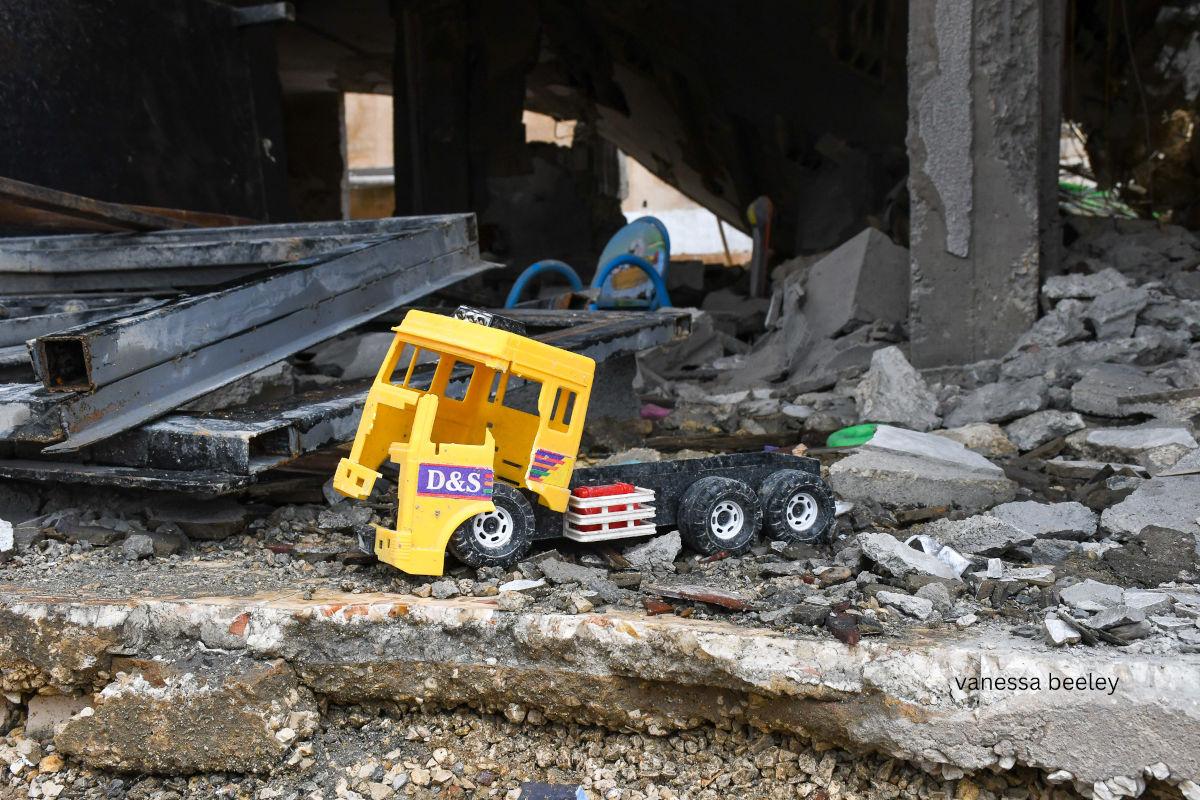
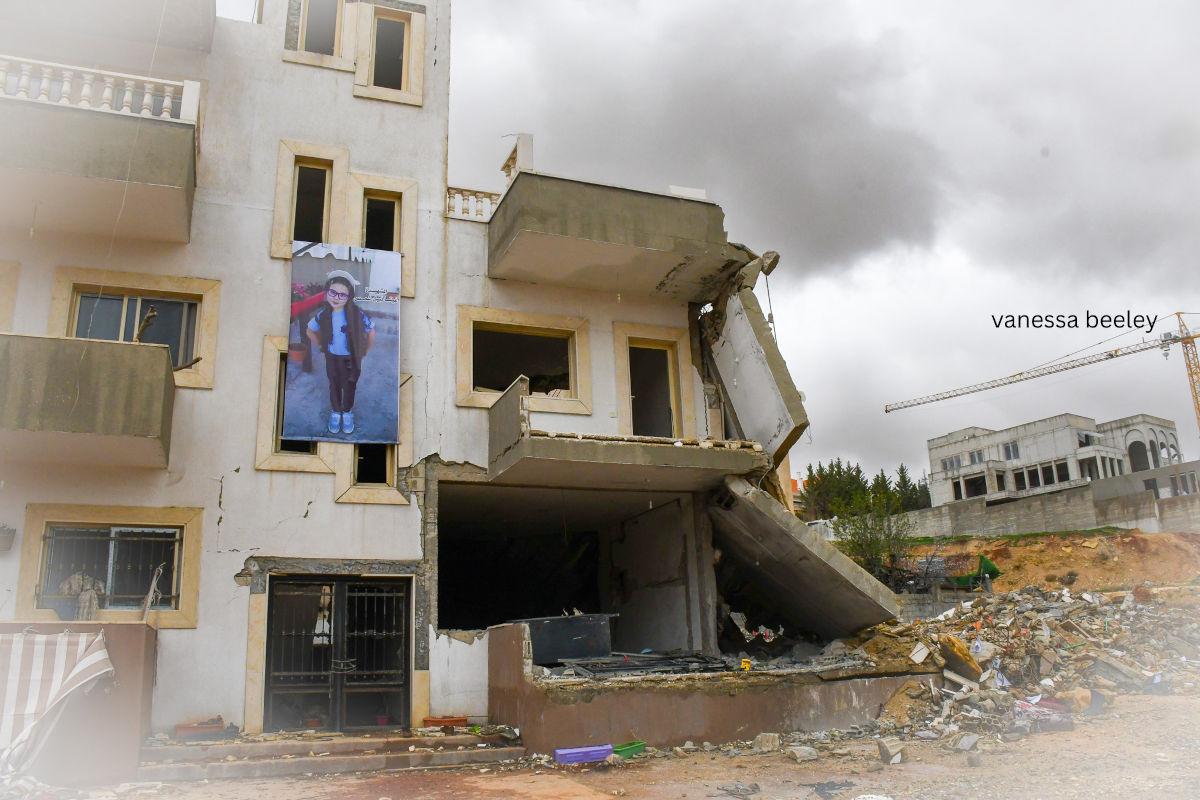
The first house we visited had been the home of the Al-Haj Hussein family. Mahdi Al-Haj Hussein was murdered alongside his wife, Alia, and their young son, Ghadi. One child survived: Karim Al-Haj Hussein was hospitalised after rescue from the rubble and intense heat that he described in his later interviews. The neighbouring house also lost a young child and her mother. According to our guide, the neighbours had called to see if it was safe to come back to their home. Upon arrival, the little girl and her mother had rushed next door to see their friends. That was when Israel decided to strike at the heart of both families.
The following short report from Al Jazeera follows the recovery of young Karim and his adoption into his uncle’s family after losing his entire family and friends:
As Lebanese journalist and mother of three, Marwa Osman, wrote at the time: "War crimes by Israel are not slowing down, they never do. They are escalating, becoming more brutal, more indiscriminate, more devastating with each passing day".
When we left this scene of murder for the next, we passed under banners depicting the young family torn from life by the Zionist war jets.
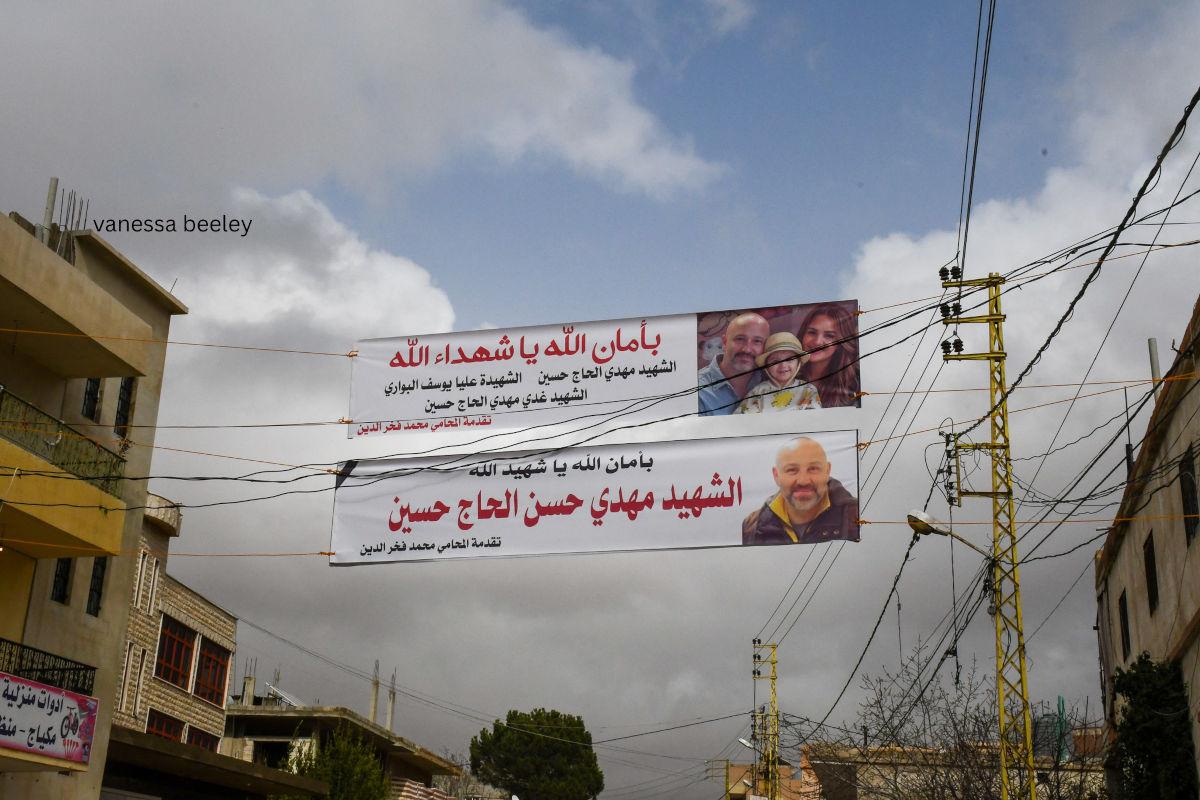
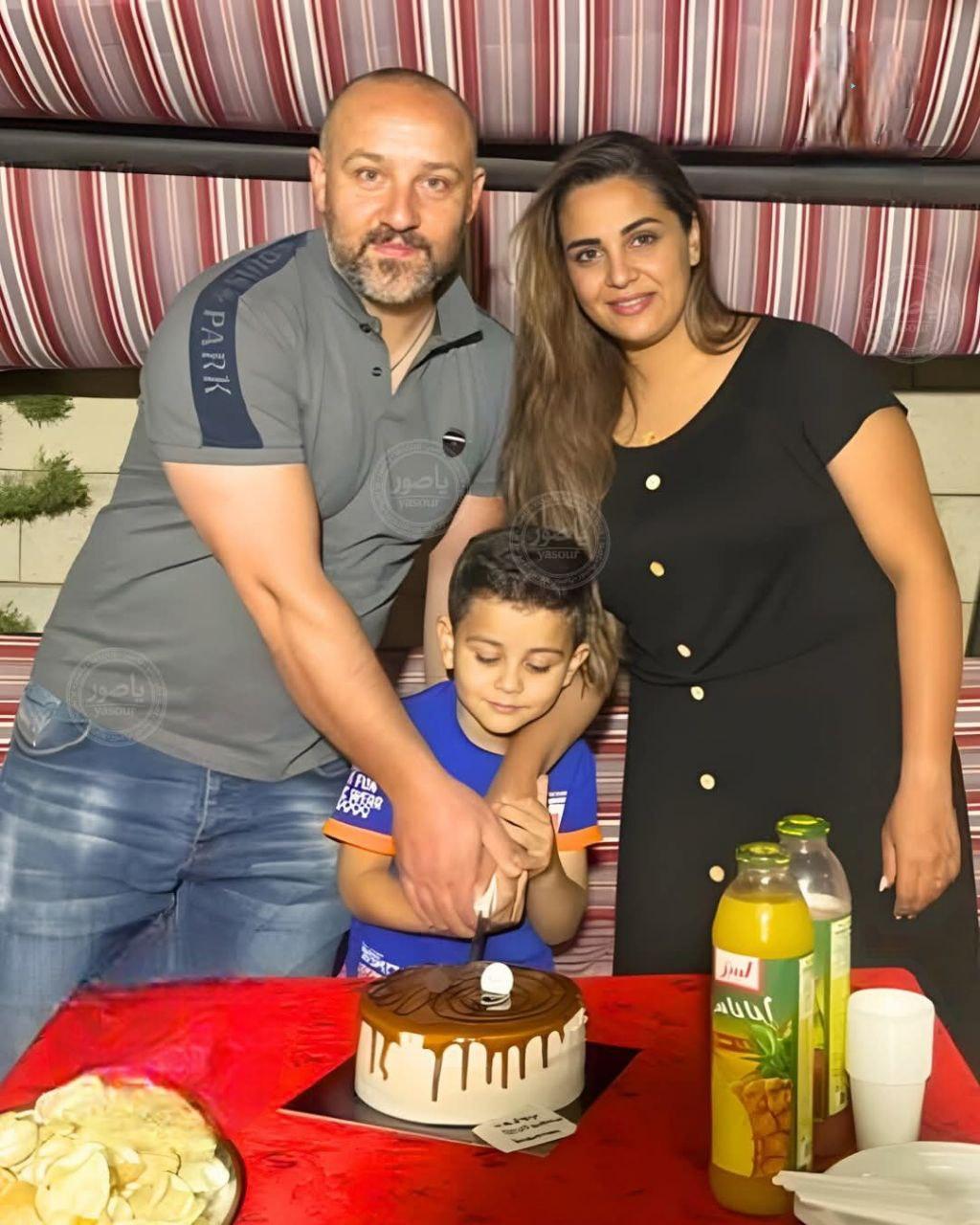
The following photo was also published on the day of the attack, depicting a young, happy family with no ties to any military units or activities. They were brutally exterminated just for their existence in this place of history and civilisation.
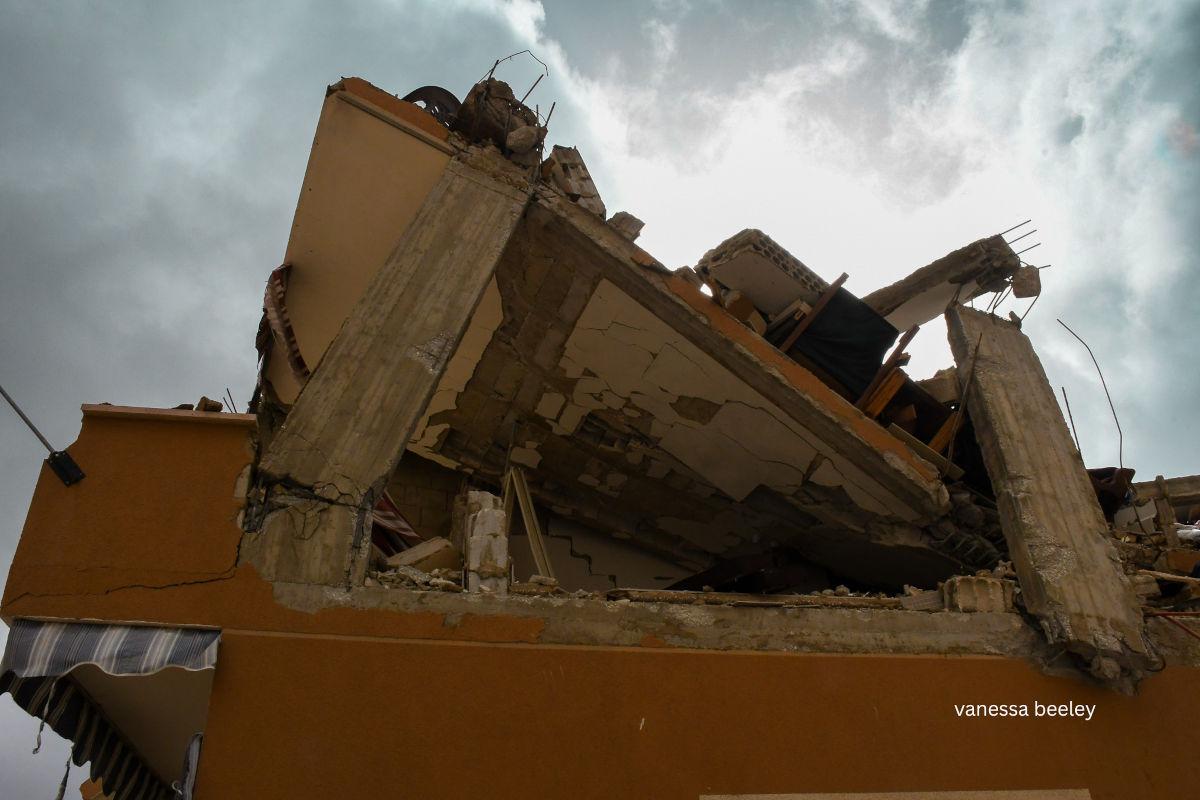
The second strike happened one week earlier in another area of Baalbek, at 3:05am, without any warning — just as people would be waking up for Suhoor, the pre-dawn meal before the daily fast during Ramadan. Here, the Zionists targeted a four-storey apartment block comprising eight family apartments.
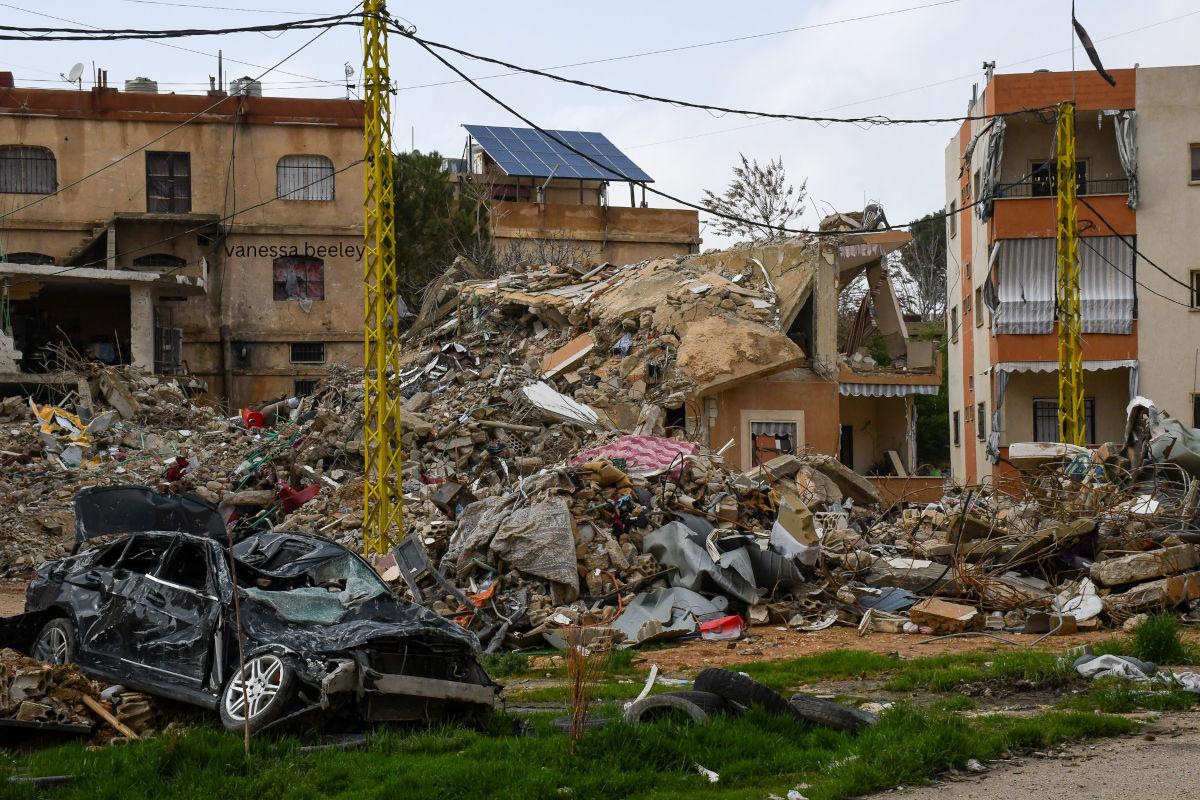
The building was in a complex of civilian housing, originally built for the Lebanese military, now occupied only by civilian tenants. In this attack, thirty civilians were injured, and nine were killed. Among these victims were three families, a mother, a father, and five children. One man had returned from another sector of the province because he was told it was safe. He was killed in the blast.
Ahmed lives in the house opposite the misshapen metal and concrete remains of the building. He came to speak with us. He said there was no evacuation warning, people were sleeping and unsuspecting. The compound is 100% civilian; not even a hunting rifle could be found among the inhabitants. He was a simple man who goes every day to Dahiyeh in the southern suburbs of Beirut, also a daily deathtrap under Zionist bombs and drone strikes, to gather bread, which he then sells in Baalbek.
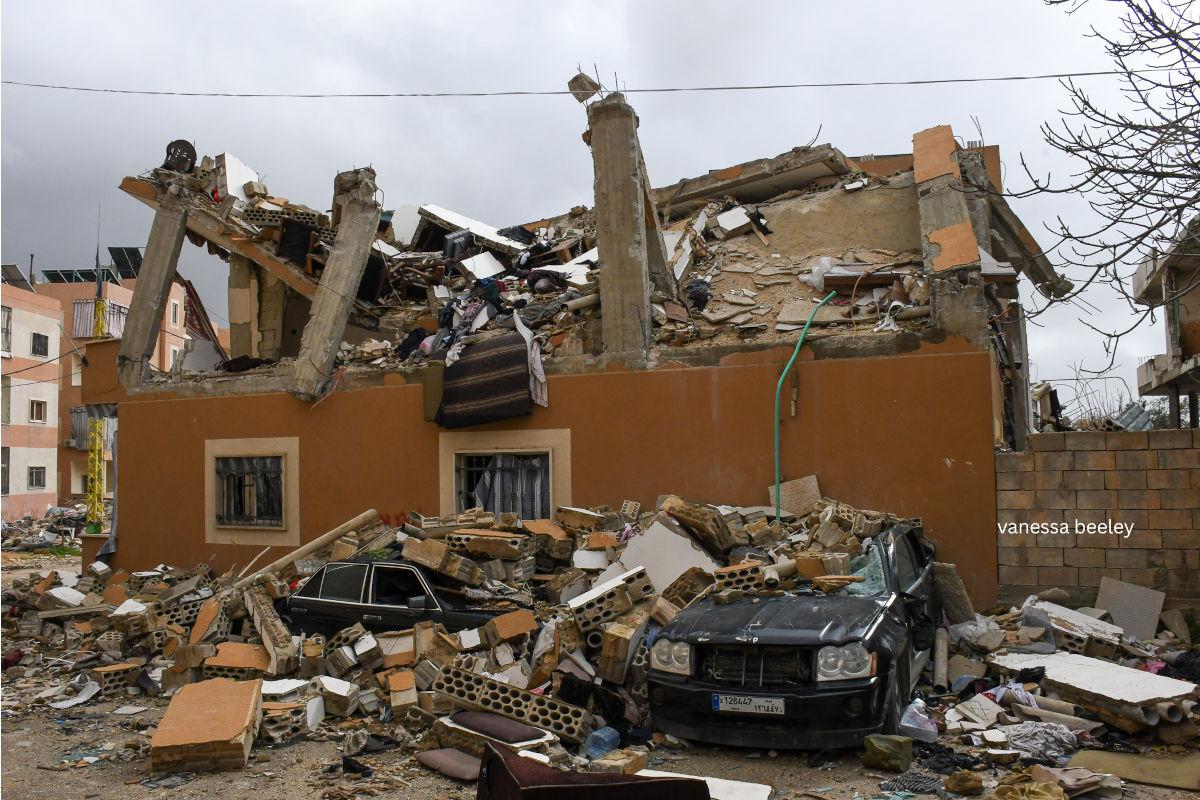
Visibly shaken, he told us that one memory will not leave his mind: he rushed to the bombed building immediately after the strike. He saw one little boy pinned under three floors of concrete, his hands outstretched pleading with Ahmed to pull him out, crying, “I don’t want to die”. As Ahmed approached, he could see the little boy’s older brother trying to pull the first boy back into the cavity so he could escape the dungeon of debris and dust.
Ahmed said the Civil Defence came immediately to rescue the dead and injured. Zionist war jets were still in the skies above them at low altitude, but he said that this time, there was no double tap to murder the paramedics and destroy ambulances. It took two full days to retrieve all the bodies. One child was found with his head missing.
At one point, Ahmed sent the young girl in the battered van alongside him to bring cakes and snacks for us from the local shop. We protested, but he insisted. Kindness and generosity sears the heart in this region. Despite everything, or perhaps because of everything they have experienced and witnessed, humanity takes precedence over anything else.
As Dr Mohammad Aloush says, “Moral superiority of humans over technology: A deep belief that ‘humans’ are the source of power and the origin of victory, and that enemy technological superiority cannot settle a struggle of wills as long as humans decide not to break”.
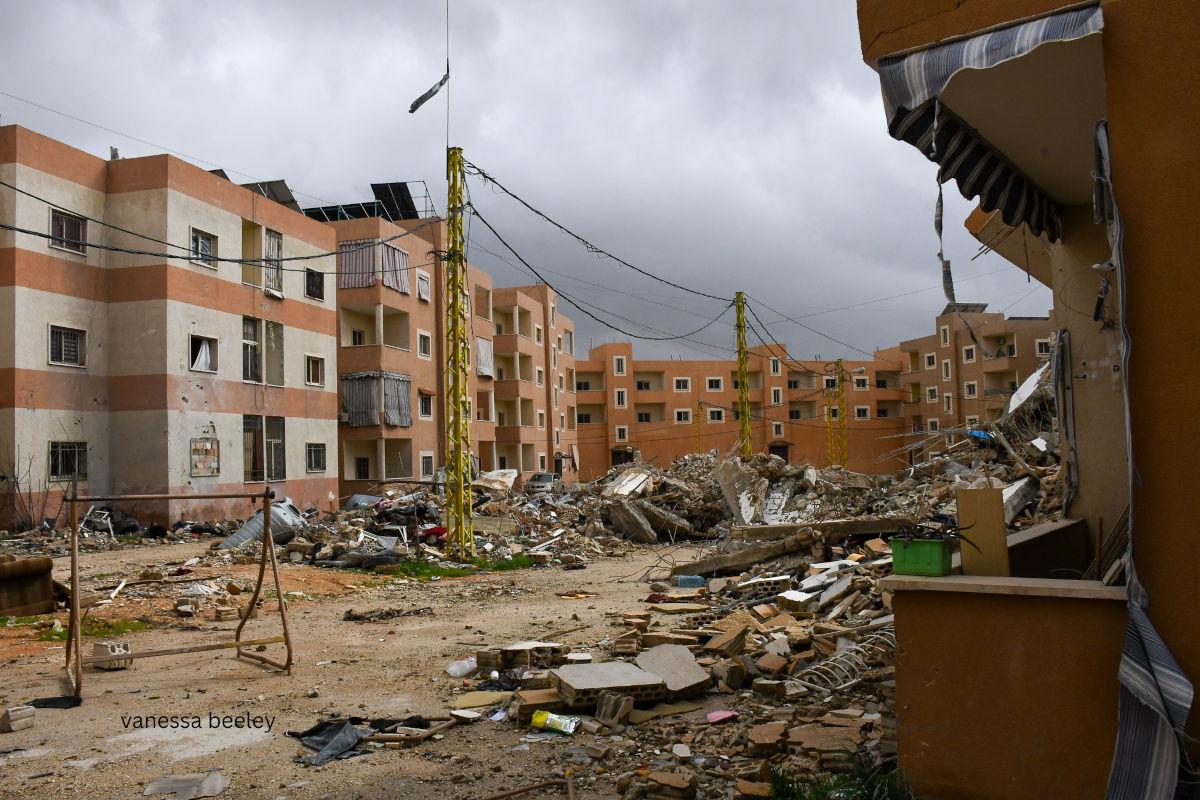
A shoe discarded, a child’s swing twisted and bent, a cooking stove flung atop the warped metal frames and concrete blocks, buried and burned-black cars: this is all that remains of these lives. They are people, civilians, now displaced, homeless, and rejected by many in case they are targeted again. Where do they go? How do they start again? How do they grieve, heal, and process the trauma while Israel still stalks the skies above them? Nobody can answer these questions, but what is certain is that nothing will end this reign of terror except the Resistance and their allies in the region, including Iran.
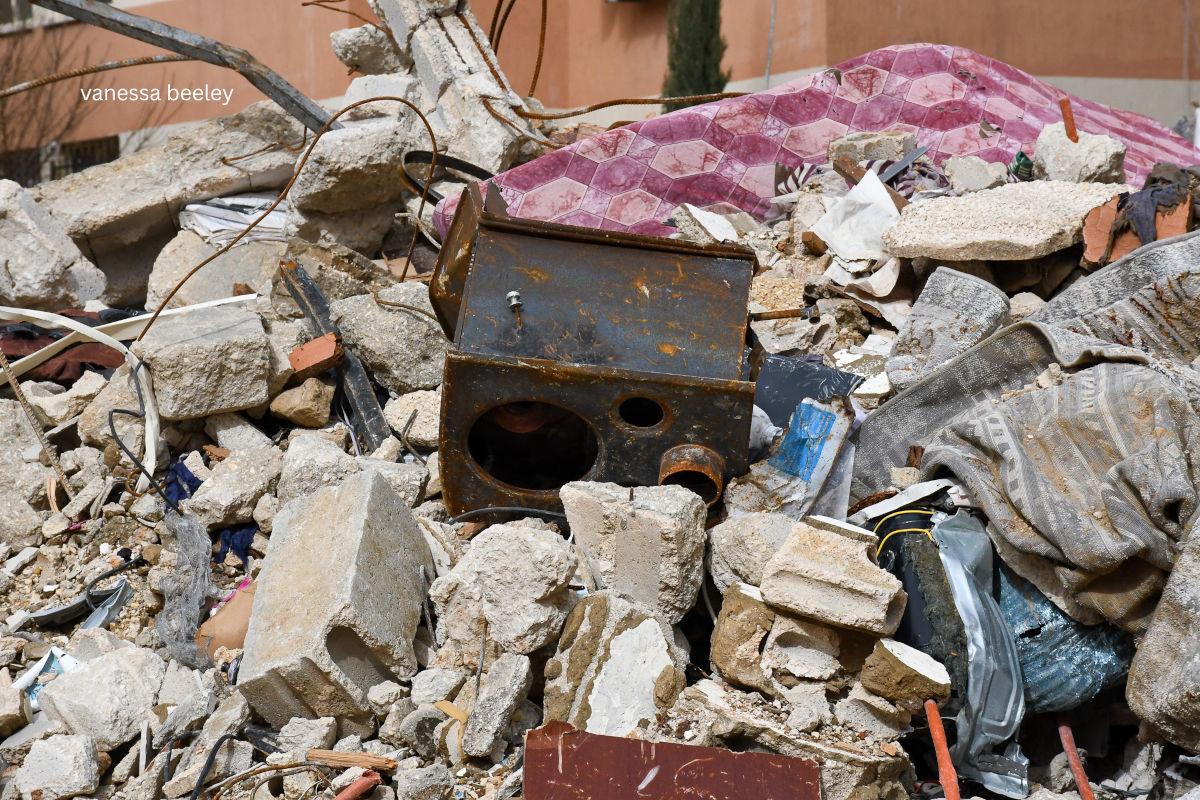
As Ahmed said, “Israel is doing this to turn us against Hezbollah, but we know our enemy”. Killing civilians, murdering, or raping and abusing children is not a sign of strength; it is the ultimate sign of weakness and impotence. These are the death throes of a genocidal entity that knows it cannot defeat such a people however much blood it spills, however much cruelty it deploys to bring them to their knees.
The resilience of the resistance environment is neither ‘accidental’ nor temporary; it is the result of profound sociological and psychological construction, making humans on this land inseparable from the terrain of confrontation. It transforms ‘material weakness’ into ‘historical potency’ and proves that attempts to break willpower are mere ‘plowing the sea’.
The stark reality remains that this environment does not practice resilience as an act but embodies it in its highest human manifestation, where the distance between self, land, and cause disappears, and the entire human bloc becomes ‘a sacrifice’ to the inevitable certainty of victory and survival.
— Dr Mohammad Alloush