
“There is no strife, no prejudice, no national conflict in outer space as yet; its hazards are hostile to us all”. It is certainly accurate to say that the situation has changed since US President John F. Kennedy uttered those words during an address at Rice University on 12 September 1962. Was it with naivety, blindness, optimism, or a wilful obfuscation of the truth that he also said, “And we have vowed that we shall not see it governed by a hostile flag of conquest, but by a banner of freedom and peace. We avow that we shall not see space filled with weapons of mass destruction, but with instruments of knowledge and understanding”. More than 60 years later, there is very little chalk left on the line between “instruments of knowledge and understanding” and “weapons of mass destruction”.
Hollywood — always a dependable bellwether — has been telling stories about this for some time, and where better to hide the truth than in plain sight? In the 2015 feature film Aloha, Bill Murray brought to life a character whose skin Elon Musk has been wriggling into, uncomfortably, ever since. Murray’s space ‘philanthropist billionaire’, Carson Welch, ‘collaborates’ with the US Air Force to launch a communications satellite from Joint Base Pearl Harbor-Hickam (JBPHH) in Hawaii. The satellite turns out to have a secret payload: a nuclear weapon. This is just fiction, as represented by popular culture, but should we consider it pettifogging or pertinent? Since the filmmakers had access to Hickam, 15th Wing’s Headquarters and Offices, as well as the cockpits of a C-17 and an F-22 Raptor, this article will argue for the latter.
Indeed, the relationship that popular culture and other forms of media have with a population are key determinants in the success of any propaganda operation. In 2026 — with regard to space — there are two dominant and intertwined narratives running. First, the increased interest and activity in the space domain is primarily concerned with the peaceful execution of economic and scientific activity for the benefit and education of mankind. Second, governments which are further expanding their military capabilities by harnessing the space domain are actually in substantive control of the projects delivering such capabilities. As a timely example of the level of conflux and overlap, the 2026 ‘Moon Mission’ is peerless.
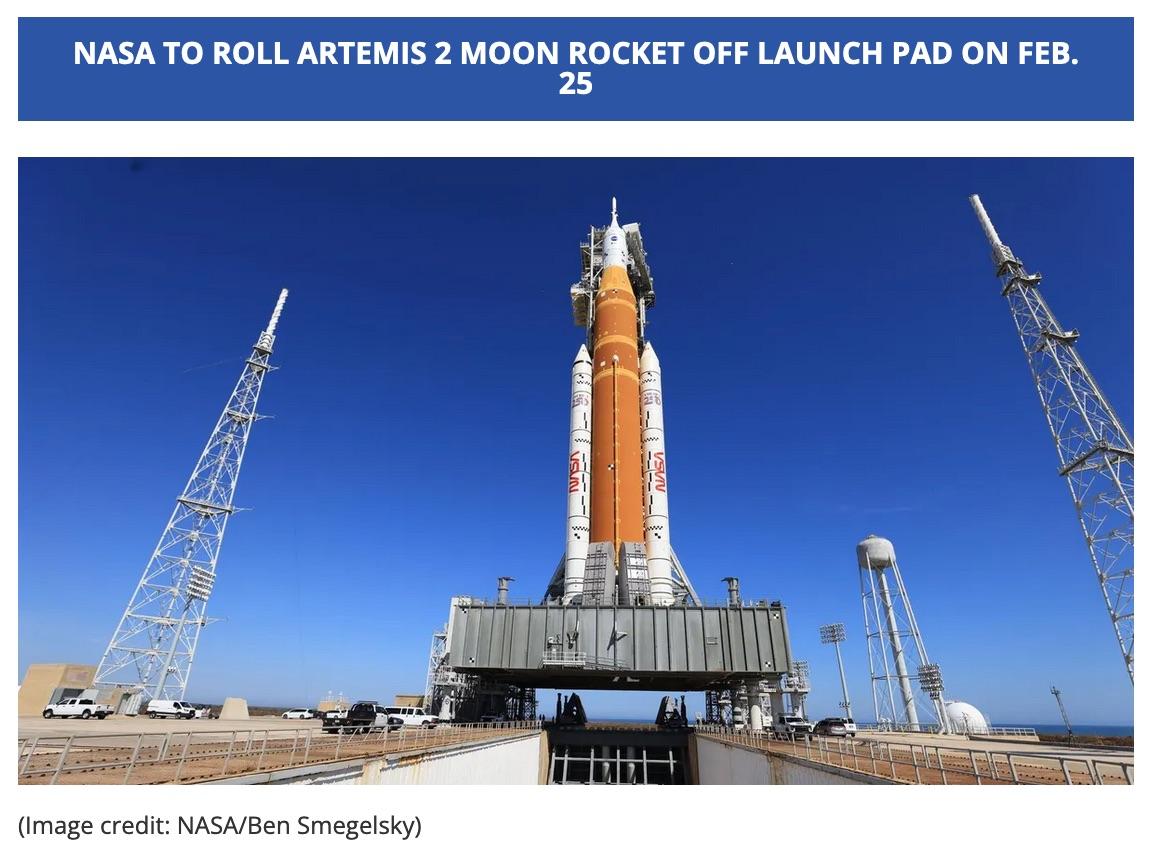
After over a month on display, seeding itself in the public’s consciousness, Artemis II has been dragged off the pad after NASA announced that the planned launch will be delayed until later in the spring. The purpose of this ‘mission’ is for “astronauts” to “venture around the Moon … paving the way for future lunar surface missions”. For educationalists, resources abound. The Natural History Museum explains “Why we’re returning to the Moon”, and the National Space Academy (yes, there is such a thing) has just extended its Space to Learn project until March 2026 (which would have been coincident with the Artemis’ planned flight).
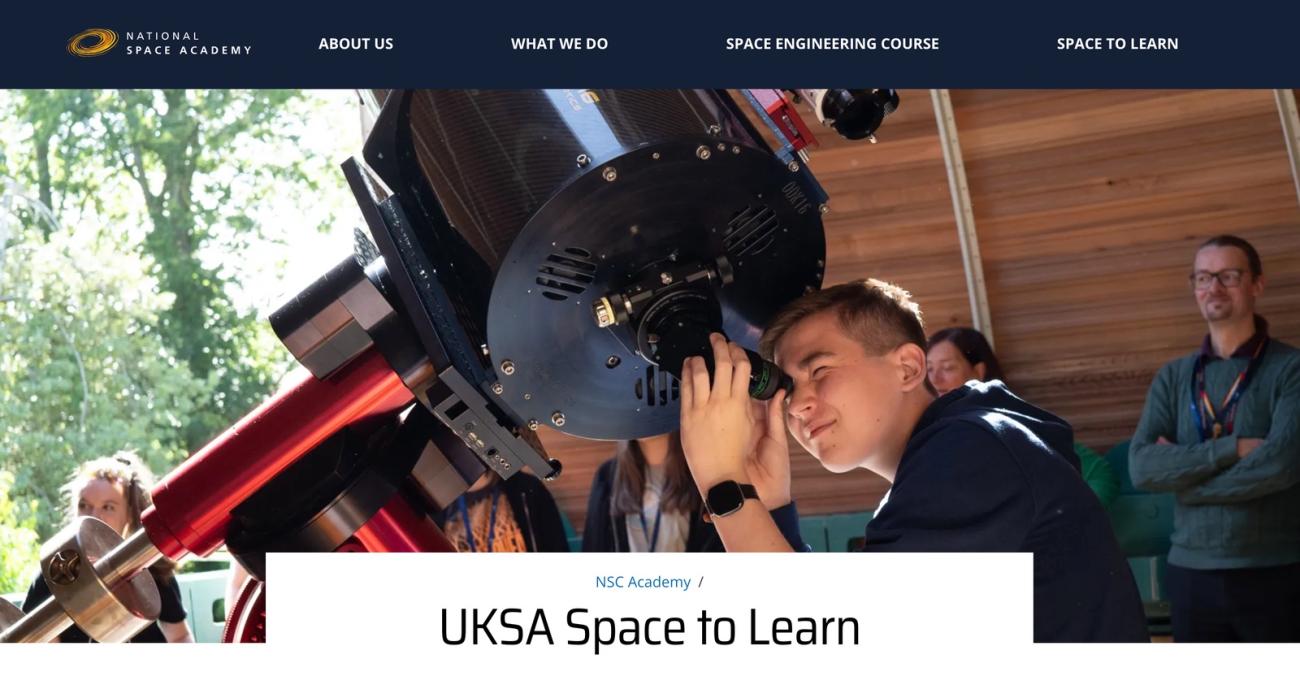
The funding for Space to Learn comes from the UK Space Agency, which projects itself as civil in nature as it helps the Government “boost UK prosperity, understand the Universe, and protect our planet and outer space”. Investigating just a fraction further reveals that the Space Agency is partnered with UK Space Command, which is the “defence lead for space operations, space workforce, and space capability”, and that they share control of the National Space Operations Centre (NSpOC). By their own definition, not even a fag-paper separates the entities or their objectives: “The National Space Operations Centre combines and coordinates UK civil and military space domain awareness capabilities to enable operations, promote prosperity and protect UK interests in space and on Earth from space-related threats, risks and hazards”. In summary, then, there is a direct link between the National Space Academy’s delivery of “high-quality, curriculum-based activities free of charge to schools across the UK” and Space Command’s mission to “protect and defend UK and allied interests in, from, and to space”.
Now to NASA’s ‘collaborations’ intended to get Artemis II off the ground: there are said to be more than 2,700 of them. The main players are, of course, all involved in the business of war. Boeing has made the core stage, supplying engine thrust. Boeing made all the Apache AH-64 helicopters and F-15 fighter jets “which the Israeli Air Force has used extensively in all of its attacks on Gaza and Lebanon, including in 2023”. Airbus provides Artemis with propulsion and power. Airbus also made the Heron TP RPAS Unmanned Aerial Vehicle (UAV) in partnership with Israel Aerospace Industries (IAI) which had pioneered the Heron and used it in Gaza. Lockheed Martin has made the little module to house the astronauts, and the company is “proud of the significant role it has fulfilled in the security of the State of Israel”. Indeed, they have provided Israel with C-130 and F-16 aircraft for decades and, more recently, F-35 stealth fighters. Northrop Grumman made the rocket boosters for NASA. Northrop Grumman componentry enables very many of the weapon systems which Israel has at her disposal. This ‘Moon Mission’ is owned by the war industry, of that there can be no doubt.
The Artemis dynasty showcases the extent to which NASA — and by extension the United States Government — is dependent upon those fashioning the tools of death and destruction to realise ‘their’ goals in space. Not just that, but dependent upon entities with foundations and loyalties outside that country. When Kennedy spoke at Rice in ’62, he was absolutely setting out America’s stall as the front-runner in this race for space. He said: “And only if the United States occupies a position of pre-eminence can we help decide whether this new ocean will be a sea of peace or a new terrifying theatre of war”. Only extreme high pressure on the propaganda barometer would cause anyone to think a ‘sea of peace’ is overhead. As to the position of pre-eminence, this is not so much about looking to Russia or China or India for a comparison, but more a question of examining how much of a grip the ‘United States’ has on the space infrastructure, even if it is emblazoned with the Stars and Stripes.
It could be a further two years that Elon Musk has to wait before SpaceX provides Starship to NASA; it will be the ‘human landing system’ for Artemis III, which is meant to plonk people on the Moon. There is no doubt that Musk’s personal views and ambitions shape the actions of ‘his’ many businesses, which means that the influence he holds, through both SpaceX and Starlink, is undue. That personality may have a bearing on commercial enterprise is not new, and nor is it necessarily problematic. However, when the personality of a civilian in the private sector exerts influence over the activities of governments and militaries, questions should be raised. In this context, it would appear to be directly relevant that Elon Musk — a committed Zionist — has pushed to inflame sectarian tension in the United Kingdom. His comments at Tommy Robinson’s Unite the Kingdom event in London in September 2025 were as hysterical and irresponsible as they were prejudiced and deliberate. He was invited to speak on the subject of migration (which, for those unfamiliar with Tommy’s oeuvre, only means brown-skinned Muslims). Musk said: “My message is, to them, if this continues, that violence is going to come to you. You will have no choice. This is, this is … You’re in a fundamental situation here, where … whether you choose violence or not, violence is coming to you. You either fight back, or you die. You either fight back or you die. And that’s the truth”.
Not only does the stable of Musk house SpaceX and Starlink, but also Starshield, a “secured satellite network for government entities”. This is one example of many ‘dual-use’ assets in space, which even the Royal Institute of International Affairs (Chatham House) admits “blur the line between peaceful and potentially disruptive applications”. Thus, both myths are dashed: activity in space may not be regarded as generally peaceful, and governments have very little control over such activity. The corporate synergies are to be paid attention to. Since Israel and the United States began launching gratuitous attacks on Iran in February of this year, the BBC tells us, “Starlink reportedly made free in Iran — but protesters are taking huge risks by using it”. This enables the belligerent parties to pump propaganda into Iran by keeping lines of (satellite) communication open, a role that X will play a large part in. For context, see the map showing the regions that Starlink is not available and consider whether this upholds Kennedy’s suggestion that “there is new knowledge to be gained, and new rights to be won, and they must be won and used for the progress of all people”. Not quite all people, it turns out.

The link between ‘progress’ in space and the delivery and enabling of kinetic effects for militaries is plain for all to see. The next convergence to assess — given that this is 2026 — is the intersection between space and artificial intelligence (AI). With regard to the Russia-Ukraine conflict, the Centre for Emerging Technology and Security (CETAS) believes that “Alongside rapid innovation in artificial intelligence (AI) and drone technology, the conflict continues to demonstrate the profound and growing influence of outer space”. It is significant, then, that SpaceX has acquired xAI in order to “accelerate humanity’s future”. Acceleration may well be the result, but in which direction? Despite their very pro-Ukraine stance, CETAS concedes that “Ukraine’s reliance on Starlink has also revealed the risks of leaving access to space-based services in the hands of a few private actors”; a reference to the belief that Elon Musk tried to restrict access and, therefore, control of Ukrainian drone activity in the Black Sea.
The unthinking and extended deployment of AI, and its overlap with space-based technologies, has the potential to deliver exactly the “terrifying theatre of war” that Kennedy predicted as possible but avoidable. Among the ‘big guns’ in the AI arsenal, both Anthropic and OpenAI have shown that conscience may yet become a problem which cannot be ignored. Caitlin Kalinowski, when resigning from OpenAI, wrote “surveillance of Americans without judicial oversight and lethal autonomy without human authorization are lines that deserved more deliberation than they got”. Immediately prior was the resignation of Mrinank Sharma from the Safeguards Research Team at Anthropic, citing “how hard it is to truly let our values govern our actions”. What both Kalinowski and Sharma are driving at is the deep sense of unease with the contractual relationships between their organisations and Pete Hegseth’s Department of War and, specifically, gifting the state the ability to surveil its citizens, and worse.
Most of the action described so far is taking place in North America, but the situation is very similar on the other side of the Atlantic. The United Kingdom’s space interests have become many in recent years; only recently, it has opened the new ‘hub’ at Westcott in Buckinghamshire. The press release makes many mentions of propulsion, though there should be little doubt that this will have a military application at some stage. The Strategic Defence Review 2025 was more explicit: “Space is a critical national infrastructure sector, a site of growing competition, and a domain that is central to warfighting”. There can be little doubt about the direction this is going in, as we are warned that “Adversaries’ global precision weapons, guided by space-based navigation systems, already hold UK strategic capabilities at risk”. And, to spell it out, “Defence must improve its ability to deter threats to and, if necessary, protect its interests in space”. This strikes a discordant note with the tenets of the Outer Space Treaty 1967, which makes it clear that “the exploration and use of outer space shall be carried out for the benefit and in the interests of all countries and shall be the province of all mankind”. Indeed, this is the first of several guiding principles. The treaty states that “States shall not place nuclear weapons or other weapons of mass destruction in orbit or on celestial bodies or station them in outer space in any other manner”.
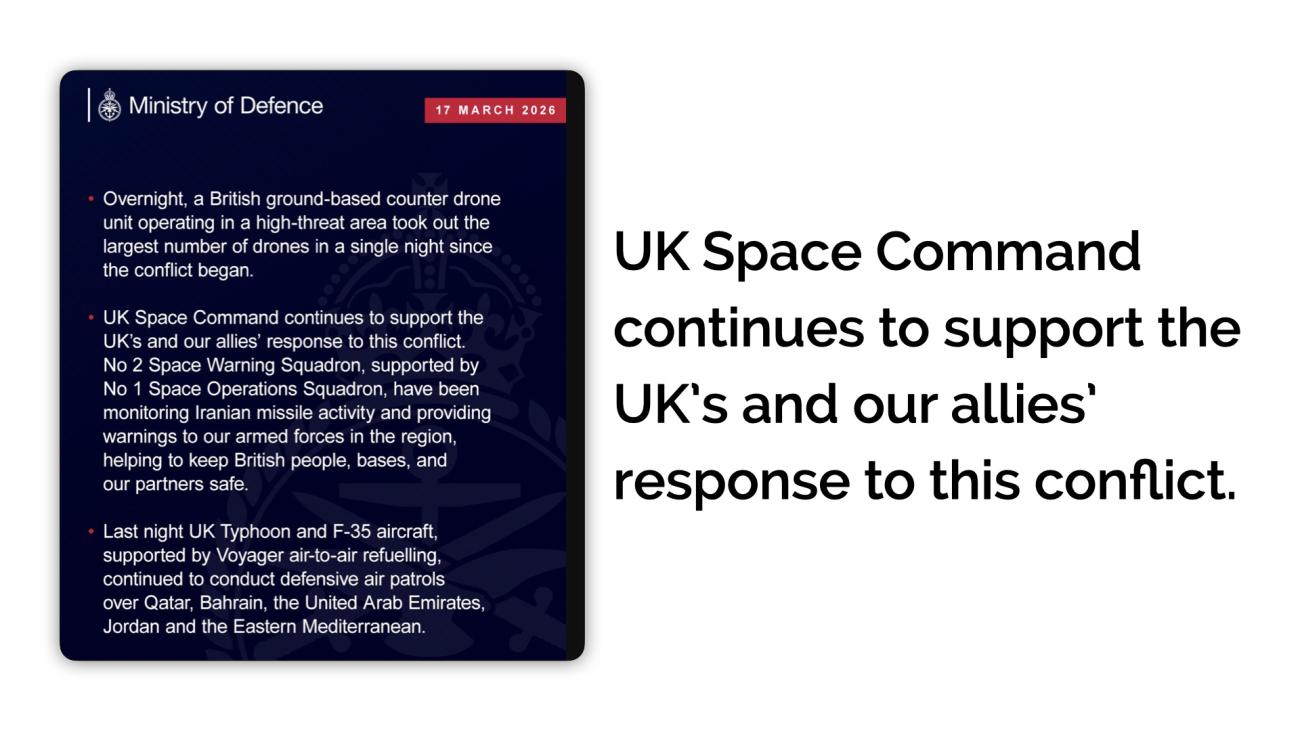
Looking over the Outer Space Treaty in its entirety is to be recommended, if only to scour the text for a guiding principle which remains intact. One might lay a fair wager that the current Commander UK Space Command, Maj Gen Paul Tedman, has pushed it right to the back of his bookshelf. At the time of writing, the United Kingdom is said to be assuming a ‘defensive’ posture in relation to the Israeli and American attacks on Iran, with the Prime Minister making the flimsy assurance that “we will not be drawn into the wider war”. Yet, on 17 March 2026, the Ministry of Defence update on the conflict detailed that “UK Space Command continues to support the UK’s and our allies’ response to this conflict”.
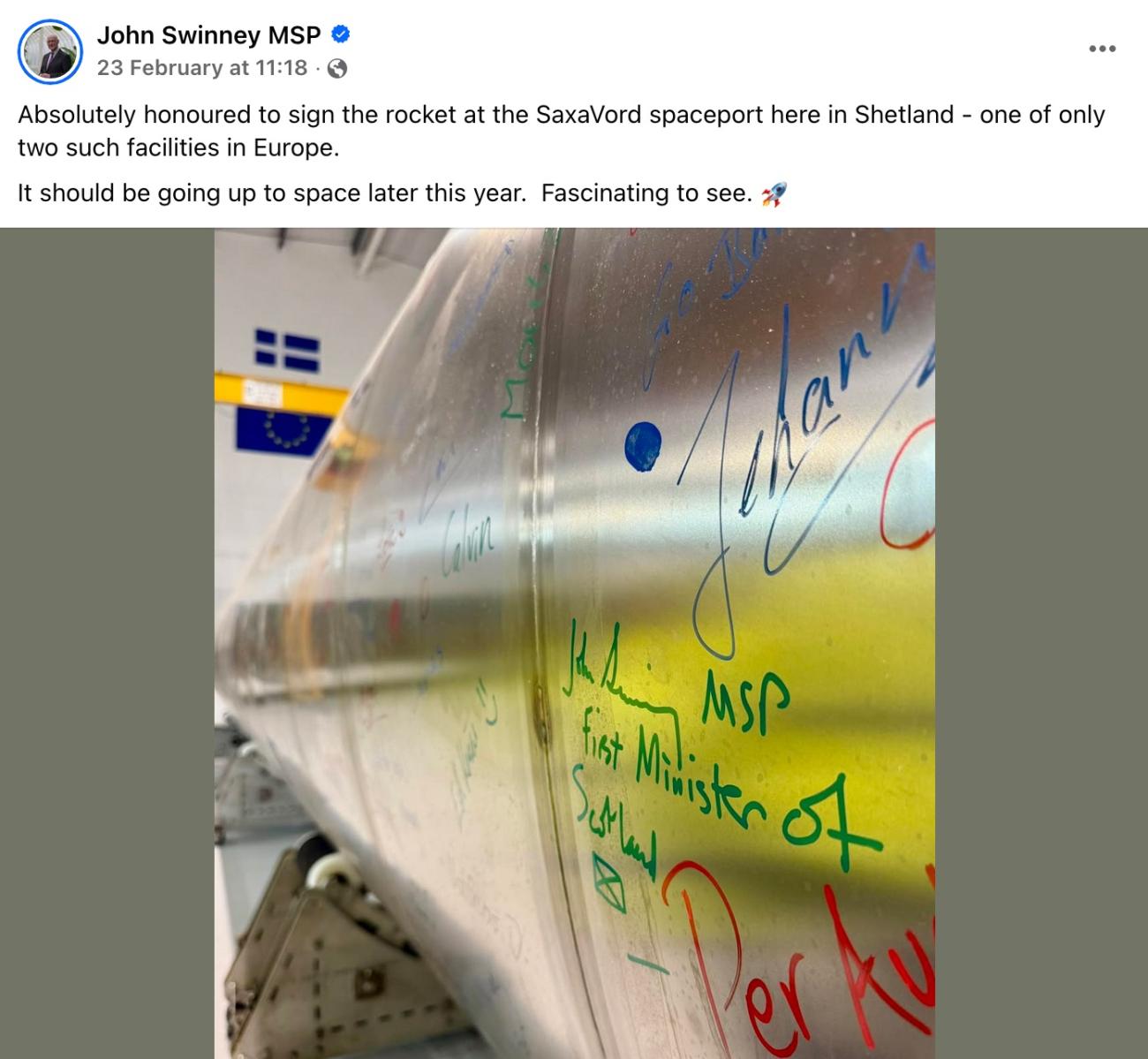
Meanwhile, at the northern extremity of the British Isles, Scotland’s First Minister John Swinney has scrawled his name on a rocket due to enter space from Shetland this year. SaxaVord Spaceport (the ‘place for space’, apparently), on Unst, is slap-bang next door to Remote Radar Head Saxa Vord, a ‘defence’ outpost since the start of the Second World War. The Spaceport is described as “one of only two such facilities in Europe” and it is claimed to have “the capacity to carry out 60% of orbital launches from the continent”. It is only right to ask how long it will take before these orbital launches have a military application or one that may be described as ‘dual use’.
For any with lingering doubts concerning intent in space, be it civil, military, or corporate, the UK Space Agency’s announcement from February 2026 makes essential viewing. Alongside the plan to manufacture optical fibres and semiconductors in Low Earth Orbit sits a scheme to “manufacture drugs in microgravity … enabling cancer treatments”. It must be noted here that an estimated 10,000 operational satellites already occupy this domain, with at least another 3,500 defunct ones swirling about. Statistically speaking, it should not be long before a collision.
If one believes JFK to be on the button with his claim that “no nation, which expects to be the leader of other nations, can expect to stay behind in this race for space”, it would be reasonable to assume that the situation will get much worse before it can get better. As geopolitics looks to become further devoid of rationality and restraint, escalation via the space domain remains an extremely likely outcome. Not for nothing did Dr Prahlada Rama Rao — creator of India’s Akash missile — say that the next war would be fought in space. If that is the case, it should be considered that such an outcome could be stopped from space, too.