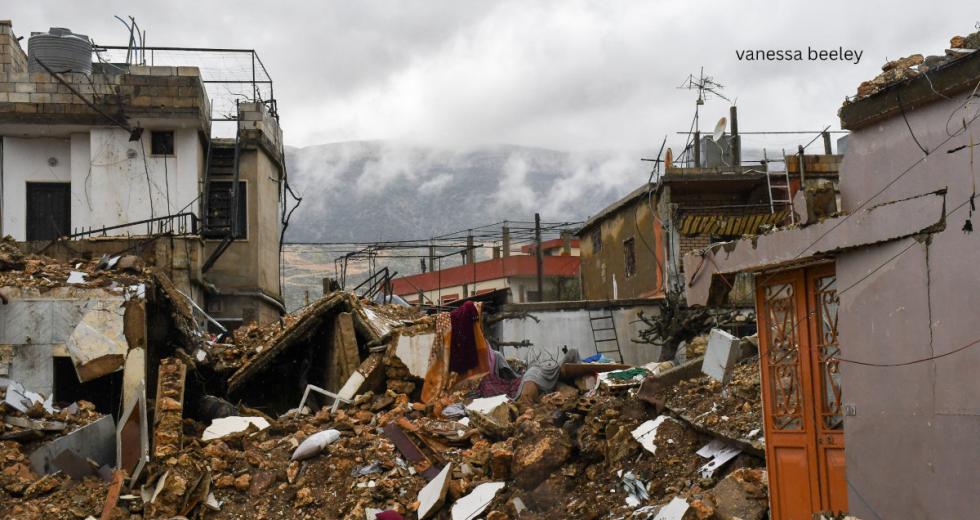
On 22 March, I travelled to Western Bekaa in Lebanon, around 50km from the border with Syria, to a small town called Sohmor. It is a Shia Muslim community that has been persecuted throughout history and which has developed a core resistance ideology that has never been destroyed, despite the atrocities it has witnessed and lived through.
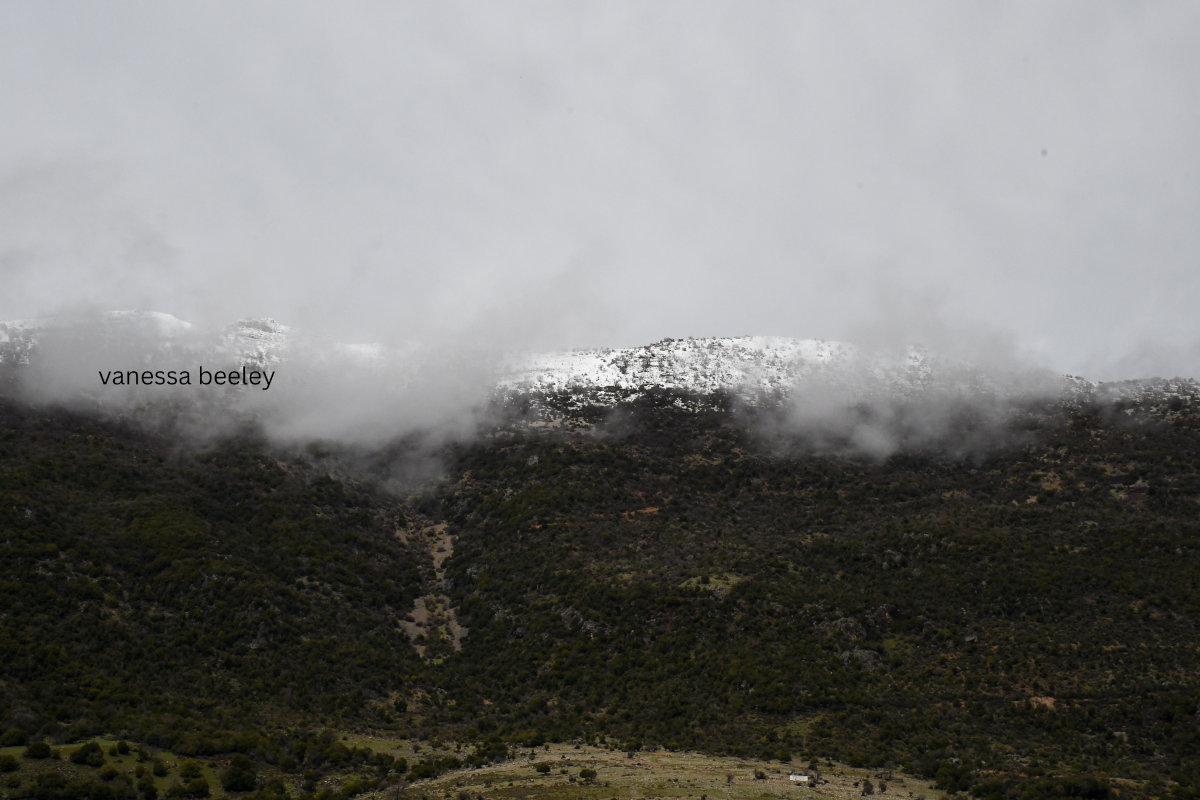
The road to the town passes through some of the most beautiful countryside in Lebanon, with towering mountains topped with snow and shrouded in rain clouds, tree-lined roads passing through some of the most prestigious vineyards in the region, and rocky precipices where goats navigate with ease and rain-laden skies stretch for miles into the horizon.
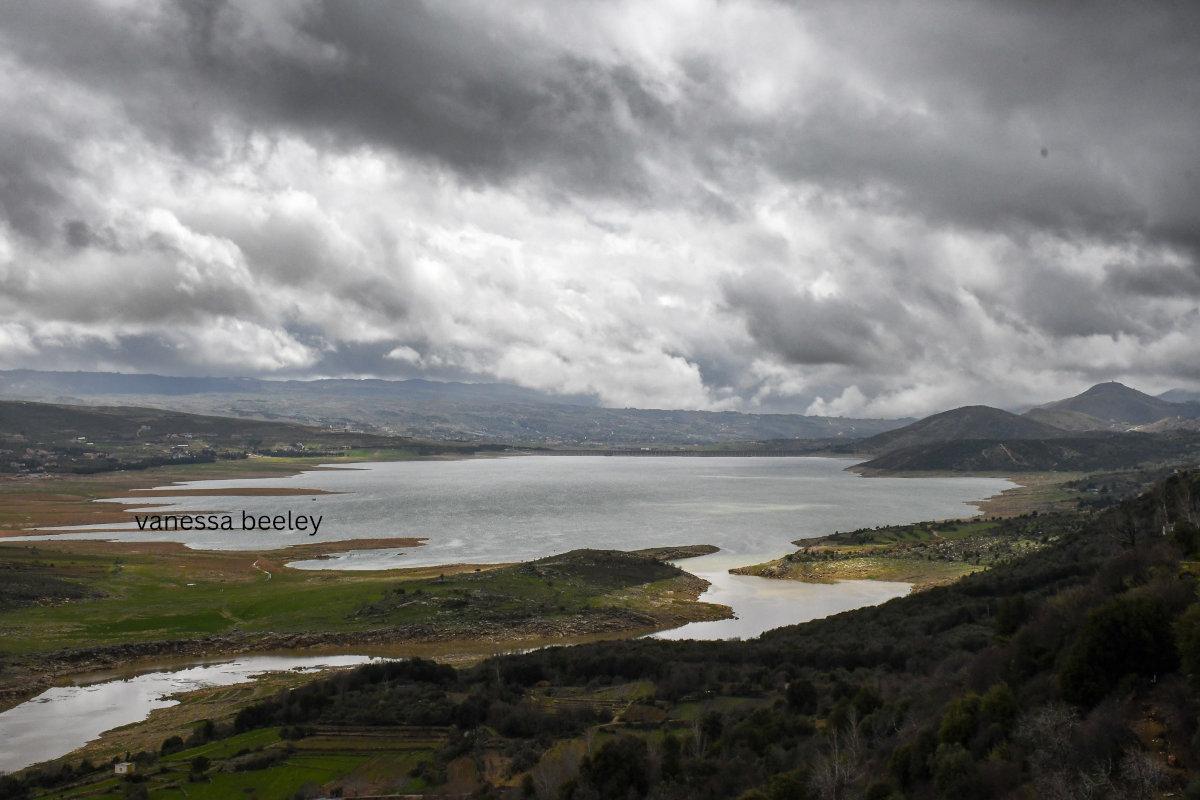
Another section of the journey brought us to Qaraoun Lake, an artificial body of water in the Bekaa Valley, created in 1959 by the construction of a 61 metre-high rockfill dam, the largest in Lebanon, in the middle reaches of the Litani River now being targeted for occupation by the Zionist regime. The reservoir generates hydropower for domestic water supply and for irrigation of agricultural lands and vineyards. The lake is surrounded by woodland and fruit orchards, and is a haven for migratory birds such as storks and pelicans.
Sondoss Al Assad, a Lebanese journalist who comes from Sohmor, also told me:
Sohmor is considered one of the ancient towns that holds within its land and on its hillsides the remains and civilisations of great antiquity stretching back thousands of years. Its distinguished geographical location on the edge of the Litani River made it a destination for ancient humans for settlement and agriculture, which led to the richness of the area in archaeological finds.
Here are the most notable antiquities and ancient discoveries in Sohmor:
- Caves and Rock-Carved Houses
Residential caves and burial sites: In the hills and mountains of Sohmor, there are groups of caves precisely carved into limestone, which were used by ancient people for housing or as burial sites.
Roman tombs: Recent discoveries (especially in 2019) indicate the presence of collective and individual tombs carved into rock, estimated to date back around 5,000 years (the Bronze Age) up to the Roman and Byzantine periods. These tombs often contain stone sarcophagi.
Grape and olive presses: Rock-carved presses are spread throughout the town, indicating intensive agricultural activity (vine and olive cultivation) in ancient times.
Other artefacts associated with Sohmor are pottery jars, oil lamps, and plates dating back to Canaanite, Phoenician and Roman eras. Bronze and copper mirrors, pins, and household tools have been found that were buried with the dead in ancient tombs in the area. Locals have found coins dating back to Roman, Byzantine, and early Islamic periods, demonstrating that the region was an important trade hub. Large building stones have been uncovered that indicate the presence of ancient temples or fortresses in the Sohmor environs.
The Road into SohmorMy fixer/driver and I first entered the town of Mashghara just as the rain began to fall in earnest. Locals told us to avoid one of the roads into Sohmor because of the risk of drone strikes, and directed us towards another, apparently less dangerous, route. It is worth noting that, often in these heavily surveilled regions, GPS is lost, leaving the driver reliant on locals for information. Add to this that many of these areas have now been evacuated, which makes it difficult at times to find someone to help. Mashghara also came under Zionist attack recently, with an airstrike targeting a house on the side of the mountain that looked like a farm storage area.
Low cloud and heavy rain reduces the efficacy of the Zionist drones that are always circling in the skies above these towns and villages, so it was a welcome weather change from the sunshine that had followed us on the roads leading to Sohmor.
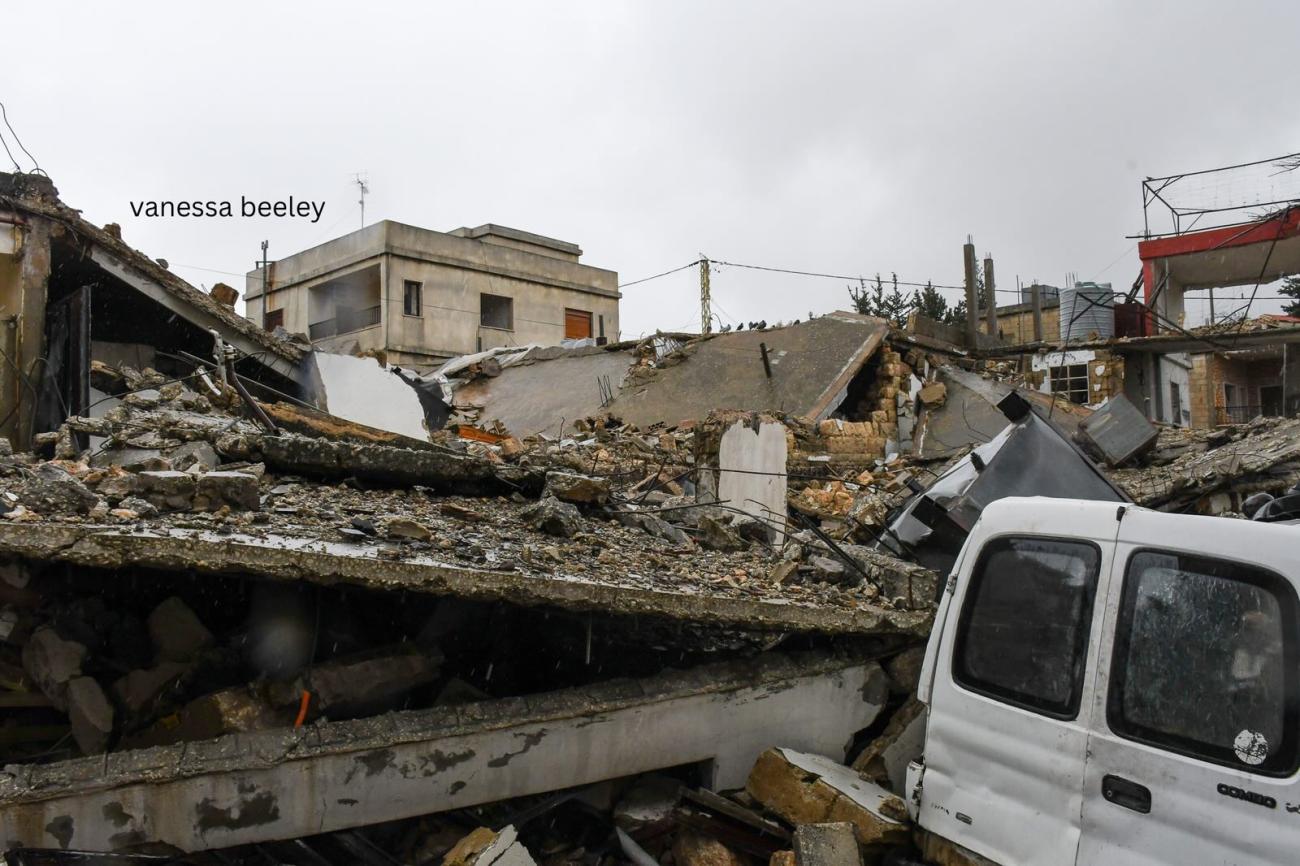
In November 2024, just before the ‘ceasefire’ during the support war for the Resistance in Gaza, a Zionist war jet targeted Sohmor, killing one and injuring four others. On the same night, an airstrike on Mashghara had killed three and injured two others.
On 18 March, one week ago, Zionist warplanes targeted five homes in Sohmor with missile strikes, killing six civilians. On 15 January, before the recent escalation and during the alleged ceasefire that Israel has violated more than 6,000 times, Zionist war jets had previously targeted Sohmor again. Israel targeted two residential buildings, one three storeys high that was reduced to a familiar cratered footprint. The second building was in the centre of the town, near the public school. As Sondoss Al Assad told me:
The town’s public school has not been spared over the past two years from repeated assaults, despite being regarded as one of Lebanon’s exemplary institutions in the realm of public education. It serves thousands of students from surrounding villages and has produced a distinguished array of graduates — doctors, engineers, journalists, and even martyrs — who have contributed profoundly to society.
The deranged Zionist spokesperson Avichay Adraee had issued an evacuation warning prior to the devastating strikes on X: “The (Israeli military) will attack Hezbollah terrorist military infrastructure in the near future to address prohibited attempts to rebuild its activities in the region”.
Just as in Gaza, everything becomes a target for the Zionist barbarism — schools, hospitals, medics, ambulances, children, civilian infrastructure, farms, houses, all civilian residences, and areas — on the basis they are ‘all Hezbollah’.
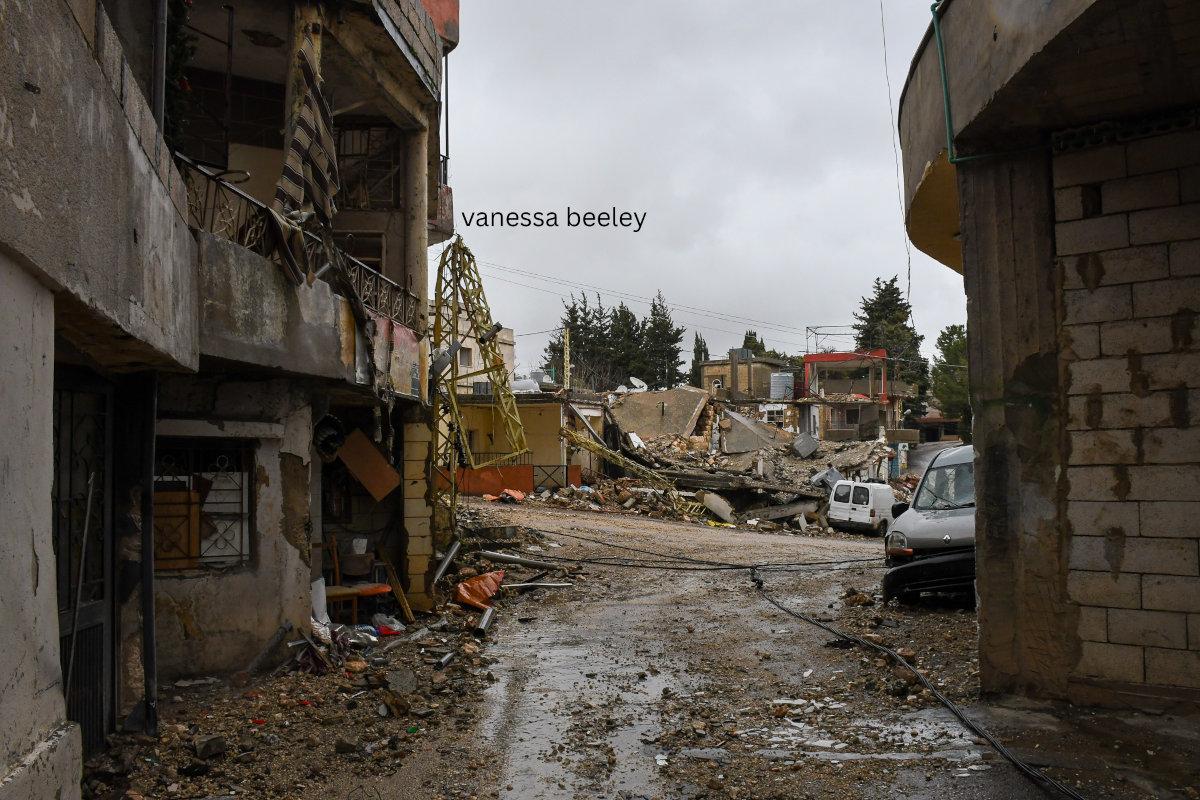
In the narrow, built-up streets of Sohmor, one missile strike causes unimaginable damage to cars, homes, and infrastructure. Drones are constantly overhead spying on the inhabitants, and the streets are largely deserted except for the young men who remained to protect the town and the elderly who refused to leave for a life of displacement and uncertainty.
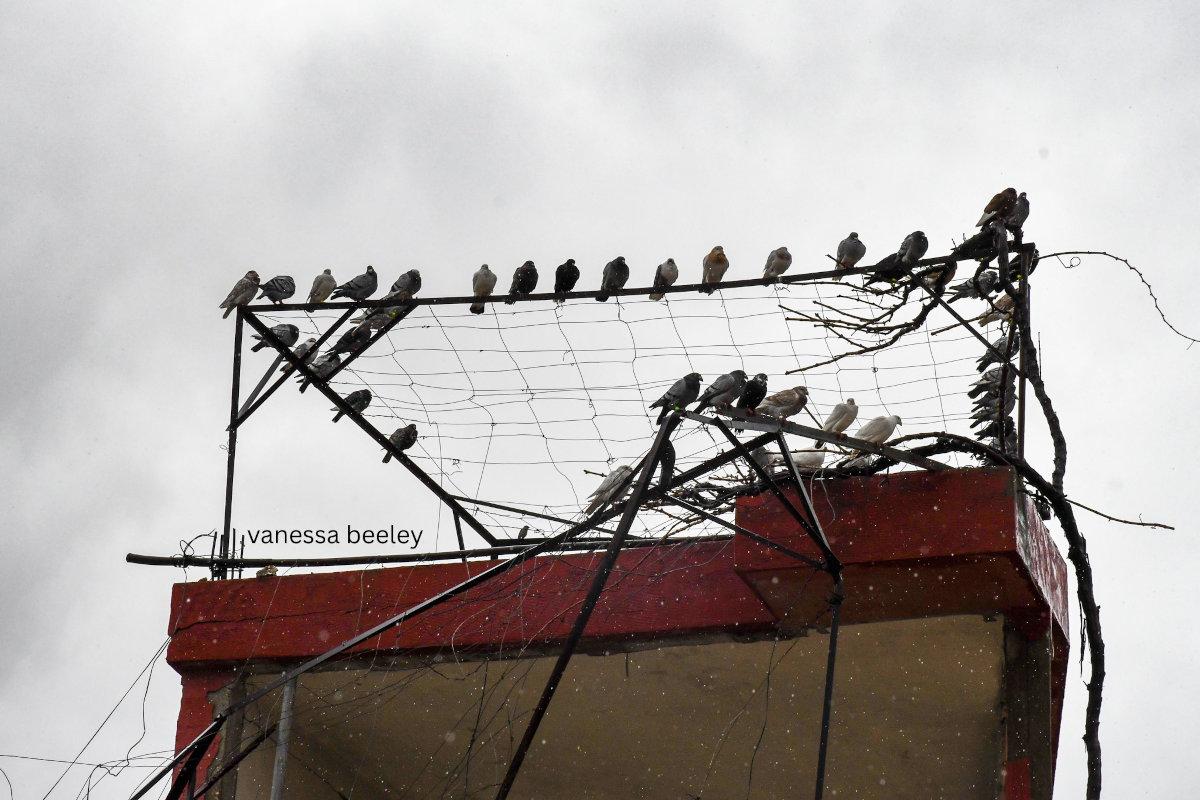
Above the mangled remains of the three-storey building, homing pigeons clung to the unstable structures of their house, their backs turned to the driving rain and wind, waiting for the person to come and feed them who will never come.
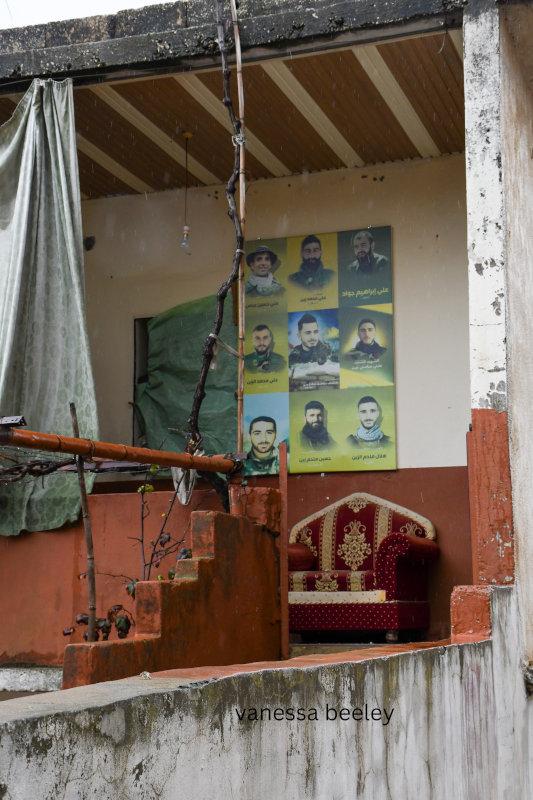
The young men escorting us led us through the narrow streets to the next area of devastation in the town. We passed a house, a red velvet chair still on the balcony next to the familiar posters of martyrs from the town, young men who had been fighting in the 2024 war in various regions of Lebanon, defending their homeland against the Zionist aggression.
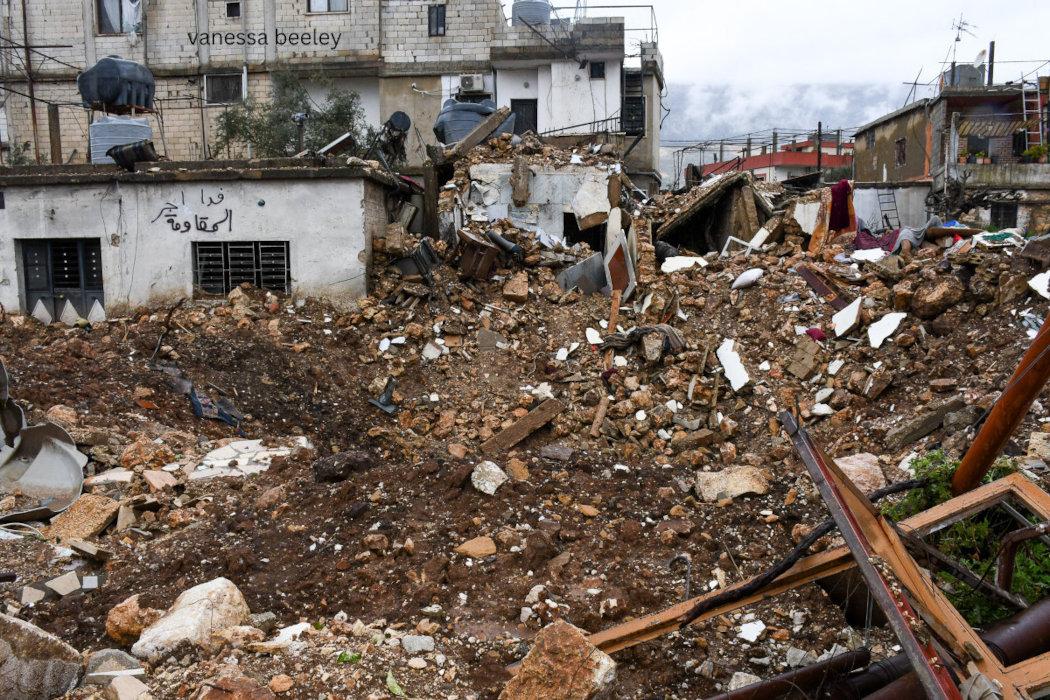
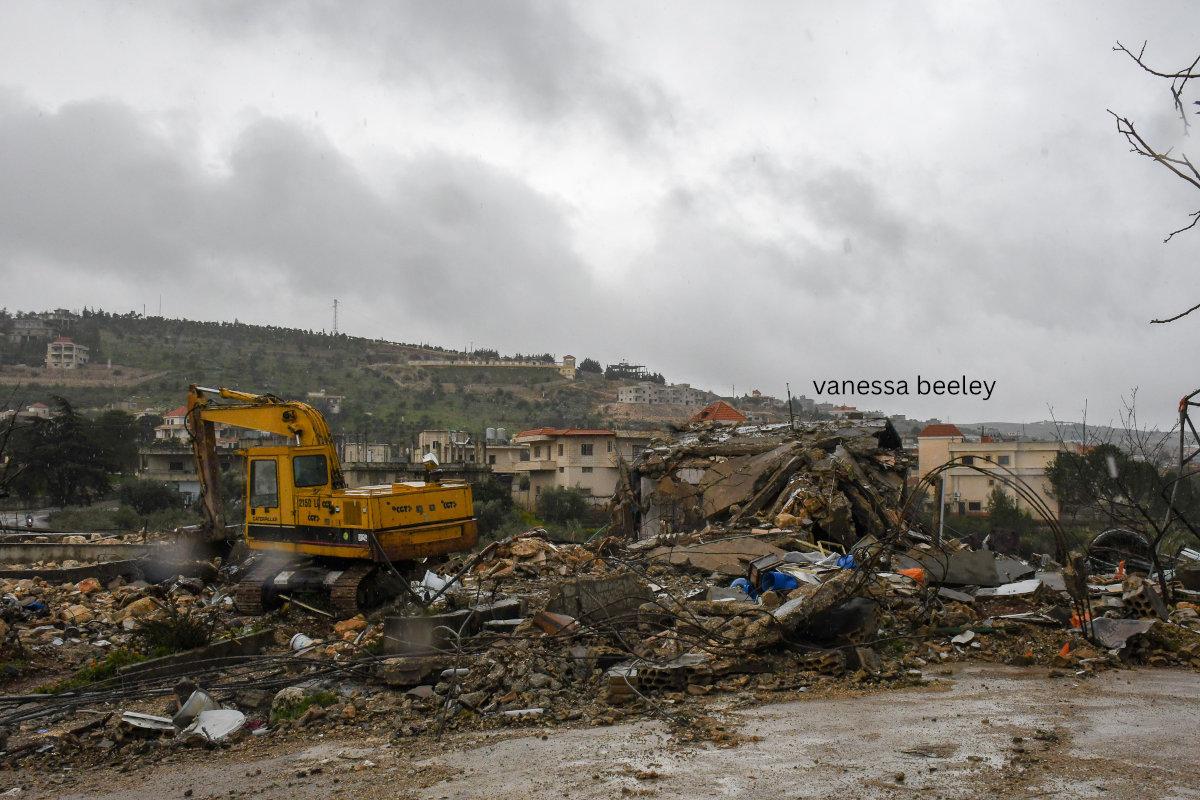
We turned the corner and encountered another shocking scene. An entire home destroyed, belongings churned into the 3m-deep crater spanning the entire footprint of the house that had simply been disintegrated into remnants of the life that existed for decades prior. An old man, dressed only in a grey tracksuit and wearing a rain-sodden cap, told us that it was his sister’s home. She was an elderly civilian, no fighter, and no threat to the Zionist genocidal occupation.
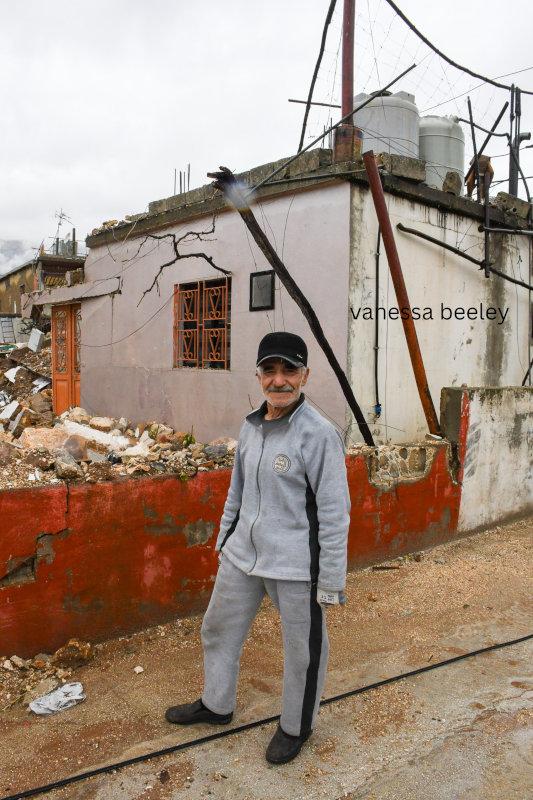
Although I had seen these craters previously in other towns and villages in the Nabatieh area, further to the south of Lebanon, the aftermath of the force of the missile blast is never less destabilising to witness. One minute, the building is a home, full of life, family, celebration of the end of Ramadan, and the start of Eid al-Fitr, and the next, it is a pile of indistinguishable rubble that thrusts those lives, their history, their hopes, and their joy into oblivion.
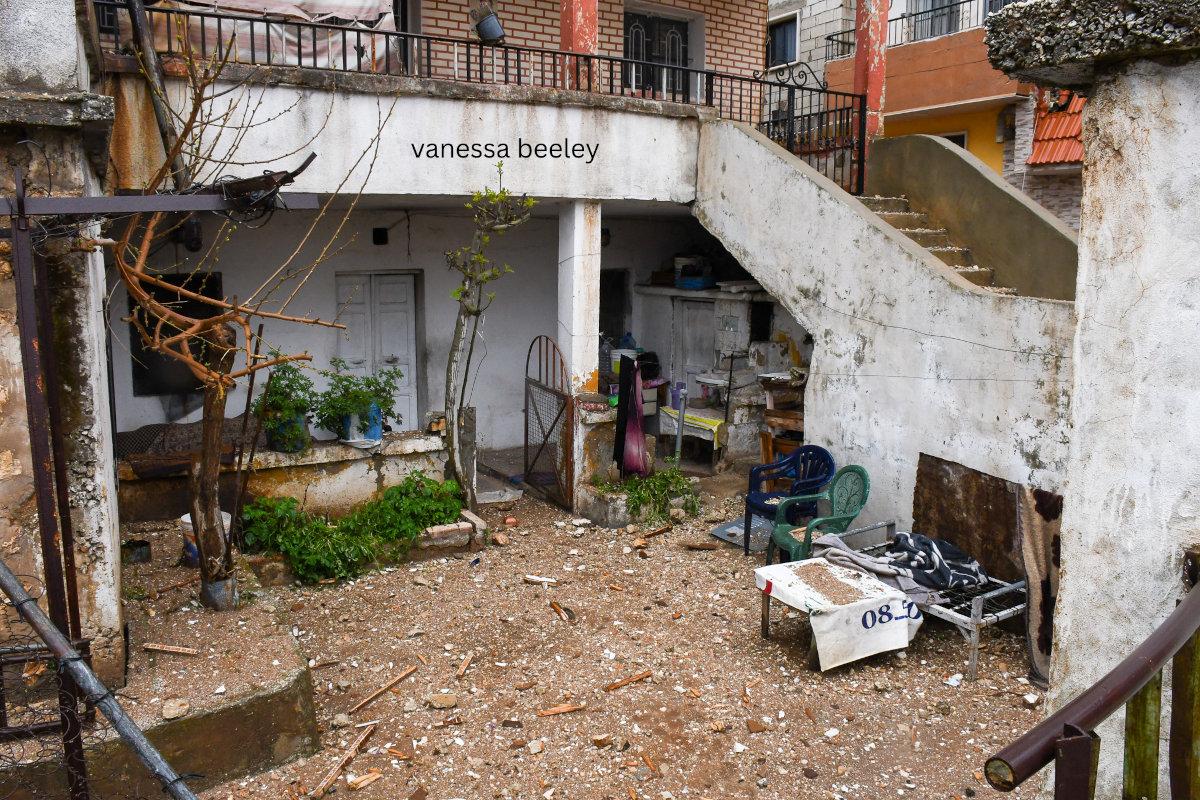
We were taken to a neighbouring house that had somehow escaped any serious damage from the blast despite being so close. The elderly lady who had been inside had emerged physically unscathed.
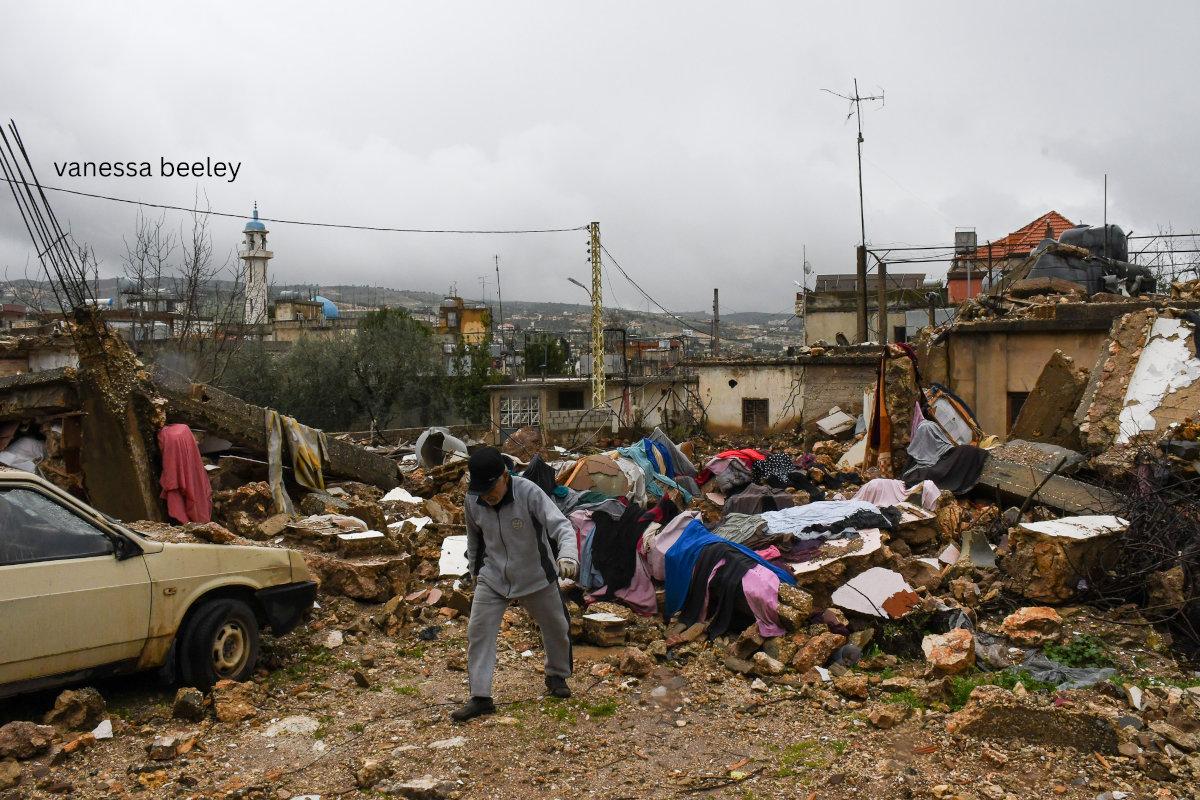
The old man insisted that I take his photo chopping wood in a tiny outhouse and standing next to the crater where he had, optimistically, hung his washing out to dry in the pouring rain. The gathering storm clouds were accompanied by the sound of Israeli war jets in the distance, flying at low altitude; an ever-present threat in Sohmor.
I asked the young men with us if it would be possible to film the street lined with the photos of other youth from the town and region who were killed resisting the Zionist aggression in recent times. It was a sobering walk as the rain formed rivulets on the road, gushing into the storm drains, face after face, smiling, young, and so proud, but so grieved and missed. In a town of 3,000 inhabitants, the rows of faces seemed to go on forever; a whole generation decimated by the Washington-Zionist alliance. This region has witnessed and endured so much bloodshed and loss and, still, there is no time to process or even to grieve because the war will not end until the Zionist threat is eliminated forever.
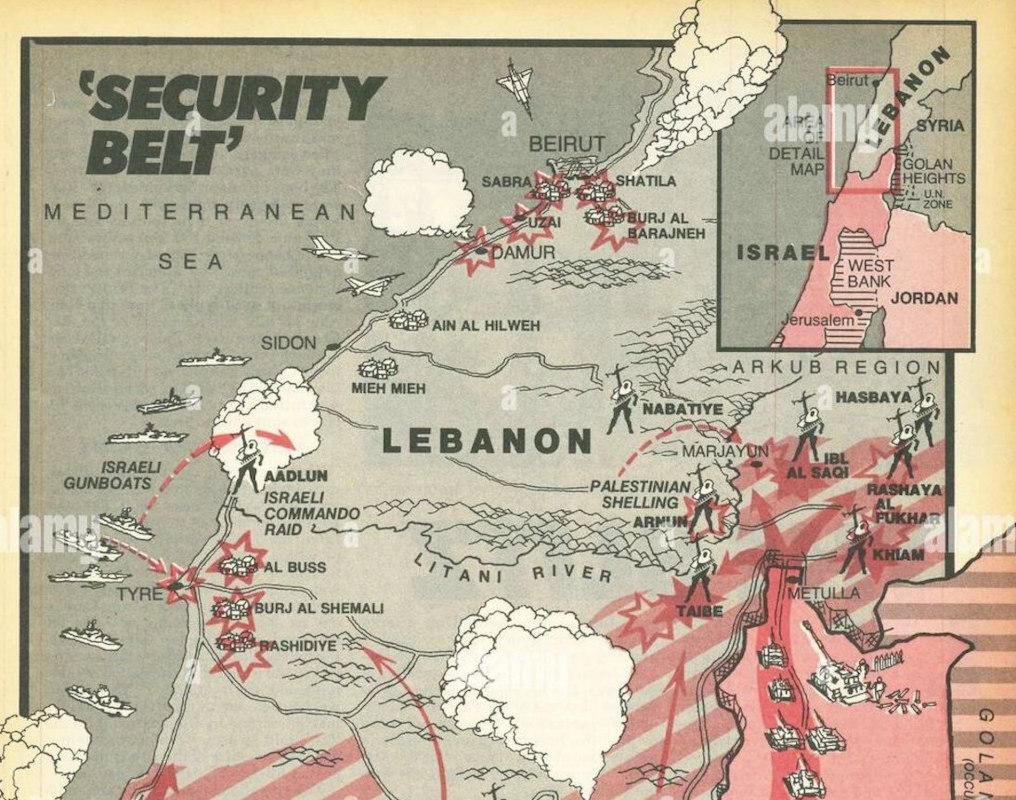
On 20 September 1984, Sohmor was the site of a horrific massacre perpetrated by members of the militia of the Zionist-backed South Lebanon Army led, at the time, by Antoine Lahad. The South Lebanon Army consisted mainly of Christian and Druze militiamen that had been trained and armed by Israel.
While the Zionist militia encircled the village, the SLA gathered 300 men, aged 16 to 39 years, in the main square to allegedly investigate an ambush that had led to the killing of three Druze militia. The shooting went on for 15 to 30 minutes, killed 13 and wounded 40. Children and elderly were among the dead and injured.
Comparisons should be made to the massacre of Palestinians of Sabra and Shatila in 1982 when similar tactics were used to slaughter more than 3000 Palestinian refugees. From the Palquest records:
Lebanese Forces militia, units from the South Lebanon Army (a break-away force under Major Saad Haddad, a proxy of Israel in South Lebanon), and militias from the right-wing Guardians of the Cedars entered the city after sunset on 16 September, under the supervision and protection of Israeli forces. For nearly three days, they tortured and killed everyone they came across, without discriminating between Palestinians and Lebanese. Not even hospitals were spared their hostilities, on 17 September, armed militias stormed Akka Hospital and brutally killed several Palestinian patients, doctors, and nurses who were there.
It is worth noting that during the 2024 war, Israel assassinated the mayor of Sohmor, Haj Haidar Shahla, demonstrating how the town of Sohmor has historically been a target of Zionist ethnic cleansing projects in Lebanon and against the Resistance.
I asked Sondoss Al Assad for a personal history of her home town, and she sent me the following vivid memories:
Sohmor has a long history of resisting aggressors. Before my grandmother passed away, she used to tell me how, in earlier times, people performed their religious rituals in caves out of fear of the Ottoman occupiers, who persecuted Shiites. She also told me how she once witnessed, with her own eyes, an ambush carried out by resistance fighters against a convoy of French colonial officers.
My grandmother was an extraordinarily strong woman. She was an orphan; her father had sailed to Latin America and never returned. She told me about a camp set up in the plains of Mashghara for Palestinians who were displaced from their homes in Galilee in 1948, and how she used to offer them simple help. She married my grandfather, and they lived together in Beirut. She gave birth to ten children. When my grandfather had to travel to Saudi Arabia for work, she carried the burden of raising them alone. She planted, harvested, and took care of the orchard.
As political tensions accelerated in the 1970s, her home became a gathering place for political activism, though it was divided between Islamist and leftist views. Her sons would argue and fight, and she was always the one trying to bring them back together. She told me how the SLA forces of Saad Haddad used to attack and shell the village. Soon, her eldest son joined the camps in South Lebanon in the Taybeh area, where he met Mostafa Chamran, and shortly afterward, he was arrested and taken to the Ansar detention camp near Nabatiah. Despite everything, she remained unbreakable. During that time, the founder of the resistance in Sohmor, Reda Al-Shaer, used to visit their home. He had a deep influence on the younger generation, and many people were moved by his powerful and engaging way of speaking. The house became like a beehive: a girl bakes saj bread for the fighters; other washes their clothes and hang them discreetly so they would not be seen; another sew uniforms for them.
Sondoss explained that her youngest aunt was murdered by a Zionist airstrike in 1993. She had refused to leave the town despite the attacks, and one day, she went to the orchard to pick fruit and bring vegetables home. An Israeli warplane tracked her and struck her with a missile. Her body was scattered across the land beneath the olive trees.
Sondoss’ grandmother remained steadfast despite the loss in her family; many resistance fighters were nurtured and grew up in her home. Some were wounded in the Israeli terrorist pager attacks in Lebanon during the 2024 war, when thousands of civilians, fighters, and children were murdered and mutilated by the explosive devices concealed in the pagers used by the group. One young man from the town of Sohmor, Daniel Menem, was fighting to defend Khiam, in the south, from the Zionist invasion in 2024. His body remained out in the open for five months before it was possible to recover him and bury him in Sohmor.
Remember that the fighters from Sohmor and all over Lebanon are also students, doctors, journalists, cameramen, medics, and ambulance drivers — they are the sons of the region that refuse to bow down to the Zionist expansionist doctrine. Resistance in this land will never die, however many times they are bombed, targeted, and massacred. Every Zionist crime leads to greater resistance and hardened resolve among the people of this land, borne out of generations of oppression and conflict. As my driver said to me, “We have everything in this region. They will never leave us alone”.
As Sondoss wrote:
So, this is Sohmor—like the other villages of Western Beqaa. Its people made great sacrifices, but they never retreated. They sense the colonial danger, and they defend their right to remain in their land.
When my grandmother passed, MP Ihab Hamadeh said the following in her honour:
‘I looked into the face of Umm Ghassan and saw in its wrinkles the geography of Western Bekaa—resisting, confronting, and victorious. The wrinkles of her face were like the hills themselves, the hills of confrontation, and the hills of martyrdom. This mother carried the banner of struggle and gave blood for this path, for the dignity, honour, and liberation that this region achieved’.
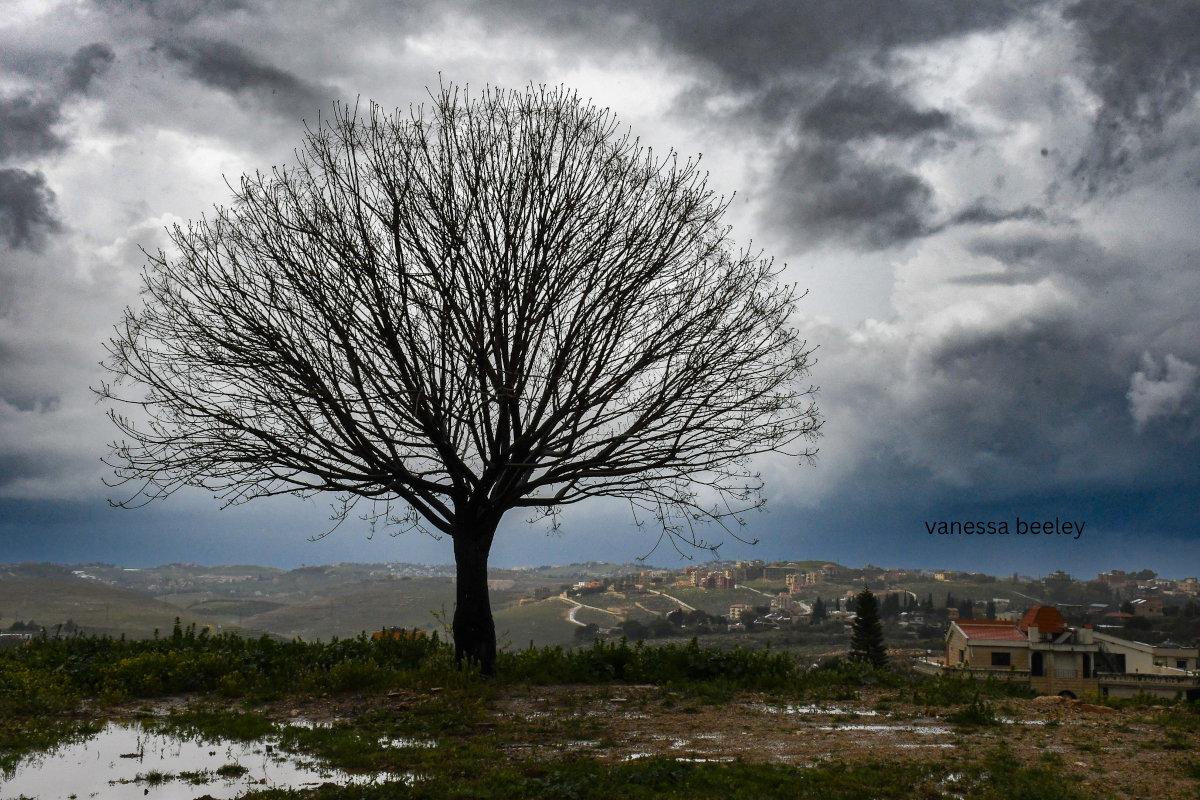
The day before, I was in the Nabatieh district of Lebanon, closer to the south, that is currently under the heaviest bombardment and attempted invasion by huge numbers of Zionist militia. Between two bombed homes, I saw this tree, bare branches splayed wide, between the two collapsed buildings. The glorious landscape glimpsed through the lattice of new spring growth. In the skies, storm clouds billowed and spun across the horizon; a passing threat. This land will never be defeated when its people stand like nature, hewn from the soil they have cultivated for hundreds and thousands of years. Therein lies the hope that we must all cling to, despite the forces that would destroy everything that is authentic and precious in our world.