
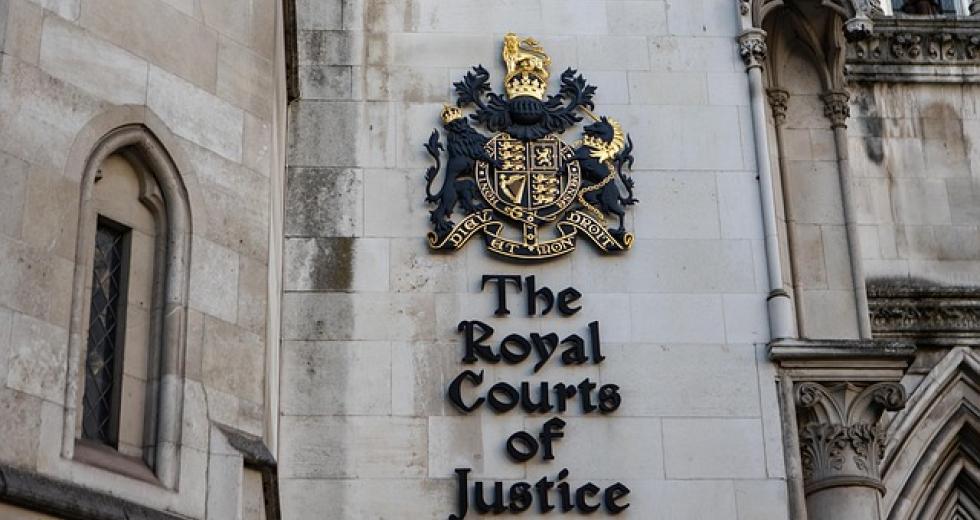
This is Part 3 of a three-part series on the incidence of post-truth in our society. Part 1 covered the ubiquity of post-truth in science and medicine, and Part 2 explored post-truth in education.
Law as the Cornerstone of a Just SocietyAccording to Aristotle, justice is the bedrock of a just society, providing a framework within which people can coexist peacefully. As a contemporary website on American justice proclaims, justice itself relies on honesty since “Without honesty, the justice system would fail to function effectively, which would undermine public trust in the system”.
In this article, we focus on the situation in Britain and the extent to which the malfaisance (or 'malfeasance' in English) identified in Switzerland, with honesty a casualty in the justice system, is present here too. We investigate through the lens of two topics spanning civil and criminal law, namely council tax (civil law) and the Lucy Letby case (criminal law).
As a prelude to discussing these two topics, we will look at foundational facts concerning the organisation of ‘justice’. These involve the corporate nature of the UK Government, including the Ministry of Justice, and His Majesty’s Courts and Tribunal Service (HMCTS). We will also examine the presence of administrative courts that do not bear the mantle of judicial authority and that no longer follow constitutional or common law, putting them in the realm of ‘post-truth’ courts and creatures that would not be out of place in Kafka’s novel The Trial, which charts the travails of a man summonsed to court for no identifiable transgression.
If it should be the case that honesty and truth appear to be casualties, then, as a society, we need urgently to embark on an initiative of the kind launched in Switzerland, with citizen juries convened to investigate cases of judicial malfeasance. This allows areas of public concern to be subject to careful and detailed scrutiny.
Corporate and Administrative CourtsThe UK’s Courts and Tribunals service is a corporate entity: ‘HMCTS’. So too, in fact, is the UK Government and its departments. The Ministry of Justice, and other bodies that fall under the aegis of gov.uk such as HM Land Registry, local authorities, and NHS Foundation Trusts, are all corporations.
The corporate nature of courts, collectively and individually, is significant, since many have Dun and Bradstreet’s Data Universal Numbering System (DUNS) numbers that apply to businesses. You might not have considered courts to be businesses, but a visit to the Dun and Bradstreet Number Lookup website will reveal that the Enforcement Business Centre of His Majesty’s Courts and Tribunal Services (HMCTS) in Kent, Surrey and Sussex, based at Folkestone, has DUNS number 228633187.
You will find the same for other enforcement Business Centres, such as the Civil National Business Centre (CNBC) in Northampton, handling motor ‘offences’ and also non-payment of council tax; its DUNS number is 234085398. Magistrates’ Courts will have DUNS numbers too. For example, that of Willesden Magistrates’ Court is 212300072, and that of Dudley Magistrates’ Court, operating likewise under the Ministry of Justice, is 214208931.
All councils, likewise, have DUNS numbers, and you can find those vouched for by the so-called Sovereign Project. The corporatisation of government bodies continues with the case of HM Land Registry, so that even individual sites have separate DUNS numbers. Thus, the office at Croydon has DUNS number 232117267, while HMRC Shipley has DUNS number 223348877.
So, the courts and government bodies with which they are in contact are corporatised in Britain. Not just that, but the members of the public who attend court are stripped of their living status by being referred to in their straw man capacity, i.e. the dead entities established through the birth certificate. The consequence is that these DUNS-registered organisations consider they can contract automatically with the straw man without needing the living man or woman’s consent, and it is only by refusing to identify with the straw man that a living man or woman can call this consent into question.
The problems lie deeper still, since courts are frequently run as administrative courts, with a single judge presiding and no jury. According to Halsbury’s Laws of England, absent a jury, courts are simply administrative courts for which “there is no authority … in this country, and no act can be passed to legitimate them”. A part of the argument rests on clause 39 of Magna Carta, still in force, that states:
No free man shall be seized or imprisoned, or stripped of his rights or possessions, or outlawed or exiled, or deprived of his standing in any other way, nor will we proceed with force against him, or send others to do so, except by the lawful judgement of his equals or by the law of the land.
The Labour Government has also proposed limiting jury trials in criminal cases in England and Wales to only “the most serious cases”, with likely sentences of under three years, leaving jury trials for cases involving murder and rape and limiting the scope for appeals. These proposals, ostensibly to reduce the backlog of criminal cases, have been met with a tsunami of outrage from the public, MPs, and legal professionals, including the four Bar Associations and the Institute for Government think tank, with the latter arguing that the plans would result in only a “modest” reduction in the time taken to deal with cases.
Moreover, these proposals run counter to King Charles III’s Coronation Oath of 6 May 2023 in which he swore, like Queen Elizabeth II before him, to uphold the “laws and customs” of this country. This was a reference, inter alia, to the upholding of common law, constitutional rights, and criminal justice, under which jury trials form an essential part.
The monarch’s oath appears to be breached in other respects, too. Indeed, ever since the time of King Edward II, monarchs have sworn to observe “God’s laws”. King Charles III is no exception, and you can see him in footage of his coronation in May 2023 adding his signature below the text, thereby agreeing to it and therefore creating a legally-binding legal document. But, God’s laws are immutable, so signalling his consent to a statute by adding his signature is a breach of this part of the oath.
You might imagine that the oath is merely window-dressing, but its significance is underlined by a House of Commons April 2025 report by David Torrance, where you can read that the oath is “the only aspect of the ceremony that is required by law” and bears the status of a “legal obligation”. Indeed, when the Archbishop of Canterbury invites Charles during the coronation ceremony to take the oath, it happens after he has indicated that it is “enshrined in law”. So, we are dealing with more than simply resplendent ceremony, since the oath is binding, and it applies to the people of the United Kingdom, Northern Ireland, and those living in “other Realms”.
Before moving on to our two selected topics, let us dwell for a while on the legal and constitutional significance of Charles’ Coronation Oath, focusing on his commitment to preserve both the “laws and customs” of the realm, and also “God’s laws”.
The Reference to “Laws and Customs”According to a 1956 scholarly article, the appearance of a reference to the “laws and customs” of the Realm was found in the earliest surviving complete version of the Coronation Oath: that of King Edward II in 1308. From that point on, the words in King Edward II’s oath remained in coronation oaths for almost 400 more years.
How are we to understand the reference to “laws and customs”? According to Hoyt, “’the laws and customs of the realm’ refer to the whole body of English law and custom”. This brings within its ambit not only charters and enactments and the “common law” (“in the sense of law administered in the king's courts”) but also “the law, administered in all other courts which did not necessarily have a royal source or find a place in charters”. So, Hoyt is telling us that the phrase “laws and customs” refers to common law and not necessarily written laws. This means that, from a historical perspective, the phrase “laws and customs” does not refer exclusively to written law (i.e. statute today) but to common law as well.
Moreover, the most authoritative jurist of the 13th century, Henry de Bracton and sometime Chancellor of Exeter Cathedral, stated that “the English hold many things by custom which they do not hold by law” and that “kings need only to have allowed the custom for it to be granted”. So, if King Charles does not step in to halt the reduction of jury trials, he is very likely in breach of his sworn duty to protect the “laws and customs” of Britain, since juries are a hallmark of the common law system. So, if King Charles III does not step in, we potentially face a major constitutional crisis.
Let us move on now to King Charles’ further undertaking; namely, to observe the “laws of God”. What does this add to the mix?
The Reference to the “Laws of God”In her Coronation Oath, Queen Elizabeth II swore to follow “the laws of God”, and this commitment was repeated in Charles’ oath as well. The first five books of the Bible make frequent reference to God’s laws, showing us that these are regarded as the last word in law and, therefore, immutable. You can glean this from the following passages in Deuteronomy:
4:2 Ye shall not add to the word which I command you, neither shall ye diminish ought from it, that ye may keep the Commandments of the Lord your God which I COMMAND you.
12:32 What thing soever I command you, observe to do it: thou shalt not add thereto, nor diminish from it.
You can see how Deuteronomy rules out adding laws to those established by God, and this means that any monarch swearing to uphold God’s laws must not add their signature to new legislation, since doing this would automatically breach their oath. In fact, Queen Elizabeth II, in the course of her long reign from 1953 to 2022, signed no fewer than 4,272 statutes into existence, and the fact that doing this breached her oath actually invalidates those statutes. The same applies to statutes signed into law by King Charles III, showing that he would be doubly in breach of his oath were he to offer his assent to any statute abolishing jury trials.
Would this force a major constitutional crisis in Britain? Well, you might say that we are already in the midst of a constitutional crisis since in 2001, barons (i.e. peers) invoked Article 69 of Magna Carta. According to one view, if redress is not made by the monarch, the barons and people of the country may stand in "lawful dissent", and may proceed to “distress and distrain” the monarch by, for example, seizing public buildings. What is more, once invoked, the power of Article 69 remains in place.
With the fresh constitutional crises that we are witnessing with the abolition of jury trials in certain cases and, with it, the ever-increasing reliance on administrative courts, debate is vitally needed on how faith in Britain’s courts and justice system can be restored. In an ideal world, we would need to reinstate Common Law Courts, and courts that are not corporatised, in which juries are the norm. We would also need to examine how the law is working in specific areas, such as employment tribunals, Family Courts, and courts handling medical negligence. Since space is limited, we will focus on just two areas, one civil and one criminal, taking the case of council tax (civil courts) and the Lucy Letby case (criminal courts). Even then, we will need to pull out the most salient points, since each could be the subject of several articles. Let us turn to council tax in the first instance.
Council TaxAccording to the Office of National Budget’s responsibilities, council tax is expected to raise £50.2 billion in 2025-2026, a sum that represents 4.1 per cent of central government receipts, equivalent to 1.7 per cent of national income. A separate report describes it as a “big tax”.
The extent of the revenue raised makes it all the more concerning to learn of fatal irregularities in the levying of council tax, all of which call into question the extent to which the legal basis for it exemplifies post-truth in the law. Here is a small sample of the breaches of lawful process that currently abound:
- Failure to pay council tax results in a summons to a Magistrates’ Court that is very possibly not constituted under the Court Act 2003, arguably rendering proceedings null and void. Note that the Justices’ Clerks Society labelled discussions of the lack of constitutionality of the courts’ pseudo-law. Martin Geddes, in his extensive discussion of this topic, remarked that “What they call pseudo-law is, in truth, the defence of law; what they promote as law is the most dangerous pseudo-law of all”. The so-called Magistrates’ Court allegedly produces a liability order, but the reality of the so-called liability order may be as elusive as the unicorn.
- We say this for a number of reasons. Firstly, the Court’s Memorandum of Entry in the so-called Magistrates’ Courts contains no written reference to a named ‘debtor’. This register is exactly the place where you would expect a record to be kept, according to an FOI. If phoning the court, no record is held of the name of the man or woman against whom a liability order has, according to the Council, been made.
- Note also that the forms on which liability orders were issued before 2003 were removed in October 2003. An FOI response confirms deprescription of liability orders at that time, with the Council Tax Handbook (13th edition) corroborating this in its assertion that the liability order form was withdrawn in 2003 and not replaced.
- Since that time, some councils create documents purporting to be liability orders, but these manifestly lack any legal standing since they are without the court seal required under the Civil Procedure Rules. Yet, administrative courts are accepting these bogus documents as having judicial authority, and using them to force a sale of someone’s home and evict them.
- There is no such principle of an anonymous court officer in British law, and yet, responses to DSARs to Magistrates’ Courts fail to disclose the name of the magistrate acting in the case.
- No jury ever sits at the Magistrates’ Court, nor at the Civil National Business Centre (CNBC), to which the case is referred for an interim charging order, with the case there heard by an anonymous court officer. From there, it is passed to a County Court for a final charging order, again with no jury present. So, these are at best administrative courts with, according to Halsbury’s Laws of England, no legal standing.
- The Local Government Act 1888 s.79 states that the liabilities of the inhabitants of the land shall become the duties and liabilities of the council (and not vice versa), but councils are conveniently setting this to one side.
- The problems are amplified when we consider that councils insist on addressing men and women by their legal fiction (Mr X or Ms Y) rather than by their living man or woman name, even when they have declared themselves to be living men and women. This is to engage in the crime of criminal conversion.

Could it be that we have in council tax a giant extortion racket in which the drive to levy billions of pounds for the state (all council tax monies initially go to the consolidated fund before a proportion is redistributed to the council) outweighs the legality of the processes used? Currently, non-payment is often met by threats of attachment of earnings and/or forced sale of homes, making council tax an extraordinarily lucrative activity, with courts aiding and abetting the multiple illegalities of which just a few examples are cited above.
The Lucy Letby CaseIn August 2023, the neonatal nurse Lucy Letby was convicted of murdering several babies at the Countess of Chester Hospital after what was one of the most protracted murder trials in British history.
Since then, several prominent figures have questioned the wisdom of the verdict, including the senior Conservative MP David Davis, Sir Jeremy Hunt, former Health Secretary Lord Sumption, the former Supreme Court judge, as well as an international group of doctors, led by eminent neonatologist Dr Shoo Lee, all acting pro bono in examining relevant medical records. Other dissenting voices include Professor Jane Hutton of Warwick University; Emeritus Professor of Statistics at Cambridge, Philip Dawid; Richard Gil, Emeritus Professor of Mathematical Statistics at Leiden University; Christopher Hitchens of the Mail on Sunday. Former Detective Superintendent Stuart Clifton has described the case as likely “the greatest miscarriage of justice this century — and that we have seen in a very long time”. This is quite a list, spanning senior politicians and academics as well as a former Supreme Court judge, a senior journalist, and a senior detective.
I must declare that I was sufficiently interested in examining the judicial process in 2023 to then write a number of articles. For example, see this one, this one, and this one concerning failures in the judicial process, not just in this case but in others as well, so these articles are exercises in applying critical thinking to the case.
Weighing up all the evidence, we have to ask — as with the civil law instance of council tax — whether post-truth is operating at the heart of the British criminal justice system. After all, the High Court judge who presided over her first trial voiced complete certainty in his concluding remarks, even though many experts have since questioned the guilty verdict and, as the paediatrician Dr Gibbs has said, “you worry that no-one actually saw her do it”, making the evidence against her at best circumstantial. Yet, despite these doubts, and the shortage of witness evidence presented by Letby’s defence team (see below), the presiding judge was emphatic in the words he used in addressing Letby in his summing up:
You acted in a way that was completely contrary to the normal human instincts of nurturing and caring for babies and in gross breach of the trust that all citizens place in those who work in the medical and caring professions.
The babies you harmed were born prematurely and some were at risk of not surviving but in each case you deliberately harmed them, intending to kill them. There was premeditation, calculation, and cunning in your actions.
The cruelty and calculation of your actions were truly horrific. [Author's note: a case of very exceptional circumstances]
You killed seven fragile babies and attempted to kill six others. All were extremely vulnerable.
This was a cruel, calculated and cynical campaign of child murder. [Author's note: alliterative effects add to the power here]
There was a deep malevolence bordering on sadism in your actions.
Remember that these are the words of a presiding judge, not a prosecution barrister pleading a case against a defendant. Any concerns that you may have may continue in the sentiments expressed by the same judge, Justice Goss, at the retrial examining the death of Baby K, directed the jury that certainties and motives were of secondary importance, saying:
You do not have to resolve every conflict in the evidence and be sure about every point that has been raised or try to determine exactly what happened. You are not detectives and, you may think, it would be a remarkable and exceptional case in which a jury could say we know everything about what happened in any case.
Nor do you have to be sure of any motive or motives. Motives for criminal behaviour are sometimes complex and not always clear. You only have to make decisions on those matters that will enable you to say whether the defendant is guilty or not.
So, it seems that guilt or innocence could, according to this judge, be determined even in the absence of specific certainties.
This would be concerning in any case, but is particularly so when the main prosecution expert, Dr Dewi Evans, a retired paediatrician, has no special expertise in the evolving field of neonatology, being unfamiliar with the modern technology used in neonatal wards and misrepresenting evidence, according to Dr Shoo Lee, in a key paper of his cited in the main trial. If we add to that the fact that the defence barrister only called one expert to the witness stand, a plumber rather than a medical expert, then we must have concerns about the evidence base used at the trial.
Note that, in saying this, we do not undermine in any way the importance of the plumber’s testimony, since he shed light on the parlous condition of the plumbing in and around the neonatal unit, with “foul water” in the sinks and a flood in the neonatal unit in January 2016. In point of fact, the significance of his testimony came to the fore in January 2026 when three infants and three adults died in a hospital in Glasgow, having contracted the same bug (Stenotrophomonas maltophilia) present in the Countess of Chester hospital. However, the non-appearance of potentially key witnesses at the main trial is deafening, and we have to ask whether their absence allowed for a fair trial. Here is a provisional list, just for starters:
- The Royal College of Paediatrics and Child Health (RCPCH) who in 2016 criticised staffing levels and limited ward rounds
- Dr Shoo Lee to debunk the air embolus theory of the coroners, whose findings were that the babies died of natural causes
- Insulin experts to offer views as to the reliability of the testing
- Hospital managers who found no evidence of wrongdoing
- Nursing managers
- The person with the risk register showing the bug was prevalent on the ward
- Someone to provide information on the deaths that took place when Letby was not on duty
- A statistical expert to offer views on the rota information presented by the prosecution
- The person responsible for swipe data
- Character witnesses
- Lucy Letby's counsellor who would put into context the confessions that Lucy Letby made on Post-it notes
- The senior judge, Lord Justice Peter Jackson, who had branded Dr Dewi Evans’ evidence in an earlier case as ‘worthless’
- An NHS analyst to explain that while the deaths in the neonatal were high, they were by no means unique amongst pre-term babies
- An NHS analyst to present statistics showing that the death of infants (i.e., non-preterm babies) at the Countess of Chester Hospital (COC) was 30% higher than the median EU rate, with higher levels of stillborn births in 2015 and 2017 than in other years. Against the backdrop of stillbirths across the UK actually reducing since 2010, events at COC are unusual, and these deaths cannot be attributed to Letby, since they occurred in the maternity section. In fact, on 16 January 2025, Prof Spiegelhalter told the Thirlwall Inquiry that data from the MBRRACE-UK system, which monitors maternal deaths for stillbirths and neonatal deaths, showed the COC’s ward to be the worst of its kind in 2015.
The presence of even a proportion of these witnesses would have provided crucial evidence to the trial, and we must ask whether the absence of so much crucial witness evidence made the trial a safe one. The Health Secretary, Wes Streeting, speaking at a Coroner’s court on 4 February 2026, expressed confidence in the court's judgment and in the court system.
However, his words neglect a crucial point. Appeals can be brought not simply on the facts presented to a court but also on the processes used, and failures in process can be equally important in considering arguments for appeal. What if the British courts, run under a corporatised HMCTS, are seriously compromised? What if post-truth is widely present, and processes flawed? Flawed processes would include the use of lead expert prosecution witness lacking relevant expertise, with a jury verdict issued by a depleted jury of 11 members, not 12, and a judge whose directions to the jury cause serious questions to be asked.
Could it be that Wes Streeting’s confidence in the British courts is misguided? We are at a juncture where serious questions must be asked about the ability of the corporatised court system to deliver justice for the people of this country. It behoves us to ask whether we have, in our justice system, the honest system that Aristotle said would create a just society. It also behoves us to put a spotlight on the system and ask whether it is delivering truth or merely a travesty of that, post-truth. If the latter, then next steps must take account of these concerns.
ConclusionLessons must be learned from the criminal case involving Lucy Letby and the civil case turning on Council Tax and systems modified if post-truth is the product of the current corporatised judicial system. These changes could involve:
- The establishment of non-corporatised Common Law courts, in line with the King’s Coronation Oath to observe the “laws and customs” of this country
- A new direction in the appointment and training of judges
- Strict rules concerning the selection of expert witnesses, with a lay panel involved that is not appointed by the state
- Strict rules regarding the standards of evidence on which convictions can be made
Post-truth will continue to flourish, and social justice will be a chimera, until major changes are made. Indeed, the civil and criminal issues highlighted in this article show, indubitably, the potential grip that post-truth thinking has in the British legal system today. It behoves us to highlight this since, as Aristotle warned, there can be no just society without an honest justice system.

Professor Gloria Moss
Professor Gloria Moss PhD has written and researched extensively on Leadership, Marketing, Cognitive Sex differences, Personality and History. She is the author of over 70 peer review journal and conference papers, eight books, and around 250 articles for the media.