
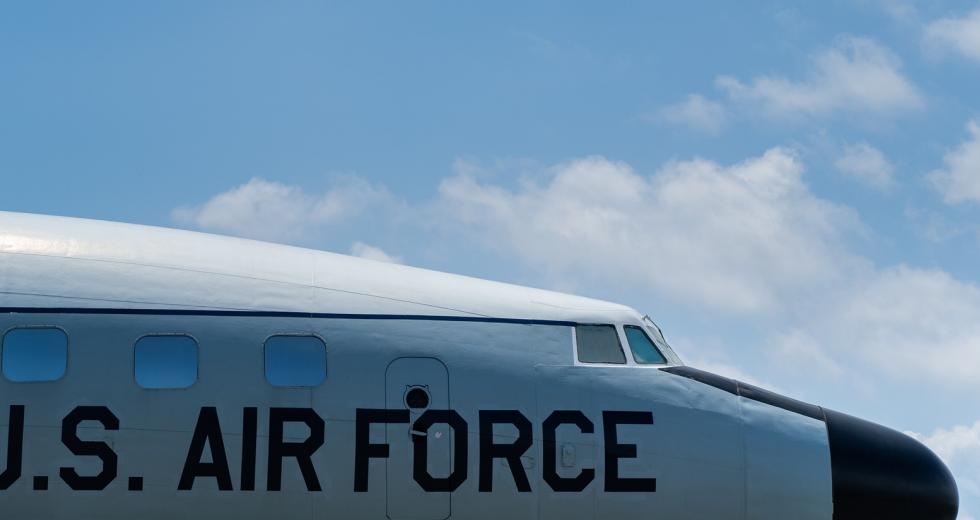
On 27 March 2026, in a strike on a Saudi air base 600 kilometres from Iranian territory, Tehran is reported to have destroyed a key US Air Force battle management and surveillance aircraft valued at between $270 million and $500 million, one of only eight or nine in operation globally. At least 10 US service members were wounded in the attack, two seriously.
Kelly Grieco, senior fellow at the Stimson Centre, described the event as a “significant loss for the war in the short term” and warned of “coverage gaps”.
Heather Penney, a former F-16 pilot and director of studies and research at AFA's Mitchell Institute for Aerospace Studies, was unequivocal: “The loss of this E-3 is incredibly problematic, given how crucial these battle managers are to everything from airspace deconfliction, aircraft deconfliction, targeting, and providing other lethal effects that the entire force needs for the battle space”.
The Pentagon has so far declined to comment.
The E-3 Sentry, one of just 16 in the US arsenal, was among several aircraft lost during the attack on Prince Sultan Air Base in Saudi Arabia on 27 March. Four KC-135 Stratotanker airborne refuelling aircraft, out of over 100 deployed to the Middle East, were also reported damaged or destroyed.
The coverage gap left by the destroyed E-3 is being filled by Australia, which has operated the E-7A Wedgetail — the E-3's successor — since 2012. Although Boeing built the E-7, Washington chose not to buy it, and now has to lean on Canberra in the air campaign against Iran.
The Iranian breakthrough happened despite US assurances that the US is, in effect, winning the war. CENTCOM commander Admiral Brad Cooper to reporters, two days before the attack: “We have damaged or destroyed over two-thirds of Iran's missile, drone, and naval production facilities and shipyards. We are on a path to completely eliminate Iran's wider military manufacturing apparatus”.
US President Donald Trump said, from the Oval Office, three days before the attack: “We've won this. This war has been won”.
The Iranian StrategyTo what extent does the attack on Prince Sultan Air Base on 27 March illustrate Tehran's strategic priorities?
The Saudi base sits 600 kilometres from Iranian territory, protected behind layers of US and Saudi air defences. To penetrate them, Iran launched six ballistic missiles and 29 drones, at an estimated total cost of $60–120 million. In return, Tehran destroyed one E-3 Sentry valued at $500 million with no replacement in production, one KC-135 tanker, and damaged three KC-135s — a combined loss of an estimated $660–700 million. At least 15 US service members were wounded; five of these were serious. A personnel building was also struck.
Kelly Grieco of the Stimson Centre said, “It seems like it is a deliberate campaign to go after the critical enablers of US airpower”.
On 28 February 2026, the opening day of the war, Iran's first action was a saturation attack on Qatar using 65 ballistic missiles and 12 drones. Two missiles were said to have avoided interception and made it all the way. One reportedly struck the AN/FPS-132 early-warning radar — one of only six such systems existing worldwide. The others are located in North America and at allied installations in the UK and Greenland. The Qatar radar was the only one forward-deployed in a combat theatre, valued at $1.1 billion.
After the first two weeks of the war, Military Watch Magazine estimates the total value of US ground radars destroyed, across Qatar, Jordan and the UAE, at $2.7 billion.
US Secretary of State Marco Rubio said on 2 March, four days into the war: “We knew that there was going to be an Israeli action, we knew that that would precipitate an attack against American forces, and we knew that if we didn't preemptively go after them before they launched those attacks, we would suffer higher casualties”.
Did Washington allow Israel to drag the US into a street fight in a desert back alley where the opponent is currently blinding the Pentagon with pepper spray?

Kristoffer Hell
Kristoffer Hell is an independent writer and journalist covering high politics and how technology shapes human experience. He holds an MLitt in Strategic Studies from the University of Aberdeen and a Diploma in News Journalism from the London School of Journalism. He previously worked as a software developer, contracting in banking, pharmaceuticals, and retail.