
The Muslim civil society is doing the dirty work of the British state.
In Part 1 of this two-part series, we explained the role and structure of the Research Information and Communication Unit (RICU) of the Home Office in working with the PR firm Breakthrough Media/Zinc to deliver astroturfed PR campaigns for Muslim civil society groups. In this second article, we will give an account of how RICU has developed what it calls its ‘product’ — that is, campaigns launched by Muslim civil society groups as if they were their own, but which in reality are constructed and signed off every step of the way by British intelligence officers.
Before we dive into the specific civil society groups that were used in these campaigns, we need to look at RICU’s ‘theory of change’.
Counter-narratives and RICU’s ‘Theory of Change’The concept of the counter-narrative emerges from an understanding of terrorism rooted in the ‘radicalisation’ thesis — the idea that terrorism emerges in the context of ‘extreme’ or ‘radical’ ideas. In accordance with this view, advocates of the ‘counter-narratives’ strategy believe that if you offer an alternative or counter-narrative to the ‘radical’ ideas that give rise to terrorism, you can essentially disrupt the so-called ‘path to radicalisation’. RICU described this ‘theory of change’ in one internal document submitted to the Swedish National Coordinator Against Violent Extremism (CVE) in 2015:
IF CSOs working to counter extremism are supported to improve their planning, delivery and management of projects and raise funds as well as build their communications capacity
THEN there will be a greater number of CSOs applying for funding to deliver high impact and scalable CVE projects whilst also leveraging their activities through communications to challenge extremist narratives online and offline and promote democratic values.
THEREBY Ensuring greater numbers of vulnerable young people are reached, reducing the appeal of extremist groups, and creating a more open approach within civil society to tackling extremism and in particular, Islamic extremism
CONTRIBUTING TO a reduction in the number of young people radicalised and recruited by extremist groups.
This is obviously premised on an extremely dubious account of the process of radicalisation, for which there is no secure evidence base.
Religious Leaders and Faith InstitutionsPrevent and CVE approaches have sought to intervene in matters of religious interpretation and practice. Mosque regulation and religious roadshows were important components to the first iteration of the UK Prevent programme. This attempt to influence religious thinking and authority and embed pro-government voices within faith institutions has continued through subsequent iterations of the strategy.
Faith AssociatesFaith Associates provides training to mosques and madrassas. It was set up in 2004 “as a non-theological consultancy to meet the needs of ethnic minority faith-based communities”. The organisation was involved in Prevent from the outset. In 2006, they helped establish the national umbrella body — the Mosques and Imams National Advisory Board (MINAB). They produce mosque training and management guides, which they now disseminate on a global scale. They have also partnered with private security firm G4S as well as the Home Office, the Community Security Trust, and others to provide mosque security training.
Faith Associates have significant global partnerships. This includes working with the United Nations to develop mosque training across East Africa. They have also worked with tech giants such as Google and Facebook. With the latter, they produced a ‘Keeping Muslims Safe Online’ guide for Muslim communities globally – which is now featured on the Facebook safety page.
In 2011, one of their flagship campaigns, ImamsOnline.com, was launched as “a dedicated portal for the promotion of Islamic leadership”. The intention was also to “provide advice, support and training to religious leaders globally”.
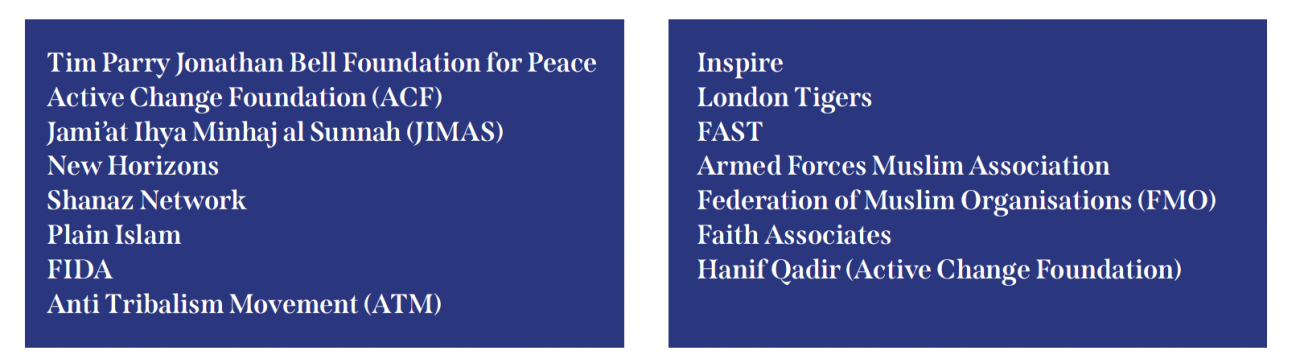
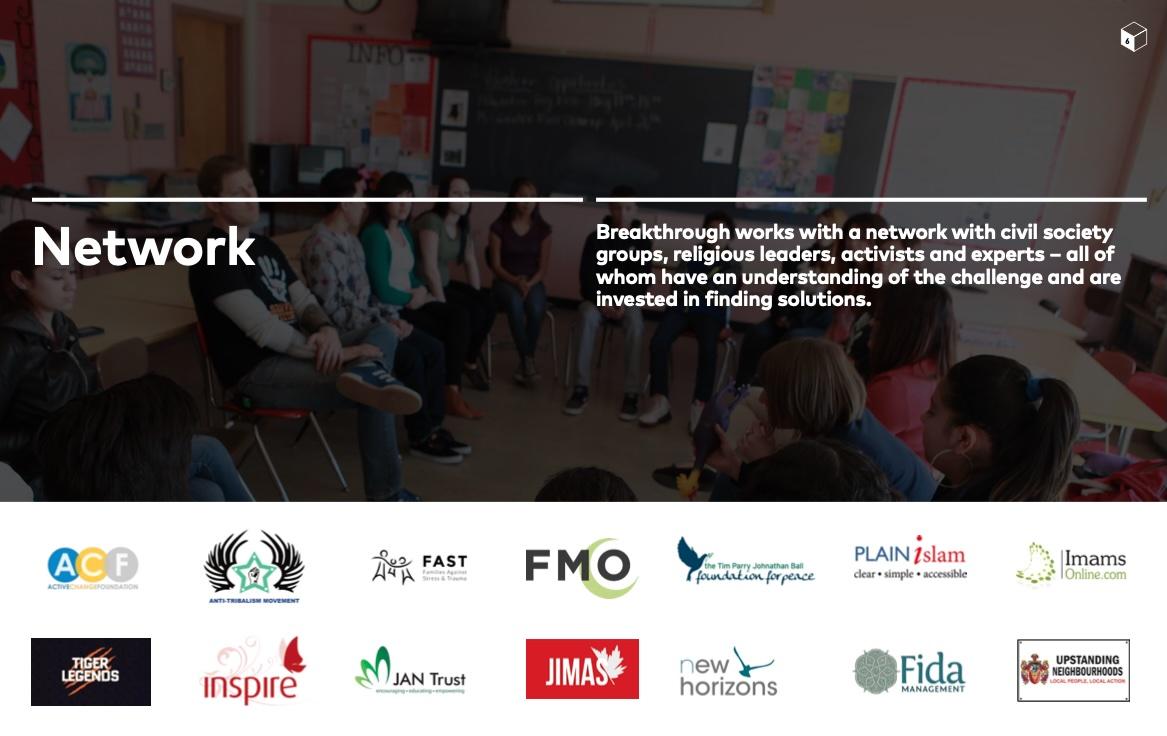
Breakthrough Media claims in internal documents that it and RICU can “only effectively influence online conversations by being embedded within target communities via a network of moderate organisations that are supportive of its goals”. Breakthrough notes, “As a result of its existing work with RICU”, it “has developed close working relationships with the following groups at the forefront of the counter-radicalisation effort in the UK”.
Faith Associates is on the list.
Indeed, Breakthrough’s ‘showcase’ presentation devotes considerable attention to the project.
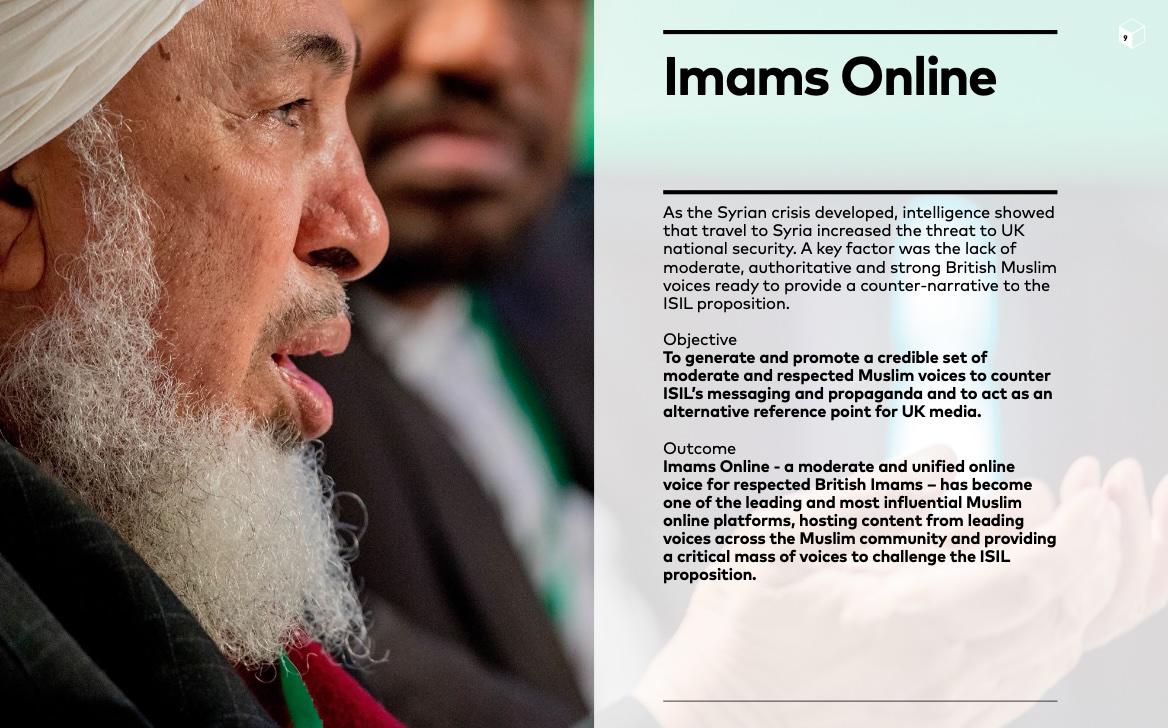
Despite this, Faith Associates has maintained that it is independent of Prevent, RICU, or Breakthrough Media. In a statement responding to a report published by CAGE:
We would also like to clarify that neither Faith Associates nor Madrassah.co.uk has ever received support from Breakthrough Media to help with its content or design. Faith Associates receives support and its services have been commissioned from a variety of sources including, local authorities, charities, mosques, madrassahs and private businesses. Madrassah.co.uk is independently funded by individuals and offers training and accredited safeguarding certification at a nominal fee paid for by Mosques, Madrassahs and Islamic charities.
While Faith Associates acknowledged that Imams Online was supported by Breakthrough Media, they maintained that the content was “authored by the Imams and Scholars themselves”:
Imams Online would like to reiterate this point and state quite clearly that any campaigns it has run, events it has held or content it has produced for its website and social media feeds is independent of any external influence. The words and sentiments expressed on the platform are wholly representative of the views and opinions of the authors, be they the Imams Online editorial team or the Imams and Scholars within our network.
However, as we highlighted in Part 1 of this article, the internal documents show clearly that RICU has contractually based routine and final editorial control over the content of materials produced by Breakthrough Media for civil society partners.
One of the central focuses of ‘counter-narratives’ has been on women and families. These measures have focused on three areas:
- ‘Empowering Muslim women’ with the intention that they will then challenge extremism in their communities;
- Address ‘gender-specific’ forms of radicalisation to address the push/pull factors that result in the ‘radicalisation’ of women;
- To get families, especially mothers, involved in countering violent extremism.
There are no existing evaluations of the impact that these policies have on the institutional status of Muslim women in Europe.
We begin with a discussion of the most prominent of these covert funded organisations, Inspire, which was led by Dame Sara Khan, who went on to become the UK Commissioner for Countering Extremism in 2018 and then, in March 2021, Khan was appointed by the Prime Minister as the government’s Independent Adviser for Social Cohesion and Resilience. She issued a report, ‘The Khan Review: Threats to Social Cohesion and Democratic Resilience’, in March 2024. Khan has had to move from a covert intelligence asset to an overt one as a result of the exposure of Inspire as intelligence-linked. In 2024, Michael Gove, the most pro-Zionist minister in the Government, attempted to move Government policy on extremism further towards Zionist interests, and in doing so, noted that his interventions drew on Khan’s work. As I have shown elsewhere, Zionist interests stood directly behind this move.
Inspire, the #MakingAStand Campaign, and RICUInspire described itself as an “independent non-governmental counter-extremism and women’s rights” organisation which seeks to “address inequalities facing British Muslim women”.
It says that its aim was “empowering women”. Inspire is said to have started with no funding, being run out of founder and former co-director Sara Khan’s kitchen. Yet, it rapidly attained a high profile.
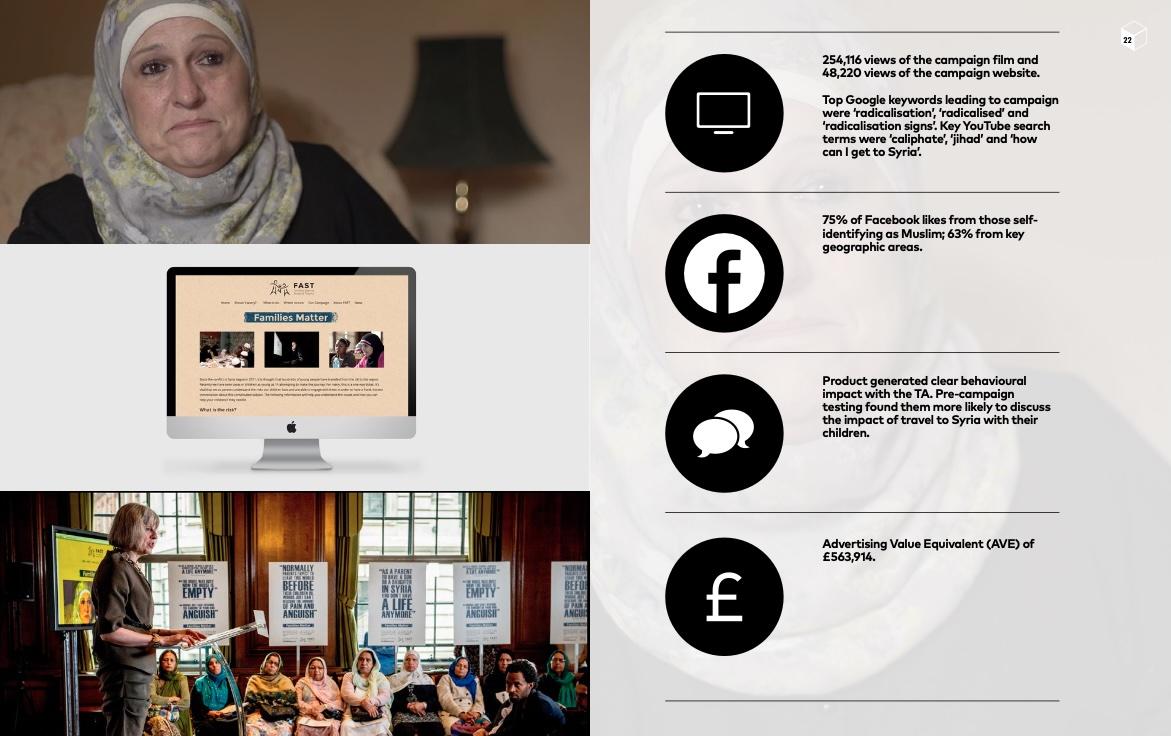
In September 2014, the Home Secretary launched its flagship campaign #MakingAStand at the headquarters of Royal United Services Institute (RUSI), a military think tank in Whitehall. The campaign was supported by The Sun newspaper, which published a front page with an image of a Muslim woman wearing a Union Jack headscarf with the headline ‘United Against I.S.’ Inspire then toured the country with their social media campaign, aiming to “empower” Muslim women to “make a stand” against extremism.

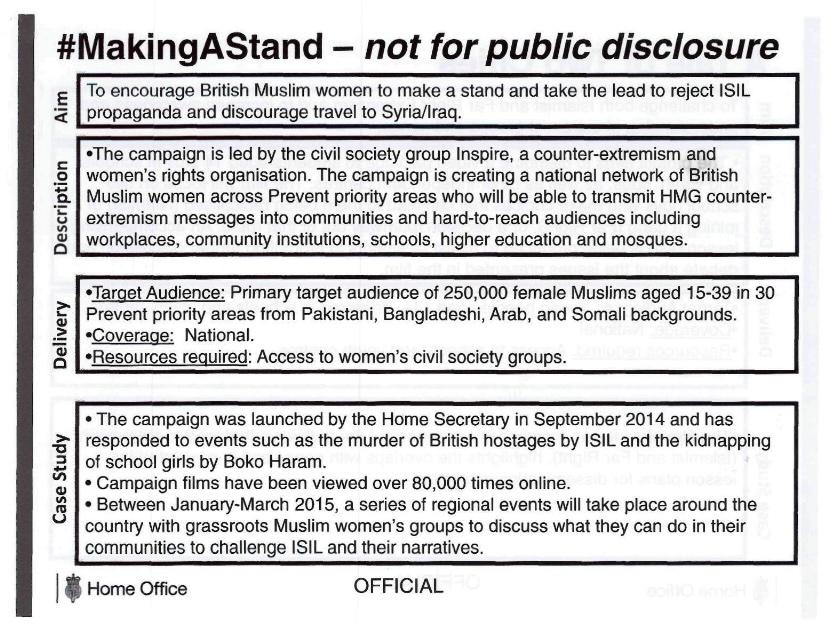
However, a leaked internal document, the Office for Security and Counter Terrorism’s (OSCT) ‘Local Delivery Best Practice Catalogue: Prevent Strategy’, described #MakingAStand differently. It is listed as one of four ‘RICU products’.
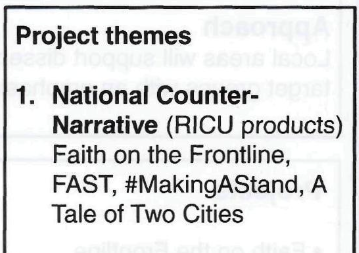
RICU was located in the OSCT in the Home Office; it has now changed its name to the Homeland Security Group. In a section of the OSCT document marked “not for public disclosure”, the campaign is described as creating a “network of British Muslim women across Prevent priority areas” in order “to transmit HMG counter-extremism messages into communities and hard to reach audiences”.
The “resources required” in the attempt to reach these audiences is “access to women's civil society groups”.
Furthermore, there was evidence that Inspire had not publicly admitted that the campaign was supported by the Home Office. Data from the Internet Archive showed that in previous versions of the relevant page on the Inspire website, the link with the Home Office was not mentioned. Between 8 October 2014 and 21 July 2015, the Internet Archive captured the relevant page eight times. None mentioned the Home Office backing. On 17 November 2015, Inspire directors at the time, Sara Khan and Kalsoom Bashir, gave evidence to the Home Affairs Select Committee. There, they were questioned by Labour MP Naz Shah about whether Inspire could be considered truly independent of Government. They were also probed about potential conflict of interests regarding Sara Khan’s sister, Sabin Khan, who was a senior civil servant in the Home Office; in fact, she was the Deputy Director of RICU at the time. Sara Khan continued to insist on their independence.
We cannot tell exactly when the page changed, but we can say that the next time the page was captured by the Internet Archive was on 23 November 2015, and a passage had been added at the bottom of the page that stated:
We are thankful to the Home Office for supporting our Making A Stand campaign. The funding received to deliver projects into communities has helped provide women with an opportunity to better understand how they can protect their children from radicalisation and extremism.
Inspire continued to maintain that it was an “independent” group, and that “all decisions in relation to Inspire’s remit and work are made solely by the directors; all projects and activities are led and carried out by the Inspire team”. Furthermore, Inspire gave the following background about why it created Making A Stand:
We launched this campaign in 2014 because we wanted to stop the damage caused by extremists poisoning young minds in our communities … Listening to women as they told us of their suffering and unimaginable grief on discovering that their sons and daughters had turned their backs on the family to join ISIS made us realise that if we came together our voice would be stronger.
Inspire stated in their supplementary written evidence to the Committee that they received Home Office funding for Making A Stand, but they did not disclose the full details of their relationship to RICU.
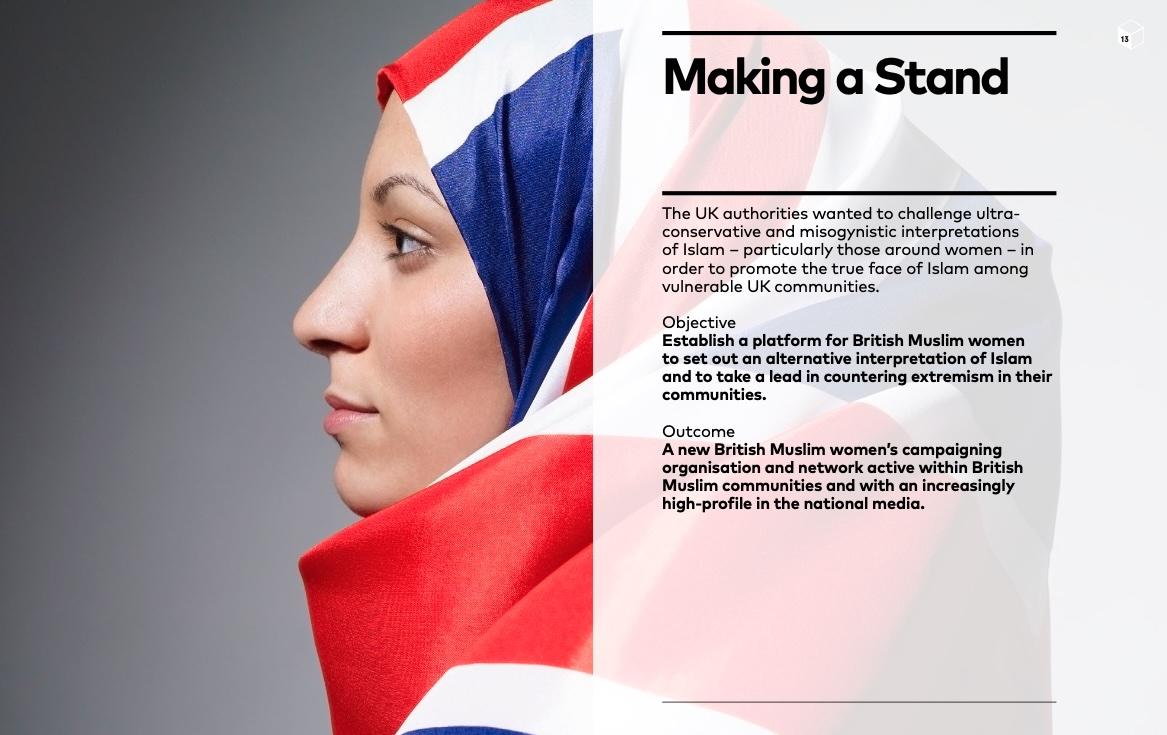
Families Against Stress and Trauma (FAST) described itself as an organisation that offers “support to vulnerable families and individuals”. It is not entirely clear what specific activities FAST undertook to offer this support, although they did produce a number of videos with help from the Home Office. Nevertheless, FAST claimed to be “an independent organisation”.
Even though, according to Saleha Jaffer, FAST had been in existence since 2007, it was only registered at Companies House in May 2009. At the time of her claims, it had four directors, one of whom was Jaffer, though FAST closed down in 2023. Jaffer was a local councillor in the London borough of Lambeth between May 2014 and May 2018. In Lambeth Council’s Register of Interests, declarations made by Jaffer do not mention her involvement with FAST, though they should have done. Furthermore, in her 2015 Register of Interest declaration, it was noted under employment that this is “sensitive information, not published at Councillor’s request”. In the previous year’s register, however, Jaffer was stated to be a “vocational employee” at the OSCT, which, as we have noted, is a British intelligence agency. Both of these anomalies raise questions about the precise relationship between the OSCT and FAST, and about the extent to which the latter was in reality an ‘independent’ organisation.
Connection to RICUAccording to Jaffer’s statement before the Home Affairs Committee Inquiry on Countering Extremism, FAST was funded by the Home Office between 2007-2010, but the financial support ended after that. Instead, in a passage that has some significance, Jaffer said:
From 2007 for three years, we got funding from [the] Home Office [and] OSCT funding, but now we don’t get it. But we do work very closely with [the] Home Office, producing lots of campaign films.
This would seem to tally with revelations in The Guardian to the effect that RICU does not pay the civil society groups it works with directly, but instead gives the money to Breakthrough Media to undertake the work.
As with Inspire, the internal OSCT ‘Prevent Strategy: Local Delivery Best Practice Catalogue’ document indicated that FAST’s Families Matter campaign was an “RICU product” which has been “led and developed” by FAST but “supported by ... PR and online activity”. The OSCT document, which is dated March 2015, notes that the “main campaign film” produced for FAST had been viewed over 162,000 times on YouTube. This figure contrasts with that given to the Committee by Saleha Jaffer, who said that “there are millions of hits on our DVDs on YouTube”. As of 2 April 2020, the FAST YouTube channel, which hosted all the group’s videos, recorded that the account had 218 subscribers and a total of 443,695 views.
On its website, which has now been deleted, FAST gave a “guarantee that everything that is discussed in groups, or individual sessions is 100% confidential”. Given its connection with the OSCT, legitimate questions might be raised about the reliability of the claims that everything is private. Its connection to RICU’s covert campaigns might also be troubling to those who have worked with FAST, especially if, as seems likely, they were not made aware of these links.
Project Shanaz has also been involved with RICU. It was originally set up by the Association of Chief Police Officers (ACPO), which is now called the National Police Chiefs Council (NPCC). The project consisted of “50 women of a number of backgrounds, race and religions, including representatives from each of the 43 police forces of England and Wales”. Detective inspector Khizra Dhindsa, who is listed in Shanaz documents as the key contact, describes the network as “our national effort to maximise the engagement, consultation, partnership working, contribution and deployment of women in preventing terrorism”. According to Middle East Eye, the project collapsed amid claims of bullying. The project was led by Sofia Mahood, who reportedly faced allegations of bullying and intimidation. A number of employees left under fraught circumstances. Khatija Barday-Wood, who was the initial chair of the organisation, allegedly quit after just six months due to experiencing alleged bullying behaviour. Nilofer Mohammed, a former treasurer of Shanaz, also resigned for the project’s alleged lack of transparency and bullying. Furthermore, founder of Slough-based charity Jeena International Rani Bilkhu was expelled from the network.
Nafir Afzal, a former chief prosecutor of North West England and long-time supporter of the Prevent programme, called for the allegations made against the organisation to be investigated. Sajda Murghal of the Jan Trust, an organisation that has also had projects provided by Breakthrough Media, told Middle East Eye that Shanaz raised “serious safeguarding concerns” and that a “culture of bullying, harassment and intimidation [was] being enforced by [Sofia] Mahmood”.
Following the collapse of the Shanaz Network, Sofia Mahmood set up Empowering Minds in 2015, which runs the Prevent-funded ‘Mothers against Radicalisation’, a training course based in Bradford that seeks to equip mothers to be able to spot signs of extremism and encourage them to make a stand against extremism. According to a 2018/19 Prevent project document for Bradford City Council, the initiative received £25,000 in Prevent funding that year, and a further £25,000 for mosques and madrassas.
ConclusionsAs can be seen from the leaked documents, many other organisations are implicated in this astroturf programme of fake grassroots Muslim civil society groups. There is no space to look in detail at them here, but suffice to say groups like these performed useful services for the shadowy figures in British intelligence who are their puppeteers. But though some groups have now disappeared having outlived their usefulness, such as Active Change Foundation (which also had involvement from military intelligence), Inspire, and FAST, others remain active such as New Horizons in British Islam and Faith Associates. British intelligence continues to invest heavily in domesticated Muslim influencers and civil society groups in the Muslim community, including in both Sunni and Shia communities such as Qari Asim and Mustafa Field, respectively, both of whom have been involved in the Government’s Mosques and Imams National Advisory Board.
In future investigations, we will look at how these organisations currently operate, who funds them, their links to Zionist groups, and how they remain connected to British intelligence.
Note: The research for this article was partly financially supported by the European Commission via the European Union’s Rights, Equality and Citizenship Programme 2014-2020.