Editor’s Note: All typographical and grammatical errors that appear in emails quoted in this article appear as in the original.
In Part 1 of this two-part investigation, David Miller explored connections between Epstein, Africa, and Zionist intelligence operations. Here, in Part 2, he examines the role of the United Arab Emirates in collaboration with the Zionist regime in asset stripping, surveillance, and influence peddling across Africa.
There are many aspects to this, but the big picture is that Zionist expansionist ambitions do not stop at the putative borders of a Greater Israel. They extend at least as far as the entire continent of Africa, and they have evidently made serious inroads on this ambition with help from Jeffrey Epstein and from Zionist intelligence linked tech companies selling spyware, drones, and surveillance equipment, much of which is equipped with back doors, allowing Zionist intelligence access to spy on surveillance data collected via such software across the whole continent.
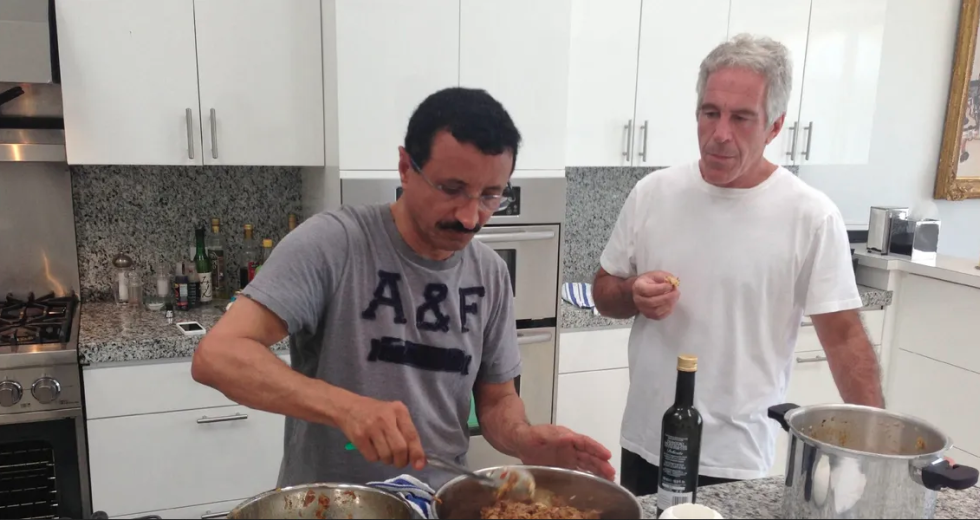
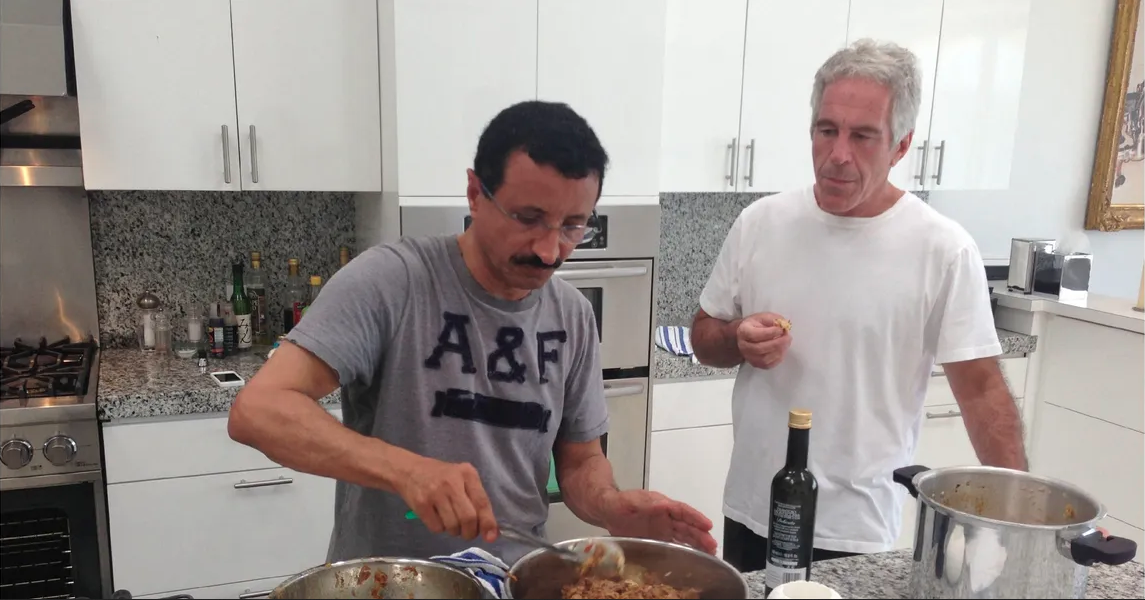
Jeffrey Epstein once bragged that he knew Sultan Ahmed bin Sulayem, the CEO of port and shipping company DP World, so well that he was “basically in charge of” DP World activities in the Horn of Africa’s Djibouti. Epstein also claimed that he had, consequently, made a fortune from arms, drugs, and diamonds because of this connection. Though technically private, DP World is, in fact, a foreign policy arm of the United Arab Emirates. And, recently, this has all been put at the disposal of Zionist interests, as Epstein’s comments also inadvertently confirm.
Introduction: Unveiling Epstein's Role in Zionist Imperialism Across AfricaRecent disclosures surrounding Jeffrey Epstein's extensive travels and connections in Africa, intertwined with Emirati state assets like DP World, expose a calculated Zionist strategy to dominate the continent through intelligence networks, resource exploitation, and cyber surveillance. Epstein's ‘humanitarian’ excursions with figures like Bill Clinton masked deeper agendas, facilitating access to West African nations such as Sierra Leone, Mali, Gabon, Senegal, Angola, and Côte d’Ivoire — coastal hubs primed for smuggling and infiltration. His boasted control over Djibouti's port, via ties to DP World's CEO Sultan Ahmed bin Sulayem, underscores a Zionist-Emirati nexus that leverages global trade infrastructure for arms, drugs, diamonds, and, of course, espionage.
This alliance, evidenced by leaked emails spanning from 2006 to 2019, reveals Epstein as a key Zionist asset, brokering deals with warlords, political elites, and tech moguls while advancing Mossad and Unit 8200 operations across DP World ports in Angola, Mozambique, Rwanda, Senegal, and beyond. From North Africa's Algeria and Egypt to the Horn of Africa and Southern regions, these ports serve as gateways for spyware like Pegasus, drones from Elbit Systems, and surveillance firms founded by Israeli military and intelligence veterans, perpetuating neocolonial control under the guise of development and security, as well as military and spy bases for both the UAE and the Zionist entity.
Testimony from Ghislaine Maxwell confirmed that former President Bill Clinton had travelled on Epstein's private jet on what were described as "humanitarian trips to Africa" in the early 2000s. In around August 2002, Epstein, former President Bill Clinton, actor Kevin Spacey, and comedian Chris Tucker spent a week on a tour of AIDS project sites in South Africa, Nigeria, Ghana, Rwanda, and Mozambique.
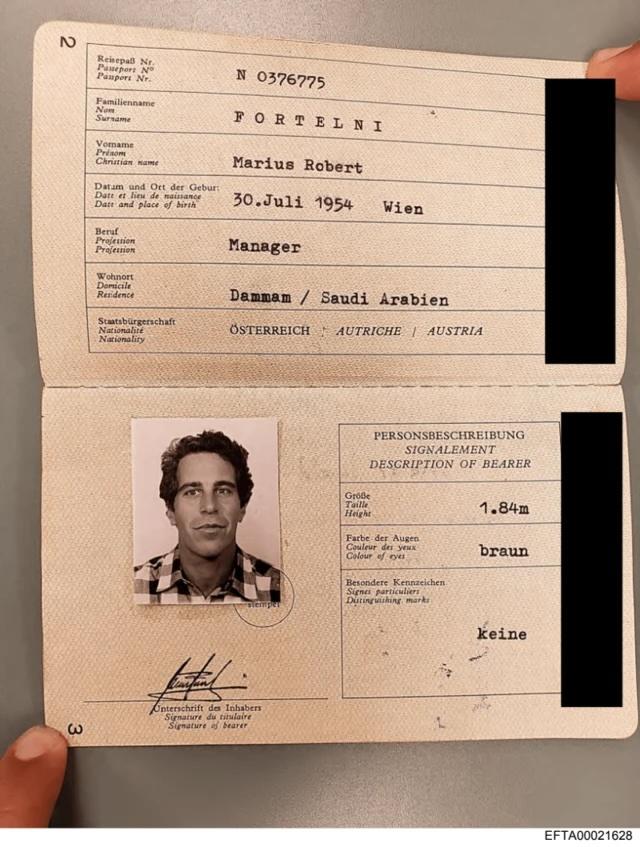
In a 2011 letter requesting a second US passport, Epstein listed future business trips to Sierra Leone, Mali, and Gabon. It is also reported that he visited Senegal and Angola, as well as Côte d’Ivoire. There seems little doubt that these trips were intended to pursue Zionist foreign policy and intelligence priorities, as well as, perhaps, scouting for young girls. All of these states are of course in West Africa and all, except for Mali, have a coastal border.
The recent disclosures about Epstein have confirmed earlier statements which were widely regarded with scepticism. Epstein had bragged he had made a fortune from arms, drugs, and diamonds because he knew the owner of the deep-water port of Djibouti, “a smuggler’s paradise”, so well “that he was basically in charge of it”.
Recently released emails have confirmed that this was the CEO of DP World, Sultan Ahmed bin Sulayem. The company is an Emirati state asset. Evidence from Ghislaine Maxwell gives further corroboration. "He showed me a photograph that he had with some African warlords", she said.
The Emirati connection is clearly of significance. Sulayem was in intensive communication with Epstein from at least 2006 through to Epstein’s death in 2019. Given that we know that Mossad and Zionist special forces have access to DP World sites, and the role of both the UAE and the Zionists in multiple African nations, it begins to look like an Africa-wide network. This is in addition to the focused attention being given by the Zionists and the Emiratis to the Horn of Africa, including Somaliland, Sudan, and Ethiopia in particular, which are just across the Red Sea from Yemen, as I have noted elsewhere.
Epstein-Sulayem Communications: A Zionist-Emirati NexusThe Epstein-Sulayem relationship exemplifies how Zionist-aligned networks exploit global trade infrastructure for imperial ends, blending financial opportunism with intelligence operations. Leaked emails reveal a decade-long bond marked by mutual favours, business pitches, and political manoeuvring. For instance, in May 2015, Sulayem emailed Epstein seeking an introduction to Elon Musk to discuss Tesla batteries for a Dubai hotel project: "Can you put me in touch with Elon Musk or ask him to refer me to someone at his company so we can discuss". The Lever reports this request came years after Epstein's 2008 conviction for soliciting a minor.
Epstein also suggested introductions to Zionist figures like Ehud Barak: "He is the right hand of Maktoum. I think you should meet", referring to Dubai's ruler. These interactions reveal a nexus where Emirati ports serve as hubs for Zionist penetration, enabling surveillance, arms smuggling, and resource extraction across Africa — fostering Zionist control under the guise of economic development.
Their correspondence often veered into the personal and political. In January 2017, ahead of Donald Trump's first inauguration, Sulayem inquired about attending and securing a handshake with Trump: "Do you think it will be possible to shake hand with trump". Epstein, ever the connector, also complimented Steve Bannon in 2018 in emails to Sulayem: "We have become friends you will like him", to which Sulayem replied, noting Trump's dislike for Bannon. Such exchanges highlight Epstein's role as a Zionist asset, facilitating links between Emirati capital and foreign policy interests and Western power brokers.
Business ventures further cemented their alliance. In December 2016, an email from Sulayem's address pitched Epstein's private islands as a luxury resort to an architecture firm:
Mr Jeffry Epstein is very dear friend and a business associate of mine he owns two beautiful islands at US Virgin Islands he wants to develop a private resort only for his, his customers and friends private use.
This proposal, amid Epstein's post-conviction rehabilitation, illustrates how Sulayem leveraged DP World's global reach, often intertwined with Zionist military access, to advance shared interests.
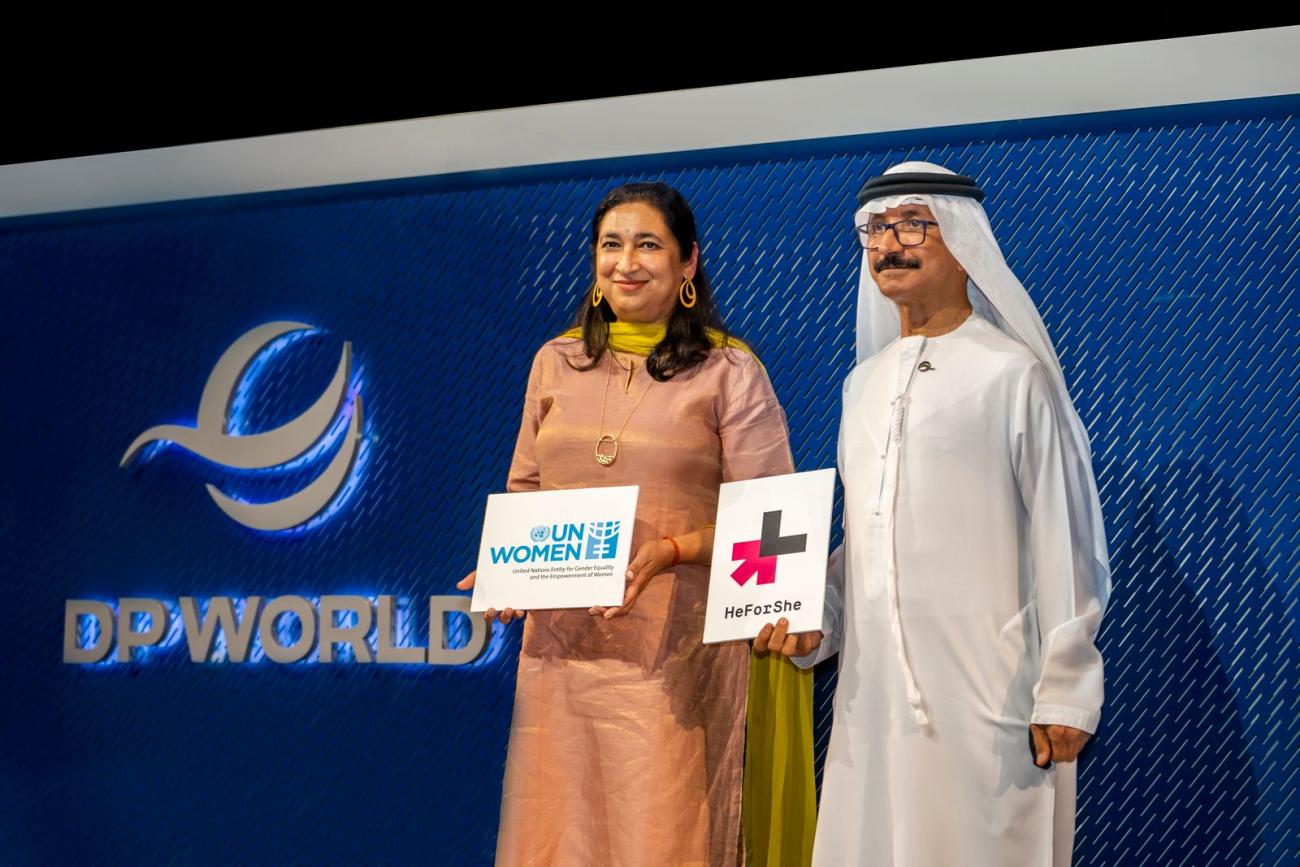
More disturbingly, emails show exchanges of compromising material. In one instance, Epstein forwarded sexually explicit content from a Liberian scandal in November 2007. Epstein wrote to Sulayem that he heard a “funny story” from a woman they both knew. Sulayem, recipient of a UN gender equality award in 2022, responded crudely: “Yes after several attemps for several months we managed to meet in NY. There is a missunderstanding she she wanted some BUSINESS! while i only wanted some PUSSYNESS!”
"Praise Allah, there are still people like you", Epstein replied. Adding to the depravity, as the BBC details, in April 2009, Epstein emailed Sulayem with the subject line "Where are you? are you ok I loved the torture video". The message implies Sulayem had shared or sent the video, though its contents remain unclear, and no further context was provided in the files. This exchange, flagged by US Congressman Thomas Massie after reviewing unredacted documents, underscores the pair's comfort in trading potentially illicit material, raising questions about Sulayem's judgement and possible involvement in darker activities.
The revelations from the US Justice Department's release of Epstein files at the end of January 2026 proved too damaging for Sulayem to weather. As Reuters reported, on 13 February 2026, DP World announced Sulayem's resignation as chairman and chief executive, effective immediately. The company, a cornerstone of Dubai's economy, handling around 10% of global container traffic, appointed Essa Kazim as the new chairman and Yuvraj Narayan as group CEO amid mounting pressure from partners and scrutiny over the Epstein ties.
His sacking marks a stunning fall for the architect of DP World's expansion, who had served in top roles since 2007. Critics point to how the scandal highlights vulnerabilities in global trade networks, where figures like Sulayem enable Zionist colony influence through port operations in strategic locations. Dubai's Government, overseeing DP World, moved swiftly to distance itself, removing Sulayem's photo from the company’s website and signalling a clean break. Yet, the episode prompts broader reflection: how many other alliances lurk in the shadows of Zionist imperial commerce?
These sordid revelations demand accountability and also a deeper examination of how these networks perpetuate exploitation, and promote the expansionist aims of the Zionist regime — the push towards Pax Judaica. DP World has facilities in ports in Africa in the following countries visited by Epstein: Angola, Mozambique, Rwanda, and Senegal. There is, so far, no concrete evidence that Epstein visited Algeria, Egypt, or Somaliland, where DP World also had sites.
Zionist Penetration via DP World Ports in AfricaEpstein's documented travels and connections to these DP World-operated countries reveal a pattern of Zionist-facilitated infiltration, where ports serve as gateways for intelligence operations, resource exploitation, and cyber surveillance — often involving Unit 8200 veterans and Israeli firms.
North Africa: AlgeriaBeyond Epstein-visited nations, DP World's African footprint amplifies Zionist activity. Algeria's Djen Djen port has had a DP World concession since 2009. Algeria maintains no diplomatic relations with Israel and has historically opposed Zionist interests, including through support for Palestinian causes. It is highly likely that the Mossad or Unit 8200 personnel are using the DP World port for covert operations. As we saw in Part 1 of this investigation, the Mossad set up a terror network across North Africa in the 1950s to combat pressure for decolonisation. The terror network, given the name ha-Misgeret or ‘The Framework’ was active, especially in Morocco, but also in Algeria.
Initially focused on Morocco, ha-Misgeret expanded into Algeria by 1955, establishing armed cells in key regions like Constantinois, Oranie, and Algerois. As research by Michael M. Laskier shows, Mossad agents trained local Jewish youth in self-defence, but these units quickly escalated to offensive actions against Algerian nationalists. This network operated under the guise of communal protection, yet it aligned with French colonial forces resisting decolonisation. The Zionist entity supplied intelligence to France on arms shipments to the Front de Libération Nationale (FLN), enabling seizures like the 1956 interception of the Athos vessel off Morocco's coast.
Ha-Misgeret's Role in Resisting Algerian IndependenceIn Algeria, ha-Misgeret actively sabotaged the push for freedom from French rule. As Nedjib Sidi Moussa writes, the network launched its first major operation in Constantine in 1956, mobilising around 100 young Jews for violent reprisals against FLN attacks on Jewish businesses.
These ‘self-defence’ actions devolved into a cycle of terror. Ha-Misgeret units conducted assassinations and bombings, targeting FLN fighters and civilians alike. For months, as the same source chronicles, the group inflicted terror strikes on the FLN, ignoring French military pleas to de-escalate.
The network's crimes extended to collaboration with the Organisation Armée Secrète (OAS), a far-right French settler militia opposing independence. Mossad backed OAS plots, including a 1963 regime change attempt against President Ahmed Ben Bella, thwarted by Algerian forces who arrested 10 Zionist agents and 20 proxies. OAS, with its Jewish faction led by figures like Jean Ghenassia, received Mossad training in clandestine warfare, having taken pat in the Nakba on the Zionist side. As Joseph Massad writes, this alliance framed Algerian independence as an antisemitic conspiracy, echoing Zionist propaganda to justify atrocities.
Ha-Misgeret's operations inflicted grave harm on Algeria's decolonisation efforts. As Laskier notes, Mossad's armed cells organised assassinations of FLN members and sympathisers, sowing division and prolonging colonial violence. In one notorious episode, Laskier confirms ha-Misgeret neutralised perceived threats through targeted killings. These acts, spanning 1956 to 1961, claimed numerous lives and disrupted FLN logistics, aligning with French torture campaigns that killed hundreds of thousands.
Mossad Operations in Algeria Post-independencePost-independence, Mossad's shadow lingered. As Ian Black and Benny Morris suggest in their book Israel’s Secret Wars: A History of Israel’s Intelligence Services, agents attempted to hijack Ben Bella's plane, echoing ha-Misgeret's legacy of terror.
Today, as a result, no doubt of the resistance of Algeria to Zionism, there is little evidence of Israeli Unit 8200 founded firms infiltrating the country, except for the NSO Group. There is, however, evidence of Mossad spying operations. Algerian authorities said they uncovered at least two spy rings and one individual spy linked to Israel since 2000, involving around 19–20 people.
- 2007: One Algerian journalist was sentenced to 10 years in prison for allegedly spying for Israel in the Kabylie region.
- 2015-2018 (Ghardaïa Spy Ring): Algerian security forces claimed to arrest 10 individuals in 2015 (reported in 2017) from countries including Libya, Mali, Ethiopia, Liberia, Nigeria, Kenya, Guinea, and a Lebanese-born Liberian, who was accused of operating a spy network for Israel using sophisticated communications equipment. In 2018, a court sentenced seven or eight of them: one (the alleged leader) to death, and six or seven others to 10 years for espionage, undermining security, and terrorism-related charges.
- 2024 (Tlemcen Spy Ring): President Tebboune announced the dismantling of an espionage network with Moroccan and Israeli links, involving arrests for spying on ports and other sites using Moroccan passports.
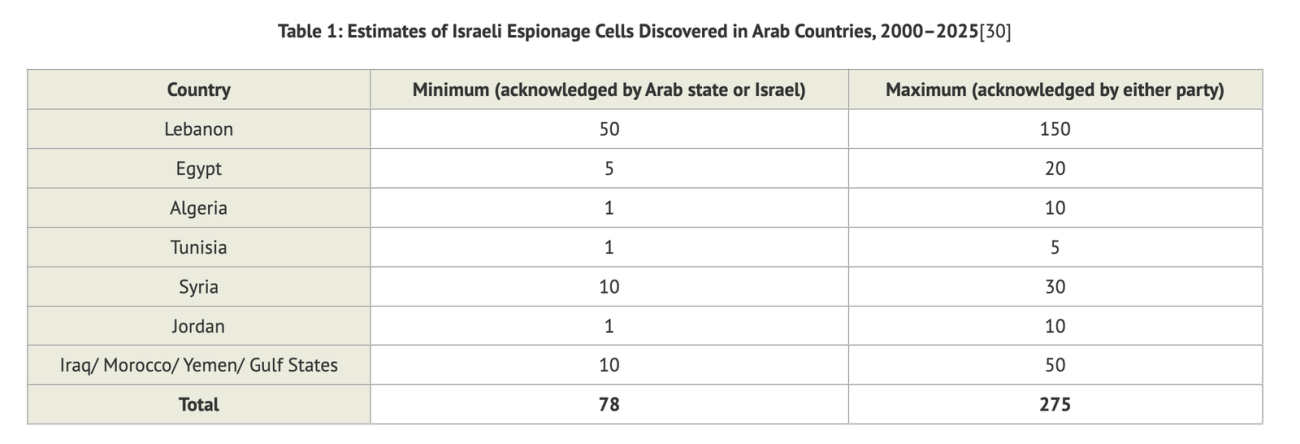
Data on Zionist intelligence plots.
Egypt's Sokhna and Alexandria ports have DP World stakes. The Cradle reports that “several Egyptian ports have been transformed into ‘major hubs’ for trade with Israel since the Gaza war began”. Unit 8200-linked Israeli firm Bler reportedly monitors communications under Sisi's regime, aiding repression. Bler delivered its Webint Center platform to Egypt's Technical Research Department (TRD), a unit attached to the General Intelligence Service (GIS). The sale was facilitated through intermediaries, including the Ukrainian company Cyberio (a long-standing Bler partner) and via Singapore to navigate sensitivities around direct Israel-Egypt tech deals despite the peace treaty. This contract enhances Egypt's ability to monitor websites, communications, dissidents, and dark web activities used by opponents under restrictions on mainstream platforms. Bler founders had previously been at other Israeli intel firms Verint and NICE Systems.
The Horn of Africa, Sudan, Djibouti and SomaliaSomaliland's Berbera port (DP World from 2017) is a Zionist-Emirati stronghold; Israeli drones and 8200 firms like Cybereason (co-founded by Lior Div, a former Unit 8200 member) provide ‘counter-terror’ tech in North Africa in collaboration with Emirati firm Oxygen, which secures Red Sea choke points for Zionist control. Recently, however, the UAE has been forced to evacuate their base at Berbera in the putative state of Somaliland by the Government of Somalia with backing from Saudi Arabia. The Somali Government cancelled all agreements with the United Arab Emirates. "This decision", the Government noted, "applies to all agreements and cooperation in the ports of Berbera, Bosaso, and Kismayo". In Djibouti, Epstein's boasted "smuggler's paradise" hosted DP World amid Zionist naval basing ambitions until it was kicked out in 2014. Pegasus spyware produced by the NSO Group is also reportedly active in Algeria, Cote d’Ivoire, Egypt, Kenya, Libya, Morocco, Rwanda, South Africa, Togo, Tunisia, Uganda, and Zambia. Israeli firm Verint has also sold its spyware in South Sudan, the breakaway territory strongly supported by the Zionist colony and via UAE-funded death squads.
AngolaIn Angola, Epstein's visits aligned with broader Zionist efforts to secure mineral resources like diamonds and oil, which are critical for sustaining the occupation economy. Angola's Luanda port, managed by DP World since 2021, has become a node in this network. Israeli companies, including those founded by Unit 8200 alumni or former occupation forces personnel like Mitrelli Group (involved in agriculture and security projects), have secured contracts for surveillance systems under the guise of ‘development aid’. Mitrelli grew out of an earlier firm called LR Group, for whom Mitrelli founder Haim Taib worked. Taib fought with the occupation forces during the first Lebanon War in 1982. LR Group founders Ami Lustig, Eytan Stibbe, and Roy Ben-Yami. The military had all been ‘Israel’ Air Force pilots and were centrally involved in supplying arms “mostly but not only” from Zionist arms firms, according to Yotam Goram’s 2020 book Israel in Africa. Taib promoted agricultural projects in Angola based on Jewish supremacist settlements in Palestine, as well as maritime security projects.
Predator Spyware Targets Angolan JournalistsIsraeli-linked surveillance firms have entrenched themselves in Angola, arming the regime with tools to crush dissent in this oil- and diamond-rich nation. In a February 2026 report, Amnesty International revealed that Predator spyware, developed by the Israeli-founded Intellexa Consortium, infected the iPhone of prominent Angolan journalist and press freedom advocate Teixeira Cândido in May 2024 when Cândido clicked on a malicious WhatsApp link. Predator infects devices via one-click or zero-click exploits, granting access to messages, geolocation, microphones, cameras, and encrypted apps without user interaction. Researchers uncovered dozens of Predator-linked domains mimicking popular Angolan news sites and government portals, indicating a broad surveillance operation stretching back to early 2023. This marks the first publicly verified deployment of Predator against civil society in Angola.
Intellexa Consortium operates as a decentralised web of companies marketing highly invasive spyware, primarily under the Predator brand. It was founded in 2019 by Tal Dilian, a former general in the Zionist regime’s military intelligence apparatus. The New York Times reports that he “was forced to retire from the Israeli Defense Forces in 2003 after an internal investigation raised suspicions that he had been involved in funds mismanagement”. Dilian was a former commander in the Zionist entity's Unit 81, a technological intelligence unit tied to Unit 8200. The consortium builds on skills from the IDF's elite cyber apparatus, notorious for surveilling Palestinians and exporting repression tech. The US Department of the Treasury sanctioned Dilian in March 2024. Its press release stated that:
Today, the Department of the Treasury’s Office of Foreign Assets Control (OFAC) designated two individuals and five entities associated with the Intellexa Consortium for their role in developing, operating, and distributing commercial spyware technology used to target Americans, including U.S. government officials, journalists, and policy experts.
The designation named Dilian and his ex-wife Sara Aleksandra Fayssal Hamou as well as a web of connected companies based in Ireland, Greece, Hungary, and North Macedonia: Intellexa S.A., Intellexa Limited, Cytrox AD, Cytrox Holdings ZRT, and Thalestris Limited.
Despite the sanctions, Predator persists in supplying spyware and has even undergone something of a “resurgence”. Between 2023 and 2025, monitoring organisation Insikt Group says it “has identified suspected Predator operators in more than a dozen countries”, including the following African countries: Angola, Botswana, the Democratic Republic of the Congo, Egypt and Mozambique, to which we next turn.
MozambiqueMozambique presents a similar tableau of exploitation, and has been a client for Predator, as noted above. Epstein's inclusion in the 2002 Clinton AIDS tour, which visited Mozambique, masked deeper intelligence pursuits. DP World's Maputo port, operational since 2004, facilitates Zionist arms and cyber incursions amid Mozambique's civil conflicts and gas boom. Elbit Systems, linked to Barak, has submitted bids to supply drones for ‘counter-terrorism’ in Cabo Delgado, exacerbating displacement of communities amid energy projects tied to imperial resource extraction. Reports indicate the Unit 8200-linked firms like NSO Group have provided spyware to Mozambican authorities, stifling journalism and opposition, and perpetuating a cycle of violence that benefits Zionist resource grabs.
RwandaRwanda, visited during the same Clinton trip, exemplifies Zionist cyber penetration post-genocide. Since 2018, DP World's Kigali Inland Container Depot (ICD) has been enabling logistics dominance as a conduit for Emirati-Zionist economic infiltration. A Rwandan e-procurement document references Cellebrite alongside other forensic tools (e.g., Oxygen and Gray Key) in the context of companies registered in Rwanda or owned by nationals being paid in local currency. This suggests possible procurement or use for digital investigations, but no confirmed contracts or deployments. The Pegasus Project reports that Rwanda was one of the countries on a leaked NSO Group client list.
SenegalIn Senegal, Epstein's reported visits — documented in State Department records as part of planned trips to multiple African nations including Senegal — coincide with Zionist expansion via DP World's Dakar port facilities. The concession for the new deep-water Port of Ndayane (approximately 50 km south of Dakar) was signed in 2020. It built on DP World's existing operations at the Port of Dakar to enable Emirati-Zionist economic infiltration. In January 2026, it was reported that Senegalese police:
… were shown a demonstration of a mass surveillance tool known as Robin in mid-2024, just months after President Bassirou Diomaye Faye assumed office following the March election … Robin is marketed by the Israeli firm Bold Analytics, a company widely described as the successor to the controversial NSO Group, developer of the infamous Pegasus spyware.
Bold Analytics was set up in 2022 to serve as the direct successor to NSO Group's big data and behavioural analytics operations. When the Pegasus spyware exposures led to US blacklisting and mounting international pressure, NSO extracted this segment — including technology, client relationships and personnel — and moved it into the new company. Intelligence Online revealed that Bold "took over the big data activities of the Israeli cyber-intelligence firm NSO" and acquired "its intellectual properties and client base", as this June 2023 report makes clear. Continuity ran deep on the personnel front. Twenty-two of the first twenty-six employees came straight from NSO's analytics teams. Intelligence Online documented how these "former NSO cyber experts" reunited at the new firm. Rami Dabush founded and now runs Bold Analytics as CEO. He previously held the position of Senior Vice President at NSO Group, where he oversaw the development and delivery of intelligence solutions to state clients across several continents. His LinkedIn profile highlights leadership in data analytics and operations, plus graduation from Israel's National Defense College (INDC) — a clear marker of high-level military or security establishment ties.
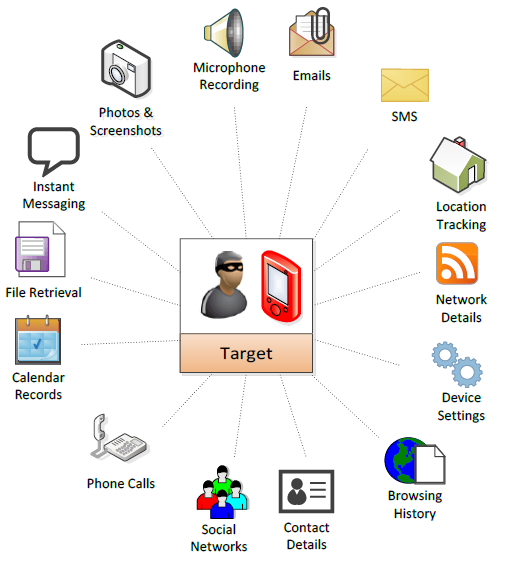
Purported diagram of Pegasus operations from
South Africa
South Africa's Durban and Cape Town (DP World logistics) see Zionist cyber incursions despite BDS pressures. Unit 8200-founded Check Point (co-founded by Gil Shwed, a Unit 8200 veteran) sells firewalls to state entities, while Israeli arms firms evade embargoes. Check Point has a regional office in Johannesburg for Southern Africa and three other regional offices cover the rest of the continent from Nigeria, Morocco, and Kenya.
In 2019, several Check Point Unit 8200 alumni left the firm to create Orca Security. They included Avi Shua (former chief technologist at Check Point) and Yoav Alon, as well as Vice President of Research & Development Ori Koral. In Southern and Eastern Africa, the company operates via partners which sell their products. One is Maxtec Africa with ‘head’ offices in both Johannesburg and Nairobi, Kenya, and operations in every country south of Kenya (Tanzania, Malawi, Mozambique, Zimbabwe, Botswana, Zambia, Namibia, and Angola). As noted above, Pegasus spyware produced by the NSO Group is also reportedly active in South Africa.
This landscape ties into the Epstein-Sulayem nexus, where DP World's expansions under Sulayem facilitated Zionist entity access. As DP World announced in May 2025, it launched a turnkey logistics solution in South Africa to boost automotive growth, leveraging ports like Cape Town where DP World operates cargo services. Sulayem had forged high-level contacts across Africa, including South Africa, to secure concessions — networks potentially bolstered by Epstein's introductions to African leaders like those in Senegal and Gabon.
Epstein's own South African ties included recruiting women from Cape Town and business links to figures like Patrice Motsepe. In an October 2014 exchange, “Epstein advised a contact to approach African Rainbow Minerals CEO Patrice Motsepe for investment in a business plan”.
This exemplifies how Emirati infrastructure under Sulayem fosters Zionist penetration in key ports, boosting Zionist entity influence.
Conclusion: Dismantling the Emerging Pax JudaicaAcross the continent and via the DP World concessions, Zionist firms — often led by veterans of Unit 8200 — deploy spyware, surveillance drones and AI products, exported from Palestinian ‘labs’, to entrench dictators, grab resources, and suppress anti-imperial movements, forging Pax Judaica through digital colonialism.
These new revelations suggest new lines of enquiry for those seeking to fully understand Epstein’s role in the expansionist foreign policy of the Zionist entity. It is clear that the role of the Zionist entity in infiltration and penetrating of Western countries — especially the US, UK, France, and Germany, is highly significant, as is the normalisation process via the Abraham Accords and its equivalent in Latin America (the Isaac Accords). Meanwhile, these multiple operations in Africa show significant penetration in multiple countries via ports, resource grabs, genocide, and ethnic cleansing. Most importantly, the evidence the use of cybersecurity and surveillance firms as a cover for intelligence penetration. What we are witnessing is the emergence of a new global empire. It has been dubbed Pax Judaica: the Jewish Empire. An urgent task is for this new empire to be properly understood and ultimately defeated.
The Epstein-Sulayem revelations crystallize the Zionist entity's insidious expansion into Africa, forging a web of ports, cyber tools, and resource grabs. Through DP World's facilities — hubs for Mossad spying, Unit 8200 spyware deployments, and arms trafficking — Zionist forces, often led by occupation veterans, exploit conflicts in nations like Mozambique, Rwanda, and Angola to seize diamonds, oil, and minerals vital to sustaining the genocidal regime in Palestine. This pattern, echoed in Egypt's monitoring platforms, Senegal's border systems, and South Africa's evaded embargoes, illustrates a broader ‘Pax Judaica’: a Jewish empire blending Emirati capital with Israeli intelligence to orchestrate genocides, ethnic cleansing, and digital colonialism across the continent. As normalisation accords like the Abraham and Isaac pacts normalise this penetration in West Asia and Latin America, exposing and defeating this global Zionist network becomes an imperative for anti-imperialist forces worldwide. Demanding accountability for Epstein's enablers and the dismantling of their exploitative infrastructure is an essential element of this.